











































An Ecuadorian oil with 71 compounds
Laboratory71 compounds were identified. The main ones are α-zingiberene (17.4%), citral (geranial 10.5% and neral 9.1%), camphene (7.8%), α-farnesene (6.8%) and β-sesquiphellandrene (6.7%)1.
Services
Catalog
Explore the full catalog1,000+ formulas ready to carry your brandFace careFull range
Serums, creams and targeted care, formulated with your actives.
Hair careFull range
From shampoo to leave-in, for every hair type.
Body careFull range
Moisturizing, nourishing and shower care: cream, butter or oil.
Hammam and naturalFull range
Black soap, argan and authentic Moroccan rituals.
Specialty careFull range
Sun care, lips, intimate care and oral care.
Industries
All solutions by industryFormulas and formats for your businessHospitality and wellness
Brands and creators
Our brands
Our own brands, developed and made in our laboratory.

 DermocosmeticsSublime CosmeticsFace, sun and body care for pharmacies and drugstores.Visit the website

 Hammam and spaLalla MamaMoroccan hammam rituals: black soap, rhassoul, oils and body care.Visit the website

 Equine careStallionGrooming care for horses: mane, coat and hooves.Visit the website
Laboratory
 Our factory in Aït MelloulISO 22716 and ISO 9001, visits by appointmentDiscover the factory
Cosmetics manufacturer based in Agadir
500+ brands35+ countries1,000+ formulas
Our factory in Aït Melloul
Up to 3 million units a yearVisits by appointment
Contract manufacturing, step by step
RegulationsCostsProject steps
Join our teams in Agadir
FormulationProductionQualityRegulatorySales
Resources
Ginger essential oil is the volatile oil of the dried rhizomes of Zingiber officinale5. Its composition varies widely: α-zingiberene, citral or geranyl acetate dominate depending on the oil12. It is not named in Regulation (EU) 2023/1545, but citral and geranyl acetate are6. The 2026 CIR assessment concludes it is safe provided the formula is non-sensitizing4.
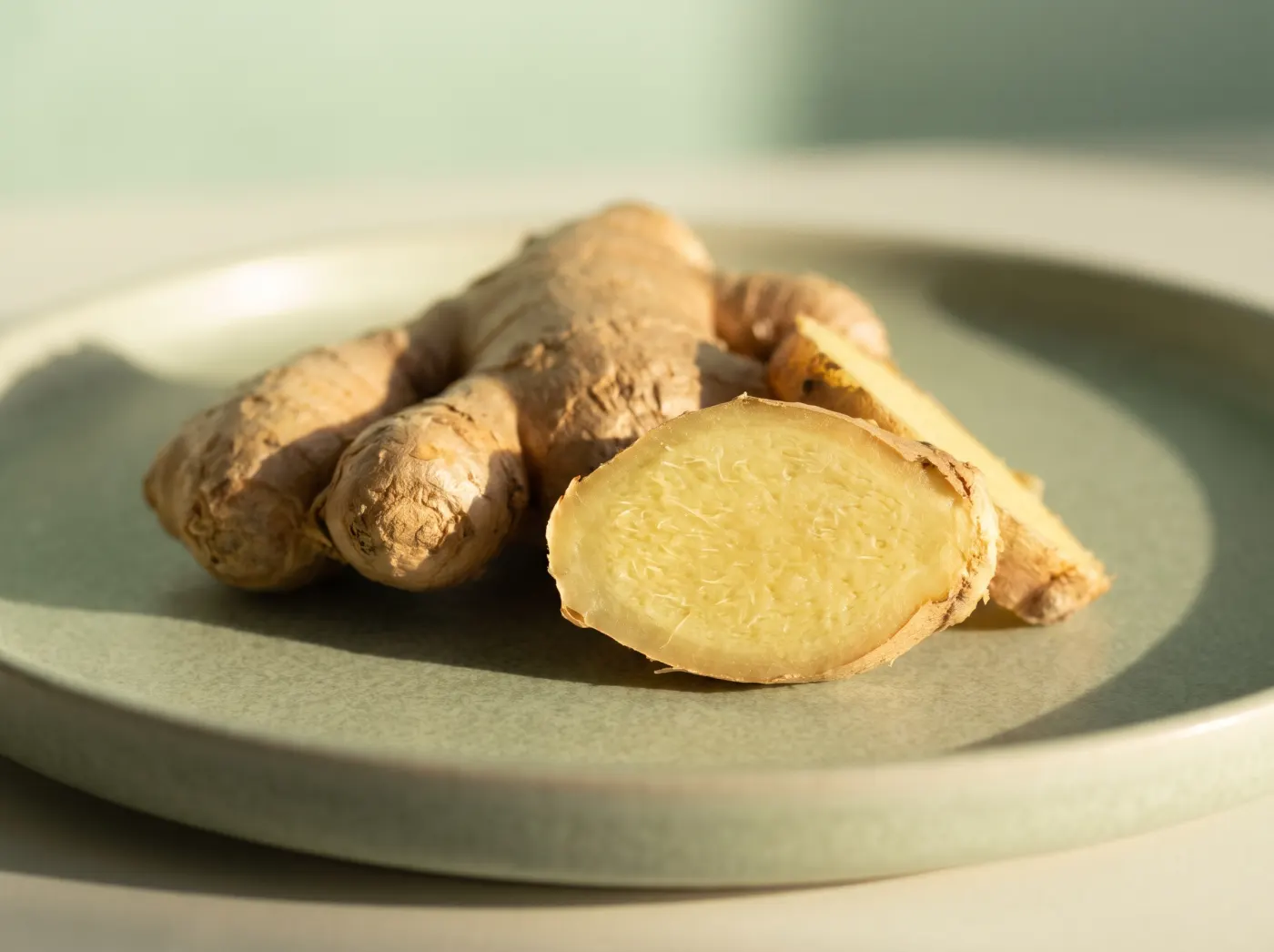
Entry from our cosmetic ingredient glossary. Regulatory data from the European Commission's CosIng database5 and from Regulation (EU) 2023/15456. Copy the identifiers in one click for your files.
Each result shows the protocol and the level of evidence. The higher the level, the better the result carries over to a finished formula.
71 compounds were identified. The main ones are α-zingiberene (17.4%), citral (geranial 10.5% and neral 9.1%), camphene (7.8%), α-farnesene (6.8%) and β-sesquiphellandrene (6.7%)1.
Bhaisa oil contains mostly geranyl acetate (18.8%), zingiberene (16.3%) and geranial (8.2%). Majulay oil contains zingiberene (19.8%) and geranial (16.5%)2.
The oil yield falls as the rhizomes mature. Chemical intensities vary significantly only with the maturity stage, not with the variety. The authors recommend harvesting at 5 months3.
The oil neutralizes free radicals in a test tube, but protects less well against lipid oxidation than BHT. In yeast, it increases antioxidant enzymes and the viability of cells exposed to H2O2 at 1.6 mg/mL1. These are not results on human skin.
The panel concludes that 8 of these ingredients are safe in the present uses and concentrations, provided the formula is non-sensitizing. The data are insufficient for the leaf cell extract. The panel raised concern about potential sensitizers, such as citronellol4.
This page summarizes published literature on a cosmetic ingredient. It does not describe the effect of a finished product, which depends on its formula, and it is not medical advice. Evidence is flagged by level: clinical trial, review or laboratory. For ginger oil, the cosmetic evidence is weak: no clinical study was kept.
Our white label catalog includes 2 formulas with ginger oil, always as a supporting ingredient. Every category can be customized (formula, fragrance, packaging).
Ginger extract in the BHA blemish care, with glycolic acid, niacinamide and centella asiatica.
Ginger among the associated ingredients of the sulfate-free keratin shampoo, with orange blossom honey and argan oil.
In our formulas, it is most often paired with
Glycolic acid 1Betaine 1Centella asiatica 1Cucumber extract 1Argan oil 1Two Zingiberaceae and a eucalyptus, three essential oils whose chemistry, and therefore labeling, differs.
| Ginger | Cardamom | Eucalyptus | |
|---|---|---|---|
| Dominant constituents | α-zingiberene, citral, geranyl acetate depending on the oil12 | 1,8-cineole and α-terpinyl acetate7 | 1,8-cineole, more than 50% of Eucalyptus globulus oil8 |
| Regulation (EU) 2023/1545 | Oil not named; citral, citronellol, limonene and geranyl acetate named6 | Oil not named; linalyl acetate, limonene and terpineol named6 | Eucalyptus globulus oil named (line 355)6 |
| Carmel catalog formulas | 2 formulas | 1 formula | 2 formulas |
Peer-reviewed studies and official regulatory sources, checked on November 3, 2026.

A product specialist reviews your request and gets back to you on the channel you prefer.