Services

Torn between two services?A project manager will guide you

Catalog

Explore the full catalog1,000+ formulas ready to carry your brand

Face careFull range

Serums, creams and targeted care, formulated with your actives.

Body careFull range

Moisturizing, nourishing and shower care: cream, butter or oil.

Specialty careFull range

Sun care, lips, intimate care and oral care.

Men, baby, makeupFull range

Shaving and beard, baby and mom, makeup.

Industries

All solutions by industryFormulas and formats for your business

Our brands

Our own brands, developed and made in our laboratory.

Become a distributor of our brandsPharmacies, spas, shops and wholesalers

Laboratory

Cosmetics manufacturing room with a row of stainless-steel mixers and an operator in white workwearOur factory in Aït MelloulISO 22716 and ISO 9001, visits by appointmentDiscover the factory

Resources

Betaine (trimethylglycine)

Betaine, or trimethylglycine, is a water-soluble organic osmolyte that skin is able to transport2. Its CosIng function is humectant1. Cosmetic data come mostly from the laboratory: it acts on barrier proteins in human skin culture2. No clinical trial isolates it yet. It is not the same as cocamidopropyl betaine, a surfactant9.

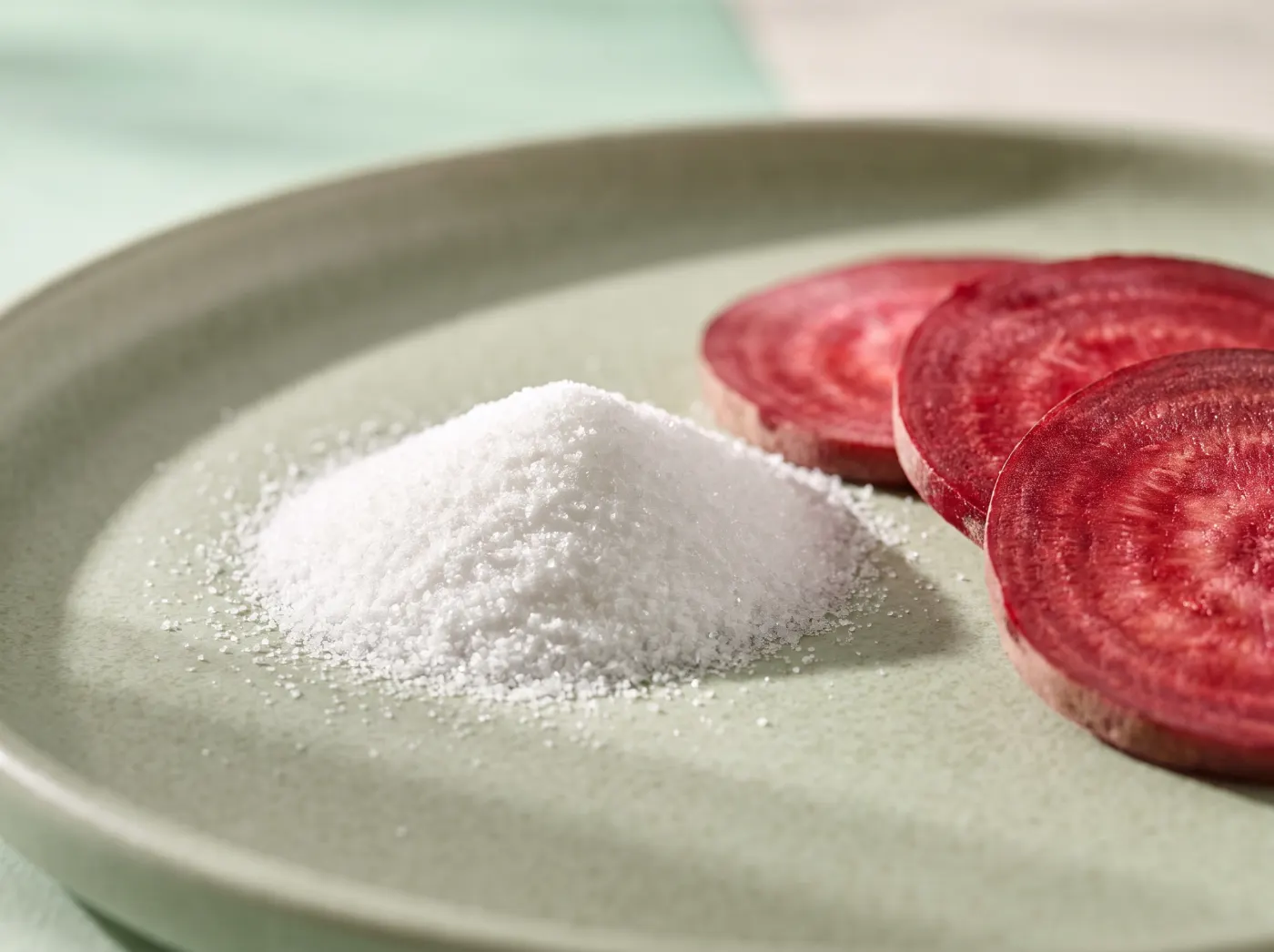
White betaine crystals in macro view on a sage green ceramic surface, with beetroot slices

Betaine at a glance

Entry from our cosmetic ingredient glossary. Regulatory data from the European Commission's CosIng database1. Copy the identifiers in one click for your files.

INCI name
BETAINENot to be confused with COCAMIDOPROPYL BETAINE and the other alkyl betaines, which are surfactants89
Other names
TrimethylglycineZwitterion (inner salt) according to CosIng1
CAS number
107-43-7 / 590-47-6CosIng links two numbers to this entry1
EC number
203-490-6 / 209-684-7
Formula
C₅H₁₁NO₂Molar mass 117.15 g/mol
CosIng functions
Humectant, hair conditioning"Humectant", "skin conditioning - humectant" and "hair conditioning" in the European nomenclature1
Appearance
White crystalline powderVery soluble in water, formulated in the aqueous phase
EU status
No restrictionAbsent from Annexes II to VI of Regulation (EC) 1223/200911
Allergen to declare
NoAbsent from the fragrance allergen list of Regulation (EU) 2023/1545
Safety
No CIR opinion specific to betaineCIR opinions cover surfactant alkyl betaines, not betaine alone89

What the research says

Each result shows the protocol and the level of evidence. The higher the level, the better the result carries over to a finished formula.

Clinical trialReview or consensusLaboratory

Facial skinSkincare

More barrier proteins in human skin

Laboratory
Human skin in organ culturePrimary keratinocytesBetaine and taurine

Skin expresses betaine transporters. When exposed to betaine or taurine, it produces more claudin-1, claudin-4 and occludin, which are tight junction proteins, and tight junction function increases in cultured keratinocytes. The effect disappears when the transporter is blocked2.

An effect on epidermal differentiation

Laboratory
Betaine 10 mMRat keratinocytes, 3D cultureWith or without UVB

Of 89 genes modified by betaine, keratin 2, a differentiation marker, is the most increased. The authors note that betaine is widely used in skincare despite the lack of studies on its own effects3.

Organic osmolytes protect tight junctions after UVB

Laboratory
Rat keratinocytesA single UVB dose

In the presence of organic osmolytes, the function of developing tight junctions is preserved after UVB. The effect does not go through cell volume or free radicals. The abstract does not say which osmolyte carries the effect: it applies to the betaine family, not to betaine alone7.

An aloe vera and trimethylglycine complex increases aquaporin 3

Laboratory
Aloe vera and trimethylglycine 1:1HaCaT keratinocytes

The complex increases aquaporin 3, a water channel of the epidermis, by up to 380% compared with the negative control. The effect is attributed to the combination, not to trimethylglycine alone4.


BodyBodycare

A more hydrating shower gel, from the first use

Clinical trial
Aloe vera and trimethylglycine shower gelOne use, then 28 daysHealthy volunteers

The shower gel improved skin hydration after one use and over 28 days, with good tolerance. The abstract gives neither the sample size nor the values, and the study does not separate trimethylglycine from aloe vera4.

Scalp and hairHaircare

Betaine naturally present in hair

Laboratory
HPLC assayHuman hair and bloodPreliminary study

Betaine can be measured in human hair. The authors show, in principle, that a shampoo can redeposit some on the fiber. They describe preliminary investigations, with no demonstrated effect on hair quality5.

Protection of a model protein under oxidative stress

Laboratory
Betaine 0.50% w/wBovine serum albuminUV, pH, cold, oxidation

Of four osmolytes, only betaine protects the protein under oxidative stress. It also limits stress caused by cold, but increases it under UVA. A protein model, not hair: effects depend on the conditions6.

Safety and mix-upsRegulation

Alkyl betaines: safe if formulated to be non-irritating

Review
CIR panel 201811 alkyl betaines

The panel concludes that alkyl betaines, which are surfactants, are safe in current uses, provided they are formulated to be non-irritating. This report does not cover betaine alone8.

Cocamidopropyl betaine: the sensitizer is an impurity

Review
CIR panel 2012DMAPA and amidoamine impurities

The panel states that synthesis impurities (DMAPA, amidoamine) are known sensitizers. It judges these surfactants safe when formulated to be non-sensitizing9.

In people already sensitized, amidoamine is the culprit

Patch test study
10 people with a positive patch testUse for 1 to 6 weeksProducts with cocamidopropyl betaine

7 of 10 people reacted to at least one product. Of 9 tested afterward, 6 reacted to amidoamine. None reacted to amidoamine-free cocamidopropyl betaine10.

This page summarizes published literature on a cosmetic ingredient. It does not describe the effect of a finished product, which depends on its formula, and it is not medical advice. For betaine, the published data are laboratory results or trials on combined products: they do not prove the effect of betaine alone on skin. Two cited studies have an industry affiliation; this is noted in the sources.

Which products use betaine?

Our white label catalog includes 5 formulas with betaine, always as a supporting ingredient. Every category can be customized (formula, fragrance, packaging).

1Face

Supporting active in a catalog micellar water.

2Body

Supporting active in a body mask and a shower oil.

2Hair

Supporting active in a scalp spray and a shampoo.

In our formulas, it is most often paired with

Panthenol 3Hyaluronic acid 2Urea 2Allantoin 1Aloe vera 1

Frequently asked questions about betaine

What is betaine?
It is trimethylglycine, an organic osmolyte: a small water-soluble molecule that helps cells hold on to their water. Skin expresses betaine transporters2. In cosmetics, it is used as a humectant for skin and hair1.
Is betaine the same as cocamidopropyl betaine?
No. Betaine (INCI BETAINE) is an osmolyte. Cocamidopropyl betaine is an amphoteric cleansing surfactant with a different INCI name. CIR opinions cover the surfactants89, and the allergic reactions described are attributed mainly to amidoamine, an impurity10. This page covers betaine alone.
What are the benefits of betaine for skin?
It is used to hydrate and to help maintain the skin barrier. Evidence is limited: in the laboratory, it increases tight junction proteins2; a shower gel combining trimethylglycine and aloe vera improves hydration, without isolating betaine4. No clinical trial tests betaine alone.

What percentage of betaine should you use?
No cited study gives a clinical trial concentration for betaine alone. Laboratory work uses 10 mM on cells3 and 0.50% w/w on a model protein6. The dose of a product is set with the formulator, depending on the format and the target.
Is betaine good for hair?
It is naturally present in hair, and a shampoo can redeposit some, according to a preliminary study5. No result on hair appearance or strength has been published. It remains a supporting active in shampoos and hair sprays.
Is betaine safe?
It is not restricted in the EU11 and is not a fragrance allergen to declare. The allergy cases described concern cocamidopropyl betaine and its impurities10, not betaine. During pregnancy, as with any skincare product, a healthcare professional's advice remains the rule.
Can you manufacture a betaine product for my brand?
Yes. Our ISO 22716 certified laboratory offers 5 formulas containing betaine (face cleanser, body and hair care) to customize, or a custom formula. Free samples are included.

Sources

Peer-reviewed studies and official regulatory sources, checked on November 3, 2026.

  1. European Commission. CosIng, entry BETAINE (CAS 107-43-7 / 590-47-6, CE 203-490-6 / 209-684-7). ec.europa.eu/growth/tools-databases/cosing
  2. El-Chami C, Foster AR, Johnson C, et al. Organic osmolytes increase expression of specific tight junction proteins in skin and alter barrier function in keratinocytes. Br J Dermatol. 2021;184(3):482-494. doi:10.1111/bjd.19162

  3. Rauhala L, Hämäläinen L, Dunlop TW, et al. The organic osmolyte betaine induces keratin 2 expression in rat epidermal keratinocytes - A genome-wide study in UVB irradiated organotypic 3D cultures. Toxicol In Vitro. 2015;30(1 Pt B):462-475. doi:10.1016/j.tiv.2015.09.015

  4. Filatov V, Sokolova A, Savitskaya N, et al. Synergetic effects of aloe vera extract with trimethylglycine for targeted aquaporin 3 regulation and long-term skin hydration. Molecules. 2024;29(7):1540. doi:10.3390/molecules29071540SkyLab AG
  5. Pulliainen K, Nevalainen H, Väkeväinen H, et al. An analytical method for the determination of betaine (trimethylglycine) from hair. Int J Cosmet Sci. 2010;32(2):135-138. doi:10.1111/j.1468-2494.2009.00554.xFinnfeeds (Danisco)
  6. Sinesi G, Salvioni L, Ronchi E, et al. Exploring bovine serum albumin (BSA) as a facile substrate for testing of osmolytes as cosmetic ingredients. Molecules. 2025;30(3):664. doi:10.3390/molecules30030664
  7. El-Chami C, Haslam IS, Steward MC, et al. Organic osmolytes preserve the function of the developing tight junction in ultraviolet B-irradiated rat epidermal keratinocytes. Sci Rep. 2018;8(1):5167. doi:10.1038/s41598-018-22533-0
  8. Burnett CL, Bergfeld WF, Belsito DV, et al. Safety assessment of alkyl betaines as used in cosmetics. Int J Toxicol. 2018;37(1_suppl):28S-46S. doi:10.1177/1091581818773354
  9. Burnett CL, Bergfeld WF, Belsito DV, et al. Final report of the Cosmetic Ingredient Review Expert Panel on the safety assessment of cocamidopropyl betaine (CAPB). Int J Toxicol. 2012;31(4 Suppl):77S-111S. doi:10.1177/1091581812447202
  10. Fowler JF, Fowler LM, Hunter JE. Allergy to cocamidopropyl betaine may be due to amidoamine: a patch test and product use test study. Contact Dermatitis. 1997;37(6):276-281. doi:10.1111/j.1600-0536.1997.tb02464.x
  11. European Parliament and Council. Regulation (EC) No 1223/2009 on cosmetic products, consolidated version of May 1, 2025: Annexes II to VI. eur-lex.europa.eu
Carmel Cosmetics Labs product specialist with a brand founder

Tell us about your project

A product specialist reviews your request and gets back to you on the channel you prefer.

Lead EN – Demande de devis
Tell us about your project. A product specialist will get back to you shortly.
CONTACT INFORMATION
Name
PROJECT INFORMATION
Which cosmetics category interests you most?

By submitting this form, you agree to our terms of service and privacy policy.

No obligation. Your information stays confidential and is used only to prepare your quote.