











































Better texture and skin tone after 3 months at 5%
Clinical trialSignificant improvement in overall skin texture and discoloration compared with placebo. The drop in wrinkles points the same way without reaching significance4.
Services
Catalog
Explore the full catalog1,000+ formulas ready to carry your brandFace careFull range
Serums, creams and targeted care, formulated with your actives.
Hair careFull range
From shampoo to leave-in, for every hair type.
Body careFull range
Moisturizing, nourishing and shower care: cream, butter or oil.
Hammam and naturalFull range
Black soap, argan and authentic Moroccan rituals.
Specialty careFull range
Sun care, lips, intimate care and oral care.
Industries
All solutions by industryFormulas and formats for your businessHospitality and wellness
Brands and creators
Laboratory
 Our factory in Aït MelloulISO 22716 and ISO 9001, visits by appointmentDiscover the factory
Cosmetics manufacturer based in Agadir
500+ brands35+ countries1,000+ formulas
Our factory in Aït Melloul
Up to 3 million units a yearVisits by appointment
Contract manufacturing, step by step
RegulationsCostsProject steps
Join our teams in Agadir
FormulationProductionQualityRegulatorySales
Resources
Glycolic acid, an alpha-hydroxy acid (AHA), exfoliates the skin surface3. At 5%, it improves texture and skin tone against placebo4. It makes skin more sensitive to the sun during use5: the CIR panel allows 10% at most, a pH of 3.5 or higher and sun protection3.
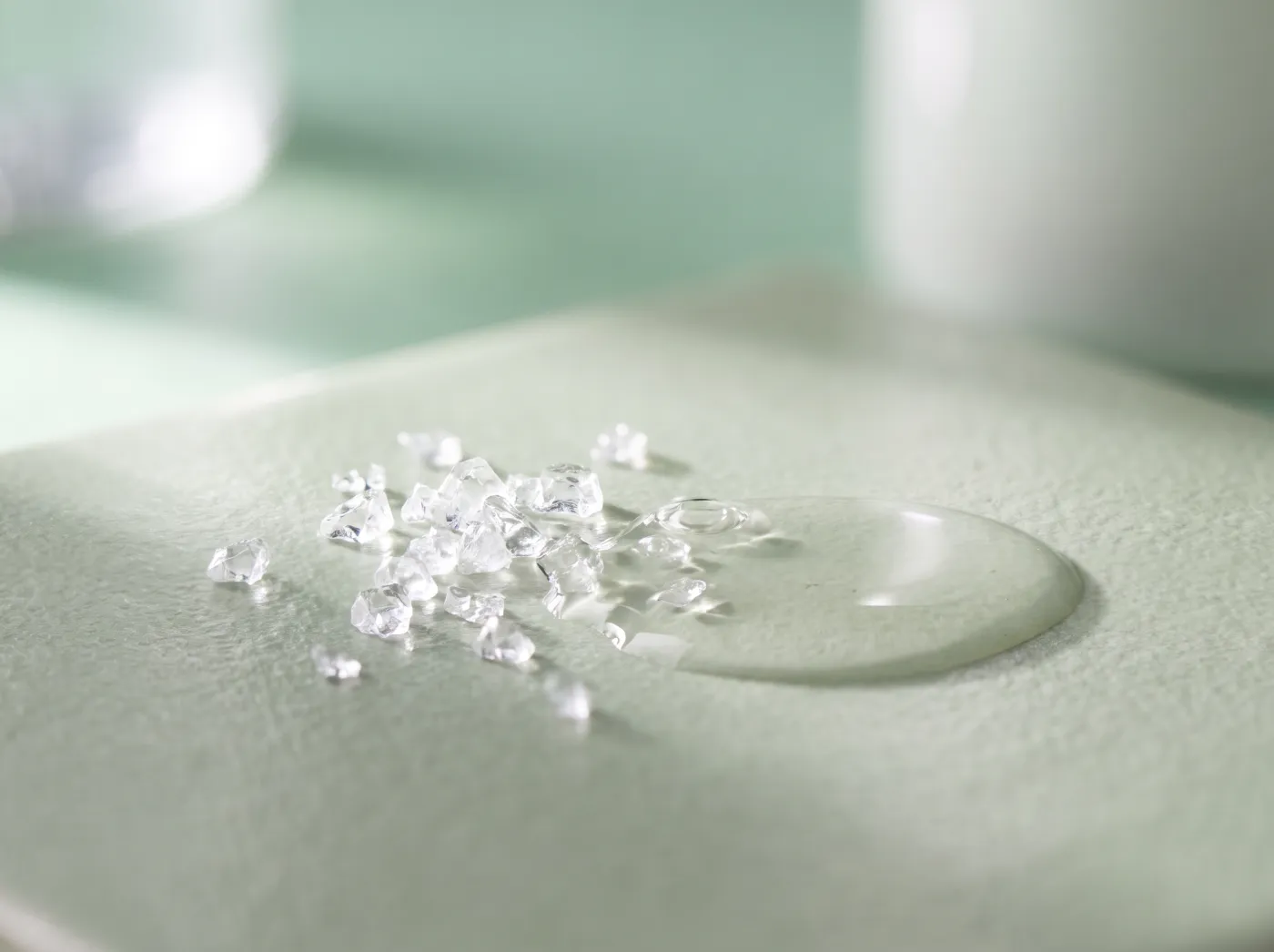
Entry from our cosmetic ingredient glossary. Data from the European Commission's CosIng database1. No maximum concentration is listed in the annexes of the regulation; the concentration and pH guidelines come from the European scientific committee2 and the CIR panel3. Copy the identifiers in one click for your files.
Each result shows the protocol and the level of evidence. The higher the level, the better the result carries over to a finished formula.
Significant improvement in overall skin texture and discoloration compared with placebo. The drop in wrinkles points the same way without reaching significance4.
Treated sites produced more sunburn cells and tolerated less UV before turning red. DNA damage increased without reaching significance. One week after stopping, no difference remained5. The FDA puts this sensitivity at 18% more for UV redness and a doubling of cell damage on average3.
Desquamation increases with concentration. Total collagen increases at every concentration, more at the highest ones. The TNF-α marker stays unchanged. Study run by the maker of the formulations tested6.
Glycolic acid is one of the 23 ingredients recommended by the panel, notably for brown spots. The panel also keeps it for a medical use that this page does not cover7.
As a precaution, the committee proposed 4% glycolic acid at most and a pH of 3.8 or higher, with a warning on UV exposure. In 2004 it noted that AHA application increases UV-induced damage and that no no-effect threshold could be defined2.
Depending on the case, AHAs can worsen or limit sun damage: it all depends on the concentration8. The reviews stress that the optimal concentration remains to be defined and that international recommendations set concentrations and pH values to limit irritation9. Studies on prolonged use of these products on sun-exposed skin remain very few10.
This page summarizes published literature on a cosmetic ingredient. It does not describe the effect of a finished product, which depends on its formula, and it is not medical advice. Some of the trials cited were run or funded by cosmetics companies, and several studies are old; this is indicated in the sources. Glycolic acid is also used in professional peels, which are outside the scope of this page.
Published guidelines range from 4% with a pH of 3.8 or higher (European scientific committee, as a precaution)2 to 10% with a pH of 3.5 or higher (CIR panel)3. The daily placebo-controlled trial uses 5%4. pH matters as much as concentration: the lower it is, the stronger the exfoliation and irritation63.
Our white label catalog includes 10 formulas with glycolic acid: the key active in 3 of them, a supporting ingredient in the others. Every category can be customized (formula, fragrance, packaging).
Key active in AHA exfoliants and cleansing gels, supporting active in scrubs, targeted care and creams.
Supporting active in one body scrub and one washing product of the catalog.
In our formulas, it is most often paired with
Niacinamide 7Panthenol 6Hyaluronic acid 4Salicylic acid 3Allantoin 3Four actives often compared for exfoliating or smoothing skin texture. They do not exclude each other and are combined in several of our formulas.
| Glycolic acid | Lactic acid | Salicylic acid | Niacinamide | |
|---|---|---|---|---|
| Family | AHA3 | AHA3 | BHA (common name)12 | Vitamin B3, not an acid |
| Effect studied | Texture and skin tone at 5%4 | Surface exfoliation3 | See the salicylic acid page | See the niacinamide page |
| EU regulation | No restriction in the annexes1. Guideline: 4%, pH 3.8 or higher2 | No restriction in the annexes. Guideline: 2.5%, pH 5 or higher2 | Restricted: 0.5 to 3% depending on the product11 | No restriction |
| Sun | Increased UV sensitivity, reversible within a week5 | Sun protection recommended with AHAs3 | Sun protection recommended with BHAs12 | Not photosensitizing |
Peer-reviewed studies and official regulatory sources, checked on November 2, 2026.

A product specialist reviews your request and gets back to you on the channel you prefer.