











































An almost fully saturated oil
LaboratoryIn the coconut oil sample, saturated fatty acids reach 92.1%, with 47.7% lauric acid and 19.9% myristic acid. Short and medium chain fatty acids (caprylic, capric) appear only in this oil, up to 7.6%4.
Services
Catalog
Explore the full catalog1,000+ formulas ready to carry your brandFace careFull range
Serums, creams and targeted care, formulated with your actives.
Hair careFull range
From shampoo to leave-in, for every hair type.
Body careFull range
Moisturizing, nourishing and shower care: cream, butter or oil.
Hammam and naturalFull range
Black soap, argan and authentic Moroccan rituals.
Specialty careFull range
Sun care, lips, intimate care and oral care.
Industries
All solutions by industryFormulas and formats for your businessHospitality and wellness
Brands and creators
Laboratory
 Our factory in Aït MelloulISO 22716 and ISO 9001, visits by appointmentDiscover the factory
Cosmetics manufacturer based in Agadir
500+ brands35+ countries1,000+ formulas
Our factory in Aït Melloul
Up to 3 million units a yearVisits by appointment
Contract manufacturing, step by step
RegulationsCostsProject steps
Join our teams in Agadir
FormulationProductionQualityRegulatorySales
Resources
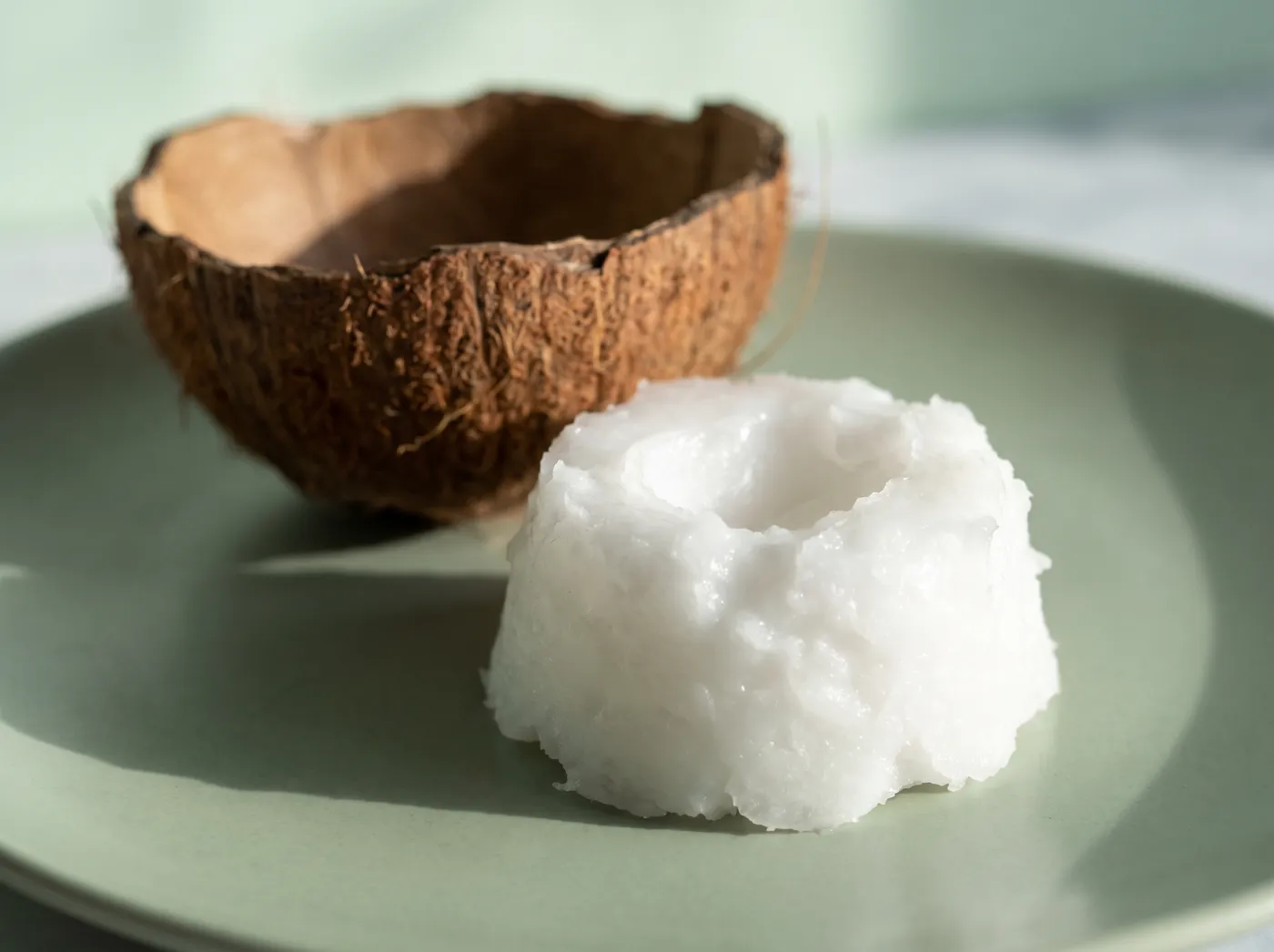
Coconut oil is the fixed oil extracted from the kernels of the coconut palm (Cocos nucifera)11. Very rich in saturated fatty acids, including nearly 48% lauric acid4, it has been compared with mineral oil on dry skin1 and studied for limiting hair protein loss2. The evidence remains mostly industry-funded or limited.
Entry from our cosmetic ingredient glossary. Regulatory data from the European Commission's CosIng database11, safety according to the CIR expert panel5. Copy the identifiers in one click for your files.
Each result shows the protocol and the level of evidence. The higher the level, the better the result carries over to a finished formula.
In the coconut oil sample, saturated fatty acids reach 92.1%, with 47.7% lauric acid and 19.9% myristic acid. Short and medium chain fatty acids (caprylic, capric) appear only in this oil, up to 7.6%4.
Both oils significantly improved skin hydration and increased surface lipids, with comparable effects. No difference in water loss or pH. Coconut oil showed a trend, not statistically significant, toward a bigger improvement in dryness symptoms1.
On healthy skin, oils rich in oleic acid do not seem to have a negative effect; frequency and duration of use matter. Coconut oil is among the materials reviewed6.
Coconut oil is the only one of the three to clearly reduce protein loss, on healthy and damaged hair alike. The authors attribute this to its lauric acid, which penetrates the fiber2.
Coconut-based oils prevent the increase in cortex porosity caused by surfactants, reverse the drop in breaking stress and protect color3.
The review reports a clinical effect on brittle hair. Evidence remains limited for hair growth9.
Ten ingredients from the flower, fruit and endosperm are judged safe in current uses. The data are judged insufficient for the shell powder5.
The authors judge that more studies are needed before making definitive recommendations on coconut oil8. The ratio of linoleic to oleic acid is presented as decisive for how useful an oil is for the skin barrier7.
This page summarizes published literature on a cosmetic ingredient. It does not describe the effect of a finished product, which depends on its formula, and it is not medical advice. Several of the studies cited were run or funded by industry; this is indicated in the sources.
Our white label catalog includes 65 formulas with coconut oil: the key active in 5 of them, a supporting ingredient in the others. Every category can be customized (formula, fragrance, packaging).
Base of cleansing balms and cleansers, also found in face care.
Fat phase of body oils, lotions, butters and scrubs.
Care oil in conditioners, masks, hair oils and scalp care.
In our formulas, it is most often paired with
Vitamin E 38Sweet almond oil 35Argan oil 32Shea butter 30Panthenol 23Four vegetable fats often compared when choosing the base of a care product. Their chemistry differs, so their behavior in a formula does too.
| Coconut oil | Shea butter | Jojoba oil | Castor oil | |
|---|---|---|---|---|
| Chemical nature | Oil: 92.1% saturated fatty acids, of which 47.7% lauric acid4 | Butter: stearic (28 to 56%) and oleic (34 to 61%) acids10 | Liquid wax: about 98% wax esters13 | Oil: about 90% ricinoleic acid12 |
| EU regulation | No restriction | No restriction | No restriction | No restriction |
| Carmel catalog formulas | 65 formulas | 65 formulas | 25 formulas | 25 formulas |
Peer-reviewed studies and official regulatory sources, checked on November 2, 2026.

A product specialist reviews your request and gets back to you on the channel you prefer.