











































Linalool and linalyl acetate lead
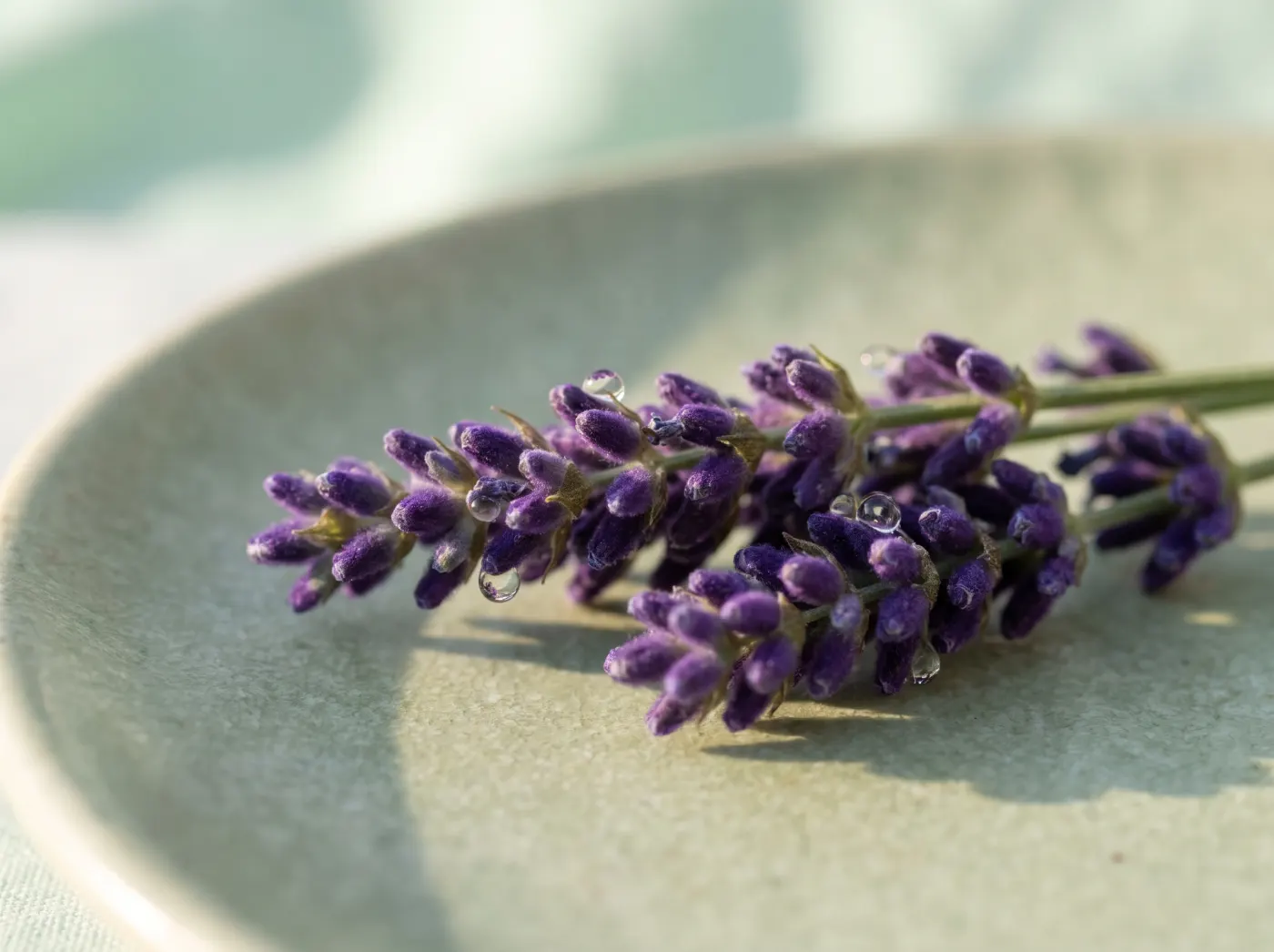
ReviewThe volatile compounds of lavender are mostly linalool and linalyl acetate6.
Services
Catalog
Explore the full catalog1,000+ formulas ready to carry your brandFace careFull range
Serums, creams and targeted care, formulated with your actives.
Hair careFull range
From shampoo to leave-in, for every hair type.
Body careFull range
Moisturizing, nourishing and shower care: cream, butter or oil.
Hammam and naturalFull range
Black soap, argan and authentic Moroccan rituals.
Specialty careFull range
Sun care, lips, intimate care and oral care.
Industries
All solutions by industryFormulas and formats for your businessHospitality and wellness
Brands and creators
Laboratory
 Our factory in Aït MelloulISO 22716 and ISO 9001, visits by appointmentDiscover the factory
Cosmetics manufacturer based in Agadir
500+ brands35+ countries1,000+ formulas
Our factory in Aït Melloul
Up to 3 million units a yearVisits by appointment
Contract manufacturing, step by step
RegulationsCostsProject steps
Join our teams in Agadir
FormulationProductionQualityRegulatorySales
Resources
Lavender essential oil is obtained from the flowers of Lavandula angustifolia8. Its main constituents are linalool, linalyl acetate and beta-caryophyllene1. It is named in Annex III of Regulation (EU) 2023/1545: its presence must be declared above 0.001% in leave-on products and 0.01% in rinse-off products9. In air, it oxidizes and becomes more allergenic1.
Entry from our cosmetic ingredient glossary. Regulatory data from the European Commission's CosIng database8 and from Regulation (EU) 2023/15459. Copy the identifiers in one click for your files.
Each result shows the protocol and the level of evidence. The higher the level, the better the result carries over to a finished formula.
The volatile compounds of lavender are mostly linalool and linalyl acetate6.
The number of identified constituents generally ranges from 100 to 250, but reaches 450 to 500 in some oils, including lavender, geranium and rosemary. Limonene, linalool and α-pinene are important constituents of more than 20 oils5.
The oil's constituents oxidize at the same rate as the pure compounds and give the same products. The sensitizing potential increases with air exposure, and the exposed oil causes reactions in people allergic to oxidized linalool1.
At high purity, linalyl acetate is weakly sensitizing (EC3 of 25%). After 10 weeks of oxidation, its EC3 falls to 3.6%, a sign of stronger sensitizing potential. Hydroperoxides are the most active oxidation products2.
Tests with oxidized linalool (1%) were positive in 483 people (8.8%), and those with oxidized limonene (0.3%) in 170 (3.1%). Many reactions were weak, doubtful or irritant: the authors point to a risk of false positives3.
Linalool and limonene hydroperoxides cause frequent positive patch test reactions. The authors consider that adding them to the European baseline series can be justified, with exposure thresholds still to be better defined4.
Compared with the saline group, the number of follicles, their depth and the thickness of the dermis increased, and the number of mast cells fell. This is an animal study: it does not allow a conclusion about an effect in humans7. A 2025 review of plant-based hair products stresses the lack of solid trials10.
This page summarizes published literature on a cosmetic ingredient. It does not describe the effect of a finished product, which depends on its formula, and it is not medical advice. Evidence is flagged by level: clinical trial, review or laboratory.
Our white label catalog includes 8 formulas with lavender oil: the key active in 2 of them, a supporting ingredient in the others. Every category can be customized (formula, fragrance, packaging).
Fragrance of the lavender intimate foam, also present in soaps, scrubs, shower gels and a beard strengthening serum.
In our formulas, it is most often paired with
Vitamin E 5Argan oil 3Aloe vera 2Chamomile 2Apricot kernel oil 2Four essential oils often compared when choosing a fragrance or a sensation. Their chemistry differs, so does their labeling.
| Lavender | Rosemary | Peppermint | Eucalyptus | |
|---|---|---|---|---|
| Dominant constituents | Linalool, linalyl acetate, beta-caryophyllene1 | α-pinene, 1,8-cineole, camphor 11 | Menthol and menthone 12 | 1,8-cineole, more than 50% of Eucalyptus globulus oil5 |
| Regulation (EU) 2023/1545 | Oil named (line 360)9 | Oil not named; Camphor, Pinene and Limonene named9 | Oil named (line 361)9 | Eucalyptus globulus oil named (line 355)9 |
| Carmel catalog formulas | 8 formulas | 17 formulas | 8 formulas | 3 formulas |
Peer-reviewed studies and official regulatory sources, checked on November 3, 2026.

A product specialist reviews your request and gets back to you on the channel you prefer.