





2026 is a key milestone for the beauty industry. Without overhauling Regulation (EC) No 1223/2009, the European Union is strengthening it through successive updates (banned substances, allergens, PFAS, microplastics, environmental claims) and finalizing its targeted simplification through the “chemicals omnibus.” For major brands, anticipating these changes is not optional: it is a strategic necessity.
In this article, Carmel Cosmetics Labs helps you understand the new EU cosmetics regulations, their impact on formulation, production and compliance, and the steps to take now to stay competitive in the European market. This regulatory update is current as of September 28, 2026.
Contents
1. A changing regulatory landscape
The European Union has always been a pioneer in cosmetic safety. However, rising environmental demands, growing consumer scrutiny and technological innovation are pushing Brussels to strengthen the existing framework.
The main reasons behind these changes:
- Protecting public health as new ingredients and nanomaterials emerge.
- Increasing transparency on raw material traceability and labeling.
- Meeting the European Green Deal, which requires an ecological transition across all sectors, including beauty.
The 2026 EU cosmetics regulations are therefore part of a drive toward a circular economy and environmental responsibility.
2. The major changes: already in force or coming soon
2.1. Stricter ingredient requirements
The European Commission regularly updates the lists of permitted, restricted and banned ingredients (Annexes II to VI of the regulation). Omnibus VII (Regulation (EU) 2025/877) has banned 22 CMR substances, including TPO used in gel nail polishes, since September 1, 2025; Omnibus VIII (Regulation (EU) 2026/78) has applied since May 1, 2026; and Regulation (EU) 2026/909 tightens the conditions of use for several ingredients from January 1, 2027.
- Restrictions on PFAS: PFHxA and related substances are banned in cosmetics placed on the EU market from October 10, 2026 (Regulation (EU) 2024/2462), France has banned cosmetics containing PFAS since January 1, 2026 (law of February 27, 2025), and a universal restriction is under evaluation at ECHA (see our guide to the PFAS ban).
- Restrictions on microplastics: exfoliating microbeads have been banned since October 17, 2023; synthetic polymer microparticles will be banned in rinse-off products on October 17, 2027, in leave-on products on October 17, 2029, and in makeup, lip and nail products on October 17, 2035 (Regulation (EU) 2023/2055).
- Case-by-case review of potential endocrine disruptors: following a call for data, triphenyl phosphate is banned and the limits for benzyl salicylate are revised (Regulation (EU) 2026/909).
- Stricter limits on nanomaterials: Regulation (EU) 2024/858 bans or restricts several of them (styrene/acrylates copolymer, copper, gold, platinum, colloidal silver…), and non-compliant products can no longer be sold since November 1, 2025.
- Assessment of natural substances as demanding as for any other ingredient, even when they are bio-based: citral, found in many essential oils, has had its conditions of use revised.
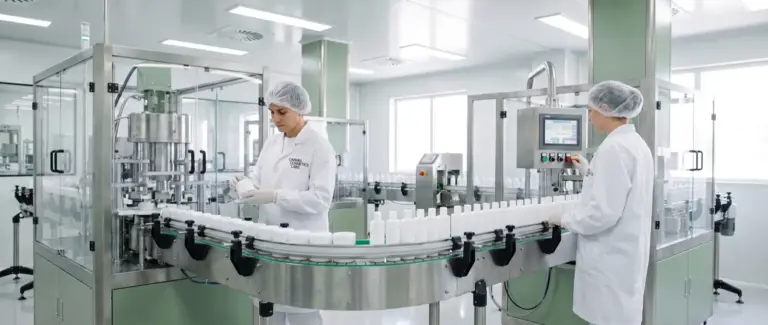
Carmel Cosmetics Labs, which manufactures formulas compliant with Regulation (EC) No 1223/2009 under Good Manufacturing Practices (ISO 22716), is already helping its partners adapt to these regulations.

2.2. Labeling and full transparency
Labeling is becoming more detailed, and digital tools are gaining ground:
- Fragrance allergens: Regulation (EU) 2023/1545 raises the number of allergens to be declared from 26 to more than 80; products placed on the market since July 31, 2026 must comply, and those already on sale must comply by July 31, 2028 (see our feature on fragrance allergens).
- Digital Product Passport (DPP): provided for by the Ecodesign Regulation (EU) 2024/1781, it is not yet required for cosmetics, which are not in the Commission’s first 2025–2030 working plan. A QR code on the packaging giving access to the composition, ingredient origin and environmental impact therefore remains voluntary.
- No product sustainability score (biodegradability, carbon footprint, recyclability) is mandatory to date; however, Directive (EU) 2024/825 (“EmpCo”), which Member States must apply since September 27, 2026, bans unsubstantiated generic environmental claims, sustainability labels not based on a certification scheme or a public authority, and climate-neutrality claims based on carbon offsetting.
- Rules on the terms “natural” and “free from” to prevent misleading claims, under the common criteria of Regulation (EU) No 655/2013.
This makes eco-labels backed by third-party certification, such as COSMOS or Ecocert, more valuable (see our COSMOS, Ecocert and Natrue comparison).
2.3. Traceability and a sustainable supply chain
The 2026 EU cosmetics regulations raise the bar on traceability, and distributors increasingly expect visibility over the product life cycle:
- Geographic origin of raw materials.
- Social conditions of production.
- Environmental footprint of transport and packaging.
Brands will therefore need closer collaboration with their partner labs, which must be able to provide documented proof of compliance at every stage of the process.
3. Impact on major cosmetics brands
3.1. Adapting existing formulas
Major brands will need to reassess their entire portfolio:
- Reformulate products containing restricted ingredients.
- Run new safety tests (toxicological and microbiological).
- Update their product information files (PIF).
At Carmel Cosmetics Labs, our R&D team stays ahead of these changes: every formula is checked against the latest annexes of Regulation (EC) No 1223/2009, with no animal testing whatsoever, in line with the EU ban (Article 18).
3.2. Rethinking packaging and logistics
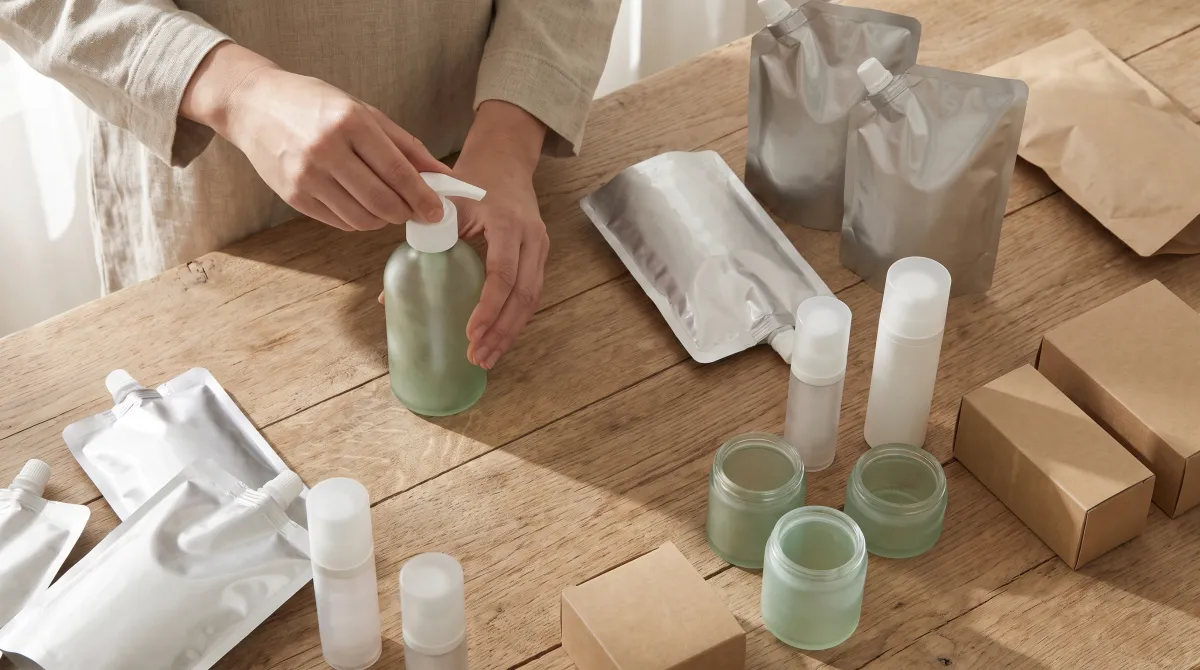
The Packaging and Packaging Waste Regulation (EU) 2025/40 (PPWR), applicable since August 12, 2026, requires eco-designed, recyclable packaging.
- Mandatory recyclability for all packaging, with design criteria applying from January 1, 2030.
- Traceability and harmonized labeling of packaging materials.
- Priority to refills and reuse.
Our sustainable packaging solutions — bottles, tubes, airless pumps, recycled glass vials — help brands get ahead of these obligations today.
3.3. Communication and marketing claims
“Clean beauty,” “natural” or “vegan” claims must be scientifically substantiated, as Regulation (EU) No 655/2013 has required since 2013; as for “paraben-free,” the Commission’s technical document on claims deems it unacceptable because it denigrates authorized preservatives (see how cosmetic claims are regulated in the EU).
With the EmpCo directive, brands must base their messaging on verifiable data rather than marketing arguments more than ever.
At Carmel Cosmetics Labs, every ingredient is traced, and we provide our partners with full documentation (technical data sheets, certificates of analysis, IFRA certificates) to support their regulatory claims.
4. How to prepare effectively for these changes
4.1. Run a regulatory audit
If you haven’t already, carry out a full audit of your ranges without delay:
- Check ingredient compliance.
- Review labeling against the new rules.
- Validate safety and efficacy tests.
Carmel Cosmetics Labs offers regulatory compliance services to support clients through this process.
4.2. Work with certified labs
Working with an ISO 22716-certified lab (Good Manufacturing Practices) is essential to guarantee compliance and quality.
Our production facility in Aït Melloul, Morocco, strictly follows these international standards and offers fast access to the European market, with production timelines defined with you in the quote.
4.3. Put sustainability at the heart of your strategy
EU cosmetics regulations favor companies committed to sustainability.
Brands should:
- Choose natural, traceable ingredients.
- Reduce their carbon footprint.
- Support local producers.
These values are central to the philosophy of Carmel Cosmetics Labs, which showcases Moroccan actives such as argan oil, prickly pear and rhassoul.
5. Opportunities to seize
Beyond the constraints, the new regulations open up real opportunities:
- Transparency as a selling point to build consumer trust.
- Product innovation through research into new sustainable raw materials.
- Premium positioning for brands that respect environmental standards.
Companies that adapt their supply chains and communication early will be tomorrow’s leaders.
Conclusion
Anticipating the 2026 EU cosmetics regulations is not an administrative burden: it is a competitive advantage.
Brands that act now will be able to guarantee the compliance, trustworthiness and performance of their products in the European market.
At Carmel Cosmetics Labs, we support major brands through this transition — from formulation to regulatory compliance — for sustainable, safe and forward-looking product development.
Recommended internal links
- Manufacturing in Morocco for the European market: a strategic lever
- How to speed up new range launches without disrupting your lines
- Podcast: Cosmetic co-branding: innovation for premium brands