











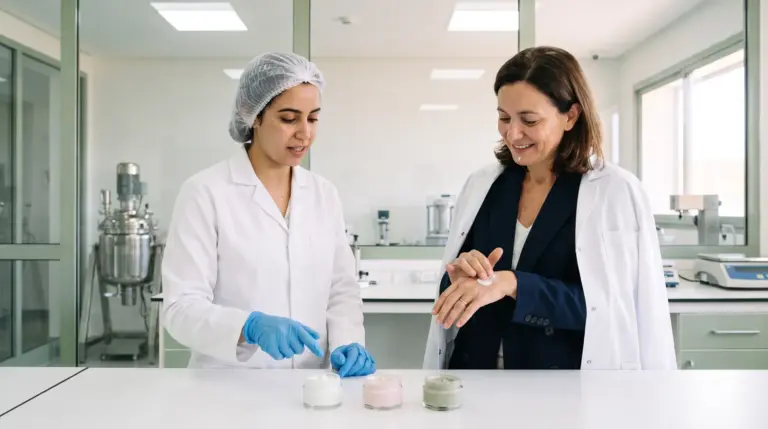
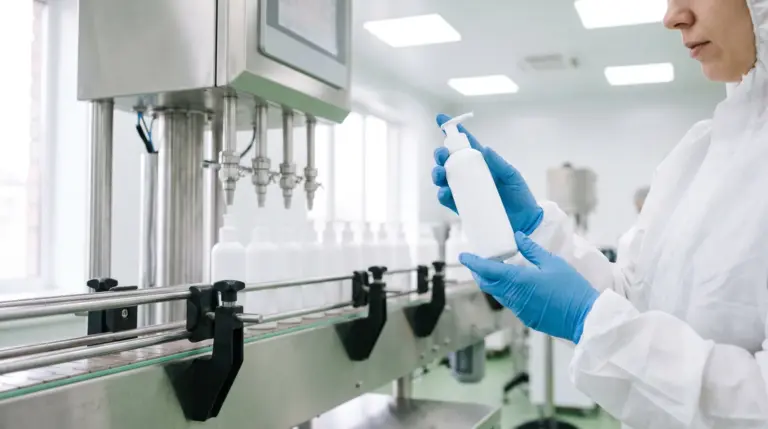
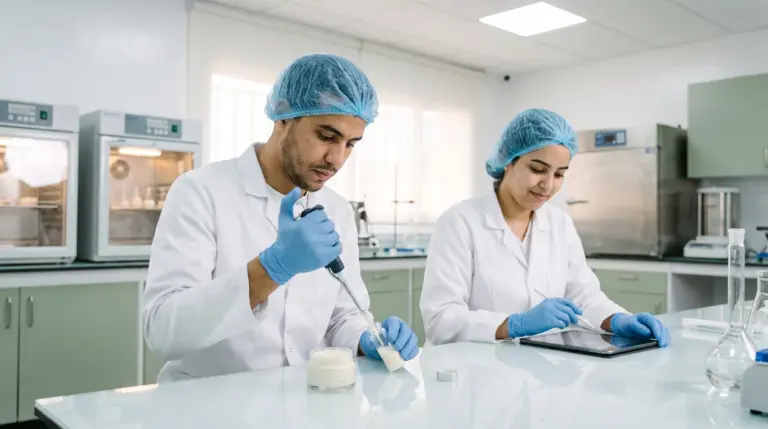

In skincare and beauty, demand for healthier, natural and eco-friendly products keeps growing. To meet it, many brands work with a cosmetics lab in Morocco, a country known for its rich plant resources and artisanal know-how. But creating a natural skincare line is no longer enough: consumers now expect concrete proof, in the form of internationally recognized organic or natural certifications.
In this article, we look at the main certifications, COSMOS, Ecocert and NATRUE, to explain how they differ and help you make the best choice for your brand.
Why consider certification for your cosmetic products?
Certifications give your brand essential credibility. They guarantee that your formulas meet rigorous standards for composition, sourcing and manufacturing processes. They are also a powerful marketing tool to win over increasingly well-informed consumers.
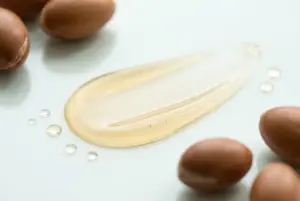
For a cosmetics lab in Morocco, offering certifiable formulations has become a major competitive advantage. It opens the door to European and international markets while showcasing local ingredients such as argan oil and prickly pear seed oil.
COSMOS: the most comprehensive international standard
What is COSMOS certification?
COSMOS is today the most widely used international standard for organic and natural cosmetics. It is backed by five major European associations: Ecocert (France), BDIH (Germany), ICEA (Italy), Soil Association (United Kingdom) and Cosmebio (France).
There are two levels:
- COSMOS ORGANIC: for organic cosmetics (at least 95% of plant ingredients certified organic).
- COSMOS NATURAL: for natural products (not necessarily organic, but following a strict charter).
Key COSMOS criteria
- Ban on GMOs, nanoparticles, silicones, parabens and other controversial substances.
- Respect for biodiversity and sustainable raw materials.
- Gentle processing methods to preserve ingredient properties.
- Control of packaging and its environmental impact.
Benefits for a brand working with a lab in Morocco
A Moroccan cosmetics lab specializing in natural ingredients often has the local raw materials needed to meet COSMOS requirements. COSMOS certification is also widely recognized in Europe, which makes exporting easier.
Ecocert: the French pioneer of organic certification
History and philosophy
Founded in France in 1991, Ecocert is one of the most respected bodies in organic certification. It is also one of the co-founders of the COSMOS label. However, Ecocert also offers its own certifications, based on a specific set of specifications.
Ecocert Cosmos vs the Ecocert Ecological and Organic Cosmetics label
- Ecocert Cosmos: aligned with the COSMOS standard (and therefore international).
- Ecocert Ecological and Organic Cosmetics: Ecocert’s own historical standard, still highly valued, particularly for sales in France.
Ecocert’s thresholds for organic cosmetics are similar:
- At least 95% of ingredients of natural origin.
- At least 20% organic ingredients (10% for rinse-off products).
For a cosmetics lab in Morocco
Ecocert is often the first choice for brands that want to sell quickly in France and capitalize on the label’s strong recognition among French consumers. A Moroccan cosmetics lab can also handle the audit and documentation with Ecocert Morocco, which has local teams.
NATRUE: an approach focused on purity and authenticity
What is NATRUE?
NATRUE is an international label founded in 2007 by several European natural cosmetics producers (Weleda, Laverana, Wala…). Less known than COSMOS in France, it is highly valued in markets such as Germany, Austria and Switzerland.
What sets it apart
- Three certification levels:
- Natural cosmetics
- Natural cosmetics with organic portion
- Organic cosmetics
- Total ban on petrochemical ingredients, even in trace amounts.
- Priority on ingredient transparency and traceability.
- A positive list of permitted ingredients, to avoid any ambiguity.
Why choose NATRUE?
If you target German-speaking markets, NATRUE is a strong marketing asset. For a Moroccan cosmetics lab, it can mean even stricter supplier selection and a commitment to maximum ingredient purity.
How to choose the right certification for your brand
Define your target market
- France or the wider European market? ➔ COSMOS is the most versatile.
- Focused on France? ➔ The historical Ecocert label is still very strong.
- Germany, Austria, Switzerland? ➔ NATRUE is preferred.
Take your formulations into account
- Do you already use mostly certifiable organic ingredients?
- Do your extracts, oils and butters come from traceable supply chains, with detailed analyses?
An experienced Moroccan cosmetics lab can help you optimize your formulas and technical files to meet the chosen standard.
Factor packaging into your decision
All these certifications also review your packaging (recyclability, no PVC…). So it is important to plan for it from the packaging design stage.
Why work with a cosmetics lab in Morocco?
Privileged local sourcing
Morocco is home to exceptional raw materials such as:
- Argan: antioxidant, nourishing.
- Prickly pear: regenerating and anti-aging.
- Ghassoul clay, honey, neroli…
Working with a Moroccan cosmetics lab gives you short supply chains that are often ethical and support local cooperatives.
Full regulatory expertise
A good lab in Morocco masters not only R&D and production but also regulatory compliance for France and Europe. It can advise you on choosing between COSMOS, Ecocert and NATRUE, prepare your PIF (product information file) and manage audits with the certifiers.
A cost advantage with no compromise on quality
More competitive labor and infrastructure costs often let you invest more in raw material quality or premium packaging, while keeping a very attractive final price.
In conclusion
Choosing between COSMOS, Ecocert and NATRUE depends above all on your target market, your marketing strategy and the positioning you want for your brand. Working closely with a cosmetics lab in Morocco lets you draw on local resources and navigate the complexity of international standards with confidence.
If you would like to discuss a natural or organic cosmetics project and find out which certification best fits your vision, our team at Carmel Cosmetics Labs is ready to support you at every step: formulation, certification, packaging and launch.