Services

Torn between two services?A project manager will guide you

Catalog

Explore the full catalog1,000+ formulas ready to carry your brand

Face careFull range

Serums, creams and targeted care, formulated with your actives.

Body careFull range

Moisturizing, nourishing and shower care: cream, butter or oil.

Specialty careFull range

Sun care, lips, intimate care and oral care.

Men, baby, makeupFull range

Shaving and beard, baby and mom, makeup.

Industries

All solutions by industryFormulas and formats for your business

Our brands

Our own brands, developed and made in our laboratory.

Become a distributor of our brandsPharmacies, spas, shops and wholesalers

Laboratory

Cosmetics manufacturing room with a row of stainless-steel mixers and an operator in white workwearOur factory in Aït MelloulISO 22716 and ISO 9001, visits by appointmentDiscover the factory

Resources

Marjoram (Origanum majorana)

Marjoram (Origanum majorana, Lamiaceae) is not oregano. The glossary INCI name, "ORIGANUM MAJORANA LEAF", does not exist as such in CosIng, which describes the leaf extract as anti-sebum, refreshing and tonic1. The oil is dominated by terpinen-4-ol and sabinene hydrates6. No cosmetic trial was retained.

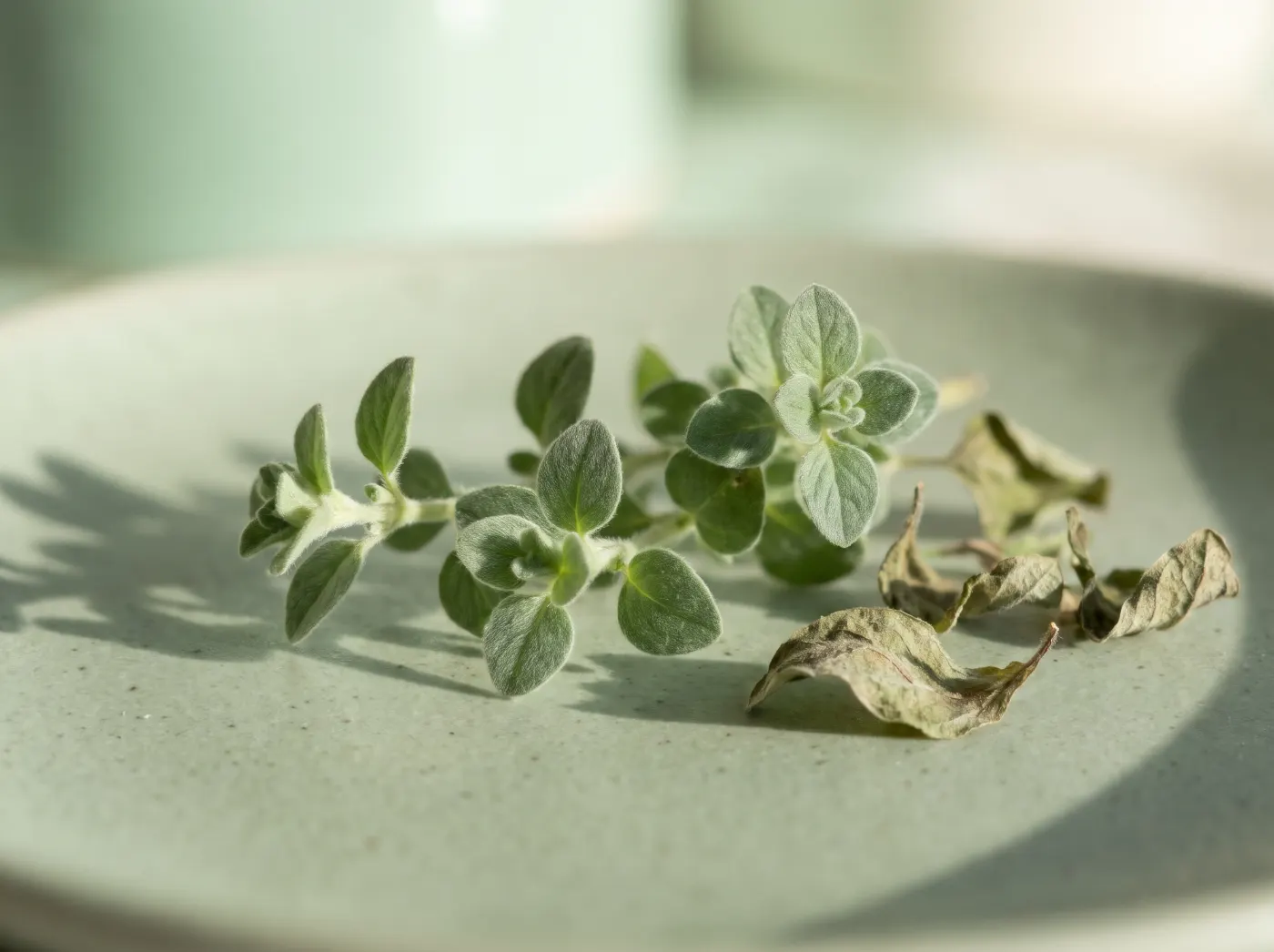
Marjoram in macro view, raw material on a sage green ceramic surface, raking light

Marjoram at a glance

Entry from our cosmetic ingredient glossary. Data from the European Commission's CosIng database12 and from consolidated Regulation (EC) No 1223/20093. The Carmel catalog uses a marjoram extract: the identifiers below are those of the CosIng entry for the leaf extract.

INCI name
ORIGANUM MAJORANA LEAFINCI name from the Carmel glossary, incomplete: CosIng does not contain this string alone. The closest entry for an extract is ORIGANUM MAJORANA LEAF EXTRACT1; the oil is called ORIGANUM MAJORANA LEAF OIL2. To be confirmed before any labeling
Other names
Sweet marjoram, knotted marjoramSweet marjoram; marjoram in CosIng: Sweet Marjoram, Origanum majorana L., Labiatae1
CAS number
84082-58-6ORIGANUM MAJORANA LEAF EXTRACT entry; same number as the leaf oil12
EC number
282-004-4ORIGANUM MAJORANA LEAF EXTRACT entry1
Botanical origin
Marjoram (Origanum majorana L., Lamiaceae)Aromatic plant of Mediterranean countries45. A species distinct from common oregano (Origanum vulgare)
Composition
Terpinen-4-ol, sabinene hydrates (oil); ursolic acid, carnosic acid, carnosol (herb)Oil from shoots grown in Tunisia: terpinen-4-ol and trans-sabinene hydrate (greenhouse), cis-sabinene hydrate and terpinen-4-ol (growth chamber)6. In the herb, ursolic acid, carnosic acid and carnosol are measured7
CosIng functions
Extract: anti-sebum, refreshing, tonic; oil: fragrance, refreshing"Anti-sebum", "Refreshing" and "Tonic" for the leaf extract1; "Fragrance" and "Refreshing" for the leaf oil2
EU status
No dedicated line in the annexesCosIng mentions no restriction for the extract or the oil12. The consolidated text of the regulation does not name Origanum3
Allergen to declare
Not marjoram, but some possible constituentsNeither the plant nor terpinen-4-ol or sabinene hydrates are named in Annex III3. A named constituent, such as eugenol (line 71), may apply depending on the batch analysis: it appears in a marjoram oil grown under salt stress6
Safety
No CIR or SCCS assessment retainedTolerance is judged on the finished formula and on the batch certificate of analysis

What the research says

Each result shows the protocol and the level of evidence. The higher the level, the better the result carries over to a finished formula.

Clinical trialReview or consensusLaboratory

Composition and antioxidantsChemistry

Terpinen-4-ol and sabinene hydrates in the oil

Laboratory
Shoots grown in TunisiaHydroponics and greenhouse, with or without NaCl

In the greenhouse without salt, the major constituents are terpinen-4-ol and trans-sabinene hydrate; in the growth chamber, cis-sabinene hydrate and terpinen-4-ol. Salt raises the oil yield by 50% in the greenhouse and brings out new compounds, including eugenol6.

Ursolic and carnosic acids, carnosol in the herb

Laboratory
Herb from Hungary and EgyptExtracts with ethanol, hexane and supercritical CO2HPLC, DPPH test, Rancimat test

The Egyptian herb and its extracts have better antioxidant activity than the Hungarian herb. With supercritical CO2, carnosol content is highest at 400 bar and 60 °C7.

A plant studied mostly for its traditional uses

Review
2017 and 2021 reviews

The 2017 review brings together ethnopharmacology, phytochemistry and biological activities4. The 2021 one concludes that the published toxicological evaluations point to the safety of the species; it does not cover a cosmetic formula5.


SkinSkincare

An official classification, not proof of an effect

Official reference
CosIngLeaf extract

CosIng gives the leaf extract the functions anti-sebum, refreshing and tonic. These functions describe the declared role of the ingredient in a product, not a trial result1. No clinical trial or skin cell test was retained for this page.

ToleranceSafety

A general caution on Lamiaceae

Case report
Rosemary alcohol4 Lamiaceae tested

In a man allergic to rosemary alcohol, tests are positive for 3 of the 4 Lamiaceae tested. The publication does not concern marjoram, but illustrates the risk of cross-reactions within the family8.

This page summarizes published literature on a cosmetic ingredient. It does not describe the effect of a finished product, which depends on its formula, and it is not medical advice. Evidence is flagged by level: clinical trial, review or laboratory.

Which products use marjoram?

Our white label catalog includes 1 formula with marjoram, always as a supporting ingredient. Every category can be customized (formula, fragrance, packaging).

1Body

Supporting extract of a dry scrub with rosemary salt, rose petals and plant extracts.

In our formulas, it is most often paired with

Basil 1Chamomile 1Myrtle extracts 1Bay leaf 1Lavender 1

Frequently asked questions about marjoram

What is marjoram in cosmetics?
It is marjoram (Origanum majorana, Lamiaceae), used mostly as a leaf extract, an oil or a hydrosol12. In our formulas, it appears as an extract in a dry scrub. It is distinct from common oregano, Origanum vulgare.
What is the INCI name of marjoram?
The Carmel glossary lists ORIGANUM MAJORANA LEAF, but this string alone is not in CosIng. The leaf extract is called ORIGANUM MAJORANA LEAF EXTRACT (CAS 84082-58-6, EC 282-004-4)1 and the oil ORIGANUM MAJORANA LEAF OIL2. The INCI name to print must match the form actually used.
What are the benefits of marjoram for the skin?
CosIng gives the leaf extract the functions anti-sebum, refreshing and tonic1. No cosmetic clinical trial was retained: work covers the composition of the oil and laboratory antioxidant tests67. A brand should stay cautious with its claims.
What is the difference between marjoram and oregano?
They are two species of the genus Origanum: marjoram is Origanum majorana, common oregano is Origanum vulgare. Their INCI names differ, and so do their oils: marjoram oil is dominated by terpinen-4-ol and sabinene hydrates6.
Do I have to declare allergens with marjoram?
Marjoram is not named in the regulation, nor are its major constituents3. A named constituent, such as eugenol, must appear in the ingredient list above 0.001% in leave-on products or 0.01% in rinse-off products if it is present36. The calculation is done on the finished product, from the batch analysis.
Is marjoram safe for the skin?
A 2021 review judges the published toxicological evaluations reassuring for the species5, but it does not target a finished product. Lamiaceae can cause cross-reactions8. Tolerance is checked on the finished formula, and a healthcare professional's advice comes first for reactive skin.
Can you make a marjoram product for my brand?
Yes. Our ISO 22716 certified lab can add marjoram to one of its catalog formulas to customize, or to a custom formula. Free samples are offered.

Sources

Peer-reviewed studies and official regulatory sources, checked on November 3, 2026.

  1. European Commission. CosIng, entry ORIGANUM MAJORANA LEAF EXTRACT (CAS 84082-58-6, EC 282-004-4). ec.europa.eu/growth/tools-databases/cosing
  2. European Commission. CosIng, entry ORIGANUM MAJORANA LEAF OIL (CAS 84082-58-6, EC 282-004-4). ec.europa.eu/growth/tools-databases/cosing
  3. European Parliament and Council. Regulation (EC) No 1223/2009 on cosmetic products, consolidated version of 1 May 2025: Annex III, line 71 (eugenol); no entry naming Origanum. eur-lex.europa.eu
  4. Bina F, Rahimi R. Sweet Marjoram: A Review of Ethnopharmacology, Phytochemistry, and Biological Activities. J Evid Based Complementary Altern Med. 2017;22(1):175-185. PMID 27231340

  5. Bouyahya A, Chamkhi I, Benali T, et al. Traditional use, phytochemistry, toxicology, and pharmacology of Origanum majorana L. J Ethnopharmacol. 2021;265:113318. PMID 32882360

  6. Baâtour O, Tarchoune I, Mahmoudi H, et al. Culture conditions and salt effects on essential oil composition of sweet marjoram (Origanum majorana) from Tunisia. Acta Pharm. 2012;62(2):251-261. PMID 22750822
  7. Vági E, Rapavi E, Hadolin M, et al. Phenolic and triterpenoid antioxidants from Origanum majorana L. herb and extracts obtained with different solvents. J Agric Food Chem. 2005;53(1):17-21. PMID 15631502
  8. González-Mahave I, Lobesa T, Del Pozo MD, et al. Rosemary contact dermatitis and cross-reactivity with other labiate plants. Contact Dermatitis. 2006;54(4):210-212. PMID 16650096
Carmel Cosmetics Labs product specialist with a brand founder

Tell us about your project

A product specialist reviews your request and gets back to you on the channel you prefer.

Lead EN – Demande de devis
Tell us about your project. A product specialist will get back to you shortly.
CONTACT INFORMATION
Name
PROJECT INFORMATION
Which cosmetics category interests you most?

By submitting this form, you agree to our terms of service and privacy policy.

No obligation. Your information stays confidential and is used only to prepare your quote.