Services

Torn between two services?A project manager will guide you

Catalog

Explore the full catalog1,000+ formulas ready to carry your brand

Face careFull range

Serums, creams and targeted care, formulated with your actives.

Body careFull range

Moisturizing, nourishing and shower care: cream, butter or oil.

Specialty careFull range

Sun care, lips, intimate care and oral care.

Men, baby, makeupFull range

Shaving and beard, baby and mom, makeup.

Industries

All solutions by industryFormulas and formats for your business

Our brands

Our own brands, developed and made in our laboratory.
Become a distributor of our brandsPharmacies, spas, shops and wholesalers

Laboratory

Cosmetics manufacturing room with a row of stainless-steel mixers and an operator in white workwearOur factory in Aït MelloulISO 22716 and ISO 9001, visits by appointmentDiscover the factory

Resources

Bay leaf (Laurus nobilis)

Bay leaf (Laurus nobilis, Lauraceae) gives a leaf powder used in soaps and scrubs. Its INCI name is LAURUS NOBILIS LEAF, which CosIng classifies as a fragrance ingredient1. The leaf oil is listed in Annex III among the allergens to declare, and the seed oil in Annex II, the list of banned substances2. No trial on the powder was retained.
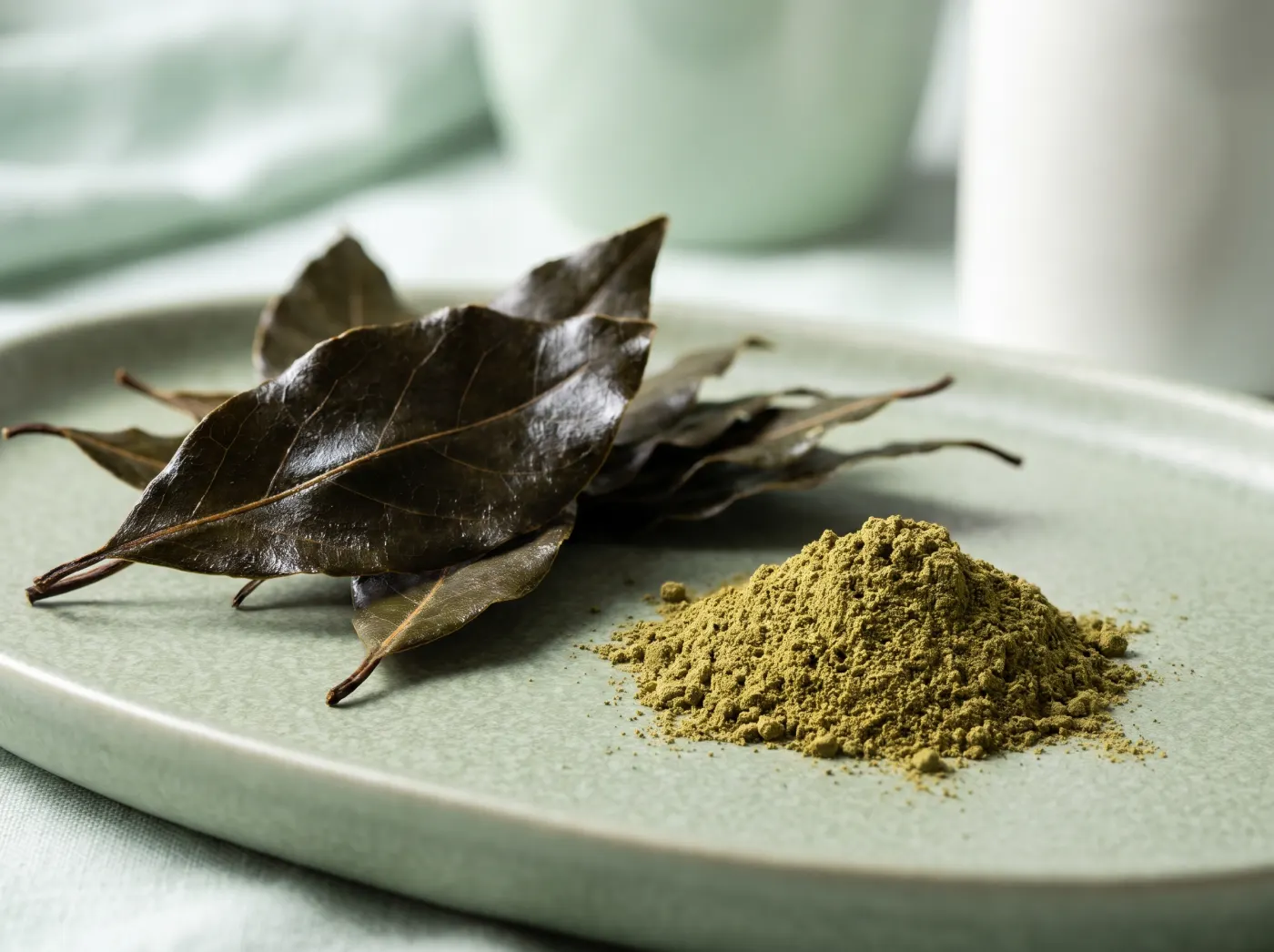
Bay leaf in macro view, raw material on a sage green ceramic surface, raking light

Bay leaf at a glance

Entry from our cosmetic ingredient glossary. Data from the European Commission's CosIng database1, consolidated Regulation (EC) No 1223/20092 and Regulation (EU) 2023/15453. Copy the identifiers in one click for your files.

INCI name
LAURUS NOBILIS LEAFDried, crushed leaves of Laurus nobilis, per the CosIng description1. Only the oil (Laurus Nobilis Leaf Oil) is named in the regulation23
Other names
Bay laurel, sweet bay, bay leafLaurel leaf
CAS / EC number
Not assignedThe CosIng entry LAURUS NOBILIS LEAF gives no CAS or EC number1. The numbers cited in the regulation concern the oils, not the powder23
Botanical origin
Bay laurel (Laurus nobilis L., Lauraceae)Plant native to the Mediterranean region5. The powder is made from dried, ground leaves
Composition
Powder: not documented. Oil: 1,8-cineole, sabinene, linaloolLeaf oil from southern Italy, 55 compounds: 1,8-cineole 31.9%, sabinene 12.2%, linalool 10.2%4. In the leaves, kaempferol and apigenin (Greece) or luteolin and kaempferol (Georgia) dominate among flavonols and flavones5
CosIng functions
FragranceFunction from the CosIng entry LAURUS NOBILIS LEAF1
EU status
Seed oil banned; leaf oil to be declaredAnnex II, line 359: Laurus nobilis L. seed oil, listed among prohibited substances. Annex III, line 359: Laurus nobilis oil (Laurus Nobilis Leaf Oil), with a cross-reference to Annex II for the seed oil. The leaf powder is not named23
Allergen to declare
The leaf oil, not the powderRegulation (EU) 2023/1545 requires the mention "Laurus Nobilis Leaf Oil" above 0.001% in a leave-on product and 0.01% in a rinse-off product. Non-compliant products may be placed on the market until 31 July 2026 and made available until 31 July 20283. For the powder, only batch analysis tells whether a named constituent applies, such as linalool (line 84) or methyleugenol (line 102, capped at 0.0002% in other leave-on products and 0.001% in rinse-off products)2
Safety
No CIR or SCCS assessment retainedTolerance is judged on the finished formula and on the batch certificate of analysis

What the research says

Each result shows the protocol and the level of evidence. The higher the level, the better the result carries over to a finished formula.

Clinical trialReview or consensusLaboratory

Composition and antioxidantsChemistry

An oil dominated by 1,8-cineole

Laboratory
Leaf oil, southern ItalyGas chromatography

55 compounds are identified, making up 91.6% of the oil. The main ones are 1,8-cineole (31.9%), sabinene (12.2%) and linalool (10.2%)4.

A composition that changes with origin

Laboratory
Leaves from Greece and GeorgiaWild trees

Oil content is 1.42% in Greek leaves and 4.54% in Georgian leaves. 1,8-cineole stays close to 30% in both, but methyleugenol (8.1%) is among the main constituents only in the Georgian oil5.

Antioxidant phenols, mostly in the cultivated sample

Laboratory
Leaf extracts and infusionsRadical scavenging, reducing power

Between a wild and a cultivated sample, the cultivated one (especially its infusion) gives the highest antioxidant activity and phenolic compound values. Chemical tests, no cells or skin6.

Flavonoids of the leaf infusion

Laboratory
Infusion of dried leavesHPLC and NMRIn vitro antioxidant tests

Ten flavonoid O-glycosides, one C-glycoside, catechin and cinnamtannin B1 are isolated. The antioxidant activity of the infusion and of the isolated compounds is measured in vitro; the abstract gives no figure7.

Skin and toleranceSkincare

A bay hydrosol hydrogel, stable for 6 months

Laboratory
Hydrosol, not the powderHyaluronate and xanthan gumIn vitro tests

Several formulations keep physical and microbiological stability for 6 months. The occlusive effect measured in vitro reaches up to 80% of that of petrolatum. This is a formulation study on the hydrosol: it says nothing about the powder13.

Sesquiterpene lactones behind the allergy

Laboratory
Bay laurel extractsSensitized guinea pigs

After selective removal of the α-methylene-γ-butyrolactones, the extracts no longer cause a reaction. The crude extract and the isolated lactones cause strong skin reactions in sensitized guinea pigs8.

Contact allergies described with bay oil

Case reports
Leaf oil, fruit oil, massagePatch tests

Cases are published with leaf oil9, with an olive and bay oil massage (patch test to the oil: +++)10 and with fruit oil11. A 2021 publication describes a skin reaction to the leaves themselves12. These isolated cases give no frequency.

This page summarizes published literature on a cosmetic ingredient. It does not describe the effect of a finished product, which depends on its formula, and it is not medical advice. Evidence is flagged by level: clinical trial, review or laboratory.

Which products use bay leaf?

Our white label catalog includes 2 formulas with bay leaf, always as a supporting ingredient. Every category can be customized (formula, fragrance, packaging).

2Body

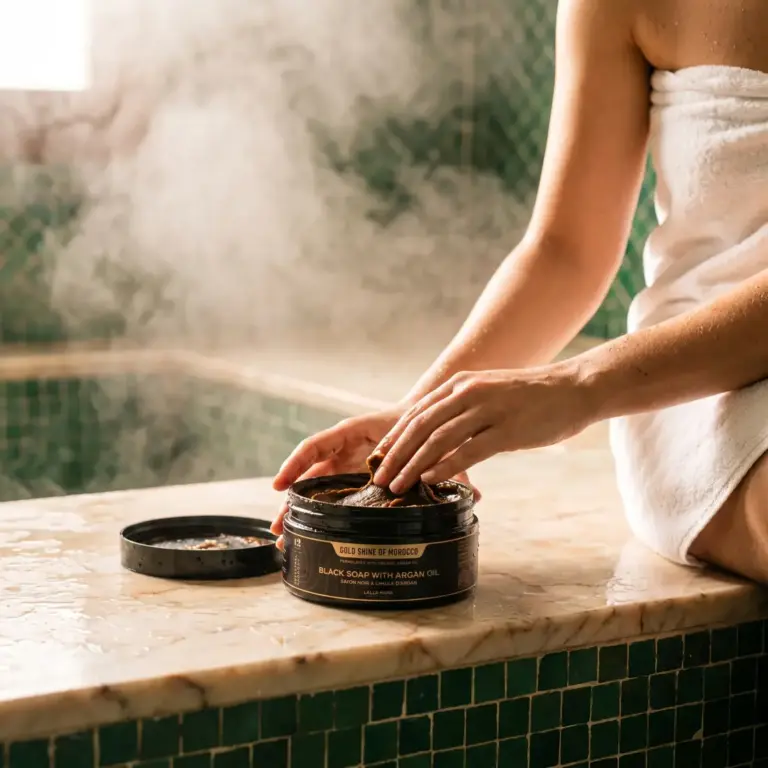
Plant powder of the traditional argan oil soap, and supporting extract of a dry rosemary salt scrub.

In our formulas, it is most often paired with

Vitamin E 2Basil 1Chamomile 1Myrtle extracts 1Soybean oil 1

Frequently asked questions about bay leaf

What is bay leaf in cosmetics?
It is the leaf of bay laurel (Laurus nobilis, Lauraceae), ground into powder or turned into an extract, essential oil or hydrosol. In our formulas, it appears as a plant powder in a soap and as an extract in a scrub. A Mediterranean plant5.
What is the INCI name of bay leaf powder?
LAURUS NOBILIS LEAF: CosIng describes this INCI name as plant material from the dried, crushed leaves of Laurus nobilis, with no CAS or EC number1. The essential oil has its own INCI name, LAURUS NOBILIS LEAF OIL.
What are the benefits of bay leaf for the skin?
No clinical trial on the leaf powder was retained. Published work covers the composition of the oil45, laboratory antioxidant tests67 and a hydrosol hydrogel13. A brand should therefore stay cautious with its claims.
Is bay leaf a fragrance allergen to declare?
The leaf oil is: line 359 of Annex III requires naming it above 0.001% in leave-on products and 0.01% in rinse-off products3. The powder is not named, but a constituent such as linalool may apply depending on the batch analysis2. Contact allergies are described with the leaves and the oil912.
Can bay oil be used in a cosmetic?
It depends on the oil. Laurus nobilis seed oil is listed in Annex II of the regulation, among the prohibited substances2. The leaf essential oil is in Annex III, with a mandatory mention23. Always specify the part of the plant and check the certificate of analysis.
What is the difference between bay leaf powder, extract and essential oil?
The powder is the ground leaf; the essential oil is the distilled volatile fraction, rich in 1,8-cineole4; the hydrosol is the aromatic water from that distillation13. Their composition, labeling and regulation differ: only the oil is named in the regulation3.
Can you make a bay leaf soap or scrub for my brand?
Yes. Our ISO 22716 certified lab can add bay leaf to one of its 2 catalog formulas to customize, or to a custom formula. Free samples are offered.

Sources

Peer-reviewed studies and official regulatory sources, checked on November 3, 2026.

  1. European Commission. CosIng, entry for the INCI name LAURUS NOBILIS LEAF: no CAS or EC number, fragrance function (accessed November 3, 2026). ec.europa.eu/growth/tools-databases/cosing
  2. European Parliament and Council. Regulation (EC) No 1223/2009 on cosmetic products, consolidated version of 1 May 2025: Annex II, line 359 (Laurus nobilis L. seed oil); Annex III, lines 71, 76, 84, 102 and 359. eur-lex.europa.eu
  3. Commission Regulation (EU) 2023/1545 of 26 July 2023 amending Regulation (EC) No 1223/2009 of the European Parliament and of the Council as regards labelling of fragrance allergens in cosmetic products (Annex III). Line 359: Laurus nobilis oil. eur-lex.europa.eu
  4. Caputo L, Nazzaro F, Souza LF, et al. Laurus nobilis: Composition of Essential Oil and Its Biological Activities. Molecules. 2017;22(6):930. PMID 28587201
  5. Stefanova G, Girova T, Gochev V, et al. Comparative study on the chemical composition of laurel (Laurus nobilis L.) leaves from Greece and Georgia and the antibacterial activity of their essential oil. Heliyon. 2020;6(12):e05491. PMID 33385077
  6. Dias MI, Barros L, Dueñas M, et al. Nutritional and antioxidant contributions of Laurus nobilis L. leaves: would be more suitable a wild or a cultivated sample? Food Chem. 2014;156:339-346. PMID 24629978
  7. Dall'Acqua S, Cervellati R, Speroni E, et al. Phytochemical composition and antioxidant activity of Laurus nobilis L. leaf infusion. J Med Food. 2009;12(4):869-876. PMID 19735189
  8. Cheminat A, Stampf JL, Benezra C. Allergic contact dermatitis to laurel (Laurus nobilis L.): isolation and identification of haptens. Arch Dermatol Res. 1984;276(3):178-181. PMID 6476889
  9. Brás S, Mendes-Bastos P, Amaro C, et al. Allergic contact dermatitis caused by laurel leaf oil. Contact Dermatitis. 2015;72(6):417-419. PMID 25753052
  10. Adişen E, Onder M. Allergic contact dermatitis from Laurus nobilis oil induced by massage. Contact Dermatitis. 2007;56(6):360-361. PMID 17577382
  11. Staseviciene D, Chomiciene A, Malinauskiene L, et al. Allergic contact dermatitis caused by laurel fruit oil. J Eur Acad Dermatol Venereol. 2018;32(11):e428-e429. PMID 29704263
  12. Vassileva S, Darlenski R. Bay leaf phytodermatitis. Contact Dermatitis. 2021;84(5):344-345. PMID 33191495
  13. Juretić L, Joukhadar R, Galić E, et al. A Natural Antioxidant-Rich Hydrogel Formulation with Laurus nobilis Hydrosol: Physicochemical and Cosmeceutical Evaluation. Gels. 2026;12(2):165. PMID 41745037
Carmel Cosmetics Labs product specialist with a brand founder

Tell us about your project

A product specialist reviews your request and gets back to you on the channel you prefer.

Lead EN – Demande de devis
Tell us about your project. A product specialist will get back to you shortly.
CONTACT INFORMATION
Name
PROJECT INFORMATION
Which cosmetics category interests you most?

By submitting this form, you agree to our terms of service and privacy policy.

No obligation. Your information stays confidential and is used only to prepare your quote.