Services

Torn between two services?A project manager will guide you

Catalog

Explore the full catalog1,000+ formulas ready to carry your brand

Face careFull range

Serums, creams and targeted care, formulated with your actives.

Body careFull range

Moisturizing, nourishing and shower care: cream, butter or oil.

Specialty careFull range

Sun care, lips, intimate care and oral care.

Men, baby, makeupFull range

Shaving and beard, baby and mom, makeup.

Industries

All solutions by industryFormulas and formats for your business

Laboratory

Cosmetics manufacturing room with a row of stainless-steel mixers and an operator in white workwearOur factory in Aït MelloulISO 22716 and ISO 9001, visits by appointmentDiscover the factory

Resources

Hydrosol (floral water)

A hydrosol, or floral water, is the aromatic water obtained during the steam distillation of a plant: a co-product of essential oil3. It contains less than 1 g/L of dispersed essential oil4. It has no single INCI name, each plant has its own. Not sterile, it is easily contaminated: it needs a preservative or aseptic packaging4.

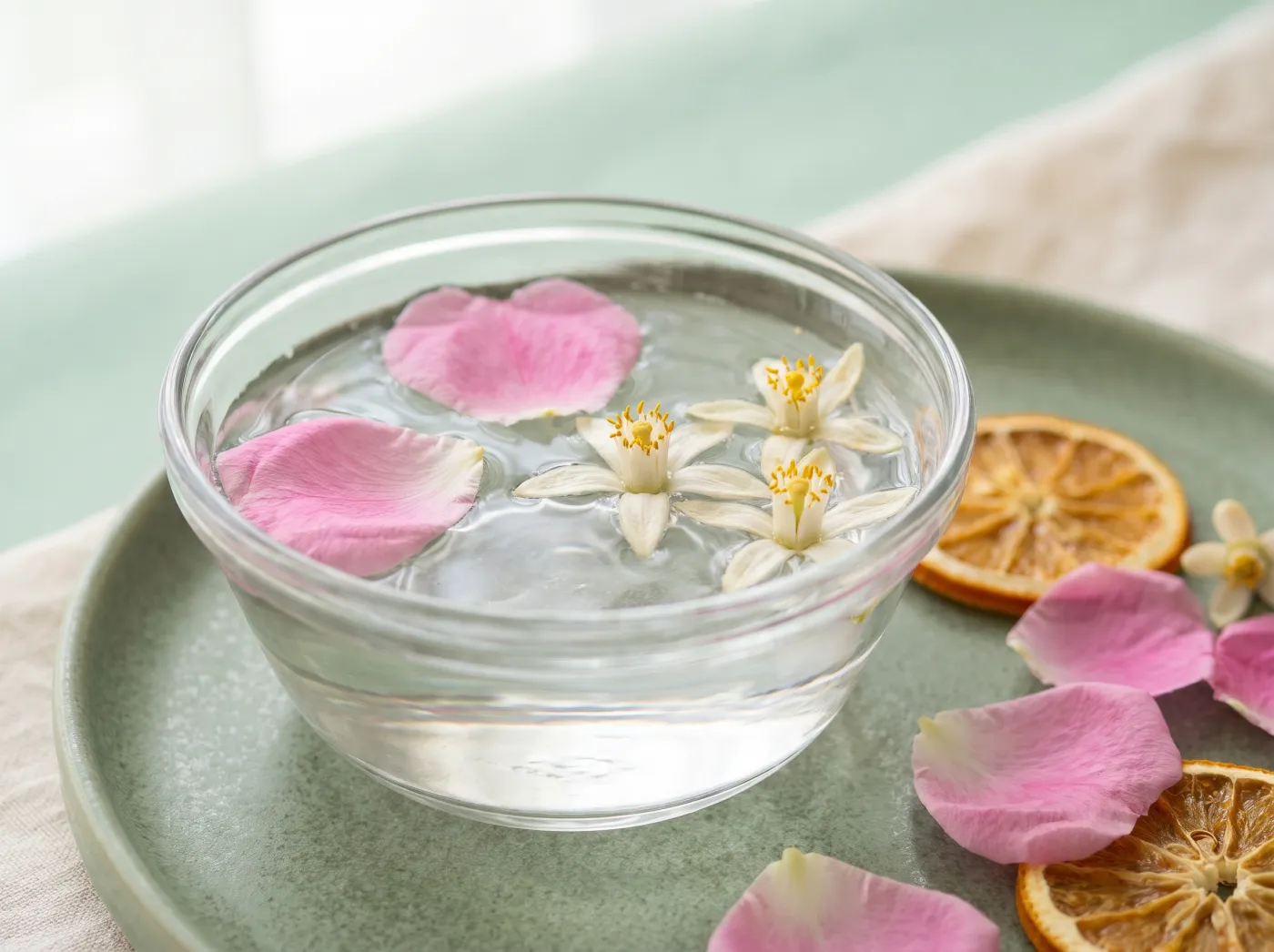
Clear floral water in a glass bottle, macro view on a sage green ceramic surface

Hydrosol at a glance (ingredient family)

Entry from our cosmetic ingredient glossary. A hydrosol is a family of ingredients, not a single substance: each plant has its own CosIng entry1, with no common identifier. Examples from CosIng1 and from our catalog; copy the INCI format for your files.

INCI format
<PLANT> FLOWER WATERor " LEAF WATER" depending on the distilled part: one INCI name per plant, never "hydrosol" on the label1
Carmel example: rose
ROSA DAMASCENA FLOWER WATERDamask rose water: dedicated glossary page
Carmel example: orange blossom
CITRUS AURANTIUM DULCIS FLOWER WATERINCI from the Carmel glossary. The studies cited concern Citrus aurantium ssp. amara4: the species is confirmed on the batch specification
Carmel example: chamomile
CHAMOMILLA RECUTITA FLOWER WATERChamomile hydrosol, CAS 84082-60-0 and EC 282-006-5 in CosIng1
CAS number
Varies by plantOne number per floral water, for example 84776-23-8 for CALENDULA OFFICINALIS FLOWER WATER or 84082-58-6 for ORIGANUM MAJORANA LEAF WATER1
EC number
Varies by plantFor example 283-949-5 for calendula1
Origin
Steam distillation of an aromatic plantCo-product of essential oil extraction3. Aqueous solution containing traces of essential oil and water-soluble compounds3
Composition
Variable: plant, distillation time, plant to water ratioMedian essential oil contents of 677 mg/L (orange blossom), 205 mg/L (Damask rose) and 116 mg/L (centifolia rose) across 22 samples4
CosIng functions
Vary by plantFragrance for chamomile and calendula, skin conditioning for marjoram, humectant and skin conditioning for bay laurel1
Preservation
Not sterile: preservative or aseptic packagingIn the 22 hydrosols stored in a non-sterile container, microbial growth was observed, including at 5 °C4
EU status
No status of its own: check plant by plantSome hydrosols are named in annex III: Pinus sylvestris Leaf Water (entry 110), Cedrus atlantica Bark Water (122), Cupressus sempervirens Leaf Water (123)2
Allergen to declare
Depends on the plant and the batchIf a substance from the annex III list (for example linalool, geraniol or citronellol) exceeds 0.001% in leave-on or 0.01% in rinse-off products, it must be declared2. Entry 122 names Atlas cedar bark water specifically2
Safety
Assessed plant by plantThe CIR panel judged peppermint leaf water safe with pulegone limited to 1%8

What the research says

Each result shows the protocol and the level of evidence. The higher the level, the better the result carries over to a finished formula.

Clinical trialReview or consensusLaboratory

Composition and manufacturingRaw material

An essential oil co-product, to be standardized

Review
2024 review

Hydrosols are aqueous solutions containing traces of essential oil and water-soluble compounds. Their composition depends on distillation time and plant to water ratio, hence the need for standardization and quality control3.

A highly variable essential oil content

Laboratory
22 samplesOrange blossom, Damask rose, centifolia rose

Medians are 677 mg/L for orange blossom, 205 mg/L for Damask rose and 116 mg/L for centifolia rose. A study by a distiller4.

Composition and activity specific to each plant

Laboratory
Rosemary, sage, cypressLaboratory analyses

The three hydrosols were analyzed by GC-MS, NMR and LC-MS. All showed free radical scavenging activity in vitro; the antifungal effect is weak, clearer for sage and rosemary6.


PreservationMicrobiology

All non-sterile samples get contaminated

Laboratory
22 hydrosolsStorage at room temperature and at 5 °C

Counts reach about 7 log CFU/mL, versus 2 log recommended by the French pharmacopoeia. The bacteria are Gram-negative environmental species (Pseudomonas, Burkholderia cepacia complex). The essential oil content is not enough to stabilize them: preservatives or aseptic packaging are needed. A study by a distiller4.

Lavender hydrosol in a gel: a help, not a preservative

Laboratory
4 lavender hydrosolsMoisturizing gelsEuropean Pharmacopoeia preservation test

The hydrosols alone have no notable antimicrobial action at dilution. In the gel, the one made from dried flowers meets criterion A for fungi and criterion B for bacteria; the one made from fresh herb only meets criterion B. They can contribute to stability without guaranteeing it5.

SafetyToxicology

Rose hydrosols at 6-20%: no marked toxicity in the laboratory

Laboratory
Rosa damascena, alba, centifolia, gallicaPlant, mice, human lymphocytes6 to 20%

Neither significant cytotoxicity nor genotoxicity: the genotoxic risk is judged low79. These tests do not cover skin tolerance.

Peppermint water: judged safe, pulegone limited

Review
2001 CIR reportOil, extract, leaf and leaf water

Peppermint water is described as a flavoring or fragrance agent, then not used. The group is judged safe if pulegone stays at 1% or less8.

This page summarizes published literature on a family of cosmetic ingredients. It does not describe the effect of a finished product, which depends on its formula, and it is not medical advice. Studies on hydrosols are mostly composition and microbiology analyses. No clinical skin trial on a cosmetic hydrosol was kept: this page does not document any effect on the skin.

Which products can use hydrosol?

Our white label catalog includes 10 formulas with hydrosol: the key active in 5 of them, a supporting ingredient in the others. Every category can be customized (formula, fragrance, packaging).

6Face

Water base of toners, mists and masks: the hydrosol replaces part of the water of the formula.

4Body

Rose and orange blossom waters in body lotions and milks, intimate mists and black soaps.

In our formulas, it is most often paired with

Panthenol 6Aloe vera 4Licorice extract 4Chamomile 3Niacinamide 3

Frequently asked questions about hydrosol

What is a hydrosol?
It is the aromatic water collected during the steam distillation of a plant, a co-product of essential oil3. It contains less than 1 g/L of dispersed essential oil, plus water-soluble compounds34.
Hydrosol, floral water, rose water: are they the same thing?
"Hydrosol" and "floral water" name the same type of product, other common names being aromatic distilled water3. Rose water is one of them, Damask rose water at Carmel, like orange blossom water. Only the INCI list, for example ROSA DAMASCENA FLOWER WATER, tells you what a product contains.
What INCI name does a hydrosol have on the label?
There is no "hydrosol" INCI name: each plant has its own, in the format "PLANT FLOWER WATER" or "PLANT LEAF WATER" depending on the distilled part. CosIng lists for example CHAMOMILLA RECUTITA FLOWER WATER or ORIGANUM MAJORANA LEAF WATER1. There is no common CAS or EC number.
Why does a hydrosol need preserving?
Because it is not sterile: microbial growth was observed in all 22 orange blossom and rose hydrosols stored in a non-sterile container, including at 5 °C. Essential oil contents are not enough to stabilize them; preservatives or aseptic packaging are required4. The preservation of a finished product is validated with a preservative efficacy test.
What are the benefits of a hydrosol for skin?
The sources we kept document no clinical skin trial on a cosmetic hydrosol: they cover composition, preservation and laboratory toxicology3467. In formulation, a hydrosol brings a scented water base; in a lavender gel, it contributed to microbiological stability without guaranteeing it5.
Can a hydrosol contain allergens?
Yes, depending on the plant, the batch and the essential oil composition. If a substance from the annex III list, for example linalool, exceeds 0.001% in a leave-on product or 0.01% in a rinse-off product, it must be declared2. Some hydrosols, like Atlas cedar bark water, are even named in this annex2.
Can you manufacture a lotion or a hydrosol for my brand?
Yes. Our ISO 22716 certified lab offers 10 formulas based on hydrosols or floral waters (toners, mists, body care, black soaps, pure hydrosols) to customize, or a custom formula. Free samples are included.

Sources

Peer-reviewed studies and official regulatory sources, checked on November 3, 2026.

  1. European Commission. CosIng, entries CHAMOMILLA RECUTITA FLOWER WATER (CAS 84082-60-0, EC 282-006-5), CALENDULA OFFICINALIS FLOWER WATER (CAS 84776-23-8, EC 283-949-5), ORIGANUM MAJORANA LEAF WATER (CAS 84082-58-6) and LAURUS NOBILIS LEAF WATER (CAS 94603-73-6). ec.europa.eu/growth/tools-databases/cosing

  2. Regulation (EC) No 1223/2009 of the European Parliament and of the Council on cosmetic products, consolidated version of May 1, 2025: annex III, entries 110 (Pinus sylvestris Leaf Water), 122 (Cedrus atlantica Bark Water) and 123 (Cupressus sempervirens Leaf Water); allergen declaration thresholds (0.001% leave-on, 0.01% rinse-off). eur-lex.europa.eu
  3. Almeida HHS, Fernandes IP, Amaral JS, et al. Unlocking the potential of hydrosols: transforming essential oil byproducts into valuable resources. Molecules. 2024;29(19):4660. doi:10.3390/molecules29194660
  4. Labadie C, Ginies C, Guinebretiere MH, et al. Hydrosols of orange blossom (Citrus aurantium), and rose flower (Rosa damascena and Rosa centifolia) support the growth of a heterogeneous spoilage microbiota. Food Res Int. 2015;76(Pt 3):576-586. doi:10.1016/j.foodres.2015.07.014Albert Vieille SAS (distiller)
  5. Kunicka-Styczyńska A, Śmigielski K, Prusinowska R, et al. Preservative activity of lavender hydrosols in moisturizing body gels. Lett Appl Microbiol. 2015;60(1):27-32. doi:10.1111/lam.12346
  6. Politi M, Ferrante C, Menghini L, et al. Hydrosols from Rosmarinus officinalis, Salvia officinalis, and Cupressus sempervirens: phytochemical analysis and bioactivity evaluation. Plants (Basel). 2022;11(3):349. doi:10.3390/plants11030349
  7. Gerasimova T, Jovtchev G, Gateva S, et al. Study on cytotoxic and genotoxic potential of Bulgarian Rosa damascena Mill. and Rosa alba L. hydrosols: in vivo and in vitro. Life (Basel). 2022;12(9):1452. doi:10.3390/life12091452
  8. Gateva S, Jovtchev G, Angelova T, et al. Genotoxic and anti-genotoxic potential of hydrosols from water-steam distillation of oil-bearing roses Rosa centifolia L. and Rosa gallica L. from Bulgaria. Pharmaceuticals (Basel). 2024;17(5):657. doi:10.3390/ph17050657
  9. Nair B (Cosmetic Ingredient Review Expert Panel). Final report on the safety assessment of Mentha piperita (peppermint) oil, Mentha piperita (peppermint) leaf extract, Mentha piperita (peppermint) leaf, and Mentha piperita (peppermint) leaf water. Int J Toxicol. 2001;20(Suppl 3):61-73. PMID 11766133
Carmel Cosmetics Labs product specialist with a brand founder

Tell us about your project

A product specialist reviews your request and gets back to you on the channel you prefer.

Lead EN – Demande de devis
Tell us about your project. A product specialist will get back to you shortly.
CONTACT INFORMATION
Name
PROJECT INFORMATION
Which cosmetics category interests you most?

By submitting this form, you agree to our terms of service and privacy policy.

No obligation. Your information stays confidential and is used only to prepare your quote.