Services

Torn between two services?A project manager will guide you

Catalog

Explore the full catalog1,000+ formulas ready to carry your brand

Face careFull range

Serums, creams and targeted care, formulated with your actives.

Body careFull range

Moisturizing, nourishing and shower care: cream, butter or oil.

Specialty careFull range

Sun care, lips, intimate care and oral care.

Men, baby, makeupFull range

Shaving and beard, baby and mom, makeup.

Industries

All solutions by industryFormulas and formats for your business

Our brands

Our own brands, developed and made in our laboratory.

Become a distributor of our brandsPharmacies, spas, shops and wholesalers

Laboratory

Cosmetics manufacturing room with a row of stainless-steel mixers and an operator in white workwearOur factory in Aït MelloulISO 22716 and ISO 9001, visits by appointmentDiscover the factory

Resources

Titanium dioxide (CI 77891)

Titanium dioxide is a white inorganic oxide, a UV filter (Annex VI) and the colorant CI 77891 (Annex IV)12. The regulation allows it up to 25% as a filter, including nano under conditions of purity, crystal form and size2. Applications that expose the lungs through inhalation are excluded for the nano form, and fine powders are regulated separately2.

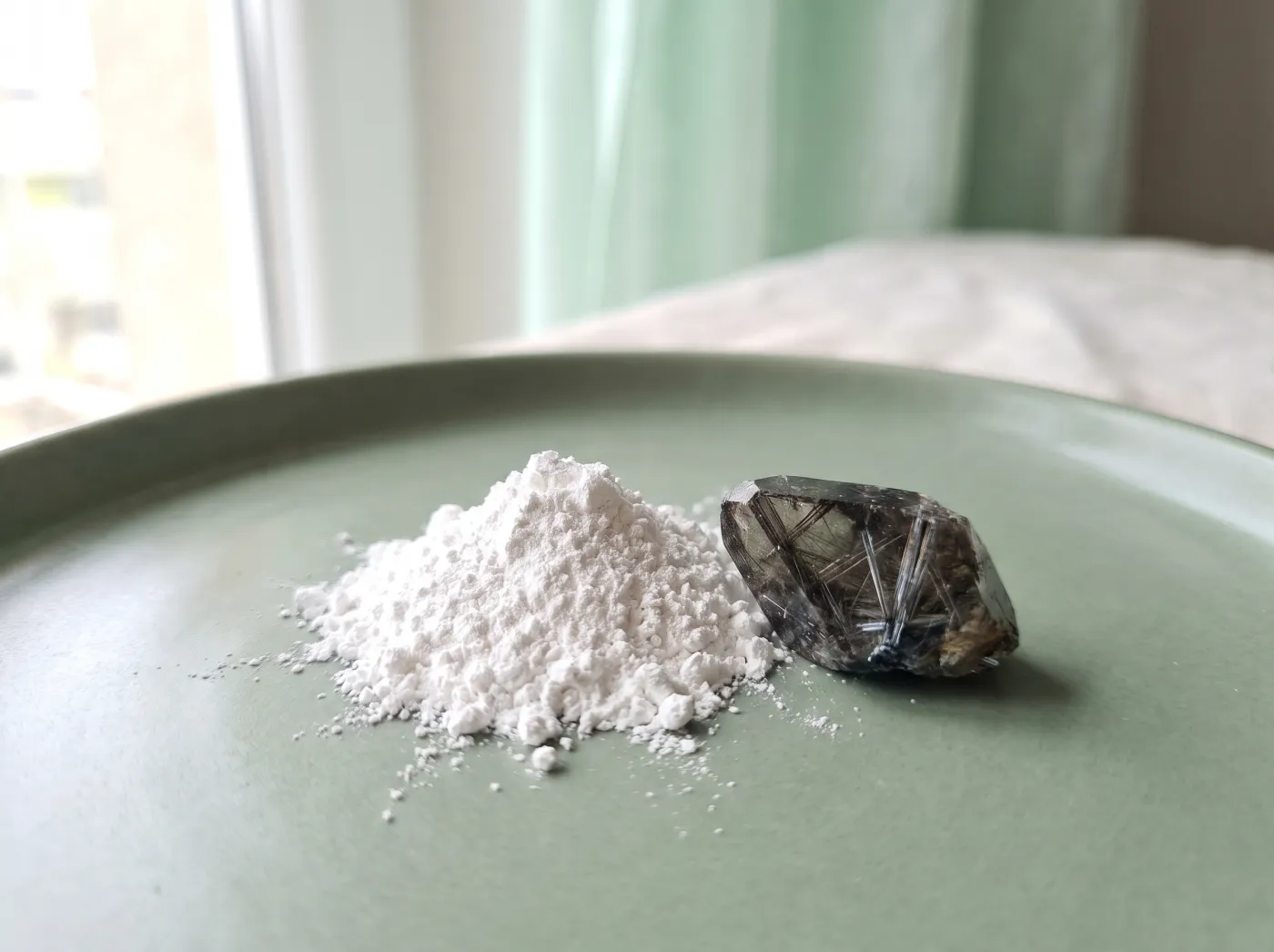
White titanium dioxide powder in macro view on a sage green ceramic surface

Titanium dioxide at a glance

Entry from our cosmetic ingredient glossary. Regulatory data from the European Commission's CosIng database1 and Regulation (EC) 1223/20092, read in its version consolidated on May 1, 2025. Copy the identifiers in one click for your files.

INCI name
TITANIUM DIOXIDEFor labeling as a colorant, the INCI name to use is CI 778911
Other names
CI 77891"Titanium dioxide (CI 77891)" in CosIng1; "Titanium dioxide (nano)" for the nano form in Annex VI2
CAS number
13463-67-7Annex VI also cites CAS 1317-70-0 and 1317-80-22
EC number
236-675-5Annex VI also cites 215-280-1 and 215-282-22
Formula
TiO₂Inorganic oxide1
CosIng function
UV filter, UV absorber, colorant, opacifying"UV filter", "UV absorber", "Colorant" and "Opacifying" in the European nomenclature1
EU status: UV filter
Authorized up to 25%Annex VI, entry 27 (standard form) and 27 bis (nano, noted 27a in CosIng): 25% in the ready-for-use preparation. If both forms are combined, the sum does not exceed 25%12
EU status: colorant
Authorized (Annex IV, entry 143)White colorant CI 77891. Purity criteria of Directive 95/45/EC (E 171)2
Inhalation
No application exposing the lungsEntry VI/27 bis (nano): "not to be used in applications that may lead to exposure of the end-user's lungs by inhalation"2. The SCCS issued opinions on the nano form in sprays (referenced in CosIng)1
Fine powders
Annex III, entry 321Titanium dioxide powder containing 1% or more of particles with an aerodynamic diameter ≤ 10 µm. a) loose-powder face products: 25%; b) aerosol hair products: 1.4% (general public) or 1.1% (professional use), a) and b) only in pigmentary form; c) other products: not to be used in applications that may expose the lungs by inhalation2
Conditions for the nano form
Entry VI/27 bisPurity ≥ 99%; rutile, or rutile with up to 5% anatase, in spherical, needle-shaped or lanceolate aggregates; median size ≥ 30 nm (number distribution); aspect ratio from 1 to 4.5 and volume-specific surface area ≤ 460 m²/cm³; listed coatings (silica, alumina, silanes, dimethicone, glycerin, stearic acid...); photocatalytic activity ≤ 10% of the uncoated reference; photostability in the final formula. Alumina + manganese dioxide combinations are not used on the lips2. The name is followed by [nano] in the ingredient list2
Allergen to declare
NoAbsent from the list of allergenic fragrance substances of Regulation 2023/15453
Safety
Four SCCS opinions referencedThree of them cover the nano form (sprays, coatings)1. According to the 2019 review, no risk for skin application up to 25%4

What the research says

Each result shows the protocol and the level of evidence. The higher the level, the better the result carries over to a finished formula.

Clinical trialReview or consensusLaboratory

Sun protectionUV filters

Less long-wave UVA attenuation than zinc oxide

Laboratory and human skin
Model formulas: 5% titanium dioxide, 5% zinc oxide, 3% avobenzoneIn vitro absorbance and UVA protection factor on human skinAuthors linked to a consumer health manufacturer

Titanium dioxide at 5% attenuates UVA beyond 360 nm less than zinc oxide at 5% or avobenzone at 3%. At a comparable sun factor, its products have lower UVA factors. The authors conclude that it replaces neither one for a high level of UVA protection5.

At 25%, UVA efficacy close to the best organic filter tested

Laboratory
Oil-in-water emulsion, in vitro testSeven organic UVA filters, coated forms of titanium dioxideTitanium dioxide at 25%

The best organic UVA filter tested (anisotriazine at 10%) reaches a PF-UVA of 11.82, comparable to the forms of titanium dioxide used at 25%. Depending on the filter chosen, creams are more or less effective6.

Measuring the sun factor varies from one laboratory to another

Clinical trial
32 products, 12 laboratoriesMulticenter trial, ISO 24444 standard

Variability between laboratories is proportional to the factor: the higher it is, the greater the dispersion. The authors judge it greater than the public and regulators expect7. A product's factor therefore depends on its formula and the test method, not on a single filter.

Safety and inhalationReviews and assessments

Safe on skin up to 25%, not recommended where it can be inhaled

Review (industry co-author)
2019 review on nano titanium dioxideSCCS opinions summarized

Most human and animal studies show that nano titanium dioxide does not go beyond the outer layers of the skin and does not reach the systemic circulation, on healthy or damaged skin. The SCCS considers it non-sensitizing, at most weakly irritating, with no evidence of carcinogenicity by the skin route. It presents no risk on skin up to 25%, but the SCCS does not recommend its use in formulations that may expose the lungs (sprays, powders), because lung inflammation is reported in animals4.

Nanoparticles stay on the skin surface

Review
2015 reviewMetal oxide nanoparticles in sunscreens

All the studies conclude that the overwhelming majority of nanoparticles stays on the surface. Any passage into living skin gives mixed results, because of very different protocols8.

Lung carcinogenicity: insufficient mechanistic evidence

Systematic review
346 studies assessed, 206 of good qualityTitanium dioxide nanoparticles, in vitro and in vivo

The studies mostly give moderate to high confidence for genotoxicity, oxidative stress and chronic inflammation. The authors conclude that the nanoparticles could induce chronic inflammation and oxidative stress, but that mechanistic evidence for lung carcinogenicity is insufficient, because of the wide variety of particles and protocols9. It is for this route, inhalation, that the regulation sets restrictions.

No difference in profile between nano and micro, according to industry authors

Review (industry authors)
2012 reviewAuthors working for a cosmetics manufacturer

According to this review, insoluble nanoparticles of titanium dioxide and zinc oxide do not cross human skin, with no safety difference between micro and nano forms10. The authors work for a cosmetics manufacturer.


This page summarizes published literature on a cosmetic ingredient. It does not describe the effect of a finished product, which depends on its formula, and it is not medical advice. Titanium dioxide is a UV filter and a colorant: a product's protection factor depends on its whole formula and the measurement method, and no factor is promised here. Several sources are authored by manufacturers, which the source list indicates.

Concentrations used in studies

No trial cited compares several concentrations within the same formula. The model UVA study uses 5%5 and one in vitro trial 25%6. The regulation sets 25% as the maximum for a UV filter, standard and nano forms added together2. The factor obtained depends on the formula tested, not on content alone.

Which products use titanium dioxide?

Our white label catalog includes 3 formulas with titanium dioxide: the key active in 1 of them, a supporting ingredient in the others. Every category can be customized (formula, fragrance, packaging).

3Body

Mineral filter, with zinc oxide, in a mineral sunscreen cream, a tinted fluid and a tinted serum from the catalog.

In our formulas, it is most often paired with

Aloe vera 3Argan oil 3Zinc oxide 2Licorice extract 1

Titanium dioxide, zinc oxide or organic filters?

The choice between mineral and organic filters is made formula by formula. Here is what the sources say, with no promise of a factor.

Titanium dioxideZinc oxideOrganic filters
NatureInorganic oxide1Inorganic oxide11Organic molecules (avobenzone, octocrylene, homosalate...)12
Annex VIEntries 27 and 27 bis (nano): 25%2Entries 30 and 30a (nano): 25%2One entry per filter, with its own limit2
UVA in the laboratoryAt 5%, less attenuation beyond 360 nm5At 5%, better attenuation than titanium dioxide5Photostabilized avobenzone at 3%: superior to titanium dioxide at 5%5
Inhalation and powdersNano form: no application exposing the lungs; fine powders separately (Annex III, 321)2No application exposing the lungs2Condition specific to each entry, for example "not to be used in sprays" for tris-biphenyl triazine2
Other useColorant CI 77891 (Annex IV, 143)2Colorant CI 77947 (Annex IV, 144)2No colorant role

Frequently asked questions about titanium dioxide

What is titanium dioxide?
It is a white inorganic oxide (CAS 13463-67-7), declared TITANIUM DIOXIDE on the label, or CI 77891 when it is used as a colorant. In CosIng, its functions are UV filter, UV absorber, colorant and opacifying1.
Is titanium dioxide safe?
On skin, the 2019 review reports that nano titanium dioxide does not go beyond the outer layers and that, according to the SCCS, it presents no risk up to 25%4. The sensitive point is inhalation: the SCCS does not recommend its use in formulations that may expose the lungs, and the regulation excludes the nano form from applications of that type24. A 2024 systematic review judges the mechanistic evidence for lung carcinogenicity insufficient9. The status of titanium dioxide as a food additive falls under another regulation.
Can you use nano titanium dioxide?
Yes, under conditions: entry VI/27 bis, purity ≥ 99%, rutile (up to 5% anatase), median size ≥ 30 nm, listed coatings, photocatalytic activity ≤ 10% of the reference, photostability, and no application exposing the lungs2. The name is followed by [nano] in the ingredient list2.
Can you use it in a powder or a spray?
Powders containing 1% or more of particles with an aerodynamic diameter ≤ 10 µm fall under Annex III, entry 321: 25% for loose face powders and 1.4% (1.1% for professional use) for aerosol hair products, in pigmentary form; other products must not expose the lungs2. The regulation also excludes the nano form from any application exposing the lungs2.
What does CI 77891 mean?
It is the name of titanium dioxide when it is used as a white colorant, Annex IV entry 143, with the purity criteria of Directive 95/45/EC (E 171)12. On the label, you read CI 77891 for the colorant and TITANIUM DIOXIDE for the UV filter1.
What percentage of titanium dioxide should a sun care product contain?
The limit is 25% for the UV filter, standard and nano forms added together2. One in vitro trial used it at 25%6 and the model UVA study at 5%5. The content is set with the formulator, depending on the formula.
What sun protection factor can you aim for with titanium dioxide?
No factor can be promised from a single ingredient. The factor depends on the formula tested and the method: dispersion between laboratories is greater than expected7, and titanium dioxide attenuates long-wave UVA less than zinc oxide in the model study5. It is measured on the finished product.
Can you manufacture a mineral sun care product for my brand?
Yes. Our ISO 22716 certified lab offers 3 formulas containing titanium dioxide (sunscreen cream, fluid and serum) to customize, or a custom formula. Free samples are included.

Sources

Peer-reviewed studies and official regulatory sources, checked on November 3, 2026.

  1. European Commission. CosIng, entry TITANIUM DIOXIDE (CAS 13463-67-7, EC 236-675-5). ec.europa.eu/growth/tools-databases/cosing
  2. Regulation (EC) No 1223/2009 of the European Parliament and of the Council of 30 November 2009 on cosmetic products (text consolidated on May 1, 2025). eur-lex.europa.eu
  3. Commission Regulation (EU) 2023/1545 of 26 July 2023 as regards labelling of fragrance allergens in cosmetic products. eur-lex.europa.eu
  4. Dréno B, Alexis A, Chuberre B, Marinovich M. Safety of titanium dioxide nanoparticles in cosmetics. J Eur Acad Dermatol Venereol. 2019;33 Suppl 7:34-46. doi:10.1111/jdv.15943L'Oréal (co-author)
  5. Beasley DG, Meyer TA. Characterization of the UVA protection provided by avobenzone, zinc oxide, and titanium dioxide in broad-spectrum sunscreen products. Am J Clin Dermatol. 2010;11(6):413-421. doi:10.2165/11537050-000000000-00000Merck Consumer Care
  6. Couteau C, El-Boury S, Paparis E, Sébille-Rivain V, Coiffard LJ. In vitro UV-A protection factor (PF-UVA) of organic and inorganic sunscreens. Pharm Dev Technol. 2009;14(4):369-372. doi:10.1080/10837450802683966
  7. Cole C, Colson B, Uhlig S. The variability of in vivo sunscreen sun protection factor values. Int J Cosmet Sci. 2025;47 Suppl 1:25-36. doi:10.1111/ics.70000
  8. Gulson B, McCall MJ, Bowman DM, Pinheiro T. A review of critical factors for assessing the dermal absorption of metal oxide nanoparticles from sunscreens applied to humans, and a research strategy to address current deficiencies. Arch Toxicol. 2015;89(11):1909-1930. doi:10.1007/s00204-015-1564-z
  9. Wolf S, Sriram K, Camassa LMA, et al. Systematic review of mechanistic evidence for TiO2 nanoparticle-induced lung carcinogenicity. Nanotoxicology. 2024;18(5):437-463. doi:10.1080/17435390.2024.2384408
  10. Nohynek GJ, Dufour EK. Nano-sized cosmetic formulations or solid nanoparticles in sunscreens: a risk to human health?. Arch Toxicol. 2012;86(7):1063-1075. doi:10.1007/s00204-012-0831-5L'Oréal (authors)
  11. European Commission. CosIng, entry ZINC OXIDE (CAS 1314-13-2, EC 215-222-5). ec.europa.eu/growth/tools-databases/cosing
  12. Matta MK, Florian J, Zusterzeel R, et al. Effect of sunscreen application on plasma concentration of sunscreen active ingredients: a randomized clinical trial. JAMA. 2020;323(3):256-267. doi:10.1001/jama.2019.20747
Carmel Cosmetics Labs product specialist with a brand founder

Tell us about your project

A product specialist reviews your request and gets back to you on the channel you prefer.

Lead EN – Demande de devis
Tell us about your project. A product specialist will get back to you shortly.

CONTACT INFORMATION
Name
PROJECT INFORMATION
Which cosmetics category interests you most?

By submitting this form, you agree to our terms of service and privacy policy.

No obligation. Your information stays confidential and is used only to prepare your quote.