











































Limonene leads, but proportions vary
LaboratoryIn one, limonene reaches 60.7%, ahead of β-pinene (12.6%) and γ-terpinene (10.3%)9. In the other, it is 39.7% and β-pinene 25.4%, with 21 components identified10.
Services
Catalog
Explore the full catalog1,000+ formulas ready to carry your brandFace careFull range
Serums, creams and targeted care, formulated with your actives.
Hair careFull range
From shampoo to leave-in, for every hair type.
Body careFull range
Moisturizing, nourishing and shower care: cream, butter or oil.
Hammam and naturalFull range
Black soap, argan and authentic Moroccan rituals.
Specialty careFull range
Sun care, lips, intimate care and oral care.
Industries
All solutions by industryFormulas and formats for your businessHospitality and wellness
Brands and creators
Our brands
Our own brands, developed and made in our laboratory.

 DermocosmeticsSublime CosmeticsFace, sun and body care for pharmacies and drugstores.Visit the website

 Hammam and spaLalla MamaMoroccan hammam rituals: black soap, rhassoul, oils and body care.Visit the website

 Equine careStallionGrooming care for horses: mane, coat and hooves.Visit the website
Laboratory
 Our factory in Aït MelloulISO 22716 and ISO 9001, visits by appointmentDiscover the factory
Cosmetics manufacturer based in Agadir
500+ brands35+ countries1,000+ formulas
Our factory in Aït Melloul
Up to 3 million units a yearVisits by appointment
Contract manufacturing, step by step
RegulationsCostsProject steps
Join our teams in Agadir
FormulationProductionQualityRegulatorySales
Resources
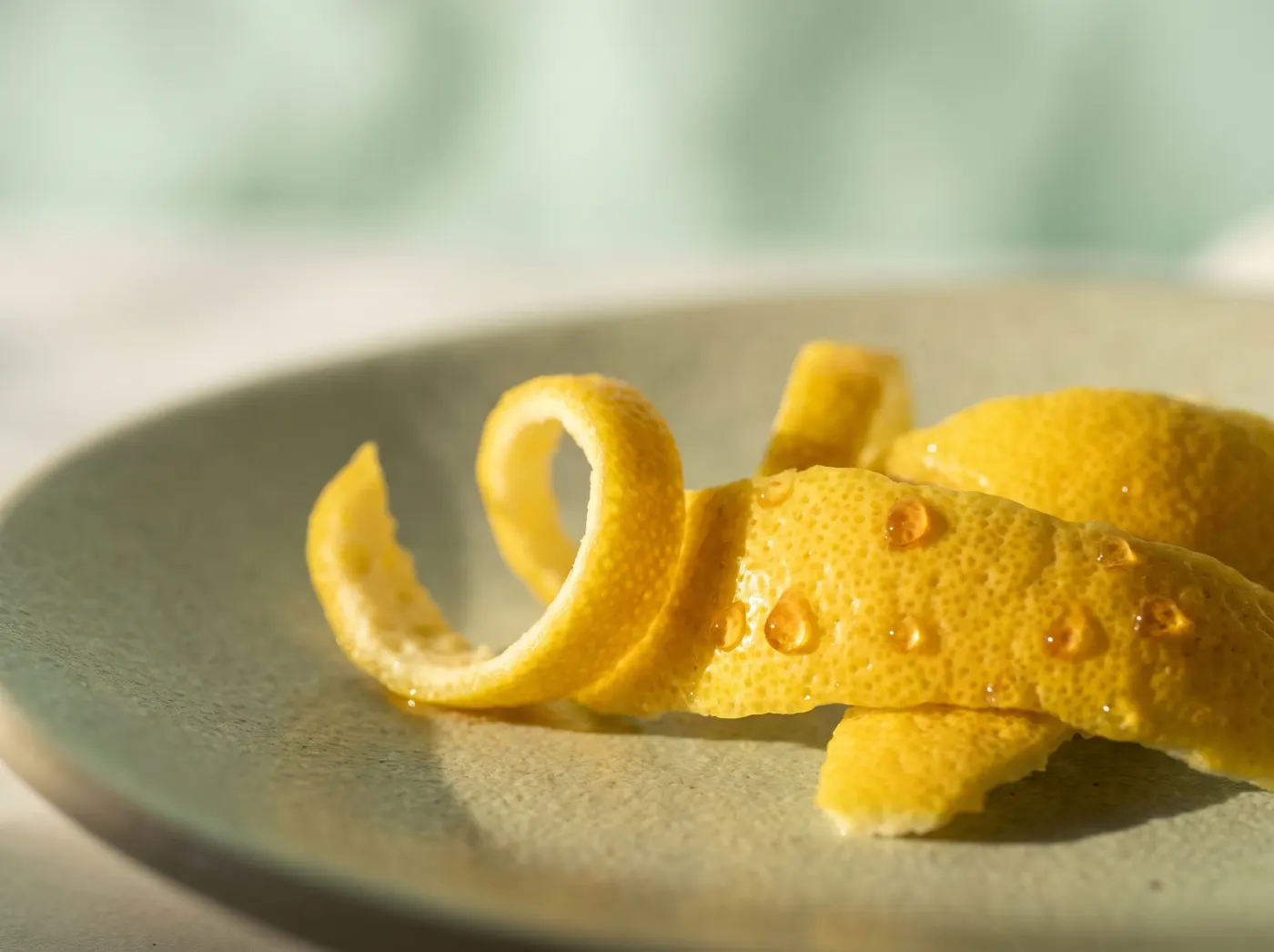
Lemon essential oil is the volatile oil obtained from the fruit of Citrus limon1. It is rich in limonene9 and contains furocoumarins, responsible for its phototoxicity4. It is named in Annex III of Regulation (EU) 2023/1545 (line 353)2 and, for its furocoumarins, falls under Annex II (line 358)3.
Entry from our cosmetic ingredient glossary. Regulatory data from the European Commission's CosIng database1 and from Regulations (EU) 2023/15452 and 1223/2009 consolidated3. Copy the identifiers in one click for your files.
Each result shows the protocol and the level of evidence. The higher the level, the better the result carries over to a finished formula.
In one, limonene reaches 60.7%, ahead of β-pinene (12.6%) and γ-terpinene (10.3%)9. In the other, it is 39.7% and β-pinene 25.4%, with 21 components identified10.
A method separates and measures 15 furocoumarins of citrus oils; it can be run in a quality control lab equipped with an HPLC7.
Oxypeucedanin and bergapten explain almost all of the phototoxic activity. Their content varies more than 20-fold by origin (bergapten from 4 to 87 ppm, oxypeucedanin from 26 to 728 ppm) and their ratio is not constant. Oxypeucedanin is four times less potent than bergapten4.
The EFSA panel classifies pressed lemon oil and its fractions as irritating to skin, eyes and airways, and as sensitizing. They contain furocoumarins and may cause phototoxicity. The opinion concerns animal feed5.
Notable differences appear between varieties and between origins of the same species. The abstract gives no content specific to lemon6.
The panel concludes the oils are safe if finished leave-on products do not exceed 0.0015% (15 ppm) of 5-methoxypsoralen and are formulated to be non-sensitizing and non-irritating8.
Exposed to air, limonene forms hydroperoxides that are far more sensitizing than the pure compound. Some of the positive tests may be irritant false positives11.
Tests with limonene hydroperoxides (0.3%) were positive in 170 people (3.1%), with many weak, doubtful or irritant reactions12.
This page summarizes published literature on a cosmetic ingredient. It does not describe the effect of a finished product, which depends on its formula, and it is not medical advice. Evidence is flagged by level: clinical trial, review or laboratory.
Our white label catalog includes 1 formula with lemon essential oil: the key active in 1 of them, a supporting ingredient in the others. Every category can be customized (formula, fragrance, packaging).
Fragrance of the cypress and lemon massage oil in the catalog, which combines the two essential oils.
In our formulas, it is most often paired with
Coconut oil 1Arnica extracts 1Argan oil 1Apricot kernel oil 1Horse chestnut 1Four citrus-scented oils often compared. Their chemistry differs, so do their labeling and their photosensitizing risk.
| Lemon | Sweet orange | Petitgrain bigarade | Litsea cubeba | |
|---|---|---|---|---|
| Dominant constituents | Limonene, β-pinene, γ-terpinene9 | Limonene | Linalool and linalyl acetate | Citral (neral and geranial) |
| Regulation (EU) 2023/1545 | Oil named (line 353)2 | Oil named (line 351)2 | Oil not named under its INCI2 | Oil not named; citral named (line 70)3 |
| Carmel catalog formulas | 1 formula | 1 formula | None | None |
Peer-reviewed studies and official regulatory sources, checked on November 3, 2026.

A product specialist reviews your request and gets back to you on the channel you prefer.