











































A triglyceride rich in linoleic acid
LaboratoryIn the sample analyzed, linoleic acid reaches 62.2% and oleic acid 28.0%. Saturated fatty acids account for 9.4% (palmitic 6.2%, stearic 2.8%)6.
Services
Catalog
Explore the full catalog1,000+ formulas ready to carry your brandFace careFull range
Serums, creams and targeted care, formulated with your actives.
Hair careFull range
From shampoo to leave-in, for every hair type.
Body careFull range
Moisturizing, nourishing and shower care: cream, butter or oil.
Hammam and naturalFull range
Black soap, argan and authentic Moroccan rituals.
Specialty careFull range
Sun care, lips, intimate care and oral care.
Industries
All solutions by industryFormulas and formats for your businessHospitality and wellness
Brands and creators
Our brands
Our own brands, developed and made in our laboratory.

 DermocosmeticsSublime CosmeticsFace, sun and body care for pharmacies and drugstores.Visit the website

 Hammam and spaLalla MamaMoroccan hammam rituals: black soap, rhassoul, oils and body care.Visit the website

 Equine careStallionGrooming care for horses: mane, coat and hooves.Visit the website
Laboratory
 Our factory in Aït MelloulISO 22716 and ISO 9001, visits by appointmentDiscover the factory
Cosmetics manufacturer based in Agadir
500+ brands35+ countries1,000+ formulas
Our factory in Aït Melloul
Up to 3 million units a yearVisits by appointment
Contract manufacturing, step by step
RegulationsCostsProject steps
Join our teams in Agadir
FormulationProductionQualityRegulatorySales
Resources
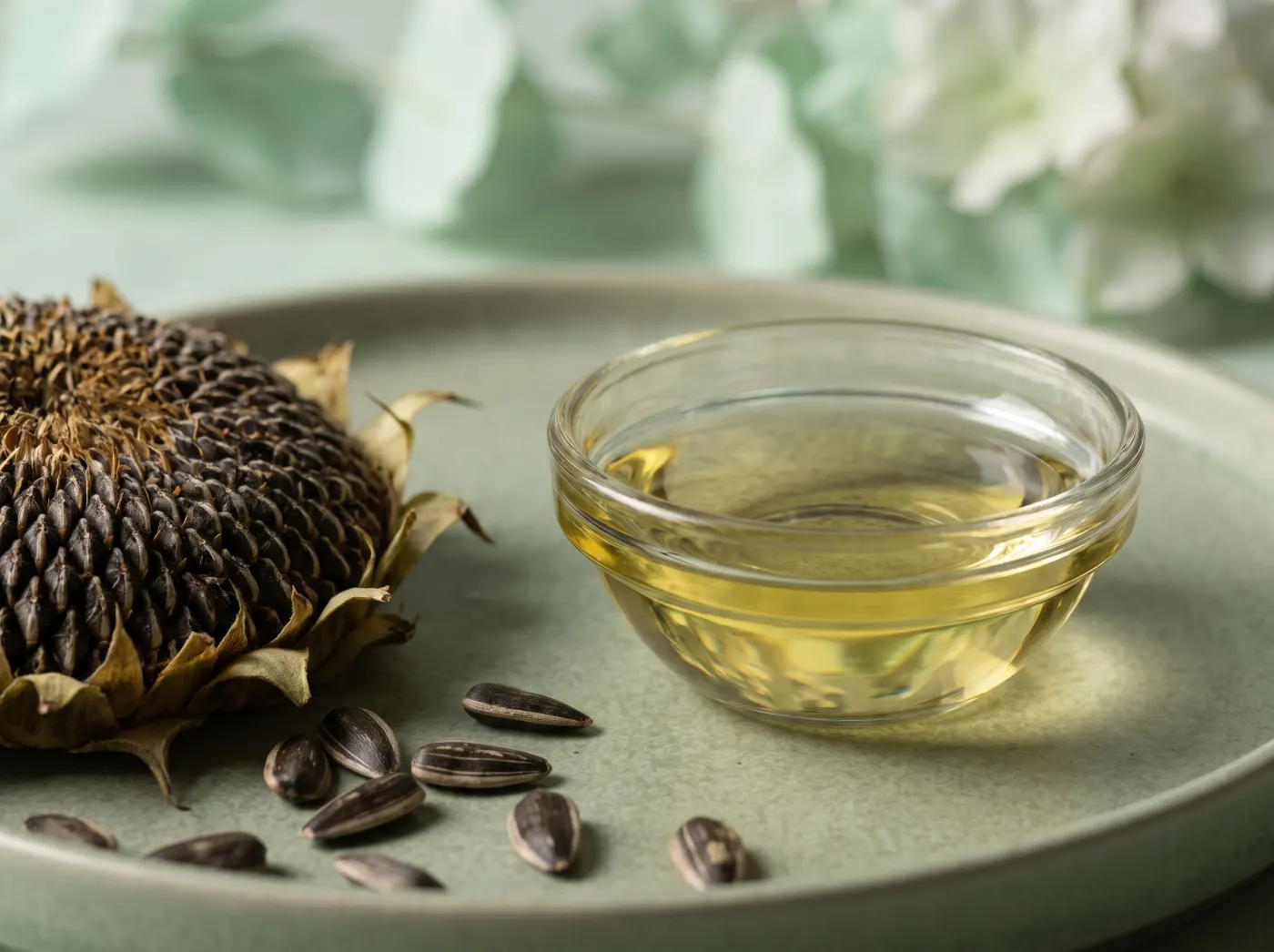
Sunflower oil is the fixed oil pressed from the seeds of Helianthus annuus9. In the sample analyzed, it contains 62.2% linoleic acid and 28.0% oleic acid6. CosIng classifies it as an emollient, occlusive and solvent9. In adults, it preserved the integrity of the stratum corneum and improved hydration in a forearm trial1.
Entry from our cosmetic ingredient glossary. Regulatory data from the European Commission's CosIng database9. Copy the identifiers in one click for your files.
Each result shows the protocol and the level of evidence. The higher the level, the better the result carries over to a finished formula.
In the sample analyzed, linoleic acid reaches 62.2% and oleic acid 28.0%. Saturated fatty acids account for 9.4% (palmitic 6.2%, stearic 2.8%)6.
The authors describe an oil rich in linoleic and oleic acids, whose effects on the barrier would work through the reorganization of lipid bilayers, ceramide synthesis and activation of the PPAR-α receptor. These are mechanisms proposed by the review3.
Applied to one forearm, sunflower oil preserved the integrity of the stratum corneum, caused no redness and improved hydration. On the other forearm, olive oil reduced the integrity of the stratum corneum and caused mild redness1.
On skin that is already weakened, oils rich in oleic acid and low in linoleic acid can worsen damage to the stratum corneum; those rich in linoleic acid or saturated fatty acids can have positive effects. On unaffected skin, an oleic-rich oil does not necessarily react negatively. Frequency and duration of use matter2.
Oils with a high linoleic acid/oleic acid ratio have a better potential for barrier repair; irritating oleic acid can harm it. Sunflower is among the oils reviewed4.
The review reports, in clinical trials, a drop in transepidermal water loss and better hydration on dry skin. It adds that oils rich in oleic acid or containing allergenic proteins can compromise the barrier3.
Sunflower oil is among the 19 oils and butters whose effects on skin application, notably on barrier repair, the review brings together5. Linoleic acid, the main component of this oil, is linked in the literature to barrier repair in animal or cell models7.
The expert panel concludes that the 244 vegetable oils assessed are safe as used in cosmetics. The review focused mainly on skin effects8.
This page summarizes published literature on a cosmetic ingredient. It does not describe the effect of a finished product, which depends on its formula, and it is not medical advice. Several of the studies cited were run or funded by industry; this is indicated in the sources.
Our white label catalog includes 7 formulas with sunflower oil: the key active in 1 of them, a supporting ingredient in the others. Every category can be customized (formula, fragrance, packaging).
Oil in the SPF 50 sun stick and the cedar-cinnamon and peppermint massage oils.
Four triglyceride oils measured in the same study. Sunflower and olive were also compared with each other on the forearm.
| Sunflower oil | Olive oil | Grapeseed oil | Sweet almond oil | |
|---|---|---|---|---|
| Linoleic acid | 62.2%6 | 16.4%6 | 74.7%6 | 22.8%6 |
| Oleic acid | 28.0%6 | 66.4%6 | 14.3%6 | 67.2%6 |
| Adult forearm stratum corneum | Integrity preserved1 | Integrity reduced1 | Not studied in our sources | Not studied in our sources |
| EU regulation | No restriction | No restriction | No restriction | No restriction |
| Carmel catalog formulas | 7 formulas | 13 formulas | 14 formulas | 74 formulas |
Peer-reviewed studies and official regulatory sources, checked on November 3, 2026.

A product specialist reviews your request and gets back to you on the channel you prefer.