Services

Torn between two services?A project manager will guide you

Catalog

Explore the full catalog1,000+ formulas ready to carry your brand

Face careFull range

Serums, creams and targeted care, formulated with your actives.

Body careFull range

Moisturizing, nourishing and shower care: cream, butter or oil.

Specialty careFull range

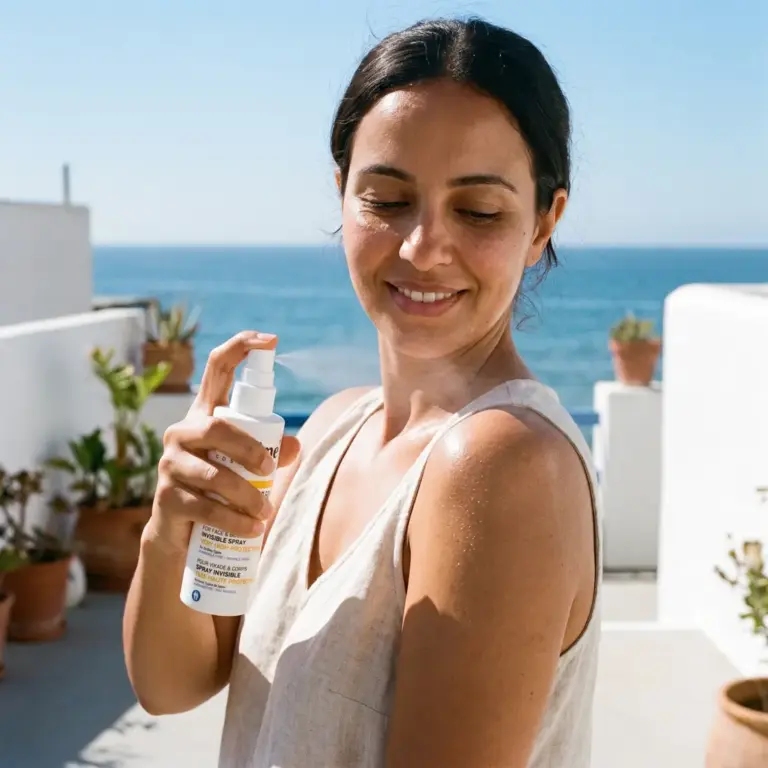
Sun care, lips, intimate care and oral care.

Men, baby, makeupFull range

Shaving and beard, baby and mom, makeup.

Industries

All solutions by industryFormulas and formats for your business

Our brands

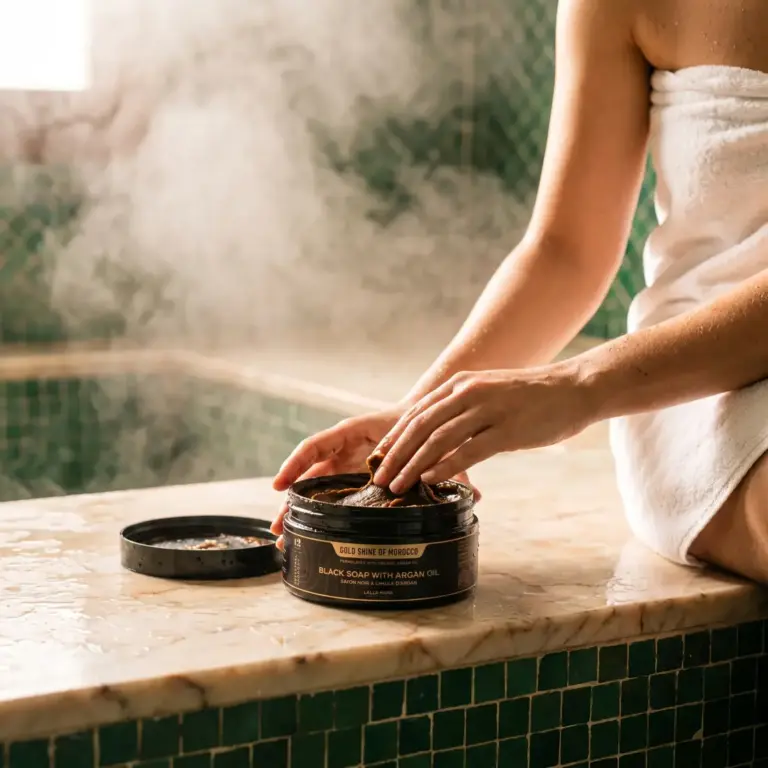
Our own brands, developed and made in our laboratory.

Become a distributor of our brandsPharmacies, spas, shops and wholesalers

Laboratory

Cosmetics manufacturing room with a row of stainless-steel mixers and an operator in white workwearOur factory in Aït MelloulISO 22716 and ISO 9001, visits by appointmentDiscover the factory

Resources

Coffee powder

Coffee powder is the ground seed of Coffea arabica, declared as an abrasive in CosIng1. It is not caffeine, which is an isolated molecule. Data specific to the powder are rare: one study on spent coffee grounds scrubs measures skin barrier tolerance2, and the reviews on cosmetic coffee rely mostly on laboratory work34.

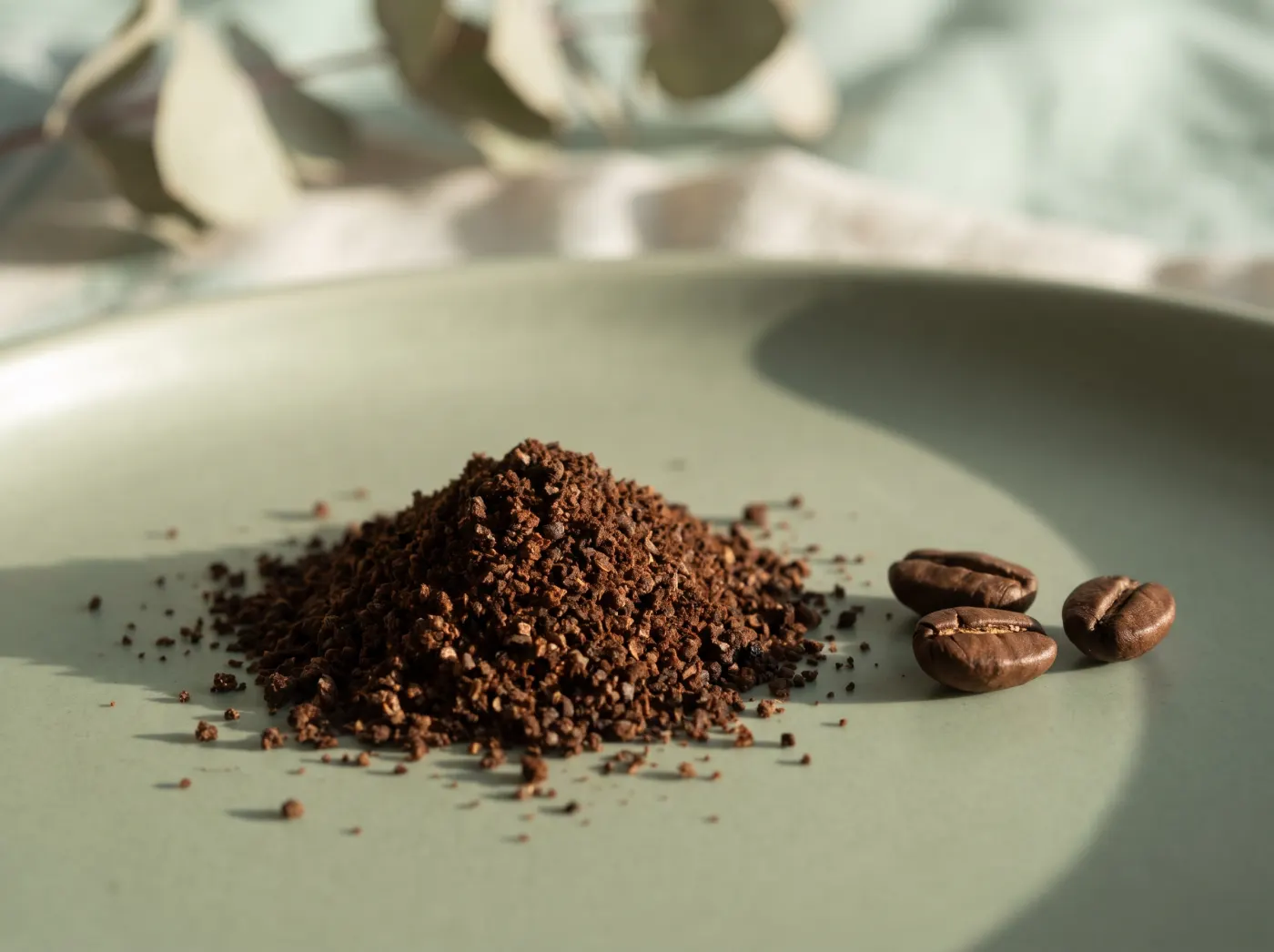
Brown coffee powder in macro view, fine grains on a sage green ceramic surface, raking light

Coffee powder at a glance

Entry from our cosmetic ingredient glossary. Regulatory data from the European Commission's CosIng database1. Copy the identifiers in one click for your files.

INCI name
COFFEA ARABICA SEED POWDERNot to be confused with caffeine (INCI CAFFEINE), an isolated molecule that has its own page11
Other names
Ground coffee, coffee groundsGrounds are the residue left after brewing; the 2025 study used spent grounds2
CAS number
84650-00-0
EC number
283-481-1
Botanical origin
Seed of the arabica coffee plant (Coffea arabica L., Rubiaceae)"Powder obtained from the dried, ground seeds of the Coffee plant"1
CosIng function
Abrasive"Abrasive"1
Appearance
Brown powder, more or less fineOur catalog uses a fine powder for the face and ground coffee for the body
EU status
No restrictionNot listed in Annexes II to VI of Regulation (EC) 1223/2009, consolidated version of May 1, 20258
Allergen to declare
NoNot on the list of fragrance allergens in Regulation (EU) 2023/154512
Safety
No CIR or SCCS assessment foundSafety of the finished formula is the responsibility of the safety assessor, under Regulation (EC) 1223/2009

What the research says

Each result shows the protocol and the level of evidence. The higher the level, the better the result carries over to a finished formula.

Clinical trialReview or consensusLaboratory

SkinSkincare

A spent coffee grounds scrub: the base matters as much as the powder

Clinical trial
Spent coffee grounds at 5% and 10% in 7 scrub basesConsumer test, then water loss measurementSample size and duration not given in the abstract

The ointment-based scrub showed no significant change in the skin barrier. The aqueous scrubs (cream and gel at 5%) disrupted it temporarily, with full recovery within 6 h after a hand cream2.

Antioxidant effects mostly in the laboratory

Review
2026 reviewExtracts of coffee beans, leaves, fruit and grounds

In the laboratory, the extracts show antioxidant, anti-aging and photoprotective activities. In humans, trials are small and short, with modest improvements in hydration, elasticity and barrier function. The authors judge the evidence insufficient to make these products an evidence-based reference3.

Caffeine, chlorogenic acids and flavonoids

Review
2025 reviewLeaves and beans of Coffea arabica

The review lists caffeine, chlorogenic acids and flavonoids. The leaves contain more of some phenolic compounds than the beans. The authors call for clinical trials to validate the benefits4.


Alternative to microplasticsEnvironment

Plastic microbeads, at the heart of dermatology reviews

Review
2026 reviewPersonal care products and pollution

The review examines intentionally added microbeads, microplastics released by packaging and substances of concern in personal care products, then makes recommendations to reduce the impact5.

The industry is removing microplastics from its formulas

Review
2024 reviewRestrictions by world region

Formulators are adapting their products to current and future legislation aimed at eliminating microplastics. The review also describes sustainable solutions to replace them6.

A European restriction on synthetic microparticles

Regulation
Regulation (EU) 2023/2055REACH Annex XVII

Regulation (EU) 2023/2055 adds to REACH a restriction on synthetic polymer microparticles, with phased information obligations. A substance being natural is among the criteria that allow it to be excluded from the definition7. A ground seed powder is a plant material; the exact scope and timelines by product type should be checked in the text of the regulation.

This page summarizes published literature on a cosmetic ingredient. It does not describe the effect of a finished product, which depends on its formula, and it is not medical advice. We found no controlled trial on coffee powder alone. The reviews cited mostly cover coffee extracts, not the exfoliating powder: their results do not transfer to a scrub.

Which products use coffee powder?

Our white label catalog includes 4 formulas with coffee powder: the key active in 3 of them, a supporting ingredient in the others. Every category can be customized (formula, fragrance, packaging).

4Hair

Scalp scrubs and detox pre-shampoo scrub, where the exfoliating coffee powder is often paired with caffeine.

In our formulas, it is most often paired with

Caffeine 5Panthenol 4Vitamin E 4Argan oil 3

Coffee powder, apricot kernel, hibiscus or caffeine?

Three abrasive plant powders and a molecule with a similar name. The table describes the material declared in CosIng, not an efficacy ranking.

Coffee powderApricot kernel powderHibiscus powderCaffeine
MaterialDried, ground seeds of Coffea arabica1Dried, ground shells of Prunus armeniaca9Powdered flowers of Hibiscus sabdariffa10Isolated molecule, found in coffee11
INCICOFFEA ARABICA SEED POWDERPRUNUS ARMENIACA SHELL POWDERHIBISCUS SABDARIFFA FLOWER POWDERCAFFEINE
CosIng functionAbrasive1Abrasive9Abrasive10Skin conditioning, perfuming11
Carmel catalog formulas4 formulas4 formulasNone15 formulas

Frequently asked questions about coffee powder

What is coffee powder?
It is the dried, ground seed of the arabica coffee plant, declared in cosmetics as COFFEA ARABICA SEED POWDER (CAS 84650-00-0). CosIng gives it a single function: abrasive1. It exfoliates mechanically, mostly in scrubs.
What is the difference between coffee powder and caffeine?
Coffee powder is a ground plant material that exfoliates. Caffeine is an isolated molecule, declared as CAFFEINE, with its own functions11. A scrub can contain both: ground coffee acts as the abrasive, and caffeine is added separately, as in several of our formulas. Caffeine has its own page.
Is a coffee scrub suitable for all skin types?
Not necessarily. In the study on spent coffee grounds scrubs, the base changed the result: the ointment did not change the skin barrier, while the aqueous bases disrupted it until recovery within 6 h2. No trial targets sensitive skin or the face. Tolerance is checked on the finished product.
How do you replace the plastic microbeads in a scrub?
With plant powders such as ground coffee or apricot kernel, or with other natural exfoliants. The reviews describe the gradual removal of microplastics from formulas65. Regulation (EU) 2023/2055 restricts synthetic polymer microparticles in REACH7: the timeline that applies to your product type should be checked in the text.
What particle size should you choose for a coffee powder?
The sources we retained give no particle size, and we put none forward. It is set during formulation and checked by sieving, with the supplier's technical data sheet. In practice, our catalog uses a fine powder for the face and ground coffee for the body.
Can you use spent coffee grounds?
The 2025 study worked on spent grounds, after characterization, formulation and stability tests2. For production, ask for analyses of each batch: grounds are a raw material whose quality varies.
Can you manufacture a coffee scrub for my brand?
Yes. Our ISO 22716 certified lab offers 4 coffee formulas (face, body and scalp scrubs) that you can customize, or a custom formula. Samples are free.

Sources

Peer-reviewed studies and official regulatory sources, checked on November 3, 2026.

  1. European Commission. CosIng, entry COFFEA ARABICA SEED POWDER (CAS 84650-00-0, CE 283-481-1). ec.europa.eu/growth/tools-databases/cosing
  2. Elezović A, Kelle BP, Oras A, et al. Caffeinated Skincare Development and Optimization: Upcycling Spent Coffee Grounds Into Natural Exfoliants J Cosmet Dermatol. 2025;24(12):e70607. doi:10.1111/jocd.70607
  3. Liao HF, Wu PY, Wen KC, et al. Exploring the Dermatological Benefits of Coffee Extracts and Their Derivatives Antioxidants (Basel). 2026;15(2):244. doi:10.3390/antiox15020244

  4. Ruse G, Jîjie AR, Moacă EA, et al. Coffea arabica: An Emerging Active Ingredient in Dermato-Cosmetic Applications Pharmaceuticals (Basel). 2025;18(2):171. doi:10.3390/ph18020171

  5. Anderson A, Tan E, Dunlop S. Plastic in dermatology: Impacts on human health, skin disease, and the contribution of personal care product use to environmental pollution J Am Acad Dermatol. 2026 (publication en ligne). doi:10.1016/j.jaad.2026.03.105
  6. Giustra M, Sinesi G, Spena F, et al. Microplastics in Cosmetics: Open Questions and Sustainable Opportunities ChemSusChem. 2024;17(22):e202401065. doi:10.1002/cssc.202401065
  7. Janssen PHM, Rijpkema WA, Bisharat L, et al. Microplastics matter: practical implications of the EU REACH restriction for the pharmaceutical industry Front Drug Deliv. 2026;6:1854462. doi:10.3389/fddev.2026.1854462DFE Pharma
  8. European Parliament and Council. Regulation (EC) No 1223/2009 on cosmetic products, consolidated version of May 1, 2025, Annexes II to VI. eur-lex.europa.eu/eli/reg/2009/1223
  9. European Commission. CosIng, entry PRUNUS ARMENIACA SHELL POWDER. ec.europa.eu/growth/tools-databases/cosing
  10. European Commission. CosIng, entry HIBISCUS SABDARIFFA FLOWER POWDER (CAS 84775-96-2, CE 283-920-7). ec.europa.eu/growth/tools-databases/cosing
  11. European Commission. CosIng, entry CAFFEINE (CAS 58-08-2, CE 200-362-1). ec.europa.eu/growth/tools-databases/cosing
  12. European Commission. Regulation (EU) 2023/1545 amending Regulation (EC) No 1223/2009 as regards labelling of fragrance allergens. eur-lex.europa.eu/eli/reg/2023/1545
Carmel Cosmetics Labs product specialist with a brand founder

Tell us about your project

A product specialist reviews your request and gets back to you on the channel you prefer.

Lead EN – Demande de devis
Tell us about your project. A product specialist will get back to you shortly.
CONTACT INFORMATION
Name
PROJECT INFORMATION
Which cosmetics category interests you most?

By submitting this form, you agree to our terms of service and privacy policy.

No obligation. Your information stays confidential and is used only to prepare your quote.