Services

Torn between two services?A project manager will guide you

Catalog

Explore the full catalog1,000+ formulas ready to carry your brand

Face careFull range

Serums, creams and targeted care, formulated with your actives.

Body careFull range

Moisturizing, nourishing and shower care: cream, butter or oil.

Specialty careFull range

Sun care, lips, intimate care and oral care.

Men, baby, makeupFull range

Shaving and beard, baby and mom, makeup.

Industries

All solutions by industryFormulas and formats for your business

Our brands

Our own brands, developed and made in our laboratory.

Become a distributor of our brandsPharmacies, spas, shops and wholesalers

Laboratory

Cosmetics manufacturing room with a row of stainless-steel mixers and an operator in white workwearOur factory in Aït MelloulISO 22716 and ISO 9001, visits by appointmentDiscover the factory

Resources

Potassium sorbate

Potassium sorbate is the potassium salt of sorbic acid, a preservative studied mainly against yeasts and molds56. European regulation allows it up to 0.6% expressed as acid (Annex V, entry 4)2. Its toxicity is very low in animal studies, with rare skin intolerances3. Its effectiveness depends on the medium, including pH.

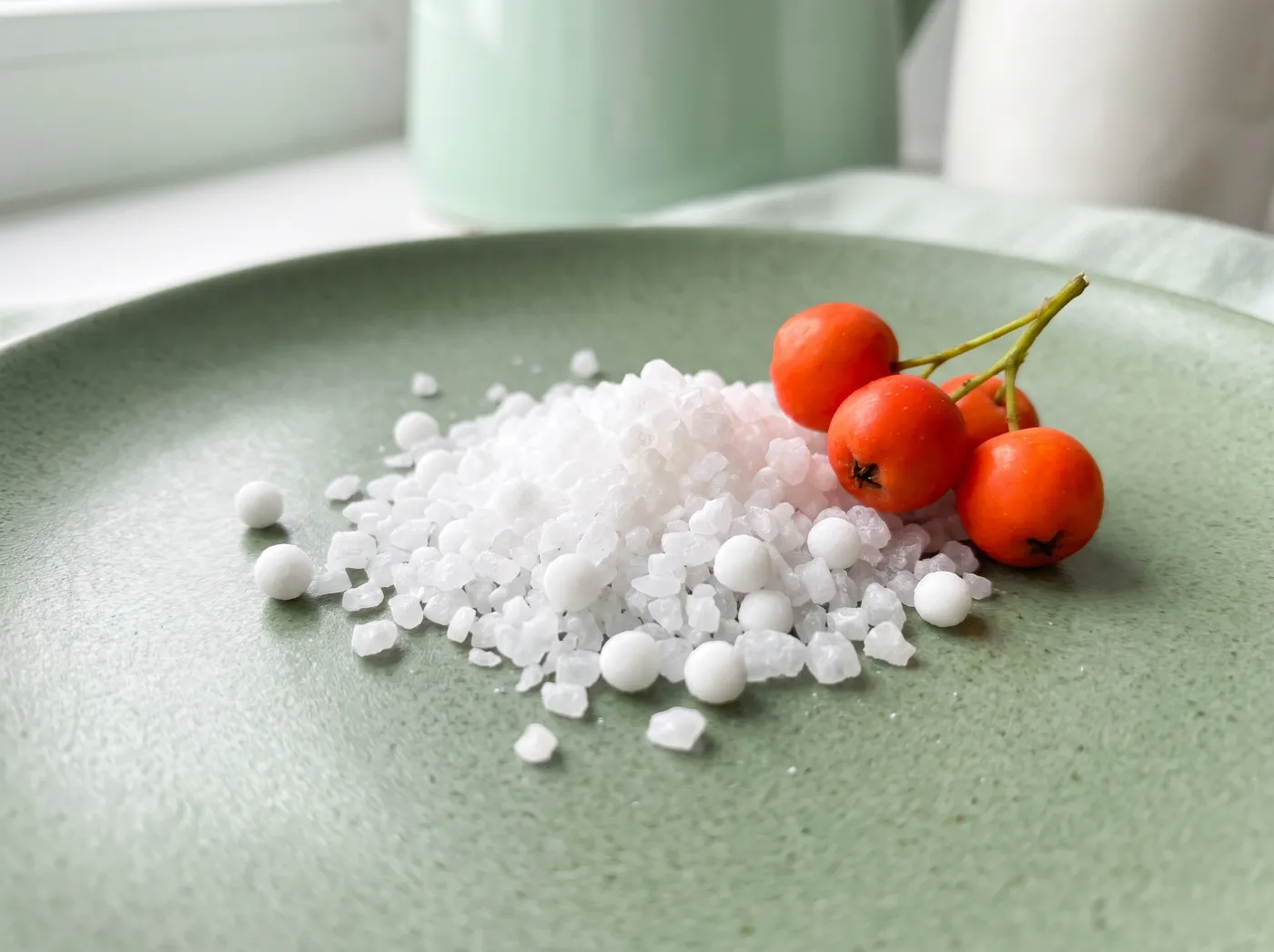
White potassium sorbate powder in macro view on a sage green ceramic surface

Potassium sorbate at a glance

Entry from our cosmetic ingredient glossary. Regulatory data from the European Commission's CosIng database1 and Regulation (EC) 1223/20092. Copy the identifiers in one click for your files.

INCI name
POTASSIUM SORBATE
Other names
Potassium sorbatePotassium (E,E)-hexa-2,4-dienoate in CosIng1; food additive E 2024
CAS number
24634-61-5CosIng also lists 590-00-11
EC number
246-376-1
Formula
C₆H₇KO₂Organic salt of sorbic acid1
CosIng functions
Preservative, fragrance"Preservative" and "Fragrance" in the European nomenclature1
EU status
Preservative allowed: 0.6% (as acid)Annex V, entry 4 "Sorbic acid and its salts" (sorbic acid, calcium, sodium and potassium sorbates), 0.6% expressed as acid, with no other condition of use12
Allergen to declare
NoAbsent from the list of fragrance allergens in Regulation 2023/154513. Like any ingredient, it appears in the INCI list
Safety
Very low animal toxicityNo carcinogenic or mutagenic effect in the studies reviewed in 19903. For food, EFSA set in 2019 a group acceptable daily intake of 11 mg sorbic acid per kg of body weight4

What the research says

Each result shows the protocol and the level of evidence. The higher the level, the better the result carries over to a finished formula.

Clinical trialReview or consensusLaboratory

Preservation and pHLaboratory

A mode of action specific to sorbic acid

Laboratory
25 strains of the yeast Saccharomyces cerevisiaeSorbic acid and acetic acid compared

Acetic acid inhibits the yeast only at a molar concentration 42 times higher than sorbic acid, and it works by acidifying the inside of the cell. Sorbic acid seems to act differently: it is a membrane-active compound that inhibits the H⁺-ATPase proton pump5.

Weak acids more effective at pH 5.0 than at pH 6.0

Laboratory
Four weak acids, including dehydroacetic acidFive molds, glycerol-based mediaSorbic acid as reference

For all four acids tested, the minimum inhibitory concentration is lower at pH 5.0 than at pH 6.0. Activity depends on the undissociated form of the acid and also on its dissociated form. Dehydroacetic acid most often has a lower inhibitory concentration than sorbic acid6.

What these trials do not say

Limit of the evidence
Food media and yeast

Both studies use food media or a yeast. They show that the medium and the pH matter, not at which exact pH a sorbate protects a cosmetic emulsion. That window is verified with a preservation test on the finished formula.

SafetyReviews and opinions

Very low toxicity, rare skin intolerances

Review
Review of the toxicity of sorbic acid and sorbates, 1990

Acute, short-term, chronic, reproduction and teratogenicity tests show very low toxicity in mammals, even at 10% of the diet, with no carcinogenic or mutagenic effect. Sorbic acid is metabolized like other fatty acids. A few cases of intolerance (non-immunological contact urticaria, pseudo-allergy) are described, too few to estimate their frequency3.

A group acceptable daily intake for food

Expert assessment
EFSA opinion, 2019Food additives E 200 and E 202

From an extended one-generation reproduction study, EFSA sets a group acceptable daily intake of 11 mg sorbic acid per kg of body weight for sorbic acid and its potassium salt4. This figure concerns food, not cosmetic use.


Other mild preservativesCIR assessments

Sodium benzoate and benzyl alcohol: safe at current uses

Expert assessment
CIR panel, 2001 then 2017Benzyl alcohol, benzoic acid and salts

The panel judges these ingredients safe in the present practices of use. In 2001, it noted non-immunological contact urticaria (5% benzyl alcohol, 2% benzoic acid) and advised caution for products intended for children7. In 2017, it confirms safety of use8.

Dehydroacetic acid: 1985 conclusion confirmed in 2023

Expert assessment
CIR panel, published in 2024

After reviewing use data and new safety data, the panel confirms that sodium dehydroacetate and dehydroacetic acid are safe in the present practices of use9.

This page summarizes published literature on a cosmetic ingredient. It does not describe the effect of a finished product, which depends on its formula, and it is not medical advice. Potassium sorbate is a functional ingredient: it protects the formula and has no "care" effect. The activity trials cited were run in food media or on yeasts, not in cosmetic emulsions: they shed light on the mechanism, not on the level in a formula. This page says so plainly.


Concentrations used in studies

No trial cited compares potassium sorbate concentrations in a formula. The regulation sets 0.6% expressed as sorbic acid (Annex V, entry 4)2. Potassium sorbate being a heavier salt, this represents about 0.8% sorbate (calculated from molar masses 150.2 and 112.1). The level in a formula is set with the formulator and validated with a preservation test.

Which products can use potassium sorbate?

No formula in our white label catalog features potassium sorbate yet. Our formulation lab can add it to a custom formula or to a catalog formula. Its common uses:

Face

Common preservative in water-based creams, gels and lotions.

Body

Common preservative in water-based lotions, shower gels and body care.

Hair

Common preservative in rinse-off and leave-on shampoos and hair care.

Potassium sorbate, sodium benzoate, benzyl alcohol or dehydroacetic acid?

Four preservatives perceived as mild. The limits are those of Annex V of the regulation2.

Potassium sorbateSodium benzoateBenzyl alcoholDehydroacetic acid
Annex V entry4: 0.6% (as acid)21: 0.5% (as acid) leave-on, 2.5% rinse-off excluding oral care products234: 1.0%213: 0.6% (as acid)2
Regulatory particularityNo condition of use2Shared entry with benzoic acid2Fragrance allergen when not used as a preservative (Annex III, entry 45): to declare above 0.001% leave-on and 0.01% rinse-off213Not to be used in aerosol dispensers (sprays)2
CosIng functionsPreservative, fragrance1Anticorrosive, fragrance, preservative10Preservative, solvent, viscosity controlling, fragrance11Preservative12
What the assessments sayVery low toxicity, rare skin intolerances3Safe at current uses (CIR); non-immunological urticaria possible78Safe at current uses (CIR); non-immunological reactions at 5%78Safe at current uses (CIR), 1985 conclusion confirmed9

Frequently asked questions about potassium sorbate

What is potassium sorbate?
It is the potassium salt of sorbic acid (CAS 24634-61-5), declared as POTASSIUM SORBATE on the label. In the CosIng database, its functions are preservative and fragrance1. It is also used as a food additive (E 202)4.
Is potassium sorbate dangerous?
Animal studies show very low toxicity, with no carcinogenic or mutagenic effect3. A few cases of skin intolerance have been described (non-immunological contact urticaria, pseudo-allergy), too rare to estimate their frequency3. Legal limits apply as for any preservative2. Sorbate is not a "risk-free" ingredient for all that: the advice of a healthcare professional remains the rule in case of a reaction.
What is the maximum concentration of potassium sorbate?
0.6% expressed as sorbic acid, according to Annex V of Regulation (EC) 1223/2009, entry 4, with no other condition2. For potassium sorbate, this corresponds to about 0.8% of raw material (calculated from molar masses).
Does potassium sorbate depend on pH?
For the weak acids tested, including dehydroacetic acid, the inhibitory concentration is lower at pH 5.0 than at pH 6.06. These trials were run in food media and on yeasts56: the useful pH of a cosmetic emulsion is determined with a preservation test on the finished formula.
Potassium sorbate, sodium benzoate or benzyl alcohol?
All three are Annex V preservatives with different limits (0.6% as acid, 0.5% or 2.5% as acid depending on the product, 1.0%)2. Benzyl alcohol is also a fragrance allergen: when it is not used to preserve, it must be declared above 0.001% leave-on or 0.01% rinse-off213. The CIR judges benzoate and benzyl alcohol safe at current uses8.
Is potassium sorbate enough to preserve a cream?
The trials cited concern yeasts and molds56. A complete preservation system is chosen according to the water, pH and raw materials of the formula, and verified with a preservation test, whichever preservative is used.
Can you manufacture a product with a mild preservative for my brand?
Yes. Our ISO 22716 certified lab develops catalog formulas you can customize or a custom formula, with a preservation system chosen with you in compliance with Annex V. Samples are free.

Sources

Peer-reviewed studies and official regulatory sources, checked on November 3, 2026.

  1. European Commission. CosIng, entry POTASSIUM SORBATE (CAS 24634-61-5 / 590-00-1, EC 246-376-1). ec.europa.eu/growth/tools-databases/cosing
  2. Regulation (EC) No 1223/2009 of the European Parliament and of the Council of 30 November 2009 on cosmetic products (consolidated text of May 1, 2025). eur-lex.europa.eu
  3. Walker R. Toxicology of sorbic acid and sorbates. Food Addit Contam. 1990;7(5):671-676. doi:10.1080/02652039009373932
  4. EFSA Panel on Food Additives and Flavourings (FAF), Younes M, Aquilina G, et al. Opinion on the follow-up of the re-evaluation of sorbic acid (E 200) and potassium sorbate (E 202) as food additives. EFSA J. 2019;17(3):e05625. doi:10.2903/j.efsa.2019.5625
  5. Stratford M, Nebe-von-Caron G, Steels H, Novodvorska M, Ueckert J, Archer DB. Weak-acid preservatives: pH and proton movements in the yeast Saccharomyces cerevisiae. Int J Food Microbiol. 2013;161(3):164-171. doi:10.1016/j.ijfoodmicro.2012.12.013
  6. Huang Y, Wilson M, Chapman B, Hocking AD. Evaluation of the efficacy of four weak acids as antifungal preservatives in low-acid intermediate moisture model food systems. Food Microbiol. 2010;27(1):33-36. doi:10.1016/j.fm.2009.07.017
  7. Nair B. Final report on the safety assessment of benzyl alcohol, benzoic acid, and sodium benzoate. Int J Toxicol. 2001;20 Suppl 3:23-50. doi:10.1080/10915810152630729
  8. Johnson W, Bergfeld WF, Belsito DV, et al. Safety assessment of benzyl alcohol, benzoic acid and its salts, and benzyl benzoate. Int J Toxicol. 2017;36(3_suppl):5S-30S. doi:10.1177/1091581817728996
  9. Cherian P, Bergfeld WF, Belsito DV, et al. Sodium dehydroacetate and dehydroacetic acid. Int J Toxicol. 2024;43(4_suppl):130-134. doi:10.1177/10915818241260276
  10. European Commission. CosIng, entry SODIUM BENZOATE (CAS 532-32-1, EC 208-534-8). ec.europa.eu/growth/tools-databases/cosing
  11. European Commission. CosIng, entry BENZYL ALCOHOL (CAS 100-51-6, EC 202-859-9). ec.europa.eu/growth/tools-databases/cosing
  12. European Commission. CosIng, entry DEHYDROACETIC ACID (CAS 520-45-6 / 771-03-9 / 16807-48-0, EC 208-293-9 / 212-227-4 / -). ec.europa.eu/growth/tools-databases/cosing
  13. Commission Regulation (EU) 2023/1545 of 26 July 2023 as regards labelling of fragrance allergens in cosmetic products. eur-lex.europa.eu
Carmel Cosmetics Labs product specialist with a brand founder

Tell us about your project

A product specialist reviews your request and gets back to you on the channel you prefer.

Lead EN – Demande de devis
Tell us about your project. A product specialist will get back to you shortly.
CONTACT INFORMATION
Name
PROJECT INFORMATION
Which cosmetics category interests you most?

By submitting this form, you agree to our terms of service and privacy policy.

No obligation. Your information stays confidential and is used only to prepare your quote.