
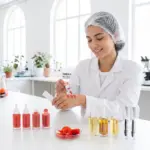
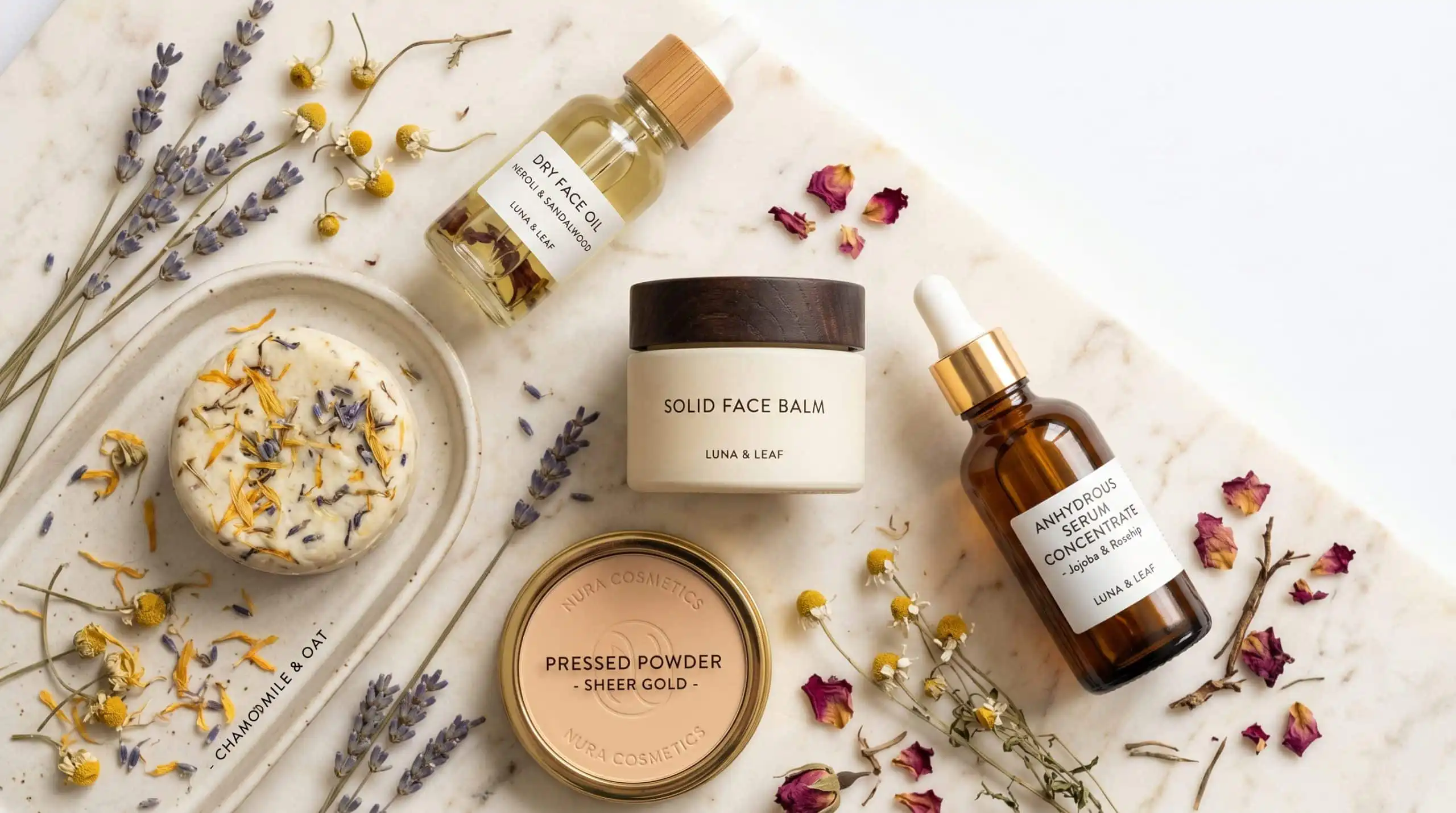
Waterless beauty is no longer a trendy niche reserved for cutting-edge Korean brands — it has become a concrete strategic lever for white label brands that want to stand out in 2026. Less water, more actives, simpler preservation and instant premium positioning: anhydrous formulations tick every box. But between regulatory constraints (especially PFAS), formulation specifics and the realities of white label production, there is a lot to untangle before you launch. This guide covers it all: definitions, formats, ingredients, pitfalls to avoid, and how Carmel Cosmetics Labs can develop your anhydrous range end to end. Find out why Carmel is the right partner for your cosmetics brand.
What is waterless beauty? Definition and real-world examples
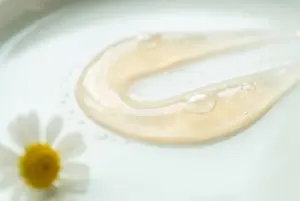
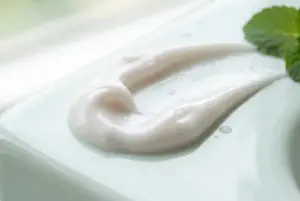
An anhydrous (or “waterless”) formulation contains no free water — no purified water, no hydrosols, no liquid aloe vera. The result: no aqueous phase, which radically changes the product’s structure, preservation and efficacy.
The trend was born in South Korea in the 2010s with “oil cleansers” and “essence oils,” before taking off in Europe through indie brands and the organic-premium segment. In 2026, the global waterless beauty market is estimated at USD 14.6 billion (Statista), with a CAGR of 9.2% — well above the growth of the overall cosmetics market.
Real-world examples of anhydrous products:
- Solid face balm: plant wax + butters + lipophilic actives — replaces a classic moisturizer
- Concentrated anhydrous serum: rosehip oil + encapsulated retinol + oil-soluble vitamin C
- Makeup remover/cleansing stick: waxes + solid surfactants + essential oils
- Water-activated powder: enzymes + encapsulated acids, mixed with water at the time of use
- Hair care bar: keratin + proteins + ceramides in a solid wax base
- Facial oil concentrate: 100% active lipids (squalane, bakuchiol, hemp oil)
What they have in common: no water = no risk of water-borne bacterial growth, which simplifies (but does not eliminate) preservation.
Why launch an anhydrous range in 2026 (5 business reasons)
Beyond the eco message (real but oversold), here are the 5 reasons driving the smartest white label brands:
1. Higher active concentration = a justified premium price
In a conventional cream, water makes up 60 to 80% of the formula. Removing that phase frees up room for high-value actives. An anhydrous serum with 15% oil-soluble niacinamide is possible to formulate, whereas an aqueous version would top out at 5–10% due to solubility constraints. For your brand, that means stronger product claims and product information that stands up to scrutiny.
2. Simpler (but not absent) preservation
An anhydrous environment removes the risk of growth for most hydrophilic bacteria and molds. This makes it possible to reduce — or even eliminate — controversial water-phase preservatives (parabens, phenoxyethanol). A powerful marketing argument: “no water-phase preservatives,” “stable without refrigeration.” Note, however, that some anhydrous formulas need antioxidants (vitamin E, CO₂ rosemary extract) to keep oils from going rancid.
3. Longer shelf life = fewer returns
Anhydrous formulas have a PAO (Period After Opening) of 12 to 24 months, versus 6–12 months for comparable emulsions. For your supply chain, that means less waste, fewer returns and fewer consumer disputes.
4. A travel and international retail advantage
Solid and concentrated formats go through airport security without the 100 ml limit. Duty-free retail, premium hotels and international e-commerce love this format: less weight, less breakage, higher average order value. A 30 g solid balm sells at the same price as a 50 ml water-based cream, often with a higher gross margin.
5. Real differentiation in a saturated market
In France and Morocco, white label cosmetics shelves are dominated by classic O/W emulsions. Offering a premium anhydrous range means occupying competitive space that is still uncrowded among affordably priced manufacturers. Brands that launch now gain first-mover advantage in their segment.
6 anhydrous cosmetic formats to consider (balms, powders, oils, sticks, solids, concentrates)
Not all anhydrous formats share the same manufacturing constraints or marketing potential. Here is our pick of the 6 most relevant formats for a white label range:
Format 1: Solid balm
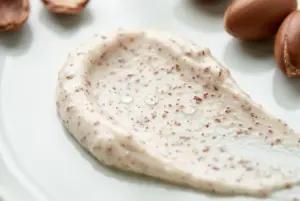
A base of plant waxes (carnauba, candelilla, beeswax) + butters (shea, mango, cocoa). Uses: face care, makeup removal, lips, body. The signature format of waterless beauty. A melting point controlled between 35°C and 42°C for the best skin feel on contact.
Format 2: Oil or concentrated oil serum
100% lipid phase: active plant oils + oil-soluble actives. The easiest format to formulate and control. Excellent premium perception. Amber glass dropper packaging recommended.
Format 3: Cosmetic stick
The same bases as the balm, molded into a stick applicator. Advantages: touch-free, hygienic application in an on-the-go format. Ideal for eye care, lip contour and targeted dark-spot care.
Format 4: Water-activated powder
Dried actives (enzymes, encapsulated AHAs, prebiotics) in a fine powder. The user mixes it with water at the time of use. An ultra-premium format, because it keeps actives as fresh as possible and adapts to the concentration the user chooses.
Format 5: Solid care bar
Solid shampoos, solid conditioners, solid facial cleansers. A fast-growing market. Requires a specific surfactant formulation (SCI, SCS, glucosides) and good control of particle size.
Format 6: Lipid concentrate in a reverse emulsion
A water-in-oil (W/O) emulsion with a very high oil phase (>70%). Technically an emulsion, but with a “waterless-like” profile: dry feel, fast absorption, high active concentration. An excellent compromise for brands that want the benefits of waterless with the feel of a cream.
Key ingredients for premium waterless products (lipophilic actives, natural emollients, preservation)
Anhydrous formulation means working exclusively with oil-soluble or anhydrous ingredients. Here are the essential families:
Structuring bases
- Carnauba wax (vegan) — high melting point, shine, firm structure
- Candelilla wax (vegan) — plant-based alternative to beeswax
- Beeswax — classic texture, soothing, approved for COSMOS Natural use
- Shea butter (unrefined) — major emollient, proven repairing action
- Cocoa butter — melting texture, high oxidative stability
Premium active oils
- Plant squalane (from olive or sugarcane) — biomimetic, non-comedogenic
- Rosehip oil — regenerating, a source of natural retinol
- Hemp oil — optimal omega-3/6 ratio, soothing
- Marula oil — ultra-fast absorption, natural antioxidants
- Bakuchiol — plant-based retinol alternative, pregnancy-friendly
High-value oil-soluble actives
- Vitamin C (tetrahexyldecyl ascorbate) — stable oil-soluble form, proven efficacy
- Encapsulated retinol — controlled release, improved photostability
- Tocopherol (vitamin E) — antioxidant + natural preservative
- Coenzyme Q10 — anti-aging, oil-soluble
- Plant phytosterols — skin barrier repair
Preservation in anhydrous formulas
Even without water, anhydrous formulas remain vulnerable to lipid oxidation. Recommended preservation strategy:
- Tocopherol (vitamin E) at 0.5–1%: primary antioxidant
- CO₂ rosemary extract (0.02–0.05%): antioxidant synergist
- BHT or BHA at regulated levels (if conventional)
- Opaque or tinted packaging (UV protection)
- Accelerated stability testing at 40°C/75% RH is mandatory
⚠️ PFAS warning: a regulatory trap to avoid in your anhydrous formulations
This topic gets little coverage but is critical for any brand formulating in 2026: some anhydrous formulations use fluorinated ingredients (PFAS) to optimize texture, water resistance or rheology. And these ingredients are at the center of a regulatory storm that is only just beginning.
What are PFAS in cosmetics?
Per- and polyfluoroalkyl substances (PFAS) — sometimes called “forever chemicals” — include more than 10,000 compounds. In cosmetics, they are used in particular in:
- Lipsticks and foundations (transfer resistance)
- Some balms and anhydrous products (rheology, slip)
- Sunscreens (waterproofing)
- Anti-frizz hair products
INCI names to watch for: Polytetrafluoroethylene (PTFE), Perfluorooctyl Triethoxysilane, any INCI entry containing “Fluoro-” or “Perfluoro-”.
2026–2028 regulatory calendar to know
- REACH Regulation (EU): universal PFAS restriction proposal submitted in 2023, final decision expected 2025–2026, with a transition period of 5 to 12 years depending on use
- EU Cosmetics Regulation (EC) No 1223/2009: several PFAS already listed in Annex II (prohibited substances), others in Annex III (restricted)
- Green Claims Directive (2026): will ban vague environmental claims — “waterless = eco-friendly” will have to be substantiated with LCA data
- Morocco (IMANOR): gradual harmonization with EU regulations; expect a 12–18 month lag
What this means for your anhydrous range
The good news: a well-built waterless formula has no need for PFAS. Plant bases (waxes, butters, oils) and natural emollients (squalane, caprylic/capric triglycerides) deliver excellent rheological performance. At Carmel Cosmetics Labs, our anhydrous formulas are 100% PFAS-free by default — our standard since 2024. Always check your formulator’s full INCI list and explicitly ask for a “no fluorinated ingredients” confirmation.
How Carmel Cosmetics Labs develops your white label anhydrous range (process, MOQ, project steps)
You have the idea, the target and the positioning. Here is exactly how we turn them into finished products under your brand.
Our anhydrous development process
- Step 1 — Creative brief: target, use, desired skin feel, priority claims, raw material budget, target certifications (COSMOS, Ecocert, Vegan)
- Step 2 — Base selection: choice of format (balm, oil, stick, powder) + draft formula with pre-approved actives
- Step 3 — Prototyping: 3 to 5 variations submitted with a technical data sheet and sensory results
- Step 4 — Stability & micro: testing at 40°C/4°C + packaging compatibility tests + challenge test where relevant
- Step 5 — Regulatory file: PIF (Product Information File) compliant with Regulation (EC) No 1223/2009, safety assessment by our toxicologist, CPNP notification
- Step 6 — Production & delivery: manufacturing, packaging under your brand, final quality control
MOQ and pricing (2026 guide)
- Balms and solid sticks: accessible MOQ — ideal for testing the market without overstock risk
- Anhydrous oils and serums: accessible MOQ (10–30 ml formats)
- Water-activated powders: accessible MOQ — a slightly longer formulation stage, with timing defined with you in the quote
- Solid bars: accessible MOQ — significant economies of scale at higher volumes
Anhydrous formulas generally have a raw material cost 15 to 35% higher than an equivalent emulsion — but the recommended retail price can be 40 to 80% higher, which automatically improves your gross margin.
Typical project steps for a 3-product range
- Phase 1: brief + formula selection
- Phase 2: prototyping + adjustments
- Phase 3: stability testing + packaging approval
- Phase 4: regulatory file + CPNP notification
- Phase 5: production (once samples and packaging are approved) + delivery
Overall timeline: defined with you in the quote, from brief to delivery, for a complete premium project (custom formulation, testing, regulatory work and production). Production starts once samples and packaging are approved.
Cost advantage vs. a classic water-based formulation
- Raw material cost: +20 to 35% for a premium anhydrous formula (quality actives)
- Manufacturing cost: comparable, sometimes slightly lower (no hot-cold emulsification)
- Packaging cost: often lower (airless pumps not always needed, fewer sealing constraints)
- Possible retail price: +40 to 80% vs. an equivalent emulsion
- Estimated net margin: 55–70% with premium positioning vs. 40–55% for a classic cream
FAQ (from Google’s “People also ask”)
Are anhydrous cosmetics suitable for all skin types?
Most anhydrous formulas suit dry to very dry, mature and sensitive skin. For combination to oily skin, choose low-comedogenic oils (squalane, jojoba, hemp) and light textures. Water-activated powders are the most versatile format.
How do you apply an anhydrous product if skin needs water?
Anhydrous products don’t replace hydration — they seal in the hydration already there. The best method: apply a toner or hydrating mist first, then the anhydrous product on damp skin. The lipophilic actives penetrate and the occlusive layer holds in water. This is the “waterless sandwich” principle.
Which certification for an eco-friendly waterless range?
COSMOS Natural or COSMOS Organic (Ecocert) are the benchmark certifications for natural anhydrous formulas in Europe. Vegan certification (with plant waxes only) is complementary and in high demand. Carmel Cosmetics Labs can support certification from the formulation stage.
What packaging works best for waterless products?
Packaging must protect against UV and oxidation: amber or opaque glass bottles, aluminum jars, recycled metal tubes, cardboard boxes with inserts. Avoid clear PET for oils. Aligning eco packaging with waterless positioning is a powerful lever for brand consistency.
Are anhydrous products really more sustainable?
No water means a smaller transport footprint (a more concentrated, lighter product) and can eliminate some synthetic preservatives. But real sustainability also depends on the raw materials and packaging used. A comparative LCA (life cycle assessment) remains the only way to substantiate a “more sustainable” claim in line with the 2026 Green Claims Directive.
How much does it cost to develop a white label anhydrous formula?
For a formula built on an existing base (an adapted catalog formula), the development cost is included in your production order. For a 100% custom formula with specific actives, expect a development fee of €800 to €2,500 depending on complexity. Contact us for a tailored quote.
Waterless beauty is one of the rare cosmetics trends where the business case, the eco case and the performance case naturally line up. For a white label brand aiming for premium positioning in 2026, it is strategic territory with few serious competitors so far — and the right formulators make the difference. At Carmel Cosmetics Labs, we develop custom anhydrous ranges from brief to delivery, with an accessible MOQ and full regulatory support.
→ Contact us to discuss your white label waterless project — we reply within 24 hours.