For hair
In Morocco, leaf powder is a classic of hair blends: among herbalists in the Fès-Meknès region, it is the plant most cited for hair care. In a mask or a cleansing treatment, it brings a plant-based note and a tradition that is easy to tell.
Services
Catalog
Explore the full catalog1,000+ formulas ready to carry your brandFace careFull range
Serums, creams and targeted care, formulated with your actives.
Hair careFull range
From shampoo to leave-in, for every hair type.
Body careFull range
Moisturizing, nourishing and shower care: cream, butter or oil.
Hammam and naturalFull range
Black soap, argan and authentic Moroccan rituals.
Specialty careFull range
Sun care, lips, intimate care and oral care.
Industries
All solutions by industryFormulas and formats for your businessHospitality and wellness
Brands and creators
Our brands
Our own brands, developed and made in our laboratory.
 DermocosmeticsSublime CosmeticsFace, sun and body care for pharmacies and drugstores.Visit the website
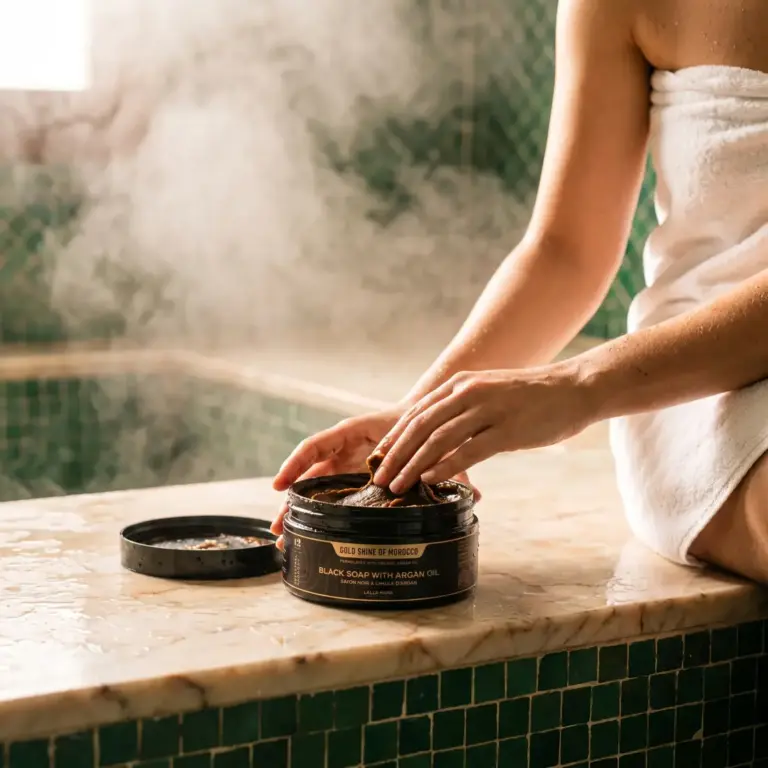
 Hammam and spaLalla MamaMoroccan hammam rituals: black soap, rhassoul, oils and body care.Visit the website
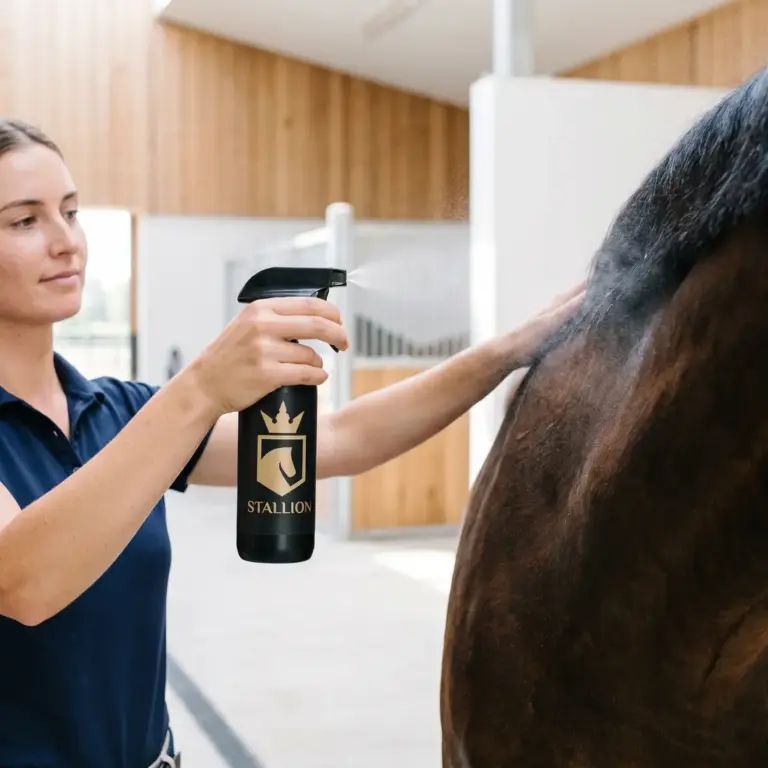
 Equine careStallionGrooming care for horses: mane, coat and hooves.Visit the website
Laboratory
 Our factory in Aït MelloulISO 22716 and ISO 9001, visits by appointmentDiscover the factory
Cosmetics manufacturer based in Agadir
500+ brands35+ countries1,000+ formulas
Our factory in Aït Melloul
Up to 3 million units a yearVisits by appointment
Contract manufacturing, step by step
RegulationsCostsProject steps
Join our teams in Agadir
FormulationProductionQualityRegulatorySales
Resources
The myrtle an evergreen shrub of the Mediterranean basin.
The flowers white, star-shaped and fragrant.
The berries blue-black, ripe from October to February.
The leaves dried and ground for hair rituals.
By the Carmel Cosmetics Labs R&D team · updated October 18, 2026
Myrtle (Myrtus communis) is an evergreen aromatic shrub of the Mediterranean basin, found in Morocco where it is called rihane. Its small glossy leaves give off a fresh scent when crushed. Dried and ground into powder, they go into traditional hair blends, often with henna. In cosmetics, the leaf comes as powder, extract, hydrosol and essential oil, for hair care, scrubs and fragranced products.
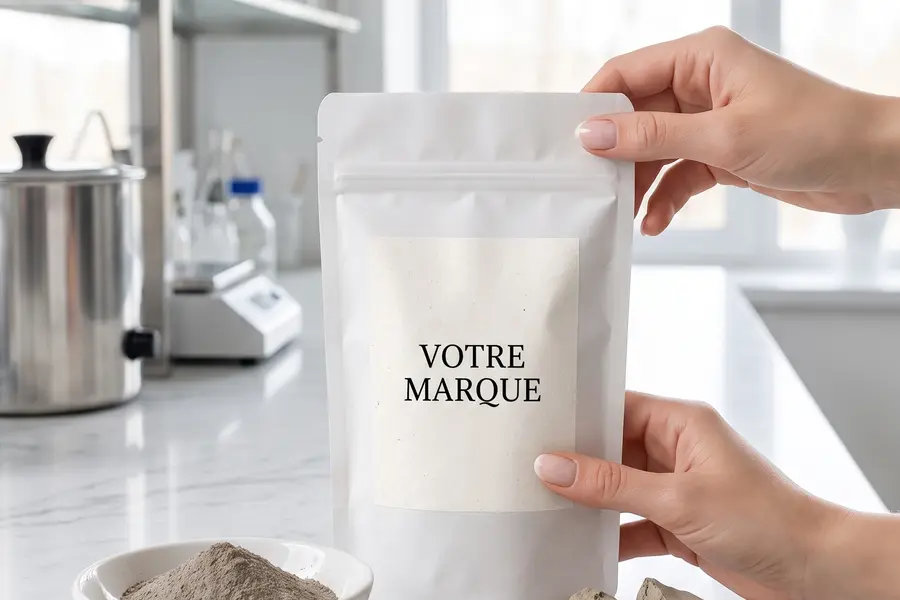
The dried, ground leaves, mixed with henna or other plants in hair rituals, or added to a scrub. This is the form closest to Moroccan tradition.
The water obtained by steam-distilling the leaves, gentle and lightly scented, for mists and lotions. Its INCI name is MYRTUS COMMUNIS LEAF WATER.
Highly concentrated and very aromatic, rich in alpha-pinene and 1,8-cineole. It is used at a low dose and contains allergens that must be labeled. Its INCI name is MYRTUS COMMUNIS LEAF OIL.
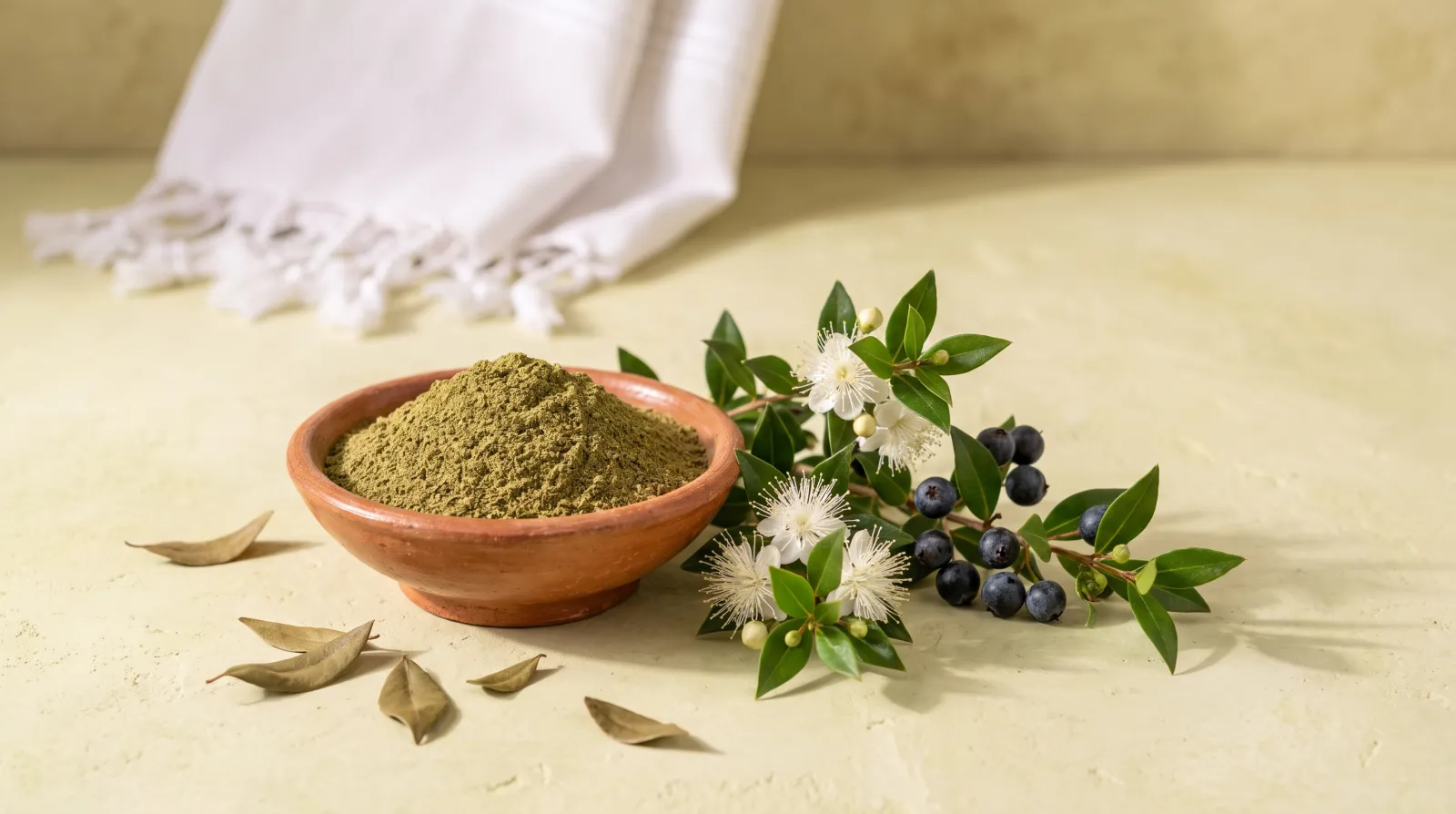
In Morocco, leaf powder is a classic of hair blends: among herbalists in the Fès-Meknès region, it is the plant most cited for hair care. In a mask or a cleansing treatment, it brings a plant-based note and a tradition that is easy to tell.
In a scrub or body care product, myrtle leaf brings a fresh, green aroma. The European CosIng database lists skin conditioning and perfuming functions for myrtle leaf extract.
Myrtle leaves are rich in phenolic compounds, studied in the laboratory for their antioxidant activity. A Moroccan plant that gives your range a clear hammam identity.
Traditionally, the leaf powder is mixed with henna or other plants into a paste, applied to the hair then rinsed; as a decoction, it serves as a rinse water. In a finished product, it goes into a ready-to-use mask or cleansing treatment.
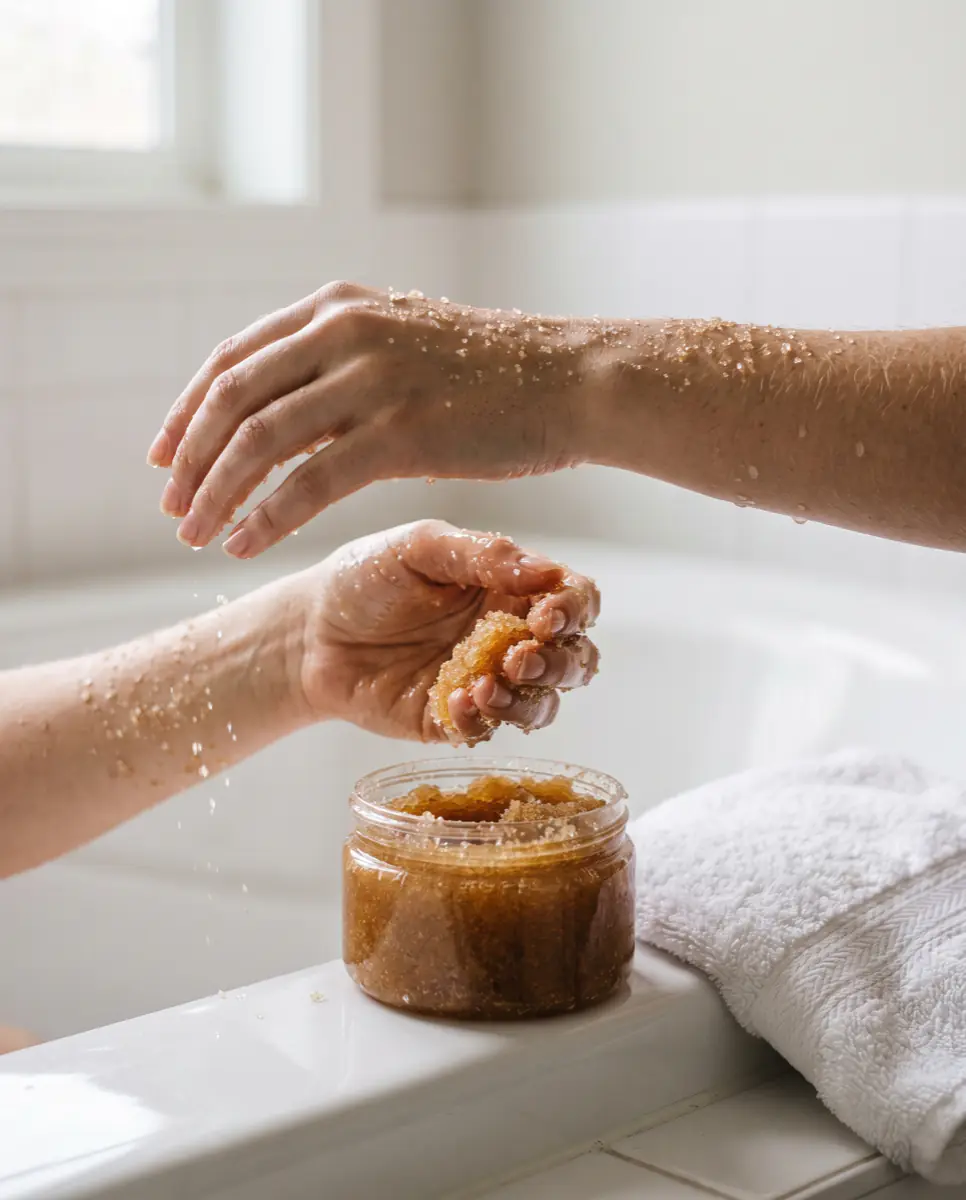
In a salt or sugar scrub, massaged onto damp skin then rinsed, for soft, lightly scented skin, in the hammam or in the shower.
As a hydrosol, sprayed on the face or applied with a cotton pad as a lotion, for a feeling of freshness. The essential oil, by contrast, is never applied pure.
We add it to body scrubs, hair oils and plant powders ready to carry your brand. Pick a category to see the formulas.
Catalog products with myrtle (rihane)
What our formulators take into account when myrtle goes into your product.
Often paired with
Myrtle leaf is declared according to its form: MYRTUS COMMUNIS LEAF EXTRACT for the extract, MYRTUS COMMUNIS LEAF WATER for the hydrosol, MYRTUS COMMUNIS LEAF OIL for the essential oil. We check the exact wording on each material's data sheet.
The essential oil contributes limonene, linalool, pinene and, depending on origin, geranyl acetate. Above 0.001% in a leave-on product and 0.01% in a rinse-off product, they must appear in the INCI list.
The essential oil changes by region: a Moroccan sample from Ouazzane is rich in 1,8-cineole, another from Benslimane in methyleugenol, a substance restricted by Annex III. We require a certificate of analysis for every batch.
Traditional uses of myrtle are sometimes medicinal: we present them as a tradition and write your claims within the cosmetic frame of fragrance, softness and hair care, with no therapeutic promise.
In a survey of 70 herbalists in the Fès-Meknès region, myrtle, called rihane, is the plant most cited for hair care, often as a powder mixed with henna.
Myrtle berries are most often blue-black, sometimes white-yellow depending on the variety. They ripen from October to February, and birds spread the seeds.
Myrtle leaves contain more phenolic compounds than its berries, and their extracts show stronger antioxidant activity in the laboratory.
Myrtle is an evergreen aromatic shrub, Myrtus communis, that grows around the Mediterranean and in North Africa, including Morocco. It bears small, glossy, fragrant leaves, scented white flowers and blue-black berries. In Morocco, it is called rihane and its leaves are used mostly for hair care.
In Morocco, myrtle leaf powder is a flagship plant of hair rituals, often mixed with henna. In a cosmetic product, it brings a fresh plant-based note and a strong Moroccan tradition. It is mostly the other ingredients in the mask or treatment that nourish and soften the fiber.
Traditionally, the powder is mixed with lukewarm water, alone or with henna, until it forms a paste, which is applied to the hair before rinsing. A leaf decoction can also serve as a rinse water. Patch test on a small area before first use.
The term most often means the essential oil, obtained by distilling the leaves and declared as MYRTUS COMMUNIS LEAF OIL. Highly concentrated, it is always diluted in an oil or a cream. There are also macerates: leaves infused in a vegetable oil, such as olive oil, which are milder and less fragranced.
Yes: in Morocco, rihane, sometimes written rihan, means common myrtle, Myrtus communis. Because local names vary from one region to another, the Latin name remains the safest reference to identify the plant, and the INCI name the one to declare it on a product.
The powder and hydrosol are gentle. The essential oil, however, contains allergens such as limonene and linalool: it is used at a low dose, is never applied pure, and these allergens appear on the label above the regulatory thresholds. A patch test on a small area is still recommended.
Yes. We add it to white label body scrubs, hair oils, plant powders and hammam care, or to an exclusive private label formula, made in our ISO 22716 factory in Morocco. Free samples and a free consultation.
Send your brief: we formulate and manufacture in our ISO 22716 factory in Aït Melloul. Free consultation and formula selection, no commitment.