






































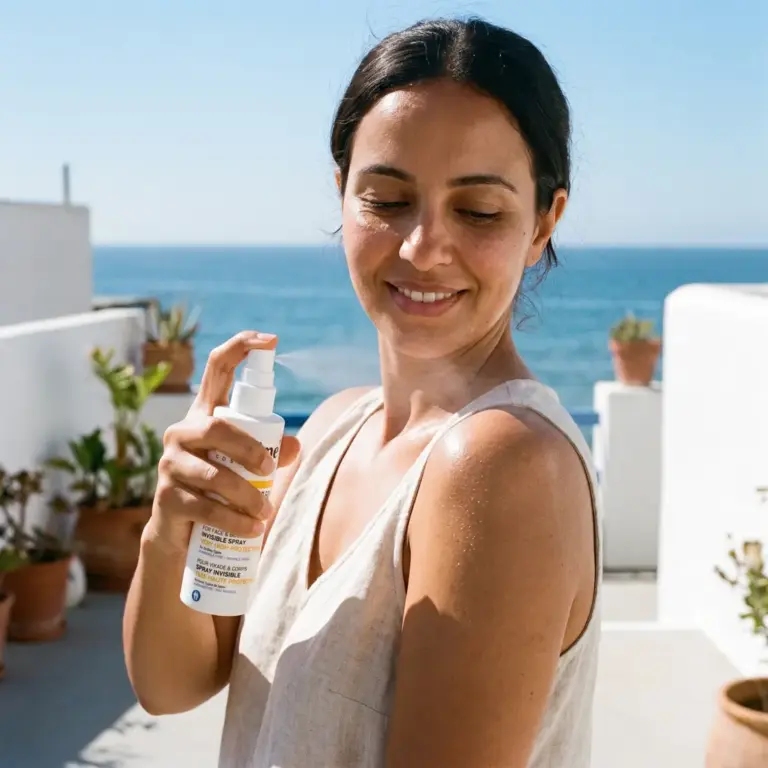
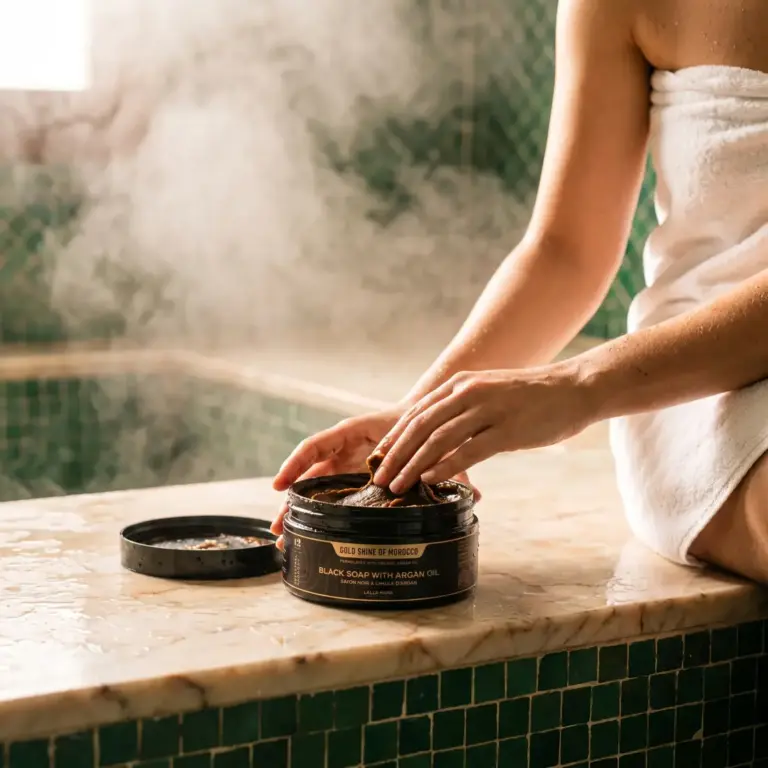







The best-selling cosmetics in Saudi Arabia are, judging by the kingdom’s imports, skin care (creams, serums, sun care), followed by perfumes, hair care and deodorants. In 2025, Saudi Arabia imported $2.51 billion of finished cosmetics, 43% of it skin care and makeup, according to UN Comtrade.
The key points at a glance
- Saudi imports of finished cosmetics: $2.11 billion in 2019, $2.51 billion in 2025 (+19%).
- Skin care (HS 3304.99) comes first: $800 million in 2025, nearly a third of the total.
- Perfume leads retail sales ($2.9 billion) but ranks only second in imports.
- France and the UAE supply more than a third of imports; South Korea climbs from 19th to 7th place.
- Every product must be notified to the SFDA by a local importer.
Why measure sales through imports?
Imports are the best public indicator of the cosmetics sold in Saudi Arabia, because no official statistic breaks down retail sales by product. We extracted the Saudi declarations from the United Nations UN Comtrade database for 2019 and 2025, covering finished products only (raw materials excluded).
The Harmonized System (HS) is the international customs nomenclature that classifies every good with a 4- or 6-digit code; chapter 33 covers perfumes and cosmetics. Values are CIF (cost, insurance and freight to the border), excluding margins and taxes. Limitation: this data does not capture local production, since the kingdom also has SFDA-approved manufacturers.
What are the best-selling cosmetic products in Saudi Arabia?
At the finest level published by customs (6-digit HS codes), the top 10 cosmetics imported by the kingdom is led by skin care, ahead of perfumes and hair care.
| Rank | Product (HS code) | 2019 ($M) | 2025 ($M) | Change |
|---|---|---|---|---|
| 1 | Skin care: creams, serums, sun care (3304.99) | 464 | 800 | +72% |
| 2 | Perfumes and eaux de toilette (3303) | 473 | 533 | +13% |
| 3 | Hair care excluding shampoo: masks, oils, colorants (3305.90) | 173 | 212 | +22% |
| 4 | Deodorants and antiperspirants (3307.20) | 89 | 135 | +53% |
| 5 | Shampoos (3305.10) | 152 | 126 | −17% |
| 6 | Liquid cleansers, shower gels (3401.30) | 83 | 105 | +26% |
| 7 | Lip makeup (3304.10) | 57 | 102 | +79% |
| 8 | Toothpastes (3306.10) | 124 | 84 | −32% |
| 9 | Eye makeup (3304.20) | 56 | 70 | +24% |
| 10 | Powders, including compacts (3304.91) | 60 | 69 | +15% |
Skin care gained $336 million in six years, more than the net increase of all the other lines combined. Mass-market hygiene is declining: toothpastes (−32%), shampoos (−17%), toilet soaps (from 143 to 67 million). Higher regional production could explain it, though customs data cannot confirm this.
Lip makeup jumps 79%, while nail products decline (from 50 to 34 million). The lead of skin care matches the ranking of best-selling cosmetics in France (in French), where facial care also comes first.
How has the Saudi cosmetics market changed since 2019?
The Saudi cosmetics market has refocused on skin care: skin care and makeup rose from 33% to 43% of finished-product imports between 2019 and 2025. The other families are losing share.
| Category (HS code) | 2019 ($M) | 2019 share | 2025 ($M) | 2025 share |
|---|---|---|---|---|
| Skin care and makeup (3304) | 687 | 33% | 1,074 | 43% |
| Perfumes and eaux de toilette (3303) | 473 | 22% | 533 | 21% |
| Hair products (3305) | 344 | 16% | 351 | 14% |
| Deodorants, shaving, bath, room fragrances (3307) | 233 | 11% | 260 | 10% |
| Oral hygiene (3306) | 143 | 7% | 118 | 5% |
| Liquid skin cleansers (3401.30) | 83 | 4% | 105 | 4% |
| Toilet soaps (3401.11) | 143 | 7% | 67 | 3% |
| Total finished cosmetics | 2,105 | 100% | 2,507 | 100% |
According to the annual reports of the Saudi General Authority for Statistics (GASTAT), chapter 33 imports rose from 7,176 million riyals in 2021 to 10,997 million in 2025, or $2.93 billion (+53%). This total also includes essential oils, which is why the amount is higher than ours.
Why does perfume lead sales but not imports?
Perfume is the number one beauty category in Saudi retail sales, but only the second in imports: its customs value is far below its in-store price, and part of the supply is produced in the Gulf.
According to the Team France Export cosmetics market sheet (in French), which cites Euromonitor International among its sources, Saudi sales grew 8% in 2025. The market values formulas suited to the climate: light, heat-resistant and long-wearing.
| Category | 2025 retail sales (Team France Export) | 2025 CIF imports (UN Comtrade) |
|---|---|---|
| Perfumes | $2.9bn | $0.53bn |
| Hair care | $1.14bn | $0.35bn |
| Skin care | $1.12bn | $0.80bn (3304.99) |
| Makeup | $0.87bn | $0.27bn (lips, eyes, nails, powders) |
The gap is widest for perfume. Regional production partly explains it: in 2025, the UAE exports $4.06 billion of locally made chapter 33 products. For a foreign brand, skin care is the category where imports weigh most in consumption.
Which countries supply the cosmetics sold in Saudi Arabia?
France is Saudi Arabia’s top supplier of finished cosmetics in 2025, with $481 million, ahead of the United Arab Emirates ($436 million), the reverse of 2019.
| 2025 rank | Supplier country | 2019 ($M) | 2025 ($M) | 2025 share |
|---|---|---|---|---|
| 1 | France | 414 | 481 | 19.2% |
| 2 | United Arab Emirates | 441 | 436 | 17.4% |
| 3 | Italy | 123 | 212 | 8.4% |
| 4 | United States | 136 | 159 | 6.3% |
| 5 | China | 61 | 156 | 6.2% |
| 6 | Germany | 137 | 118 | 4.7% |
| 7 | South Korea | 19 | 114 | 4.5% |
| 8 | Spain | 62 | 106 | 4.2% |
| 9 | Egypt | 112 | 102 | 4.1% |
| 10 | India | 67 | 77 | 3.1% |
France mainly sells perfume ($254 million, nearly half of imported perfumes). Italy almost doubled its sales, mostly in skin care and makeup. The UAE dominates hair products, deodorants and soaps.
South Korea posts the strongest growth: from $18.7 million to $113.8 million (×6.1), including $104.6 million in skin care and makeup, close to 10% of the 3304 segment. China multiplies its sales by 2.5; the United Kingdom falls from 118 to 70 million.
What role does the UAE play in the Gulf beauty market?
The UAE is both Saudi Arabia’s second-largest supplier and the Gulf’s re-export hub. Re-export is the resale abroad of imported goods without substantial transformation.
According to UAE.Stat, the UAE federal statistics portal (FCSC), the UAE imported $5.68 billion of chapter 33 products in 2025 and re-exported $4.59 billion of them (81%). Its exports of locally made products have increased almost tenfold since 2017.
There are therefore two entry points: a Saudi importer directly, or a UAE distributor covering several countries. Some of the products attributed to the UAE may also have been made elsewhere.
What does it take to sell cosmetics in Saudi Arabia?
To sell a cosmetic product in Saudi Arabia, it must be notified to the health authority (SFDA) through an approved local importer, with compliant labeling and a complete technical file. Notification is now made on Ghad, the SFDA’s unified electronic system, which replaced the former eCosma platform.
The SFDA made this notification mandatory in stages, from 2015 (oral hygiene) to 2016 (skin care), as its announcement on electronic cosmetics registration states; notified products appear in its public cosmetics list. The steps:
- Choose the category and the channel. Skin care is the most dynamic and most competitive segment: target a specific need (heat, oily skin, sun care).
- Find a local importer. The notification is filed by a company established in the kingdom and approved by the SFDA.
- Build the product file. Formula with INCI names, safety assessment, good manufacturing practice certificate (ISO 22716), free sale certificate.
- Adapt the label. According to the US International Trade Administration (ITA), the label states in particular function, components, batch, origin and precautions; the SFDA may require Arabic.
- Remove regional statements. An SFDA circular of February 14, 2025, relayed by the ITA, bans statements such as “For Export Only” or “European market edition” on labels.
- Prepare each shipment. At customs clearance, the importer presents the notification numbers and the conformity certificates required for each batch.
For the requirements shared by all six countries, see our guide to exporting cosmetics to the GCC countries. If the formula also targets Europe, the same documentation base can serve both: that is the purpose of our regulatory support and product file preparation service.
The manufacturer’s point of view: which range for the Saudi market?
For a brand targeting Saudi Arabia, the data suggests starting with skin care, the most imported and most dynamic segment, and designing the range for the climate and local labeling from the formulation stage.
At Carmel Cosmetics Labs (ISO 22716 and ISO 9001, more than 500 brands supported in more than 35 countries), here is what we advise locking down before a Gulf project:
- Textures designed for heat: gel-creams, fluids, light serums, stability tested at high temperature.
- An ingredient list checked early against the Gulf standard (GSO 1943, cited by the SFDA).
- Bilingual labeling planned from the design stage, with no statement reserved for another market.
- Differentiating active ingredients: against K-beauty and European brands, argan oil, prickly pear seed oil or rose water offer a strong origin story.
- A complete documentation file: GMP certificates, INCI formula, safety assessment.
Morocco remains a small supplier but is growing fast: from $1.7 million to $7.6 million between 2019 and 2025, from 42nd to 29th place (details in our 2025 review of Morocco-Middle East cosmetics trade). Compare with what sells best in Morocco in 2026.
This rise of skin care follows the major beauty trends of 2026 and the success of the best-selling dermocosmetics in Europe.
Frequently asked questions
What is the most imported cosmetic in Saudi Arabia?
Skin care. Customs subheading 3304.99 (creams, serums, sun care and other skin preparations) accounted for $800 million of imports in 2025, according to UN Comtrade, nearly a third of imported finished cosmetics, far ahead of perfumes ($533 million).
How big is the cosmetics market in Saudi Arabia?
In retail sales, perfumes, hair care, skin care and makeup together exceed $6 billion in 2025, according to Team France Export, with 8% growth. At the border, the kingdom imported $2.51 billion of finished cosmetics the same year.
Does K-beauty sell in Saudi Arabia?
Yes, more and more. Saudi imports of Korean cosmetics grew 6.1 times between 2019 and 2025, to $113.8 million. South Korea moved from 19th to 7th place among suppliers, almost entirely thanks to skin care and makeup.
Do you need to go through the UAE to sell in Saudi Arabia?
No. The SFDA notification is filed by a company established in Saudi Arabia, which can be your direct importer. A UAE distributor remains useful for covering several Gulf countries at once, since the UAE re-exports the equivalent of 81% of its chapter 33 imports.
Do labels have to be in Arabic?
The SFDA may require Arabic for labeling. Planning a bilingual Arabic-English label from the start avoids redoing the packaging. Since a circular of February 2025, statements reserving a product for another market, such as “For Export Only”, are banned.
Conclusion: skin care, the gateway to the kingdom
Seen through imports, the best-selling cosmetic products in Saudi Arabia are first skin care, then perfumes and hair care. The market is refocusing on skin care and demands rigorous compliance with the SFDA.
Preparing a skin care range for the Gulf? We formulate and manufacture your line as white label with an accessible MOQ, with the certificates and documentation importers expect. Book your free consultation or schedule a meeting with our team.
Methodology: UN Comtrade, reporter Saudi Arabia, extraction of October 17, 2026, current US dollars CIF. Scope: HS 3303 to 3307, 3401.11 and 3401.30. Partner = declared country of origin. Conversions: 3.75 riyals and 3.6725 dirhams per dollar.