




































Exporting cosmetics to the Gulf Cooperation Council (GCC) countries, namely Saudi Arabia, the United Arab Emirates, Kuwait, Qatar, Oman and Bahrain, is a lucrative opportunity for skincare brands and entrepreneurs. Growing demand for high-quality skincare in the region, driven by an expanding middle class and greater skincare awareness, makes it a promising market. Entering these markets, however, means carefully navigating regulations, cultural preferences and strategic planning. This guide walks you through the steps of exporting cosmetics to the GCC countries and shows how our labs can support skincare brands and entrepreneurs along the way.
Understanding the GCC market
The GCC countries are known for diverse, high-potential markets for cosmetics and skincare. The factors behind this growth include:
- Rising disposable income: The GCC region has high per-capita disposable income, so consumers can spend more on luxury and premium skincare.
- Growing beauty awareness: Skincare and beauty are getting more attention, driven by the hot climate and cultural preferences around grooming and beauty.
- Preference for natural products: GCC consumers prioritize natural ingredients and the certifications requested by their market in their cosmetics, so brands must align their product offer with these preferences.
Steps to export cosmetics to the GCC countries
1. Understand the regulatory requirements
Each GCC country has its own set of regulations and standards governing cosmetics imports. There is, however, also a GCC-wide regulatory framework that simplifies the process for businesses:
- GCC Standardization Organization (GSO): The GSO has developed unified standards for cosmetics and personal care products, covering ingredient restrictions, labeling requirements and product safety.
- Local registration and certification: Each country still requires local registration and approval from authorities such as the Saudi Food and Drug Authority (SFDA) in Saudi Arabia or the Emirates Authority for Standardization and Metrology (ESMA) in the UAE.
Brands must comply with these regulations, which involves documentation, safety assessments and Good Manufacturing Practices (GMP).
2. Product testing and certification
Product testing is a key step to make sure your cosmetics meet the safety and quality standards required by the GCC countries. This includes:
- Ingredient safety assessment: Making sure every ingredient complies with local regulations, especially regarding banned or restricted substances.
- Microbiological and stability testing: Confirming that products are safe to use and have an adequate shelf life in GCC climate conditions.
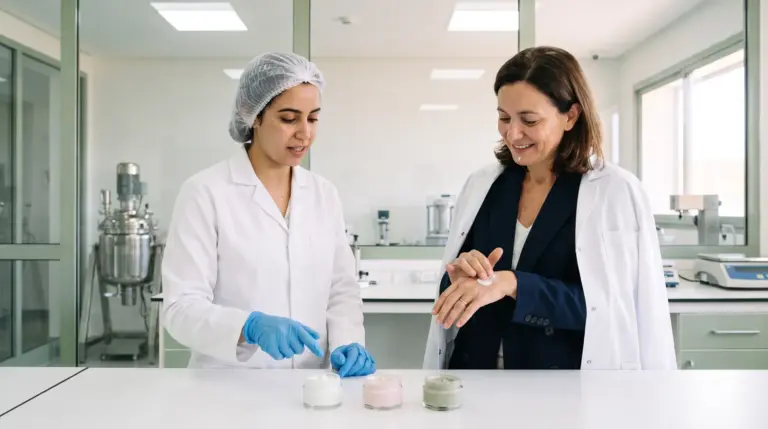
Our labs can help you obtain these certifications with their advanced testing facilities, so your products are compliant and ready for market.
3. Adapt product labeling and packaging
GCC regulations require specific labeling information in Arabic and English. This includes:
- Product name and function
- Manufacturer and importer contact details
- Ingredient list
- Directions for use and warnings
- Production and expiry dates
Our team can help you design compliant labels and packaging that also match local cultural and aesthetic preferences.
4. Build a market entry strategy
Entering the GCC market requires a comprehensive strategy that covers the following:
- Market research: Understanding consumer preferences, the competitive landscape and pricing strategies in each target country.
- Distribution channels: Partnering with local distributors, retailers or e-commerce platforms to reach your target audience effectively.
- Marketing and branding: Adapting your marketing strategy to local tastes, cultural norms and values.
5. Build relationships with local distributors
Reliable local partners are essential to enter the market successfully. Local distributors understand the market’s nuances, have well-established networks and can help you work through regulatory complexities.
How can our cosmetics labs help?
Exporting cosmetics to the GCC is a complex process that requires specialized knowledge and resources. That is where our cosmetics labs step in, with full support for skincare brands and entrepreneurs:
- Regulatory guidance and compliance support: Our specialized team keeps up with the latest regulations in each GCC country. We guide you through registration and documentation requirements, and make sure your products comply with all local standards.
- Product testing and certification: Our labs offer comprehensive testing, including microbiological, chemical and stability testing, to ensure your products are safe, effective and compliant. We provide the certificates needed for export.
- Labeling and packaging advice: We help you create bilingual (Arabic and English) labels and packaging that comply with local regulations and appeal to the target market.
- Market analysis and strategy: Drawing on our industry knowledge, we help you understand market dynamics, consumer behavior and the competition, so you can build a winning market entry strategy.
- Local partnerships and distribution: We connect you with our network of local distributors, retailers and marketing experts for a smooth market entry and sustainable growth.
Conclusion
The GCC region is a promising market for skincare brands looking to expand their footprint. However, navigating its regulatory, cultural and commercial landscape takes expertise and careful planning. Our cosmetics labs are here to help skincare brands and entrepreneurs meet these challenges and enter the GCC market successfully and with confidence. From compliance and testing to strategic planning and local partnerships, we provide end-to-end support tailored to your needs.
With our expertise behind you, you can focus on what you do best – creating great skincare products – while we handle the complexities of market expansion.