


















































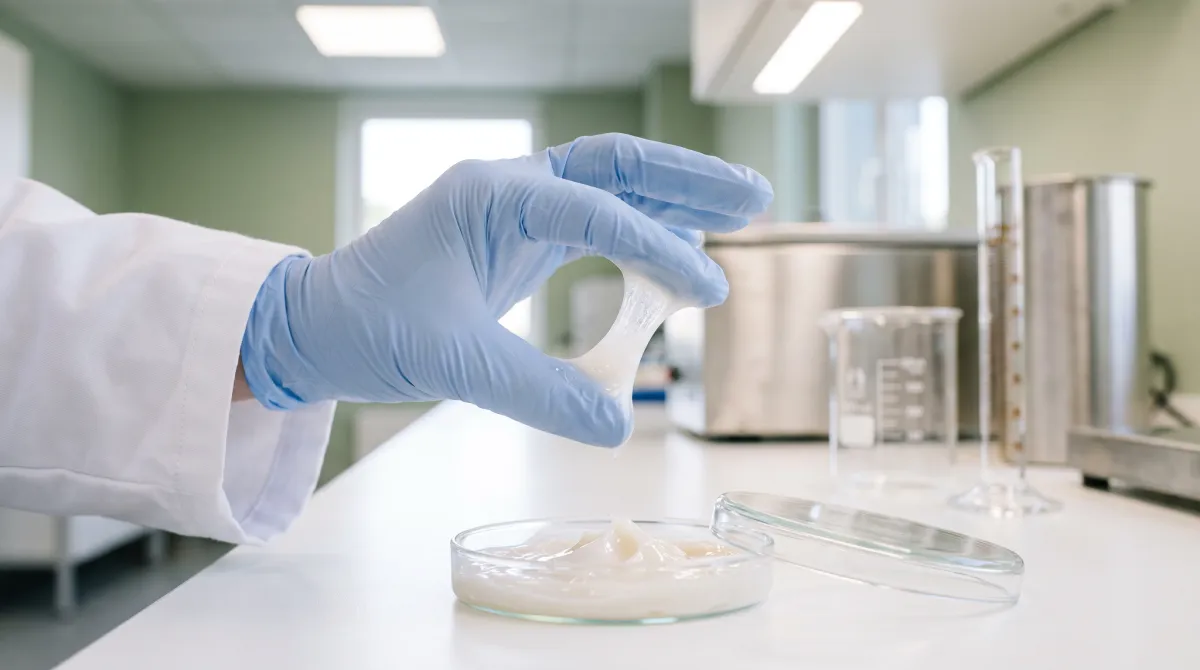
Beauty trends 2027 come down to one idea: proof becomes the product. Consumers want routines that work as systems, biotech actives that target precise mechanisms of skin aging and verifiable promises. At the same time, the European Union is tightening its calendar: retinol capped, microplastics banned in rinse-off products, allergens to be labeled.
The key points at a glance
- Systems rather than products: Mintel predicts that a product will stay in a routine only if it proves its usefulness to the consumer, to those around them and to algorithms.
- Targeted longevity: formulation briefs now aim at precise mechanisms of skin aging, rather than a generic “anti-aging”.
- Mainstream biotech: PDRN and its plant-based or microbial alternatives are moving from treatment rooms to serums.
- AI discovery: according to Euromonitor, beauty accounts for nearly half of the product searches started on AI platforms in 2026.
- 2027 European calendar: vitamin A capped from May 1st, 2027 for all products on sale, microplastics banned in rinse-off products on October 17, 2027.
This article follows up on our overview of the 12 beauty trends of 2026. Where 2026 described what was reaching the shelves, beauty trends 2027 describe what a brand must already prepare in formulation, packaging and positioning.
What are the 10 beauty trends 2027 to know?
The 10 beauty trends 2027 combine forecasts from Mintel, Euromonitor and WGSN, the launches at the in-cosmetics Global 2026 show and the European regulatory calendar. The table summarizes the signal behind each one and what it means for your brand.
| No. | 2027 trend | Sourced signal | What it means for your brand |
|---|---|---|---|
| 1 | Targeted longevity | Central theme of in-cosmetics Global 2026 (BeautyMatter) | Brief written by mechanism, dedicated cosmetic efficacy evidence |
| 2 | Next-generation biotech | WGSN makes PDRN the emblematic active of 2026 | Biotech sourcing, plant-based or microbial alternatives |
| 3 | “Whole” skin barrier | Mintel, Global Predictions 2027 | Formulas targeting the barrier, bridges to nutricosmetics |
| 4 | Skin after weight loss | WGSN session at in-cosmetics 2026 | Body and face ranges dedicated to appearance and firmness |
| 5 | Biological skinification of hair | Euromonitor: scalp, the least exploited longevity opportunity | Skincare-inspired scalp serums and treatments |
| 6 | Beauty as systems | Mintel: from products to systems | Routines, diagnostics, services attached to the product |
| 7 | AI discovery and social commerce | Euromonitor: “Scroll to Shop” | Structured product pages, INCI and evidence readable by machines |
| 8 | Asian wave and micro-indulgences | Euromonitor: “Asian Wave”, “Emotional Micro-indulgence” | Sensorial textures, discovery formats, K-beauty codes |
| 9 | Clean reinvented and claim substantiation | EmpCo Directive, French PFAS law | Documented environmental claims, PFAS-free formulas |
| 10 | Compliance built into the formula | Regulations (EU) 2024/996, 2023/2055 and 2023/1545 | Retinol reformulation, polymers, allergen labeling |
Which 2027 trending ingredients are driving cosmetic innovation?
2027 trending ingredients target an identified mechanism rather than a vague benefit: skin longevity, biotechnology and barrier care shape formulation briefs. For details on the actives that emerged this year, see our B2B guide to trending cosmetic ingredients.
1. Skin longevity becomes a targeted approach
Skin longevity is an approach that seeks to preserve skin quality over the long term by acting on the mechanisms of aging, instead of only correcting its visible signs. At the in-cosmetics Global 2026 show, which brought together more than 1,000 exhibitors and 250 ingredient launches according to BeautyMatter, longevity was the dominant theme, as we observed in our report from in-cosmetics Paris 2026.
Biomedical research now describes 12 hallmarks of aging, according to a review published in the journal Cell in 2023, such as cellular senescence, a grid on which suppliers position their actives. Euromonitor expects a shift from correction to prevention over 2026-2027. For your brand: a brief that names the targeted mechanism and cosmetic efficacy tests to document it.
2. Biotech moves from treatment rooms to serums
PDRN (polydeoxyribonucleotide) is a purified DNA fragment, historically extracted from salmon milt, used in cosmetics for skin hydration and appearance. WGSN presents it as the emblematic active of 2026, which has moved from Korean clinics to masks, eye contour products and hair ampoules, and notes the rise of plant-based and microbial alternatives. Our guide to PDRN in cosmetics: definition, evidence and formulation details what the studies actually say.
In 2027, the point is no longer to display the active but to choose the right version of it: origin, purity, realistic concentration, vegan compatibility.
3. The skin barrier is thought of as a whole
In its Global Predictions 2027, Mintel takes the skin barrier as its central example: consumers increasingly link it to what they eat, drink, apply and even wear. Nutrition, sleep, stress management and skincare enter the same conversation. According to BeautyMatter, nutricosmetics is becoming a beauty infrastructure.
In practice, barrier care can become a pillar of a range, with textures for reactive skin and education on the role of skin lipids.
What new consumers and skincare routines will 2027 bring?
On the consumer side, beauty trends 2027 draw a more precise skincare 2027: skin that changes after weight loss, a scalp treated as skin in its own right, and a routine designed as a system.
4. Skin after rapid weight loss
GLP-1 type treatments have created a new beauty clientele. In a WGSN session reported by BeautyMatter, about one in eight American adults said they had used these drugs, and 80% of users worried about sagging skin, 47% about loss of facial volume. WGSN uses the term “Fauxzempic” for products that target appearance and tone without a prescription.
A necessary caution: a cosmetic does not act on weight and does not treat anything. The consistent response is care that hydrates and improves the look of skin firmness, with strictly cosmetic claims.
5. Hair adopts skincare science
Hair skinification means transferring the actives and logic of facial care to the scalp and the fiber. Euromonitor identifies scalp care as the least exploited longevity opportunity, and in-cosmetics 2026 gave a large place to this biological approach to hair. Scalp serums and multi-step hair rituals are its translation.
6. The routine becomes a system
For Mintel, beauty is moving “from products to systems”: brands that connect products, expertise, technology and services build a more lasting relationship. Diagnostics, subscriptions and guided routines are examples. According to Mintel, a product keeps its place only if it proves its usefulness to the consumer, to those around them and “to the machine”. Design the range as a journey where every item has a clear role.
How is the 2027 cosmetics market being reshaped?
The 2027 cosmetics market keeps growing: Euromonitor estimates global beauty and personal care sales at $669.8 billion in 2026, up 6.1% in current value. But beauty trends 2027 shift the discovery channels and the centers of gravity of cosmetic innovation.
7. Discovery goes through AI and social commerce
Euromonitor groups this movement under the name “Scroll to Shop”. In China, Douyin overtook Tmall in beauty e-commerce with a 42% share in the second quarter of 2026, and beauty accounts for nearly half of the product searches that start on AI platforms. Your product page must therefore be readable by a conversational assistant: full INCI, clear benefits, accessible evidence, FAQ.
8. The Asian wave and sensorial micro-indulgences
According to Euromonitor, Korean, Japanese and Chinese brands together grew faster than non-Asian brands in 2025. The firm also notes an “emotional micro-indulgence”: small, playful treat purchases. Gel textures, travel formats and sensorial rituals are its markers.
Which 2027 regulatory deadlines will transform formulas?
Several European texts reach their deadlines in 2027: among the beauty trends 2027, these are the only ones that apply to every brand. Anticipating them avoids an urgent reformulation and unsellable stock.
9. Clean reinvented demands proof
Clean is not disappearing, it is changing: Euromonitor talks about “ingredient integrity” and notes that in 2026, one deodorant in three carries a “clean” claim. Two texts now frame this discourse. The Directive (EU) 2024/825, known as EmpCo, applied since September 27, 2026, bans generic environmental claims that are not demonstrated and sustainability labels that are not certified. In France, Law No. 2025-188 of February 27, 2025 has banned cosmetic products containing PFAS since January 1st, 2026; our guide to the PFAS ban in cosmetics details the impact on formulas.
10. Compliance is built into the formula
Compliance by design means validating the regulations when choosing raw materials, before working on the texture. The key deadlines:
| Text | What changes | Key date |
|---|---|---|
| Regulation (EU) 2024/996 | Vitamin A capped at 0.05% retinol equivalent in body lotion, 0.3% in other products, with a mandatory statement | Non-compliant products can no longer be made available from May 1st, 2027 |
| Regulation (EU) 2023/2055 | Restriction of synthetic polymer microparticles (microplastics) | Rinse-off products: October 17, 2027; leave-on: October 17, 2029; makeup, lip and nail products: October 17, 2035 |
| Regulation (EU) 2023/1545 | New fragrance allergens to be labeled above 0.001% (leave-on) or 0.01% (rinse-off) | Placing on the market until July 31, 2026, making available until July 31, 2028 |
| Regulation (EU) 2025/40 (PPWR) | Packaging recyclability criteria, graded A, B or C | January 1st, 2030 for compliance with the criteria |
For fragrances and allergen labeling, see also our fragrance allergen checklist for the EU, Canada and the United States. These rules apply to any brand sold in the European Union.
How do you build beauty trends 2027 into your range?
Building in a trend means translating it into specifications, not stacking it on an existing formula. The method we recommend:
- Choose only one or two trends, those that match your customers and your positioning.
- Formulate for the targeted mechanism or need (skin barrier, look of firmness, scalp) rather than a trendy ingredient.
- Check the regulations for each raw material: status under Regulation (EC) 1223/2009, 2027 deadlines, PFAS, allergens.
- Select the active and its version: origin, realistic concentration, available supplier data.
- Plan the tests for stability, packaging compatibility and, if you claim a result, cosmetic efficacy.
- Write provable claims, readable by consumers and AI engines alike.
The manufacturer’s view. At Carmel Cosmetics Labs, an ISO 22716 and ISO 9001 certified laboratory in Agadir, we support more than 500 brands in more than 35 countries. The most frequent mistake with beauty trends 2027 is to start from the ingredient seen on social media rather than from the end customer’s need. A trend that is well used comes down to one clear sentence, a formula compliant with Regulation (EC) 1223/2009 and evidence you can show.
Our advice: check from the first brief that your actives, polymers and fragrances will remain authorized at the European deadlines.
Our custom cosmetic formulation team can turn these directions into realistic specifications, with an accessible MOQ.
Frequently asked questions
What will be the biggest beauty trend in 2027?
The most defining beauty trend of 2027 is proof. Mintel predicts that only products able to demonstrate their usefulness will stay in routines, and the EmpCo Directive has banned generic environmental claims that are not demonstrated since September 2026. Targeted longevity, biotech and beauty as systems all rest on this demand for documented results.
Will retinol be banned in 2027?
No, retinol remains authorized, but it is regulated. Regulation (EU) 2024/996 limits vitamin A to 0.05% retinol equivalent in body lotions and 0.3% in other products, with a mandatory statement on the label. From May 1st, 2027, no non-compliant product can be made available in the European Union.
Which cosmetic products are affected by the 2027 microplastics ban?
The October 17, 2027 deadline applies to rinse-off products, such as shower gels, shampoos or cleansers containing synthetic polymer microparticles. Leave-on products follow in October 2029, and makeup, lip and nail products in October 2035. Exfoliating microbeads are already banned, with no additional delay.
Will PDRN still be trending in 2027?
Everything suggests PDRN will remain a reference, but in more varied forms. WGSN points to the rise of plant-based and microbial alternatives for vegan brands. In 2027, the difference will come from the quality of the active, its realistic concentration and the honesty of the message, more than from the mere presence of the word PDRN on the label.
How can you follow beauty trends 2027 without reformulating your whole range?
Choose one or two trends consistent with your positioning instead of following them all. Working with a laboratory that masters European regulations and offers an accessible MOQ lets you test an innovation on a short range, then widen it if sales follow.
In summary: prepare for 2027 now
Beauty trends 2027 will reward brands that connect innovation and proof: targeted actives, consistent routines, demonstrable claims and formulas compliant with the European deadlines. Among the beauty trends 2027, choose a few and build them into your specifications from the start.
Preparing a range for 2027? Book a free consultation with our formulation laboratory and let’s discuss your project.