For skin
In a mask, the leaf powder is mixed with a floral water or blended with a clay. It forms a plant-based paste that cleanses the skin gently and leaves a light herbal scent.
Services
Catalog
Explore the full catalog1,000+ formulas ready to carry your brandFace careFull range
Serums, creams and targeted care, formulated with your actives.
Hair careFull range
From shampoo to leave-in, for every hair type.
Body careFull range
Moisturizing, nourishing and shower care: cream, butter or oil.
Hammam and naturalFull range
Black soap, argan and authentic Moroccan rituals.
Specialty careFull range
Sun care, lips, intimate care and oral care.
Industries
All solutions by industryFormulas and formats for your businessHospitality and wellness
Brands and creators
Our brands
Our own brands, developed and made in our laboratory.

 DermocosmeticsSublime CosmeticsFace, sun and body care for pharmacies and drugstores.Visit the website

 Hammam and spaLalla MamaMoroccan hammam rituals: black soap, rhassoul, oils and body care.Visit the website

 Equine careStallionGrooming care for horses: mane, coat and hooves.Visit the website
Laboratory
 Our factory in Aït MelloulISO 22716 and ISO 9001, visits by appointmentDiscover the factory
Cosmetics manufacturer based in Agadir
500+ brands35+ countries1,000+ formulas
Our factory in Aït Melloul
Up to 3 million units a yearVisits by appointment
Contract manufacturing, step by step
RegulationsCostsProject steps
Join our teams in Agadir
FormulationProductionQualityRegulatorySales
Resources
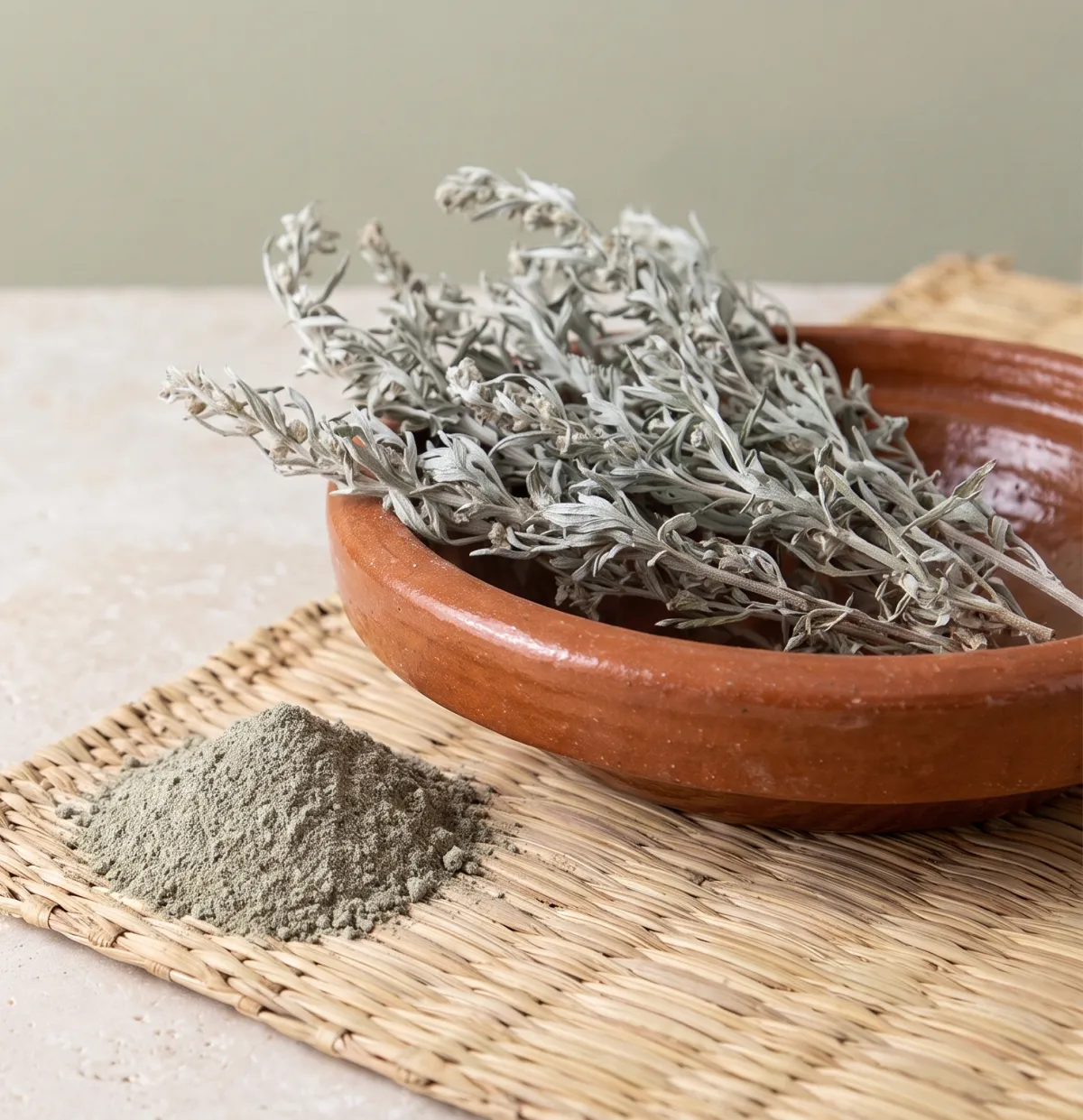
The steppe white wormwood of the high plateaus, with silvery leaves.
The sprig woolly leaves with a herbal, camphor-like scent.
The drying the leaves dry before being ground.
The powder fine and fragrant, for masks and the hammam.
By the Carmel Cosmetics Labs R&D team · updated October 18, 2026
White wormwood (Artemisia herba-alba), called chih in Morocco, is a small perennial shrub of the Asteraceae family, 15 to 60 cm tall, with woolly, silvery leaves. It forms vast steppes on the High Plateaus and the southern slope of the Anti-Atlas. Highly aromatic, it gives off a herbal, camphor-like scent. In cosmetics, its dried, ground leaves go into powders, masks and hammam rituals.
The dried, then ground leaves, declared as ARTEMISIA HERBA-ALBA LEAF POWDER. This is the form used in our powders and masks: a whole plant material, chosen for its texture and discreet aroma.
A volatile oil obtained by distillation, which the CosIng database classifies as a perfuming ingredient. The Moroccan oils analyzed are rich in thujones and camphor: it is dosed like a fragrance, with its own labeling rules.
In a mask, the leaf powder is mixed with a floral water or blended with a clay. It forms a plant-based paste that cleanses the skin gently and leaves a light herbal scent.
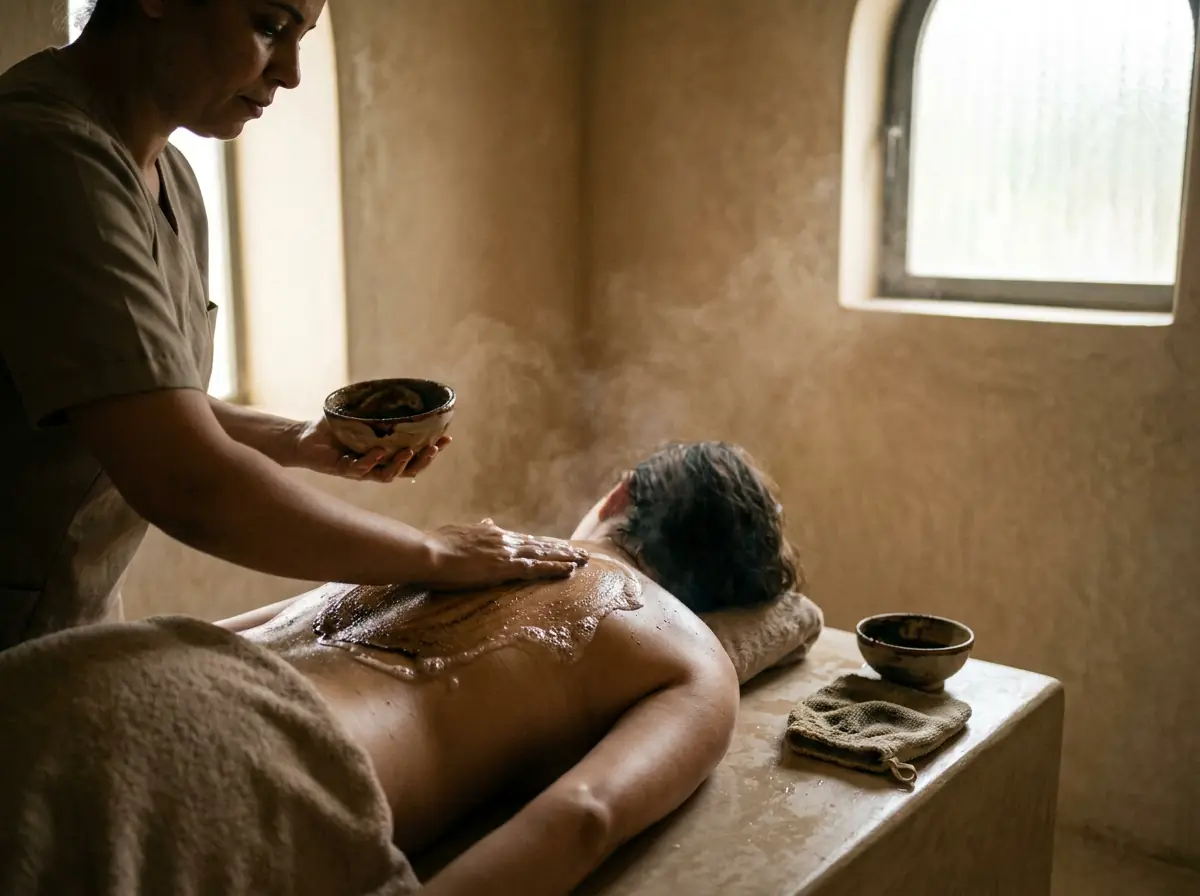
In a hammam blend, paired with black soap or a body mask, it brings an aromatic, camphor-like note that recalls the steppes of Morocco.
It tells the story of a terroir ingredient, known in Morocco as chih, izri or ifsi. The CosIng database lists a skin conditioning function for white wormwood flower extract.
One spoonful of powder mixed into rose water or blended with a clay, applied in a thin layer, then rinsed off with lukewarm water after a few minutes. Avoid the eye area.
Added to a body mask or a black soap ritual, it is massaged onto damp skin in the hammam, then rinsed off.
Sold in a sachet or a jar, it is prepared just before use: the paste does not keep, the dry powder does.
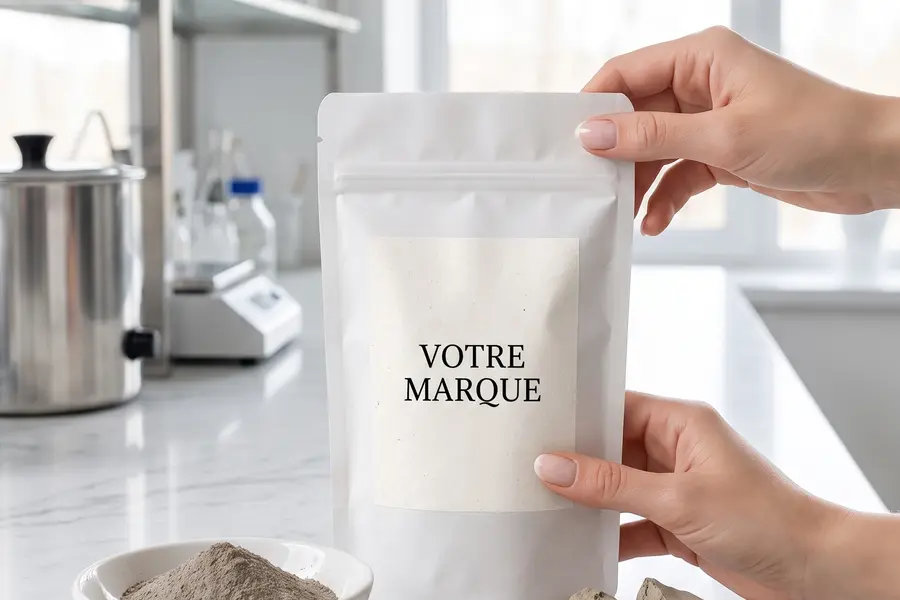
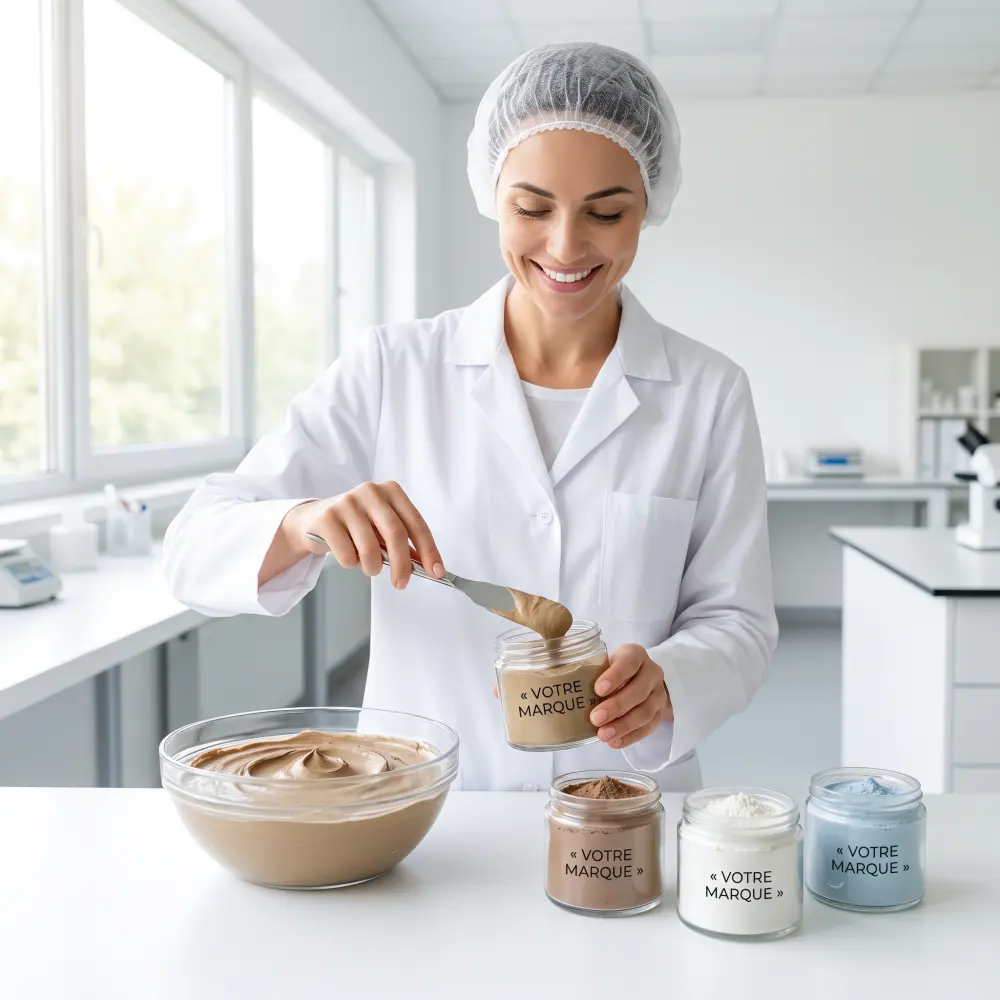
We add it to mix-your-own powders, face masks and hammam ritual products, ready to carry your brand. Pick a category to see our formulas.
What our formulators take into account when white wormwood goes into your product.
Often paired with
“Chih” is a vernacular name: the INCI list gives the plant's Latin name and the part used, here the powdered leaves.
As a raw plant material, it is checked on receipt, notably for microbiological cleanliness, then sieved for an even texture.
Its camphor-like scent is pronounced: we balance it with floral waters or other plants. If a wormwood essential oil is added, its allergens are labeled, including camphor, added to the list by Regulation (EU) 2023/1545.
Chih has traditional medicinal uses in Morocco. We present them as a tradition and write your claims within the cosmetic frame: cleanse, fragrance, soften.
In Morocco, white wormwood has several names: chih in Arabic, izri or ifsi in Amazigh depending on the region.
The white wormwood steppe is characteristic of the High Plateaus and the southern slope of the Anti-Atlas, in a climate that receives about 200 to 300 mm of rain per year.
The Artemisia genus includes about 500 species worldwide, twelve of which are found in Morocco.
It is Artemisia herba-alba, a small aromatic shrub with silvery leaves, called chih in Morocco. It grows in dry steppes, notably on the High Plateaus. In cosmetics, its dried, ground leaves are mostly used, in powders, masks and hammam rituals.
In cosmetics, the leaf powder serves as a plant-based base for masks and hammam blends: it helps cleanse the skin and brings a herbal, camphor-like scent. Its medicinal uses belong to folk tradition: they are not benefits a cosmetic product can claim.
Mix one spoonful of powder with rose water or a clay to make a paste. Apply it in a thin layer on the face, avoiding the eyes, leave it on for a few minutes, then rinse with lukewarm water. Patch test on a small area before first use.
The Artemisia genus includes about 500 species, twelve of them in Morocco. White wormwood is recognized by its woolly, silvery leaves and camphor-like scent. On a label, it is the Latin name in the INCI list, Artemisia herba-alba, that identifies the exact species, not the common name.
Chih is the Arabic name for white wormwood, also called izri or ifsi in Amazigh. Herbalists in the Fès-Meknès region mention its leaves in traditional preparations, as a decoction or infusion, among other things for cleaning teeth. These are traditional uses, not product claims.
Yes. We add it to white label mix-your-own powders, face masks and hammam ritual products, or to an exclusive private label formula, made in our ISO 22716 factory in Aït Melloul, Morocco.
Send your brief: we formulate and manufacture your white wormwood powders and masks in our ISO 22716 factory in Aït Melloul. Free consultation and formula selection, no commitment.