











































Services

Torn between two services?A project manager will guide you

Catalog

Explore the full catalog1,000+ formulas ready to carry your brand

Face careFull range

Serums, creams and targeted care, formulated with your actives.

Body careFull range

Moisturizing, nourishing and shower care: cream, butter or oil.

Specialty careFull range

Sun care, lips, intimate care and oral care.

Men, baby, makeupFull range

Shaving and beard, baby and mom, makeup.

Industries

All solutions by industryFormulas and formats for your business

Our brands

Our own brands, developed and made in our laboratory.

Become a distributor of our brandsPharmacies, spas, shops and wholesalers

Laboratory

Cosmetics manufacturing room with a row of stainless-steel mixers and an operator in white workwearOur factory in Aït MelloulISO 22716 and ISO 9001, visits by appointmentDiscover the factory

Resources

Vegetable glycerin (glycerol) in cosmetics

Glycerin, or glycerol, is the reference humectant: it attracts water into the stratum corneum, where skin naturally contains it5. A 20% cream increases measured hydration after 10 days7. Its origin, plant, animal or synthetic, does not appear in the INCI name: it is a specification requirement.
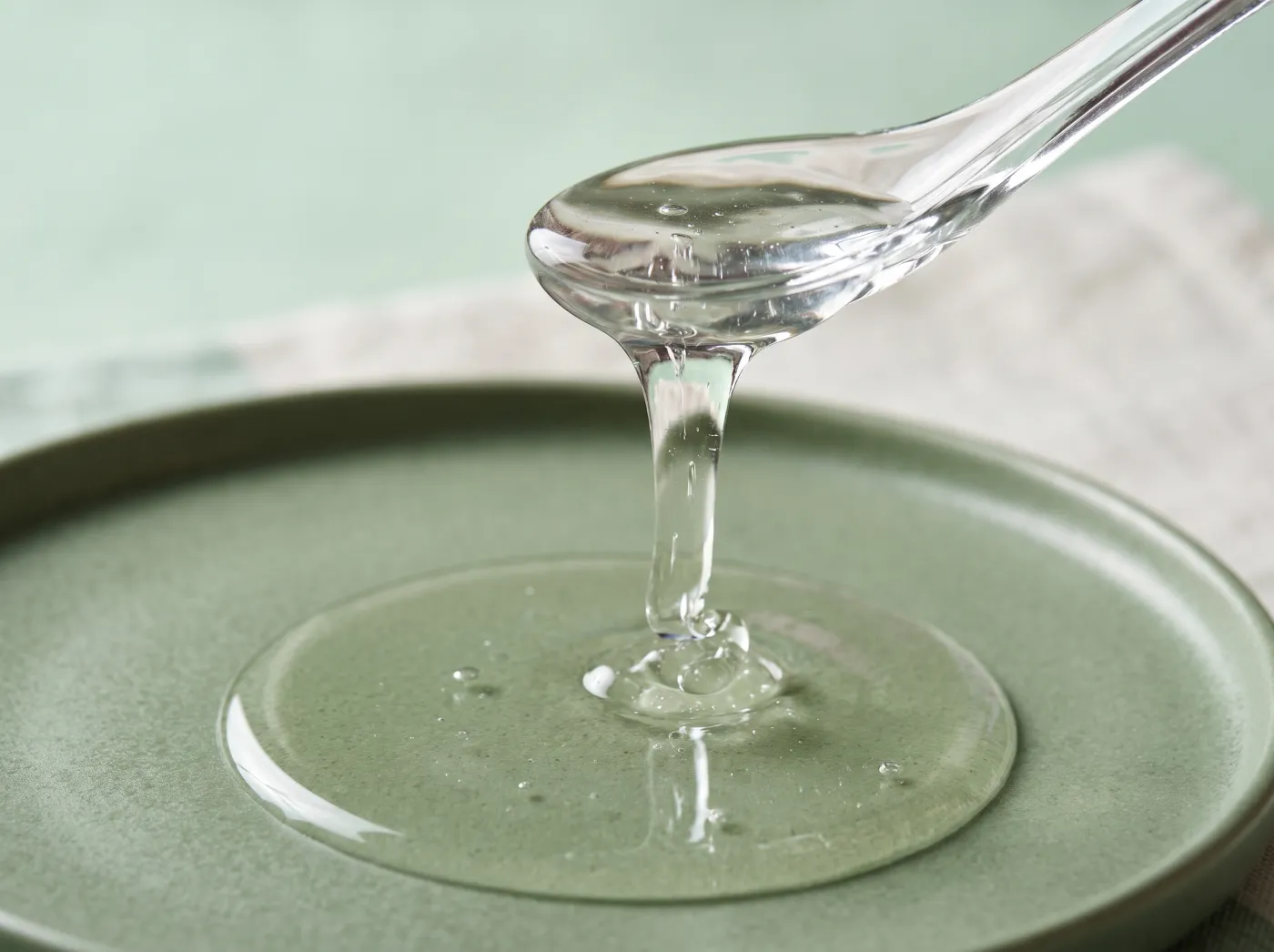
Colorless liquid glycerin in macro, a thick drop on a sage green ceramic surface

Glycerin at a glance

Entry from our cosmetic ingredient glossary. Regulatory data from the European Commission's CosIng database1 and Regulation (EC) 1223/20092, safety according to the CIR expert panel3. Copy the identifiers in one click for your files.

INCI name
GLYCERIN
Other names
GlycerolGlycerol (INN), propane-1,2,3-triol, glycerolum (European Pharmacopoeia)1
CAS number
56-81-5
EC number
200-289-5
Formula
C₃H₈O₃Molar mass 92.09 g/mol
CosIng functions
Humectant, skin and hair conditioner, solvent"Humectant", "skin conditioning - humectant", "hair conditioning", "skin protecting", "solvent" and "viscosity controlling", among others1
Appearance
Colorless, viscous, odorless liquidMiscible with water in all proportions
Origin
Plant, animal or syntheticThe INCI name does not distinguish the origin, and the molecule is identical in all cases. Require it from the supplier through a certificate of origin
EU status
No restrictionAbsent as a substance from annexes II to VI of Regulation (EC) 1223/2009 as consolidated on May 1, 20252
Allergen to declare
NoAbsent from the fragrance allergen list of Regulation (EU) 2023/1545
Safety
Judged safe in cosmeticsCIR panel 2019: safe in the practices of use and concentrations described3

What the research says

Each result shows the protocol and the level of evidence. The higher the level, the better the result carries over to a finished formula.

Clinical trialReview or consensusLaboratory

Skin and hydrationSkincare

Hydration up after 10 days at 20%

Clinical trial
20% cream10 days17 healthy volunteersDouble blind, placebo controlled

Corneometry values, a sign of hydration, increase significantly. Skin water loss and sensitivity to an irritating surfactant (SLS) do not change7.

Glycerol hydrates, petrolatum limits water loss

Clinical trial
Emulsion with glycerol, petrolatum or both12 hours51 volunteers with dry skinRandomized, double blind, crossover

The complete cream reduces water loss compared with the vehicle and increases hydration compared with the vehicle alone and with the vehicle containing petrolatum. The authors attribute the drop in water loss to petrolatum and the hydration to glycerol9.

Stratum corneum glycerol is linked to its hydration

Clinical trial
Measurements in humansNo product applied

Stratum corneum hydration follows its glycerol content, more closely than sebum production. After immersion in water, both drop together, then glycerol returns to normal within a few hours. This finding supports glycerin-based moisturizers5.

Without aquaporin-3, less glycerol and less hydrated skin

Laboratory
Mice lacking aquaporin-3

Stratum corneum water drops by about 50% and its glycerol falls from 5.5 to 2.3 nmol per µg of protein; elasticity and barrier recovery decrease. An animal result: it explains the role of glycerol without proving the effect of an applied product6.

BodyBodycare

Niacinamide and glycerin lotions: dryness and water loss

Clinical trial
Niacinamide and glycerin lotions35 days63 and 58 womenRandomized

Compared with six other body lotions, the two formulas gave the largest improvement in visible dryness, hydration and skin water loss. The share of glycerin is not isolated from that of niacinamide13.

Origin and properties of the materialFormulation

A biodiesel by-product

Laboratory
Purification processFinal purity of 98.2%

Every ton of biodiesel produced generates about 100 kg of glycerol. Crude, it contains methanol, oil, soap and salts; a two-step purification reaches 98.2%11. Crude glycerol is a by-product coming mainly from this industry12.

Maximum water retention between 60 and 70% in solution

Laboratory
Solutions from 0 to over 70% by massGravimetry, water loss, calorimetry

Water retention increases with concentration up to 60%. Between 60 and 70%, the solution does not change weight on evaporation; above 70%, it absorbs ambient moisture10.

Expert viewDermatology

Judged safe in cosmetics

Expert assessment
CIR panel 2019

The panel reviewed the animal and human data and concludes that glycerin is safe in the practices of use and concentrations described3.

Hydration, barrier and mechanical properties of the skin

Review
2008 review

The review describes improved stratum corneum hydration, barrier function and mechanical properties of the skin, as well as protection against irritant stimuli. Endogenous glycerol passes through aquaporin-34.

Less stinging than a urea cream

Clinical trial
20% cream versus 4% urea and 4% salt30 days197 people with dry atopic skinRandomized, double blind

Moderate or severe stinging is reported by 10% of users of the glycerin cream, versus 24% with urea. The effect on dryness is judged equivalent. A population with atopic skin: transpose the result with caution8.

This page summarizes published literature on a cosmetic ingredient. It does not describe the effect of a finished product, which depends on its formula, and it is not medical advice. Some of the studies cited were run or funded by manufacturers; this is shown in the sources. Glycerin is a basic ingredient: studies often cover complete creams, where its share is not always isolated; the page says so each time.

Concentrations used in studies

The two clinical trials cited test a 20% glycerin cream78. Pure, it is not applied as is: in vitro, water retention peaks between 60 and 70%, then the solution absorbs moisture from the air10. The level in a finished product is set with the formulator, according to the texture and feel you want.

Which products use glycerin?

Our white label catalog includes 15 formulas with glycerin: the key active in 1 of them, a supporting ingredient in the others. Every category can be customized (formula, fragrance, packaging).

6Face

Supporting humectant in hydrosol-based toners, cleansing gels, scrubs and eye contour care.

8Body

Humectant in mists, liquid soaps, shower gels, body masks and sun care or aftershave products.

1Hair

Supporting humectant in heat-protectant hair sprays; CosIng recognizes a hair conditioning function.

In our formulas, it is most often paired with

Argan oil 8Aloe vera 6Panthenol 5Niacinamide 4Allantoin 3

Glycerin, urea, panthenol or betaine?

Four humectants or moisturizers often combined. They complement each other more than they compete; each has its own detailed page.

GlycerinUreaPanthenolBetaine
CosIng functionsHumectant, skin and hair conditioner, solvent1Humectant, see the urea pageSkin and hair care, antistaticHumectant, hair conditioner
In the skinYes: stratum corneum glycerol, via aquaporin-356Component of the natural moisturizing factor, see the pageSee the panthenol pageOsmolyte that skin can transport, see the page
ToleranceModerate or severe stinging in 10% of users of a 20% cream824% with a cream at 4% urea and 4% salt, in the same study8See the panthenol pageSee the betaine page
EU regulationNo restriction12No restrictionNo restrictionNo restriction

Frequently asked questions about glycerin

Vegetable glycerin: where does it come from?
Glycerin is the backbone of fats and oils: it is recovered by separating the fatty acids. "Vegetable" means it comes from plant oils; crude glycerol is today a by-product coming mainly from biodiesel production1112. A glycerin can also be of animal origin or come from chemical synthesis, and the INCI name GLYCERIN does not say which. For a brand, origin is a specification requirement: ask the supplier for a certificate of origin.
Vegetable glycerin vs glycerin: is there a difference?
Chemically, no: it is the same molecule, glycerol (CAS 56-81-5)1. The difference lies in the specification: a plant origin can be required for a natural or vegan positioning, and the purity grade (cosmetic or pharmacopoeia) is set at purchase.
What are the benefits of glycerin for skin?
It hydrates: a 20% cream increases measured hydration after 10 days7, and the glycerol content of the stratum corneum is linked to its hydration5. On its own, it does not reduce water loss7; to limit it, it is paired with an occlusive fat, as in the crossover trial cited9.
What percentage of glycerin should you use?
The clinical trials cited test a 20% cream78. Pure glycerin is not applied as is: above 70% in solution, it absorbs moisture from the air rather than holding it10. The dose is set with the formulator, according to texture and target.
Is glycerin safe?
The CIR panel judges it safe in the practices of use and concentrations described3 and it is not restricted in the EU2. In a trial on atopic skin, 10% of users of a 20% cream report moderate or severe stinging, versus 24% with a urea cream8. During pregnancy, as with any skincare product, a healthcare professional's advice remains the rule.
Is glycerin good for hair?
CosIng recognizes a hair conditioning function1. We kept no controlled hair study: this page therefore says no more.
Can you manufacture a glycerin moisturizer for my brand?
Yes. Our ISO 22716 certified lab offers 15 formulas containing glycerin (lotions, gels, soaps, mists, creams, hair sprays) to customize, or a custom formula. Free samples are included.

Sources

Peer-reviewed studies and official regulatory sources, checked on November 3, 2026.

  1. European Commission. CosIng, entry GLYCERIN (CAS 56-81-5, EC 200-289-5). ec.europa.eu/growth/tools-databases/cosing
  2. European Parliament and Council. Regulation (EC) No 1223/2009 on cosmetic products, consolidated version of May 1, 2025: no entry for glycerin in annexes II to VI. eur-lex.europa.eu
  3. Becker LC, Bergfeld WF, Belsito DV, et al. Safety Assessment of Glycerin as Used in Cosmetics. Int J Toxicol. 2019;38(3 Suppl):6S-22S. doi:10.1177/1091581819883820
  4. Fluhr JW, Darlenski R, Surber C. Glycerol and the skin: holistic approach to its origin and functions. Br J Dermatol. 2008;159(1):23-34. doi:10.1111/j.1365-2133.2008.08643.x
  5. Choi EH, Man MQ, Wang F, et al. Is endogenous glycerol a determinant of stratum corneum hydration in humans?. J Invest Dermatol. 2005;125(2):288-293. doi:10.1111/j.0022-202X.2005.23799.x
  6. Hara M, Ma T, Verkman AS. Selectively reduced glycerol in skin of aquaporin-3-deficient mice may account for impaired skin hydration, elasticity, and barrier recovery. J Biol Chem. 2002;277(48):46616-46621. doi:10.1074/jbc.M209003200
  7. Lodén M, Wessman W. The influence of a cream containing 20% glycerin and its vehicle on skin barrier properties. Int J Cosmet Sci. 2001;23(2):115-119. doi:10.1046/j.1467-2494.2001.00060.xACO Hud
  8. Lodén M, Andersson AC, Anderson C, et al. A double-blind study comparing the effect of glycerin and urea on dry, eczematous skin in atopic patients. Acta Derm Venereol. 2002;82(1):45-47. doi:10.1080/000155502753600885ACO Hud
  9. Vaillant L, Georgescou G, Rivollier C, Delarue A. Combined effects of glycerol and petrolatum in an emollient cream: a randomized, double-blind, crossover study in healthy volunteers with dry skin. J Cosmet Dermatol. 2020;19(6):1399-1403. doi:10.1111/jocd.13163Pierre Fabre
  10. Chen HJ, Lee PY, Chen CY, et al. Moisture retention of glycerin solutions with various concentrations: a comparative study. Sci Rep. 2022;12(1):10232. doi:10.1038/s41598-022-13452-2Healthmate
  11. Abdul Raman AA, Tan HW, Buthiyappan A. Two-step purification of glycerol as a value added by product from the biodiesel production process. Front Chem. 2019;7:774. doi:10.3389/fchem.2019.00774
  12. Luo X, Ge X, Cui S, Li Y. Value-added processing of crude glycerol into chemicals and polymers. Bioresour Technol. 2016;215:144-154. doi:10.1016/j.biortech.2016.03.042
  13. Christman JC, Fix DK, Lucus SC, et al. Two randomized, controlled, comparative studies of the stratum corneum integrity benefits of two cosmetic niacinamide/glycerin body moisturizers vs. conventional body moisturizers. J Drugs Dermatol. 2012;11(1):22-29. PMID 22206073Procter & Gamble
Carmel Cosmetics Labs product specialist with a brand founder

Tell us about your project

A product specialist reviews your request and gets back to you on the channel you prefer.

Lead EN – Demande de devis
Tell us about your project. A product specialist will get back to you shortly.
CONTACT INFORMATION
Name
PROJECT INFORMATION
Which cosmetics category interests you most?

By submitting this form, you agree to our terms of service and privacy policy.

No obligation. Your information stays confidential and is used only to prepare your quote.





