











































α-pinene, viridiflorol and camphene
Reviewα-Pinene, viridiflorol and camphene are the major constituents of Cistus ladanifer essential oils. The review also points to possible uses in cosmetics1.
Services
Catalog
Explore the full catalog1,000+ formulas ready to carry your brandFace careFull range
Serums, creams and targeted care, formulated with your actives.
Hair careFull range
From shampoo to leave-in, for every hair type.
Body careFull range
Moisturizing, nourishing and shower care: cream, butter or oil.
Hammam and naturalFull range
Black soap, argan and authentic Moroccan rituals.
Specialty careFull range
Sun care, lips, intimate care and oral care.
Industries
All solutions by industryFormulas and formats for your businessHospitality and wellness
Brands and creators
Our brands
Our own brands, developed and made in our laboratory.
 DermocosmeticsSublime CosmeticsFace, sun and body care for pharmacies and drugstores.Visit the website
 Hammam and spaLalla MamaMoroccan hammam rituals: black soap, rhassoul, oils and body care.Visit the website
 Equine careStallionGrooming care for horses: mane, coat and hooves.Visit the website
Laboratory
 Our factory in Aït MelloulISO 22716 and ISO 9001, visits by appointmentDiscover the factory
Cosmetics manufacturer based in Agadir
500+ brands35+ countries1,000+ formulas
Our factory in Aït Melloul
Up to 3 million units a yearVisits by appointment
Contract manufacturing, step by step
RegulationsCostsProject steps
Join our teams in Agadir
FormulationProductionQualityRegulatorySales
Resources
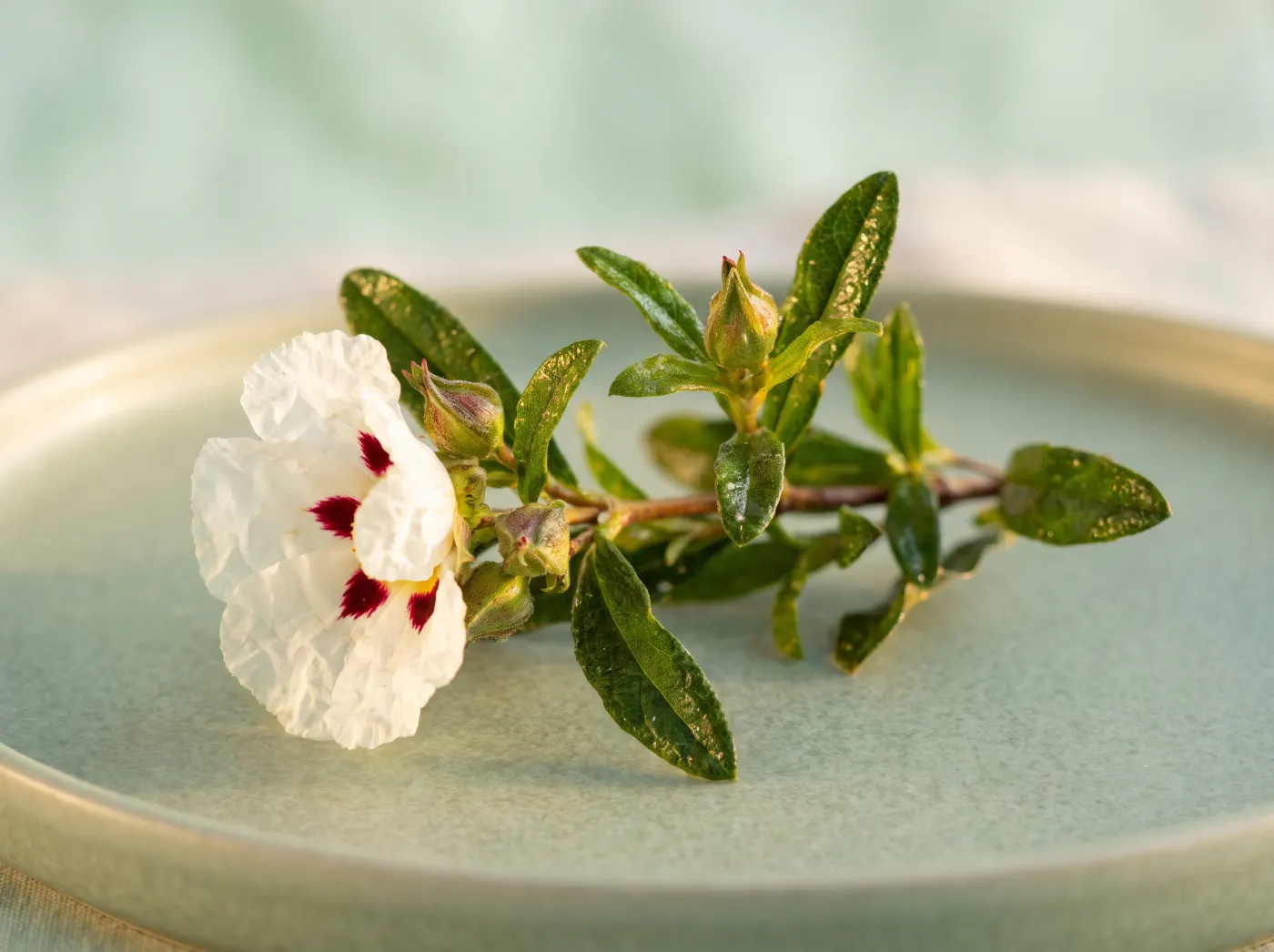
Cistus essential oil is the volatile oil distilled from Cistus ladanifer, a Mediterranean shrub studied notably in Morocco12. Its major constituents vary: α-pinene, viridiflorol and camphene according to the 2025 review1. It is named neither in Regulation (EU) 2023/1545 nor in the consolidated Annex III67. No cosmetic clinical study was kept.
Entry from our cosmetic ingredient glossary. Regulatory data from the European Commission's CosIng database5, from Regulation (EU) 2023/15456 and from consolidated Regulation (EC) No 1223/20097. Copy the identifiers in one click for your files.
Each result shows the protocol and the level of evidence. The higher the level, the better the result carries over to a finished formula.
α-Pinene, viridiflorol and camphene are the major constituents of Cistus ladanifer essential oils. The review also points to possible uses in cosmetics1.
Viridiflorol reaches 17.64%, pinocarveol 11.02%, bornyl acetate 9.38% and ledol 8.85%2. The study shows that the harvest period influences the composition: choosing the batch matters for product consistency.
The Cistus ladanifer extract protected fibroblasts from oxidative stress, inhibited elastase and showed no irritant effect on reconstructed epidermis3. These results concern extracts rich in ellagic acid derivatives: they do not transfer to the essential oil.
This page summarizes published literature on a cosmetic ingredient. It does not describe the effect of a finished product, which depends on its formula, and it is not medical advice. Evidence is flagged by level: clinical trial, review or laboratory. For cistus, the cosmetic evidence is weak: few studies, laboratory-based.
Our white label catalog includes 2 formulas with cistus oil: the key active in 2 of them, a supporting ingredient in the others. Every category can be customized (formula, fragrance, packaging).
In our formulas, it is most often paired with
Copaiba balsam 1Carrot essential oil 1Peer-reviewed studies and official regulatory sources, checked on November 3, 2026.

A product specialist reviews your request and gets back to you on the channel you prefer.