Services

Torn between two services?A project manager will guide you

Catalog

Explore the full catalog1,000+ formulas ready to carry your brand

Face careFull range

Serums, creams and targeted care, formulated with your actives.

Body careFull range

Moisturizing, nourishing and shower care: cream, butter or oil.

Specialty careFull range

Sun care, lips, intimate care and oral care.

Men, baby, makeupFull range

Shaving and beard, baby and mom, makeup.

Industries

All solutions by industryFormulas and formats for your business

Laboratory

Cosmetics manufacturing room with a row of stainless-steel mixers and an operator in white workwearOur factory in Aït MelloulISO 22716 and ISO 9001, visits by appointmentDiscover the factory

Resources

Hyaluronic acid (sodium hyaluronate)

Hyaluronic acid is a polysaccharide that holds water. It is mostly used as its sodium salt (INCI: SODIUM HYALURONATE)12. Its molecular weight changes how it behaves: fractions of 20 to 300 kDa cross the stratum corneum, those of 1,000 to 1,400 kDa do not4. Trials cover hydration, elasticity and fine lines356.

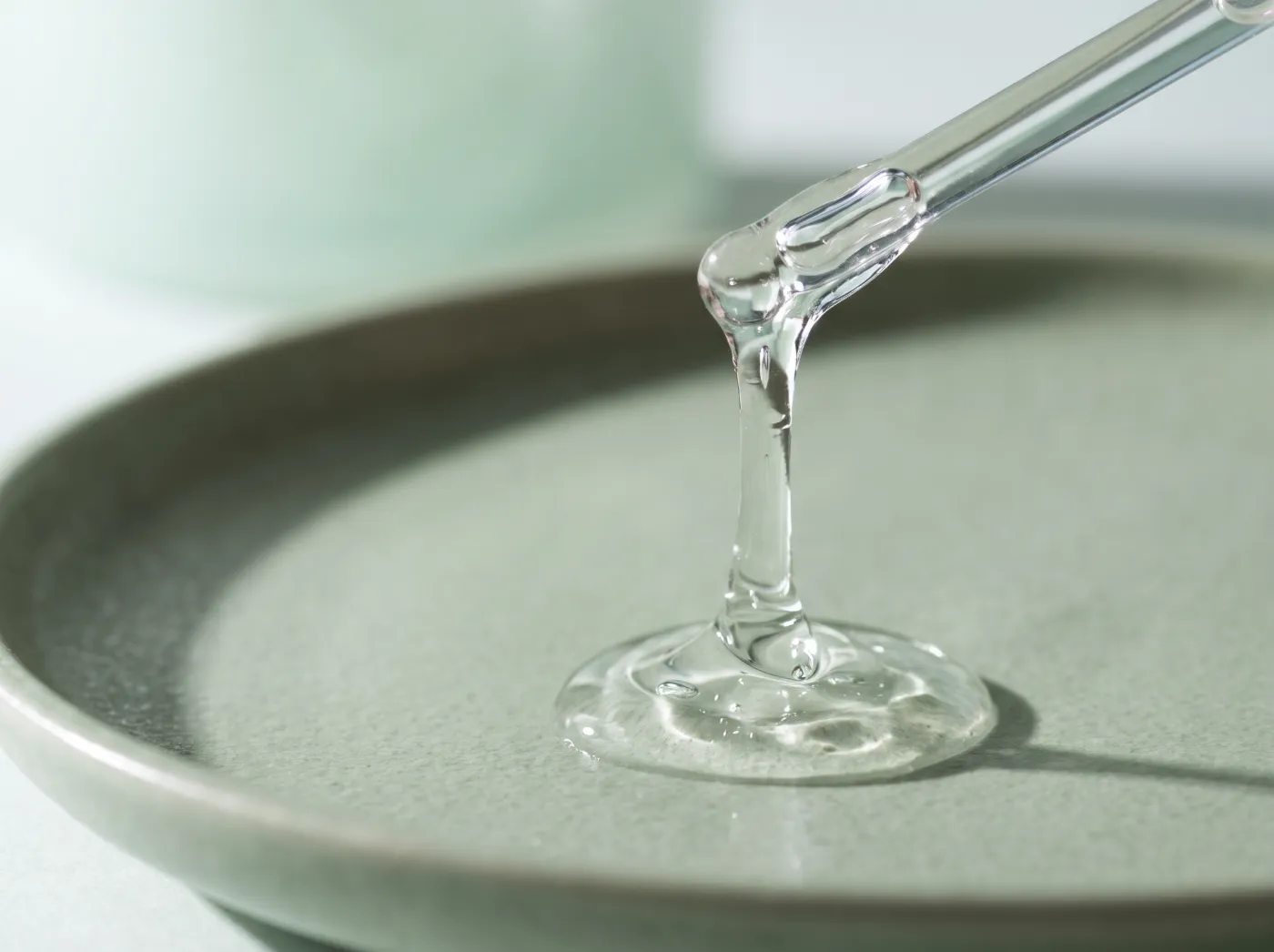
White sodium hyaluronate powder in macro view on a sage green ceramic surface

Hyaluronic acid at a glance

Entry from our cosmetic ingredient glossary. Regulatory data from the European Commission's CosIng database113, safety according to the CIR expert panel2. Copy the identifiers in one click for your files.

INCI name
SODIUM HYALURONATESodium form, the most common in our formulas. The free acid is declared as HYALURONIC ACID13
Other names
Sodium hyaluronate, hyaluronanHyaluronic acid, sodium salt; a potassium salt also exists (potassium hyaluronate)2
CAS number
9067-32-7Free hyaluronic acid: 9004-61-913
EC number
Not assignedCosIng lists no EC number for the sodium salt; the free acid carries 232-678-013
Nature
Polysaccharide (glycosaminoglycan)Polymer of variable molecular weight, from a few dozen to over 1,000 kDa depending on grade34
CosIng functions
Humectant, skin conditioning"Humectant" and "skin conditioning" in the European nomenclature1
Origin
Bacterial fermentationThe CIR panel cites bacterial fermentation and rooster combs as the main sources2
Appearance
White powder, soluble in waterFormulated in the water phase; gel viscosity rises with molecular weight
EU status
No restrictionNot listed in the annexes of Regulation (EC) 1223/20091
Allergen to declare
No
Safety
Judged safe in cosmeticsCIR panel conclusion for the acid, the sodium salt and the potassium salt; skin conditioning use up to 2%2

What the research says

Each result shows the protocol and the level of evidence. The higher the level, the better the result carries over to a finished formula.

Clinical trialReview or consensusLaboratory

Facial skinSkincare

Hydration, elasticity and eye-area fine lines depending on molecular weight

Clinical trial
0.1%60 days76 women aged 30 to 605 molecular weights, versus a control cream

All five creams (50, 130, 300, 800 and 2,000 kDa) improved hydration and elasticity compared with the control. Wrinkle depth dropped significantly only with the 50 and 130 kDa fractions3.

Immediate and lasting hydration with a serum

Clinical trial
Hyaluronic acid serum6 weeks40 women aged 30 to 65Twice-daily application, no control group

Hydration measured with a corneometer: +134% right after application, +55% at week 6. The dermatologist's assessment also shows gains in smoothness (64%) and bounce (60%)6.

Hydration maintained for 24 hours and less water loss

Clinical trial
1% hyaluronic acid with 5% glycerin and centella extract24 hours20 womenRandomized, compared with an untreated control area

Hydration higher than the control area at 1, 8 and 24 hours (+59%, +48%, +29%) and lower water loss at 24 hours. The result comes from the combination of three actives, not from hyaluronic acid alone7.

A high molecular weight serum, open-label study

Clinical trial
Serum with high molecular weight hyaluronic acid and peptides8 weeksOpen-label study, no control group

Hydration up at every visit and favorable investigator ratings on fine lines, texture and dryness. With no control group and added peptides, the effect of hyaluronic acid itself is not isolated8.

Penetration: molecular weight decides

Laboratory
Ex vivo human skinRaman microspectroscopy3 grades of hyaluronic acid

Fractions of 20 to 300 kDa cross the stratum corneum; those of 1,000 to 1,400 kDa stay at the surface. A 2025 review sets the penetration limit below 100 kDa410.


BodyBodycare

Dry legs: more hydration with low molecular weight

Clinical trial
Low or high molecular weight lotions and vehicle4 weeks36 residents aged 60 to 80Double-blind, randomized

Skin capacitance of 56.37 AU with low molecular weight, versus 52.37 with high molecular weight and 49.01 with the vehicle. Water loss and dryness symptoms did not differ between areas. No adverse effects5.

Scalp and hairHaircare

Skin and hair: an overview from an active ingredient maker

Review
2025 literature reviewAuthors from Givaudan

This review describes effects of hyaluronic acid on skin and hair, with a focus on hair care, and notes that only the fraction below 100 kDa penetrates the skin. The abstract reports no quantified clinical result on hair: the evidence remains to be confirmed10.

What experts sayReviews

A well-tolerated moisturizer, useful in anti-aging care

Review
2022 literature reviewAuthors from L'Oréal

The studies reviewed describe topical hyaluronic acid as well tolerated and effective for skin hydration and rejuvenation. The loss of skin hyaluronic acid starts around age 259.

A well-tolerated ingredient, rare adverse effects

Review
2016 systematic reviewAll routes of administration

The review concludes that tissue hydration and elasticity improve and that adverse effects are marginal. It is not limited to cosmetic use: read this result as a sign of good tolerance11.

This page summarizes published literature on a cosmetic ingredient. It does not describe the effect of a finished product, which depends on its formula, and it is not medical advice. Several of the clinical trials cited were run or funded by cosmetics companies; this is indicated in the sources.

Concentrations used in studies

The trials cited test hyaluronic acid at 0.1% (five molecular weights) and at 1% in combination. The CIR panel notes cosmetic use up to 2%. The final concentration of a formula is set with the formulator, depending on molecular weight, texture and the desired effect.

Which products use hyaluronic acid?

Our white label catalog includes 40 formulas with hyaluronic acid: the key active in 11 of them, a supporting ingredient in the others. Every category can be customized (formula, fragrance, packaging).

26Face

Key active in serums, creams, cream cleansers and hydrating eye contour products, supporting active in toners, masks and cleansers.

6Hair

Key active in the hydrating hair serum and mask, also found in smoothing hair care and scalp sprays.

In our formulas, it is most often paired with

Panthenol 27Niacinamide 19Shea butter 11Allantoin 10

Hyaluronic acid, niacinamide, vitamin C or retinol?

Four actives often compared when choosing the hero of a range. They do not exclude each other and are often combined in the same routine.

Hyaluronic acidNiacinamideVitamin CRetinol
Main roleSurface hydration, comfortBarrier, skin tone, shineRadiance, antioxidant protectionSkin texture, fine lines
WhenMorning and eveningMorning and eveningOften in the morningIn the evening
In the formulaStable, molecular weight changes the feel and the penetration4Stable, easy to formulate in the water phaseOxidizes with air and light, needs protective packagingSensitive to light and oxidation
EU regulationNo restriction1No restrictionNo restriction for ascorbic acidConcentration limited since Regulation (EU) 2024/99612
Who it suitsAll skin typesGeneral public, sensitive skin includedDull skinExperienced users, gradual introduction

Frequently asked questions about hyaluronic acid

What is hyaluronic acid?
It is a polysaccharide that holds water and occurs naturally in skin. In cosmetics, it is mostly used as its sodium salt (sodium hyaluronate), produced mainly by bacterial fermentation2. It hydrates the skin surface and improves comfort.
Are hyaluronic acid and sodium hyaluronate the same thing?
Almost. Sodium hyaluronate is the sodium salt of hyaluronic acid; it is more stable and easier to formulate. On a label you will read SODIUM HYALURONATE or HYALURONIC ACID, two distinct INCI names in CosIng113.
What are the benefits of hyaluronic acid for skin?
The clinical studies cited cover hydration, elasticity and the look of fine lines, with creams or serums applied once or twice a day for 4 to 8 weeks356. The effect depends on molecular weight and on the complete formula.
Which molecular weight should you choose?
Fractions of 20 to 300 kDa cross the stratum corneum, those of 1,000 to 1,400 kDa stay at the surface4. In a trial at 0.1%, fine lines receded with the 50 and 130 kDa fractions, while all five molecular weights improved hydration3. Many formulas combine several molecular weights: the choice is made with the formulator.
Should you apply it in the morning or at night?
Both work. The studies cited applied products twice a day368, and there is no restriction on use in the EU1.
Can you use hyaluronic acid with vitamin C?
Yes, it is a common pairing in serums. As with any combination of actives, the stability of the final formula is checked through lab testing.
Is hyaluronic acid safe, and does it have side effects?
The CIR panel judges it safe in cosmetics, with no sensitizing effect, and it is not restricted in the EU12. No adverse effects were reported in the dry legs trial5. During pregnancy, as with any skincare product, a healthcare professional's advice remains the rule.
Can you manufacture a hyaluronic acid serum for my brand?
Yes. Our ISO 22716 certified lab offers 40 hyaluronic acid formulas (serums, creams, eye contour, body and hair care) that you can customize, or a custom formula. Samples are free.

Sources

Peer-reviewed studies and official regulatory sources, checked on November 2, 2026.

  1. European Commission. CosIng, entry SODIUM HYALURONATE (CAS 9067-32-7). ec.europa.eu/growth/tools-databases/cosing
  2. Becker LC, Bergfeld WF, Belsito DV, et al. Final report of the safety assessment of hyaluronic acid, potassium hyaluronate, and sodium hyaluronate. Int J Toxicol. 2009;28(4 Suppl):5-67. doi:10.1177/1091581809337738
  3. Pavicic T, Gauglitz GG, Lersch P, et al. Efficacy of cream-based novel formulations of hyaluronic acid of different molecular weights in anti-wrinkle treatment. J Drugs Dermatol. 2011;10(9):990-1000. PMID 22052267

  4. Essendoubi M, Gobinet C, Reynaud R, et al. Human skin penetration of hyaluronic acid of different molecular weights as probed by Raman spectroscopy. Skin Res Technol. 2016;22(1):55-62. doi:10.1111/srt.12228Soliance

  5. Muhammad P, Novianto E, Setyorini M, et al. Effectiveness of topical hyaluronic acid of different molecular weights in xerosis cutis treatment in elderly: a double-blind, randomized controlled trial. Arch Dermatol Res. 2024;316(6):329. doi:10.1007/s00403-024-03003-2
  6. Draelos ZD, Diaz I, Namkoong J, et al. Efficacy evaluation of a topical hyaluronic acid serum in facial photoaging. Dermatol Ther (Heidelb). 2021;11(4):1385-1394. doi:10.1007/s13555-021-00566-0Colgate-Palmolive
  7. Milani M, Sparavigna A. The 24-hour skin hydration and barrier function effects of a hyaluronic 1%, glycerin 5%, and Centella asiatica stem cells extract moisturizing fluid: an intra-subject, randomized, assessor-blinded study. Clin Cosmet Investig Dermatol. 2017;10:311-315. doi:10.2147/CCID.S144180Difa Cooper
  8. Robinson DM, Vega J, Palm MD, et al. Multicenter evaluation of a topical hyaluronic acid serum. J Cosmet Dermatol. 2022;21(9):3848-3858. doi:10.1111/jocd.15241Alastin Skincare
  9. Bravo B, Correia P, Gonçalves Junior JE, et al. Benefits of topical hyaluronic acid for skin quality and signs of skin aging: from literature review to clinical evidence. Dermatol Ther. 2022;35(12):e15903. doi:10.1111/dth.15903L'Oréal
  10. Zanchetta C, Scandolera A, Reynaud R. Hyaluronic acid in topical applications: the various forms and biological effects of a hero molecule in the cosmetics industry. Biomolecules. 2025;15(12):1656. doi:10.3390/biom15121656Givaudan
  11. Salwowska NM, Bebenek KA, Żądło DA, Wcisło-Dziadecka DL. Physiochemical properties and application of hyaluronic acid: a systematic review. J Cosmet Dermatol. 2016;15(4):520-526. doi:10.1111/jocd.12237
  12. Commission Regulation (EU) 2024/996 of 3 April 2024 amending Regulation (EC) No 1223/2009 (vitamin A, alpha-arbutin, arbutin and other substances). eur-lex.europa.eu
  13. European Commission. CosIng, entry HYALURONIC ACID (CAS 9004-61-9, EC 232-678-0). ec.europa.eu/growth/tools-databases/cosing
Carmel Cosmetics Labs product specialist with a brand founder

Tell us about your project

A product specialist reviews your request and gets back to you on the channel you prefer.

Lead EN – Demande de devis
Tell us about your project. A product specialist will get back to you shortly.
CONTACT INFORMATION
Name
PROJECT INFORMATION
Which cosmetics category interests you most?

By submitting this form, you agree to our terms of service and privacy policy.

No obligation. Your information stays confidential and is used only to prepare your quote.