








































Introduction
In the cosmetics world, guaranteeing the quality of your products is paramount. With consumers increasingly informed and demanding, rigorous testing to ensure safety and efficacy is more crucial than ever. Today we look at how to test the quality of your cosmetic products, guided by Reda, an expert in the field.
Step 1: Stability testing
The first step in our quality assurance process is stability testing. It ensures your products keep their efficacy and quality throughout their shelf life. Stability testing involves storing products under controlled environmental conditions to simulate different climates and storage scenarios.
Why it matters: By exposing products to different temperatures and humidity levels, we can understand how factors such as heat, cold and moisture affect the product’s stability, texture and efficacy. This step is crucial for ensuring your products stay consistent and reliable over time.
How is it done? Products are placed in climatic stability chambers set to different temperature and humidity levels. Over time, we monitor any change in the product’s properties to confirm its long-term stability.

Step 2: Microbiological testing
Next, we carry out microbiological testing to make sure no harmful or pathogenic microorganisms grow in your products. This step is essential to guarantee they are safe for consumer use and free from contamination.
Why it matters: Contaminated products can cause serious health problems, including infections and allergic reactions. Making sure products are free from bacteria, yeasts and molds is essential for consumer safety.
How is it done? Using sterile techniques, samples are taken and transferred onto culture-medium plates, which are incubated to detect any microbial growth. Advanced equipment is used to identify and quantify any contaminants.

Step 3: Efficacy testing
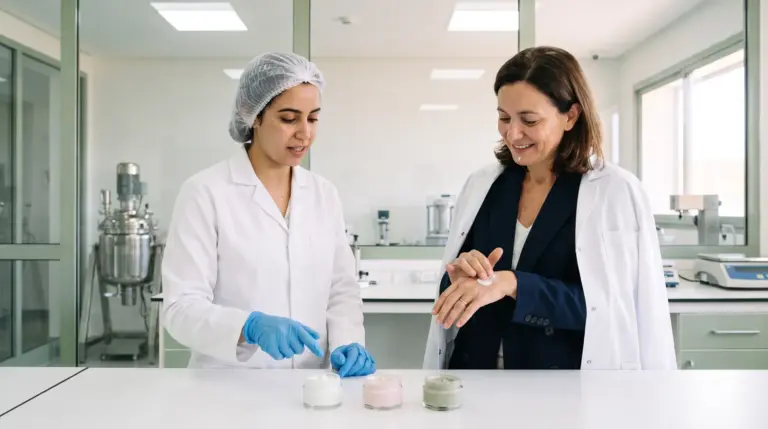
We also run efficacy tests to make sure your products deliver the results you promise your customers. This involves applying the product to skin models or using instrumental methods to measure its efficacy.
Why does it matter? Efficacy testing verifies that your products work as claimed, which is essential for customer satisfaction and trust. It measures parameters such as hydration levels, wrinkle reduction and skin radiance.
How is it done? Products are applied to simulated skin models or tested with instruments such as cutometers (to measure skin elasticity) and spectrophotometers (to assess skin radiance). The data is recorded and analyzed to confirm the product lives up to its claims.
Step 4: Compatibility and skin tolerance testing
Finally, we carry out compatibility and skin tolerance tests to make sure your products are gentle on the skin and suitable for all skin types. This step ensures that even people with sensitive skin can use your products without problems.
Why it matters: Products must be not only effective but also safe and non-irritating. Ensuring compatibility and skin tolerance helps avoid adverse reactions that could harm users and your brand’s reputation.
How is it done? Patch tests and other dermatological assessments are carried out on volunteers or in vitro models. This lets us assess the risk of irritation or allergic reaction.
Conclusion
Quality testing is a comprehensive process that ensures your cosmetic products are safe, effective and reliable. By following these steps, you can be confident your products will meet consumer expectations and regulatory standards. If you have questions about our testing methods, feel free to ask in the comments. Stay tuned for more insights and tips!