











































Services

Torn between two services?A project manager will guide you

Catalog

Explore the full catalog1,000+ formulas ready to carry your brand

Face careFull range

Serums, creams and targeted care, formulated with your actives.

Body careFull range

Moisturizing, nourishing and shower care: cream, butter or oil.

Specialty careFull range

Sun care, lips, intimate care and oral care.

Men, baby, makeupFull range

Shaving and beard, baby and mom, makeup.

Industries

All solutions by industryFormulas and formats for your business

Our brands

Our own brands, developed and made in our laboratory.

Become a distributor of our brandsPharmacies, spas, shops and wholesalers

Laboratory

Cosmetics manufacturing room with a row of stainless-steel mixers and an operator in white workwearOur factory in Aït MelloulISO 22716 and ISO 9001, visits by appointmentDiscover the factory

Resources

Ylang ylang oil (Cananga odorata)

Ylang ylang essential oil is obtained from the flowers of Cananga odorata1. It contains linalool, geranyl acetate and benzyl benzoate, among others4. Regulation (EU) 2023/1545 names it in Annex III: it must be declared above 0.001% in leave-on products and 0.01% in rinse-off products2. In targeted allergy tests, it is the essential oil most often positive7.
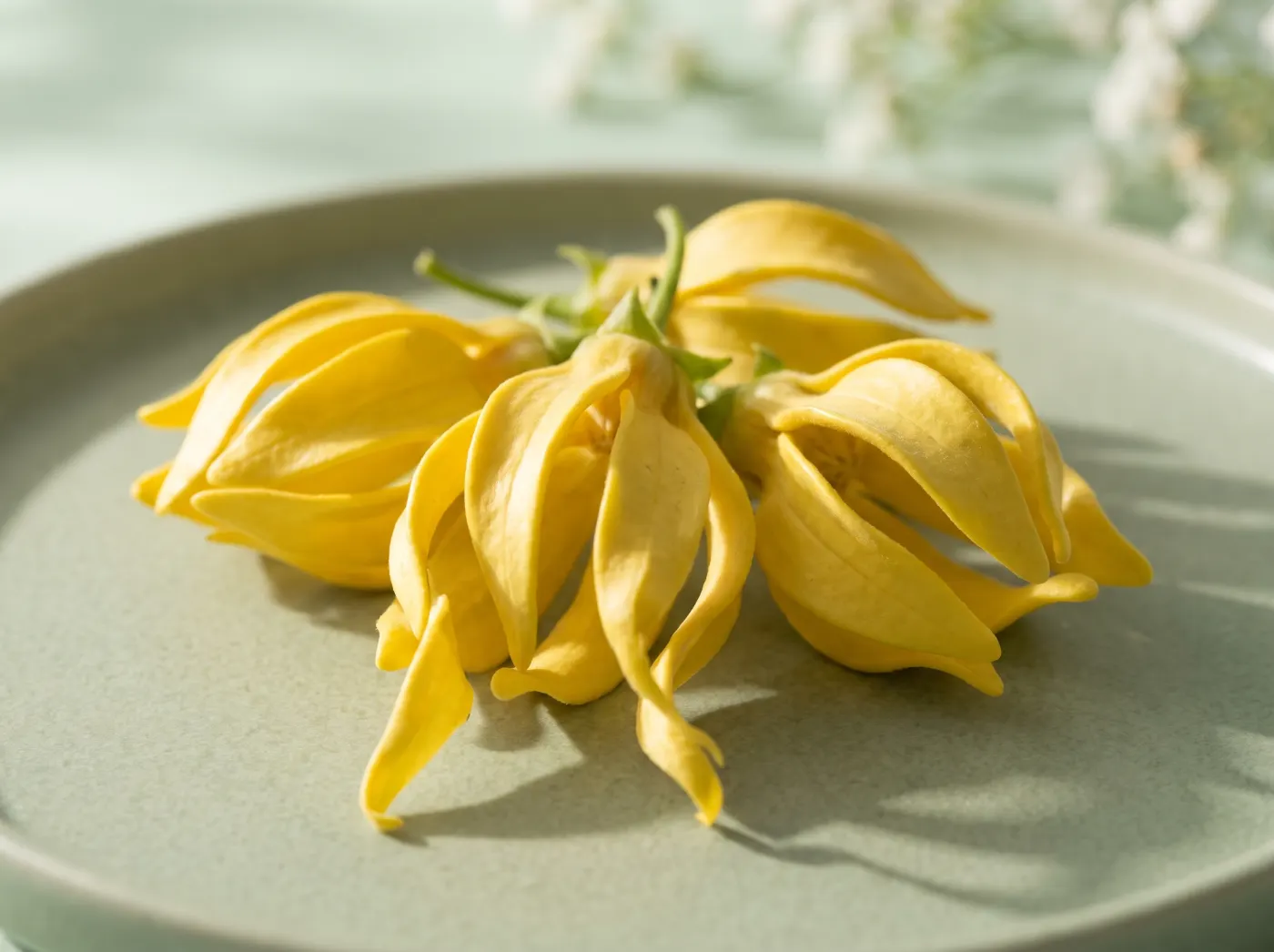
Ylang ylang essential oil in macro view, golden drops on a sage green ceramic surface, raking light

Ylang ylang oil at a glance

Entry from our cosmetic ingredient glossary. Regulatory data from the European Commission's CosIng database1 and Regulation (EU) 2023/15452. Copy the identifiers in one click for your files.

INCI name
CANANGA ODORATA FLOWER OIL
Other names
Ylang ylang essential oilYlang ylang oil. CosIng and the regulation group them under "Cananga odorata flower oil and extract; ylang ylang flower oil and extract"2
CAS number
83863-30-3 / 8006-81-3 / 68606-83-7
EC number
281-092-1CosIng gives 281-092-1 for the first CAS and no number for the other two1
Botanical origin
Ylang ylang (Cananga odorata, Annonaceae)CosIng: volatile oil obtained from the flowers1. Fresh, ripe flowers, distilled6
Composition
Linalool, geranyl acetate, benzyl benzoateConstituents identified in an oil from Grande Comore4. More than 160 compounds found by two-dimensional chromatography5
CosIng functions
Fragrance, perfuming"Fragrance" and "Perfuming"1
EU status
Named in Annex III, line 347Line added by Regulation (EU) 2023/1545; CosIng refers to III/34721
Allergen to declare
Yes, as "Cananga Odorata Oil/Extract"Above 0.001% in a leave-on product and 0.01% in a rinse-off product. Its constituents linalool (line 84), benzyl benzoate (line 85) and geranyl acetate (line 369) are also named. Non-compliant products may be placed on the market until 31 July 2026 and made available until 31 July 202823
Safety
No CIR assessment retainedNo CIR panel report found on this oil. Documented point of caution: contact allergy117

What the research says

Each result shows the protocol and the level of evidence. The higher the level, the better the result carries over to a finished formula.

Clinical trialReview or consensusLaboratory

Oil compositionChemistry

A mixture of several hundred compounds

Laboratory
GC×GC-TOFMS chromatographyDistillation fractions of ripe flowers

161 individual compounds were identified in the light and heavy fractions, 75 more than in the previous full characterization. They are mostly terpenes, terpene esters and alcohols5.

Linalool, geranyl acetate and benzyl benzoate

Laboratory
Flowers from Grande ComoreHydrodistillationThree distillation times

Distillation time changes the yield and quality of the oil. Linalool, geranyl acetate and benzyl benzoate are among the identified compounds4.

A composition that varies by island and plantation

Laboratory
Grande Comore, Mayotte, MadagascarGC/MS and genetic markers

Oil composition varies between plantations and between islands. This variation does not follow the genetics of the trees: the authors attribute it to environmental and growing conditions6. Hence the value of setting a specification for each batch.

Contact allergiesToxicology

The essential oil most often positive in targeted tests

Clinical study
10,930 people testedIVDK network, 2010 to 2019Clinic population

908 people (8.3%) reacted to at least one of the twelve essential oils tested. Ylang ylang (I and II) comes first with 3.9% positive tests. Massage professionals and beauticians are over-represented among sensitized people7.

A result already observed in the previous period

Clinical study
15,682 people testedIVDK network, 2000 to 2008

637 people reacted to at least one essential oil. Ylang ylang (I and II) is the most frequent, with 3.1% positive reactions as a weighted average8.

Lower frequency in North America, higher in the European network

Clinical study
62,354 people testedNACDG 2009 to 2014, IVDK 2010 to 2014Ylang ylang at 2% (NACDG) and 10% (IVDK) in petrolatum

Cananga odorata gives 1.1% positive tests in the North American network and 2.4% in the European network. Among European people sensitized to an essential oil without reacting to the three reference fragrance mixes, 38% react to Cananga odorata: this test therefore adds information9.

It is not known which constituents are responsible

Review
2008 reviewFood use

The oil has caused sensitization reactions in animals and humans, but the authors note that it is not known which constituents are responsible, or whether oils with some constituents removed are less sensitizing10. A specialist review details the allergens of ylang ylang oil11.

Red blood cell damage at high concentration

Laboratory
In vitro hemolysis test

The tests show varying degrees of damage to red blood cells. The authors conclude that the concentration must be controlled, and that formulas should be designed to limit irritation4.

Skin: limited evidenceSkincare

An oil blend, including a dwarf ylang ylang absolute, in a cream

Clinical trial
Antioxidant body cream29 healthy volunteers4 weeksVersus placebo and an untreated area

After 4 weeks, the cream with the blend reduces the area and roughness (Rz) of the skin compared with before application, the placebo and the untreated area. The blend combines four oils and a dwarf ylang ylang absolute (var. fruticosa): the effect of ylang ylang oil itself is not isolated12.

Activity on cultured fibroblasts

Laboratory
Pre-inflamed human dermal fibroblastsTen essential oils tested

All the oils tested, ylang ylang included, slow the proliferation of these cells. Ylang ylang and one other oil act mainly on proteins linked to tissue remodeling. Laboratory study: it says nothing about an effect on human skin13.

This page summarizes published literature on a cosmetic ingredient. It does not describe the effect of a finished product, which depends on its formula, and it is not medical advice. Evidence is flagged by level: clinical trial, review or laboratory.

Which products can use ylang ylang oil?

No formula in our white label catalog features ylang ylang oil yet. Our formulation lab can add it to a custom formula or to a catalog formula. Its common uses:

Face

Rare in face care: the oil is mostly a fragrance ingredient, with caution on tolerance.

Body

Scented massage oil, body milk or dry oil, care balms and candles with a floral note.

Hair

Scented hair oils and leave-in care; we found no published study on hair.

Ylang ylang, geranium, patchouli or rosewood?

Four fragrance essential oils often compared. Their chemistry differs, and so does their labeling status.

Ylang ylangGeraniumPatchouliRosewood
Dominant constituentsLinalool, geranyl acetate, benzyl benzoate4β-citronellol (29.7%) and geraniol (14.6%) in one sample14Patchouli alcohol (about 28% in the oil studied)15Linalool (93.6% in one oil studied)16
Annex IIIOil named (line 347)2Oil named (line 364)2Oil named (line 365)2Oil not named; linalool named (line 84)3

Frequently asked questions about ylang ylang oil

What is ylang ylang essential oil?
It is the volatile oil obtained from the flowers of Cananga odorata1. Its INCI name is CANANGA ODORATA FLOWER OIL. It contains linalool, geranyl acetate and benzyl benzoate, among others4.
What are the benefits of ylang ylang oil in cosmetics?
CosIng classifies it as a fragrance and a perfuming ingredient1. It is first of all a fragrance ingredient: we kept no clinical trial of the oil alone on skin. The only cosmetic data cover a cream based on an oil blend12, and cultured cells13.
Do I have to declare ylang ylang in the ingredient list?
Yes. Since Regulation (EU) 2023/1545, Cananga odorata flower oil and extract are named in Annex III (line 347) and declared as "Cananga Odorata Oil/Extract" above 0.001% in a leave-on product and 0.01% in a rinse-off product2. Non-compliant products may be placed on the market until 31 July 2026 and made available until 31 July 2028.
Is ylang ylang allergenic?
It can be: it is the essential oil most often positive in the targeted tests of the IVDK network (3.9% of the people tested from 2010 to 2019)7. These people were already seeking care for a skin reaction: the figure cannot be applied to the general population. Tolerance tests on the finished product remain the rule.
Is ylang ylang good for hair?
We found no published study on hair or scalp with this oil. In a hair product, it serves mostly as a fragrance, with the same declaration requirement.
Does ylang ylang oil carry risks?
No concentration limit applies to the oil, but its labeling is mandatory2. The point of caution is skin sensitization79. A laboratory study also notes varying damage to red blood cells depending on concentration4. During pregnancy, as with any skincare product, a healthcare professional's advice remains the rule.
Can you manufacture a ylang ylang product for my brand?
Yes, we study its integration depending on the availability of the material. Our ISO 22716 certified lab can add it to a customized catalog formula, or design it into a custom formula, with the allergen declaration calculation. Samples are free.

Sources

Peer-reviewed studies and official regulatory sources, checked on November 3, 2026.

  1. European Commission. CosIng, entry CANANGA ODORATA FLOWER OIL (CAS 83863-30-3 / 8006-81-3 / 68606-83-7, EC 281-092-1). ec.europa.eu/growth/tools-databases/cosing
  2. Commission Regulation (EU) 2023/1545 of 26 July 2023 amending Regulation (EC) No 1223/2009 of the European Parliament and of the Council as regards labelling of fragrance allergens in cosmetic products (Annex III). eur-lex.europa.eu
  3. Regulation (EC) No 1223/2009 of the European Parliament and of the Council on cosmetic products, consolidated version of 1 May 2025 (Annexes II to VI). eur-lex.europa.eu
  4. Mrani SA, Zejli H, Azzouni D, Fadili D, Alanazi MM, Hassane SOS, et al. Chemical Composition, Antioxidant, Antibacterial, and Hemolytic Properties of Ylang-Ylang (Cananga odorata) Essential Oil: Potential Therapeutic Applications in Dermatology. Pharmaceuticals (Basel). 2024;17(10):1376. doi:10.3390/ph17101376
  5. Brokl M, Fauconnier ML, Benini C, Lognay G, du Jardin P, Focant JF. Improvement of ylang-ylang essential oil characterization by GC×GC-TOFMS. Molecules. 2013;18(2):1783-97. doi:10.3390/molecules18021783
  6. Benini C, Mahy G, Bizoux JP, Wathelet JP, du Jardin P, Brostaux Y, et al. Comparative chemical and molecular variability of Cananga odorata (Lam.) Hook.f. & Thomson forma genuina (ylang-ylang) in the Western Indian Ocean Islands: implication for valorization. Chem Biodivers. 2012;9(7):1389-402. doi:10.1002/cbdv.201100306
  7. Geier J, Schubert S, Reich K, Skudlik C, Ballmer-Weber B, Brehler R, et al. Contact sensitization to essential oils: IVDK data of the years 2010-2019. Contact Dermatitis. 2022;87(1):71-80. doi:10.1111/cod.14126
  8. Uter W, Schmidt E, Geier J, Lessmann H, Schnuch A, Frosch P. Contact allergy to essential oils: current patch test results (2000-2008) from the Information Network of Departments of Dermatology (IVDK). Contact Dermatitis. 2010;63(5):277-83. doi:10.1111/j.1600-0536.2010.01768.x
  9. Warshaw EM, Zug KA, Belsito DV, Fowler JF, DeKoven JG, Sasseville D, et al. Positive Patch-Test Reactions to Essential Oils in Consecutive Patients From North America and Central Europe. Dermatitis. 2017;28(4):246-252. doi:10.1097/DER.0000000000000293
  10. Burdock GA, Carabin IG. Safety assessment of Ylang-Ylang (Cananga spp.) as a food ingredient. Food Chem Toxicol. 2008;46(2):433-45. doi:10.1016/j.fct.2007.09.105
  11. de Groot AC, Schmidt E. Essential Oils, Part VI: Sandalwood Oil, Ylang-Ylang Oil, and Jasmine Absolute. Dermatitis. 2017;28(1):14-21. doi:10.1097/DER.0000000000000241
  12. Leelapornpisid P, Wickett RR, Chansakaow S, Wongwattananukul N. Potential of native Thai aromatic plant extracts in antiwrinkle body creams. J Cosmet Sci. 2015;66(4):219-31. PMID 26665978
  13. Han X, Beaumont C, Stevens N. Chemical composition analysis and in vitro biological activities of ten essential oils in human skin cells. Biochim Open. 2017;5:1-7. doi:10.1016/j.biopen.2017.04.001dōTERRA International (essential oil manufacturer)
  14. Kačániová M, Vukic M, Vukovic NL, Čmiková N, Verešová A, Schwarzová M, et al. An In-Depth Study on the Chemical Composition and Biological Effects of Pelargonium graveolens Essential Oil. Foods. 2023;13(1):33. doi:10.3390/foods13010033
  15. Lin RF, Feng XX, Li CW, Zhang XJ, Yu XT, Zhou JY, et al. Prevention of UV radiation-induced cutaneous photoaging in mice by topical administration of patchouli oil. J Ethnopharmacol. 2014;154(2):408-18. doi:10.1016/j.jep.2014.04.020
  16. Teles AM, Silva-Silva JV, Fernandes JMP, Calabrese KDS, Abreu-Silva AL, Marinho SC, et al. Aniba rosaeodora (Var. amazonica Ducke) Essential Oil: Chemical Composition, Antibacterial, Antioxidant and Antitrypanosomal Activity. Antibiotics (Basel). 2020;10(1):24. doi:10.3390/antibiotics10010024
Carmel Cosmetics Labs product specialist with a brand founder

Tell us about your project

A product specialist reviews your request and gets back to you on the channel you prefer.

Lead EN – Demande de devis
Tell us about your project. A product specialist will get back to you shortly.
CONTACT INFORMATION
Name
PROJECT INFORMATION
Which cosmetics category interests you most?

By submitting this form, you agree to our terms of service and privacy policy.

No obligation. Your information stays confidential and is used only to prepare your quote.





