





Color and tones
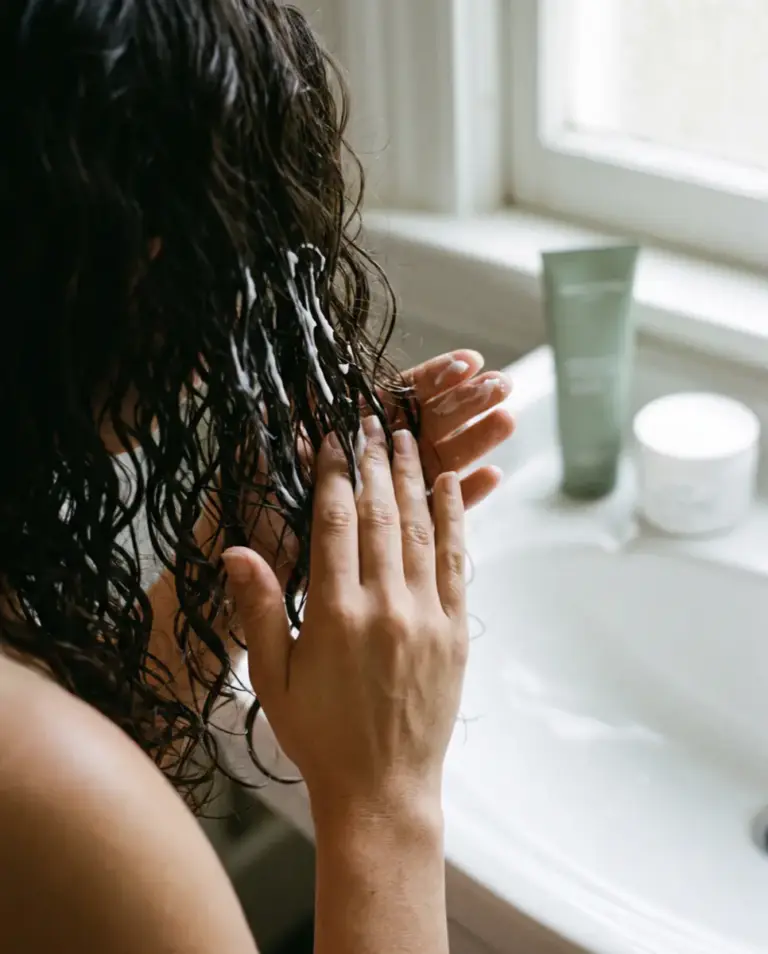
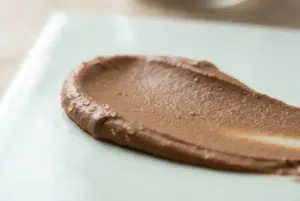
Its lawsone binds to keratin and colors the strand from the outside, in copper to red tones depending on the base. A plant-based color that fades gradually.
Services
Catalog
Explore the full catalog1,000+ formulas ready to carry your brandFace careFull range
Serums, creams and targeted care, formulated with your actives.
Hair careFull range
From shampoo to leave-in, for every hair type.
Body careFull range
Moisturizing, nourishing and shower care: cream, butter or oil.
Hammam and naturalFull range
Black soap, argan and authentic Moroccan rituals.
Specialty careFull range
Sun care, lips, intimate care and oral care.
Industries
All solutions by industryFormulas and formats for your businessHospitality and wellness
Brands and creators
Laboratory
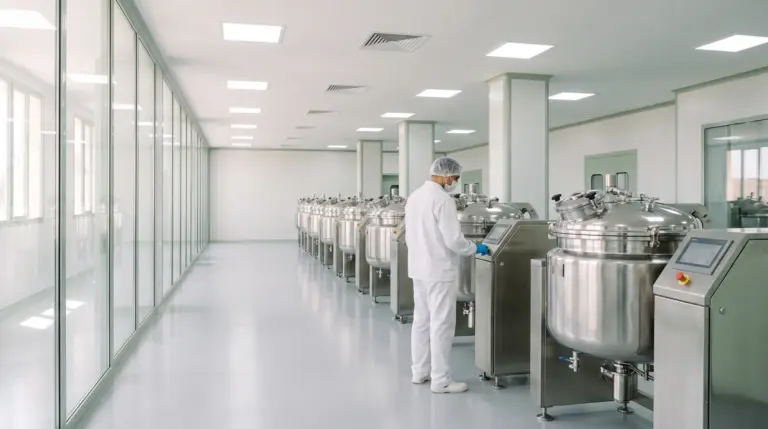 Our factory in Aït MelloulISO 22716 and ISO 9001, visits by appointmentDiscover the factory
Cosmetics manufacturer based in Agadir
500+ brands35+ countries1,000+ formulas
Our factory in Aït Melloul
Up to 3 million units a yearVisits by appointment
Contract manufacturing, step by step
RegulationsCostsProject steps
Join our teams in Agadir
FormulationProductionQualityRegulatorySales
Resources
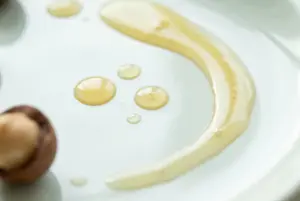
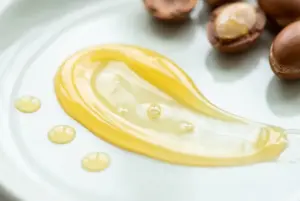
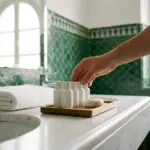
Henna a shrub of hot lands.
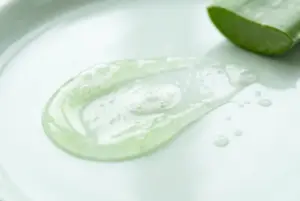
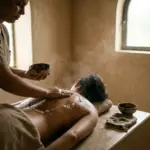
Its leaves sun-dried, rich in lawsone.
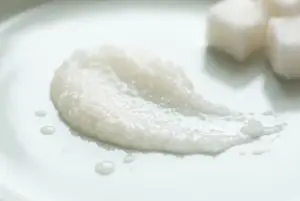
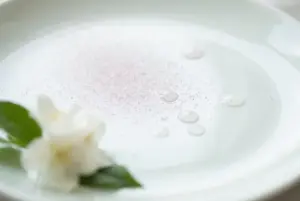
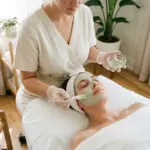
The powder finely ground, a deep green.
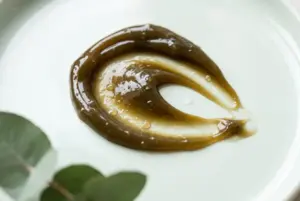
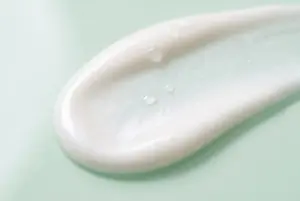
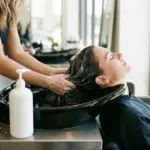
The pattern a festive ritual, passed hand to hand.
By the Carmel Cosmetics Labs R&D team · updated October 2, 2026
Henna is a powder made from the dried, ground leaves of Lawsonia inermis, a shrub from hot regions. Its pigment, lawsone, binds to the keratin in hair and skin and gives copper tones. In cosmetics, it is used to color, coat and add shine to hair, and is part of hammam care.
Leaves of Lawsonia inermis. Lawsone gives it copper to red tones. This is the henna we use in our products.
Despite the name, it is a different plant, Cassia obovata. It coats and adds shine without coloring.
Often henna with added PPD (p-phenylenediamine), a sensitizing dye banned on skin in EU cosmetics. We do not make it.
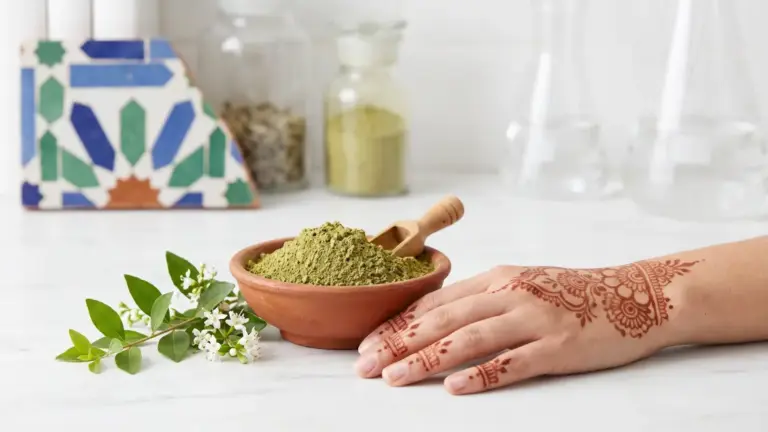
Its lawsone binds to keratin and colors the strand from the outside, in copper to red tones depending on the base. A plant-based color that fades gradually.
It leaves a film on the strand: hair looks thicker, smoother and shinier.
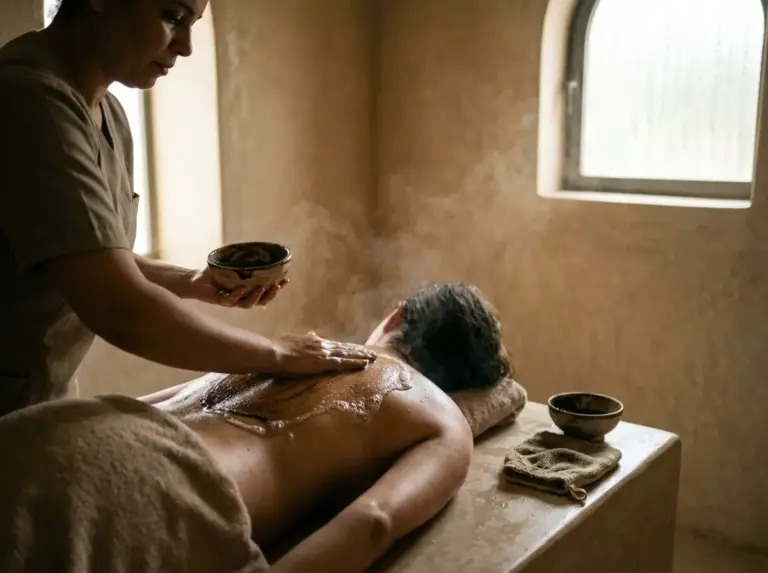
Paired with black soap or clay, it is part of body care rituals handed down from generation to generation.
Mixed with hot water into a paste, applied to clean hair, then rinsed out. The longer it stays on, the deeper the color.
In a small amount in a hair mask, for shine without strong color.
In a soap or hammam treatment, as a fragrant botanical touch.
We add it to hair care and hammam rituals ready to carry your brand. Choose a category to see the formulas.
What our formulators consider when henna goes into your product.
Lawsone stains: in rinse-off care, we dose for shine without unwanted color on light hair.
Our henna formulas contain no PPD and no added oxidation dye.
Grind fineness, lawsone content and microbiological cleanliness are checked on receipt.
Henna from southern Morocco can be highlighted on the packaging, provided it is documented in the product file.
"Henna: rituals, aesthetic and social practices" was inscribed on UNESCO's Intangible Cultural Heritage list, nominated by 16 countries including Morocco.
Henna's pigment is named after the plant, Lawsonia, itself named after the Scottish physician Isaac Lawson.
In Morocco, the henna night comes before the wedding: the bride's hands and feet are decorated with patterns.
It adds copper tones, coats the strand and boosts shine. Hair looks thicker and smoother.
Natural henna (Lawsonia inermis) colors thanks to lawsone. Neutral henna is a different plant, Cassia obovata: it coats and adds shine without coloring.
"Black henna" used for temporary tattoos often contains PPD (p-phenylenediamine), a strongly sensitizing dye banned on skin in EU cosmetics. Natural henna never produces a black color.
Pure natural henna does not penetrate the strand like an oxidation dye: it coats it. It can, however, dry out some hair types; in that case it is combined with an oil.
Its INCI name is LAWSONIA INERMIS LEAF POWDER for the leaf powder. This is the name that appears in the ingredient list.
Yes. The EU Scientific Committee on Consumer Safety (SCCS) has assessed henna as safe for hair coloring, under the conditions described in its opinion.
Yes. We add it to white label hair masks, shampoos and hammam care, or to an exclusive private label formula, made in our factory in Morocco.
Send your brief: we formulate and manufacture in our ISO 22716 factory in Aït Melloul. Formula selection and detailed quote, with no commitment.