











































Services

Torn between two services?A project manager will guide you

Catalog

Explore the full catalog1,000+ formulas ready to carry your brand

Face careFull range

Serums, creams and targeted care, formulated with your actives.

Body careFull range

Moisturizing, nourishing and shower care: cream, butter or oil.

Specialty careFull range

Sun care, lips, intimate care and oral care.

Men, baby, makeupFull range

Shaving and beard, baby and mom, makeup.

Industries

All solutions by industryFormulas and formats for your business

Our brands

Our own brands, developed and made in our laboratory.

Become a distributor of our brandsPharmacies, spas, shops and wholesalers

Laboratory

Cosmetics manufacturing room with a row of stainless-steel mixers and an operator in white workwearOur factory in Aït MelloulISO 22716 and ISO 9001, visits by appointmentDiscover the factory

Resources

Cocamidopropyl betaine (CAPB)

Cocamidopropyl betaine (CAPB) is an amphoteric surfactant based on coconut fatty acids, used to foam and soften washing products15. It is not the same as betaine, a humectant. The allergies described mostly come from manufacturing impurities, amidoamine and DMAPA67; the CIR panel judges it safe if the formula is non-sensitizing3.
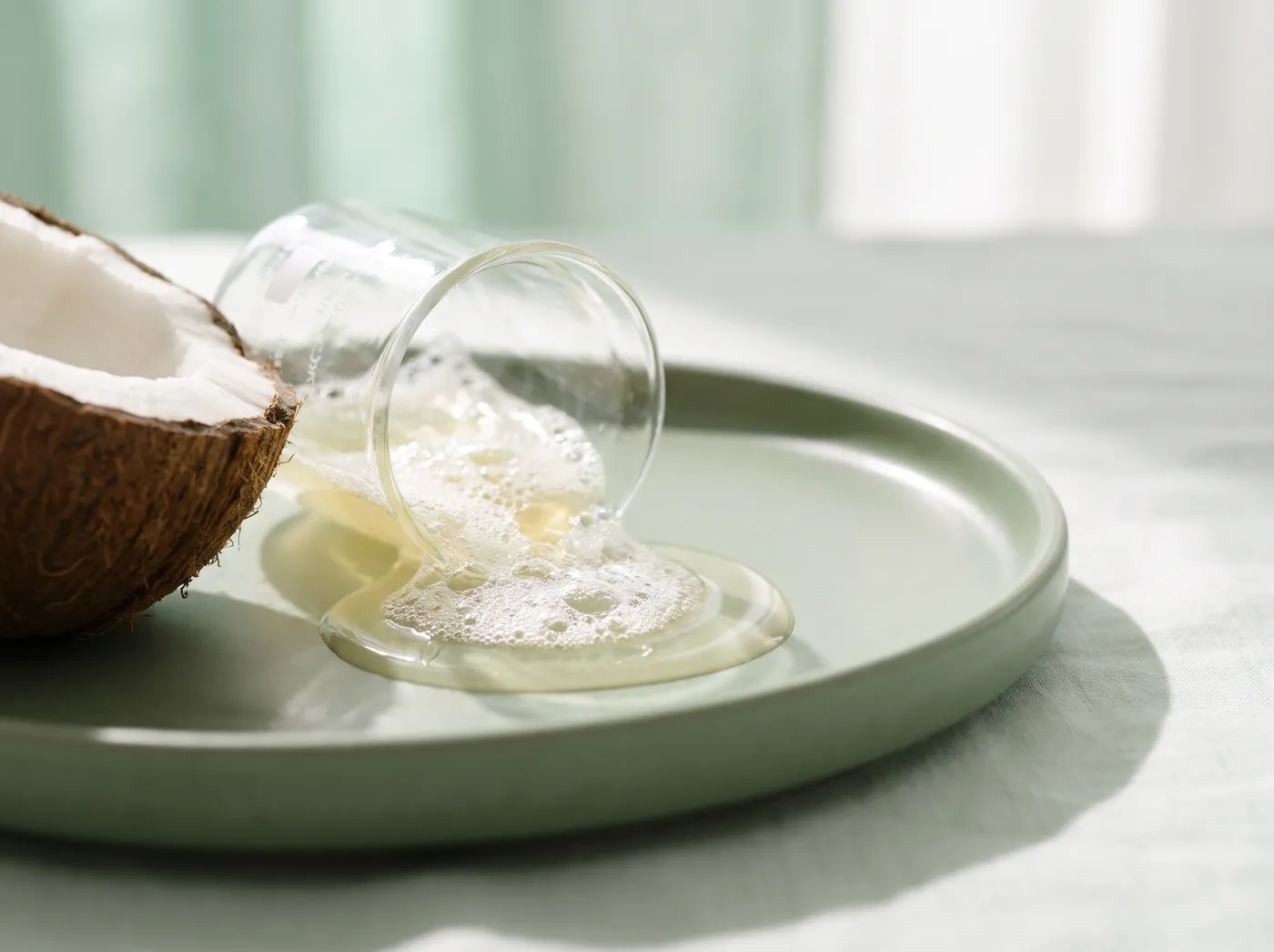
Cocamidopropyl betaine, viscous amber liquid in macro view, on a sage green ceramic surface

Cocamidopropyl betaine at a glance

Entry from our cosmetic ingredient glossary. Regulatory data from the European Commission's CosIng database1 and Regulation (EC) 1223/20092, safety according to the CIR expert panel34. Copy the identifiers in one click for your files.

INCI name
COCAMIDOPROPYL BETAINE
Other names
CAPBNot to be confused with betaine (INCI BETAINE), a humectant: see the betaine page
CAS number
97862-59-4Generic CAS; CosIng also lists 61789-40-0, 70851-07-9 and 83138-08-31
EC number
263-058-8CosIng also lists 274-923-41
Chemical nature
Zwitterion (inner salt), amphoteric surfactantCarries both a positive and a negative charge1
CosIng functions
Cleansing, foam boosting, conditioning, antistatic"Cleansing", "foam boosting", "hair conditioning", "antistatic" and "viscosity controlling", among others1
Appearance
Viscous liquid in aqueous solutionFormulated in the water phases of washing products
EU status
No restrictionAbsent from Annexes II to VI of Regulation (EC) 1223/2009 as consolidated on May 1, 2025, like amidoamine and DMAPA (text search)2
Allergen to declare
NoAbsent from the fragrance allergen list of Regulation (EU) 2023/1545
Safety
Safe if the formula is non-sensitizingCIR panel 2012; for alkyl betaines, 2018: safe if the formula is non-irritating34

What the research says

Each result shows the protocol and the level of evidence. The higher the level, the better the result carries over to a finished formula.

Clinical trialReview or consensusLaboratory

Mildness of washing productsSkincare and haircare

An amphoteric detergent with relatively low irritation

Review
2008 review

CAPB is increasingly used in shampoos, shower gels, cleansers and care products, because it causes relatively low skin irritation5.

Syndets are gentler on skin than soap

Review
2 reviews, 2018 and 2022Synthetic detergent family

Cleansers with synthetic detergents cause less irritation and dryness than alkaline soaps, which disturb the barrier, dissolve lipids and change the pH. These reviews cover the syndet family, not CAPB alone1213.

A pH of 5.5 that respects the skin flora

Review
1995 review

Synthetic detergents with a pH close to 5.5 do not interfere with the skin flora, unlike alkaline soap11.

Contact allergy and impuritiesDermatology

Allergen of the year 2004, impurities to blame

Review
2008 review

The prevalence of sensitization is estimated between 3.0 and 7.2% in people tested, which earned CAPB the title of allergen of the year 2004. Manufacturing impurities, amidoamine and DMAPA, are judged responsible5.

One impurity singled out: amidoamine

Clinical trial
10 people already positive to CAPBUse tests of 1 to 6 weeksPatch tests

7 of 10 people react to at least one product containing CAPB. On patch testing, 6 of the 9 tested react to amidoamine at 0.1%, none to DMAPA; with a CAPB free of amidoamine, no reaction. According to the authors, amidoamine is probably the sensitizer in most cases, without ruling out that CAPB alone is rarely one7.

Another reading: DMAPA as the real sensitizer

Clinical trial
10 people allergic to a commercial CAPBDMAPA at 1%, amidoamine from 0.1 to 0.5%

All the people positive to DMAPA react to amidoamine at 0.5 and 0.25%, and 4 of 10 at 0.1%. The authors see a cross-reaction: DMAPA would be the real sensitizer, and amidoamine can release it by hydrolysis. A well-purified CAPB would no longer sensitize. The two studies therefore do not single out the same impurity6.

Frequency in people tested

Clinical trial
People referred for suspected allergyPatch tests

In North America, of 975 people tested in 2001, 15 are positive to CAPB, 25 to amidoamine and 18 to both8. In Beijing, 42 of 429 people (9.8%) react to CAPB at 1%, 25 with a link judged relevant9. These figures do not apply to the general population.

A surfactant among those most linked to contact allergy

Review
2021 review

Among surfactants, CAPB, DMAPA and amidoamine appear with decyl glucoside among the substances most associated with contact allergy. For irritation, they are sodium lauryl sulfate and benzalkonium chloride10.

Expert viewCIR

Safe if formulated not to sensitize

Expert assessment
CIR panel 2012

CAPB and related amidopropyl betaines show no other significant toxicity. The panel judges them safe when formulated to be non-sensitizing, which can rely on a quantitative risk assessment. It cites DMAPA and amidoamine as known sensitizers3.

11 alkyl betaines judged safe if non-irritating

Expert assessment
CIR panel 2018Read-across by group

The panel groups 11 alkyl betaines and concludes they are safe in current uses, when formulated to be non-irritating4.

This page summarizes published literature on a cosmetic ingredient. It does not describe the effect of a finished product, which depends on its formula, and it is not medical advice. Some of the studies cited were run or funded by manufacturers; this is stated in the sources. The allergy data come from people referred for suspected contact allergy: they do not measure frequency in the general population. No study retained covers the effect of CAPB on hair.

Which products can use cocamidopropyl betaine?

No formula in our white label catalog features cocamidopropyl betaine yet. Our formulation lab can add it to a custom formula or to a catalog formula. Its common uses:

Face

Co-surfactant in foaming face cleansers and mild cleansing gels.

Body

Surfactant in shower gels, liquid soaps and foaming lotions.

Hair

Co-surfactant in shampoos: foam and a softer feel.

Cocamidopropyl betaine, SLS, decyl glucoside or betaine?

Three common surfactants and one false friend. Betaine, a humectant, has almost the same name as CAPB but not the same role.

Cocamidopropyl betaineSodium lauryl sulfateDecyl glucosideBetaine
FamilyAmphoteric surfactant1Anionic surfactantNon-ionic surfactantHumectant, not a surfactant
CosIng functionsCleansing, foam boosting, conditioning1Foaming cleanserFoaming cleanserHumectant, hair conditioning: see the betaine page
Watch pointContact allergy tied to amidoamine and DMAPA impurities367Among the common causes of surfactant-related irritation10Cited among the surfactants associated with contact allergy10No CIR opinion specific to betaine: the opinions cover alkyl betaines34

Frequently asked questions about cocamidopropyl betaine

What is cocamidopropyl betaine?
It is an amphoteric surfactant, that is both positively and negatively charged1, based on coconut fatty acids. It foams, cleanses and softens the feel of shampoos, shower gels and cleansers15. On the label, it reads "Cocamidopropyl Betaine".
Cocamidopropyl betaine and betaine: are they the same?
No. Betaine (INCI BETAINE, or trimethylglycine) is a humectant that hydrates; cocamidopropyl betaine is a surfactant that cleanses and foams. They have different CAS numbers, and the CIR opinions cover surfactant alkyl betaines, not betaine alone34. See the betaine page.
Is cocamidopropyl betaine safe, or an allergen?
The CIR panel judges it safe if the formula is non-sensitizing3, and it is subject to no restriction in the EU2. Contact allergies are documented in people referred for suspected allergy: 15 positive out of 975 in North America8, 9.8% of the 429 people tested in Beijing9. These figures do not apply to the general population.
Does the allergy come from CAPB or its impurities?
Mostly from impurities. One study singles out amidoamine and finds that a CAPB free of amidoamine causes no reaction7; another singles out DMAPA as the real sensitizer and concludes that a well-purified CAPB no longer sensitizes6. For a brand, the consequence is practical: set the raw material quality in the specification, and ask the supplier for its amidoamine and DMAPA levels.
What percentage of cocamidopropyl betaine should you use?
The European regulation sets no ceiling2 and the CIR opinions rely on use concentrations, with no single figure3. The 1% in patch tests are diagnostic concentrations, not use doses9. The dose is set with the formulator, depending on the surfactant system and tolerance tests.
Is cocamidopropyl betaine suitable for a sulfate-free shampoo?
It is not a sulfate and often serves as a co-surfactant that helps foam1. The "sulfate-free" claim, however, depends on the whole surfactant system, not on a single ingredient.
Can you manufacture a shampoo or a mild cleanser for my brand?
Yes. Our ISO 22716 certified lab formulates shampoos, shower gels and face cleansers to customize from the catalog, or as a custom formula. Surfactant quality is part of the specification. Free samples are included.

Sources

Peer-reviewed studies and official regulatory sources, checked on November 3, 2026.
  1. European Commission. CosIng, entry COCAMIDOPROPYL BETAINE (CAS 97862-59-4 (generic), EC 263-058-8 / 274-923-4). ec.europa.eu/growth/tools-databases/cosing
  2. European Parliament and Council. Regulation (EC) No 1223/2009 on cosmetic products, version consolidated on May 1, 2025: no entry for cocamidopropyl betaine, amidoamine or DMAPA in Annexes II to VI. eur-lex.europa.eu
  3. Burnett CL, Bergfeld WF, Belsito DV, et al. Final report of the Cosmetic Ingredient Review Expert Panel on the safety assessment of cocamidopropyl betaine (CAPB). Int J Toxicol. 2012;31(4 Suppl):77S-111S. doi:10.1177/1091581812447202
  4. Burnett CL, Bergfeld WF, Belsito DV, et al. Safety Assessment of Alkyl Betaines as Used in Cosmetics. Int J Toxicol. 2018;37(1 Suppl):28S-46S. doi:10.1177/1091581818773354
  5. Jacob SE, Amini S. Cocamidopropyl betaine. Dermatitis. 2008;19(3):157-160. PMID 18627690
  6. Foti C, Bonamonte D, Mascolo G, et al. The role of 3-dimethylaminopropylamine and amidoamine in contact allergy to cocamidopropylbetaine. Contact Dermatitis. 2003;48(4):194-198. doi:10.1034/j.1600-0536.2003.00078.x
  7. Fowler JF, Fowler LM, Hunter JE. Allergy to cocamidopropyl betaine may be due to amidoamine: a patch test and product use test study. Contact Dermatitis. 1997;37(6):276-281. doi:10.1111/j.1600-0536.1997.tb02464.x
  8. Fowler JF Jr, Zug KM, Taylor JS, et al. Allergy to cocamidopropyl betaine and amidoamine in North America. Dermatitis. 2004;15(1):5-6. doi:10.2310/6620.2004.20410
  9. Li LF. A study of the sensitization rate to cocamidopropyl betaine in patients patch tested in a university hospital of Beijing. Contact Dermatitis. 2008;58(1):24-27. doi:10.1111/j.1600-0536.2007.01251.x
  10. Presley CL, Militello M, Barber C, et al. The history of surfactants and review of their allergic and irritant properties. Dermatitis. 2021;32(5):289-297. doi:10.1097/DER.0000000000000730
  11. Schmid MH, Korting HC. The concept of the acid mantle of the skin: its relevance for the choice of skin cleansers. Dermatology. 1995;191(4):276-280. doi:10.1159/000246568
  12. Draelos ZD. The science behind skin care: cleansers. J Cosmet Dermatol. 2018;17(1):8-14. doi:10.1111/jocd.12469
  13. Mijaljica D, Spada F, Harrison IP. Skin cleansing without or with compromise: soaps and syndets. Molecules. 2022;27(6):2010. doi:10.3390/molecules27062010Ego Pharmaceuticals
Carmel Cosmetics Labs product specialist with a brand founder

Tell us about your project

A product specialist reviews your request and gets back to you on the channel you prefer.

Lead EN – Demande de devis
Tell us about your project. A product specialist will get back to you shortly.
CONTACT INFORMATION
Name
PROJECT INFORMATION
Which cosmetics category interests you most?

By submitting this form, you agree to our terms of service and privacy policy.

No obligation. Your information stays confidential and is used only to prepare your quote.





