






















Choosing the right manufacturer for your white label cosmetics line is a crucial step that affects quality, safety, brand reputation and the overall success of your product range. Below are the key considerations and questions to ask to make sure you choose a reliable manufacturing partner that matches your brand’s vision and values.
1. Assess the manufacturer’s quality standards
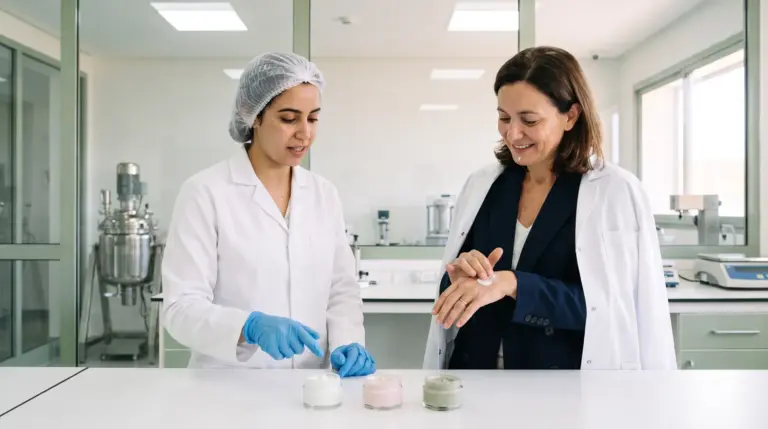
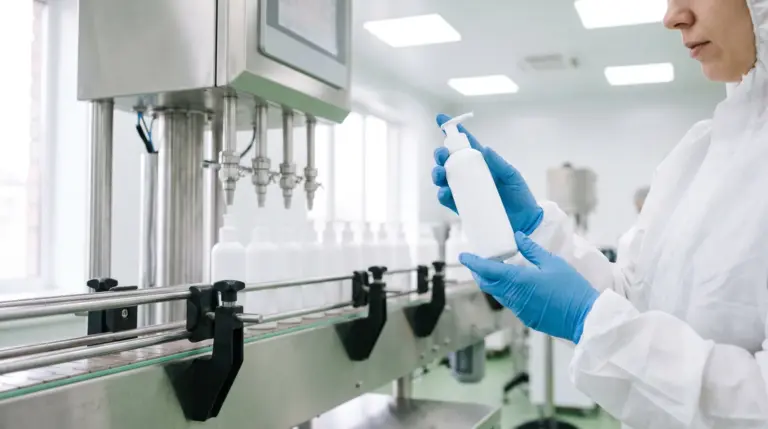
In cosmetics, quality is non-negotiable. A reputable manufacturer must meet strict standards and certifications, such as Good Manufacturing Practices (GMP) and ISO certifications, which guarantee consistent production quality and safety. Checking these certifications not only confirms the manufacturer’s quality, it also strengthens your brand’s credibility with consumers.
Questions to ask:
- Do you hold GMP or ISO certifications?
- What is your quality control process, and how often do you test products?
- Can you provide sample quality assurance reports?
2. Review ingredient sourcing and product safety
Today’s consumers care more and more about product safety and ingredient integrity. A good white label manufacturer should be transparent about where its ingredients come from and how it meets safety rules and consumer preferences for clean, vegan, cruelty-free or organic ingredients. Working with a manufacturer that has strong ingredient traceability guarantees product safety and builds trust with your target market.
Questions to ask:
- Where do you source your ingredients, and are they ethically sourced?
- Are your products free from parabens, sulfates and other harmful chemicals?
- Can you meet specific ingredient requests, such as organic or hypoallergenic ingredients?
3. Ensure regulatory compliance
Cosmetics are subject to strict regulations that vary from region to region. A reputable manufacturer must know these regulations and be able to make compliant products for different markets. Look for manufacturers that offer full compliance support, including product labeling, documentation and regulatory guidance for the regions you want to enter, such as FDA regulations in the United States or European Union compliance standards.
Questions to ask:
- Are you familiar with the regulatory requirements of the markets we plan to enter?
- Can you help us make our labeling and documentation compliant?
- How do you keep products compliant as regulations change?
4. Evaluate product customization options
White label cosmetics usually offer fewer customization options than private label, but some manufacturers still let brands adjust aspects such as packaging, fragrance or certain formula components. This flexibility can help align products with your brand’s aesthetic and your customers’ preferences.
Questions to ask:
- What customization options are available for packaging, colors or fragrance?
- Can you provide samples of custom formulations before full-scale production?
- Do you offer eco-friendly packaging options?
5. Consider minimum order quantities (MOQs) and production capacity
MOQs can vary widely from one manufacturer to another, so it is important to choose a partner that fits your business’s production needs. Look for an accessible MOQ for your launch, along with the capacity to support larger volumes as you grow. The manufacturer’s capacity should match your projected growth to avoid future supply problems.
Questions to ask:
- What is your minimum order quantity, and can it vary by product?
- What is your maximum production capacity?
- Can you scale up production if demand grows?
6. Review production planning and supply chain management
On-time delivery is essential, especially if you run an e-commerce business or operate in a competitive retail market. Schedules must be manageable and predictable so you can hit your business targets. Ask about the manufacturer’s supply chain practices, including ingredient sourcing, production scheduling and shipping procedures.
Questions to ask:
- How is the schedule from order to delivery set and committed to in the quote?
- How do you handle supply chain disruptions?
- Can you provide real-time order tracking?
7. Assess communication and transparency
A strong partnership requires clear, open communication. Your manufacturer should give you a dedicated point of contact, regular updates and a responsive support team to solve any issues. Transparent communication is essential when dealing with production delays, adjustments or changes in ingredient availability.
Questions to ask:
- How often will we receive production updates?
- Who will be our main point of contact for questions and concerns?
- How do you handle problems or delays during production?
8. Check the manufacturer’s industry reputation and client references.
It pays to look into a manufacturer’s track record and reputation in the industry. Look for reviews, testimonials and case studies from past or current clients. Speaking directly to references will give you a sense of the manufacturer’s reliability, quality standards and business practices.
Questions to ask:
- Can you provide references from other brands you have worked with?
- Do you have case studies or testimonials that show successful partnerships?
- How long have you been working in the white label cosmetics industry?
9. Verify ethical and environmental standards
For many brands, partnering with an ethical manufacturer is essential. Check that the manufacturer’s values match your brand’s principles, such as eco-friendly practices, fair labor standards and sustainable sourcing. Consumers increasingly support brands that make ethical and environmental commitments.
Questions to ask:
- Do you follow ethical labor practices and fair trade standards?
- Are your facilities powered by renewable energy or other sustainable practices?
- How do you manage waste and environmental impact in production?
In conclusion
Choosing the right white label cosmetics manufacturer is an essential step in building a successful brand. By carefully assessing quality standards, regulatory compliance, customization options and production reliability, brands can lay a solid foundation for growth and customer satisfaction. At Carmel Cosmetics Labs, we understand that every brand has unique needs, and we are committed to delivering high-quality products that help our clients earn trust, loyalty and market presence in an increasingly competitive industry.