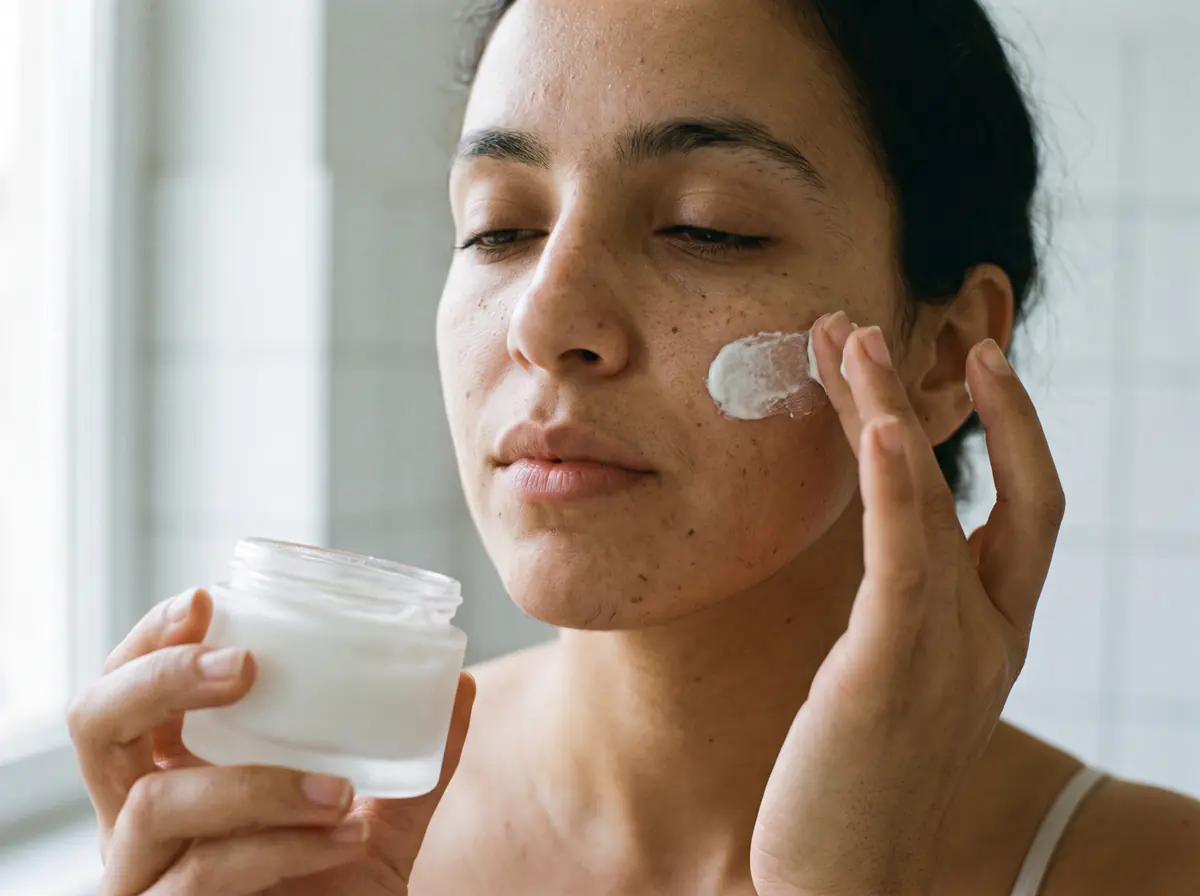
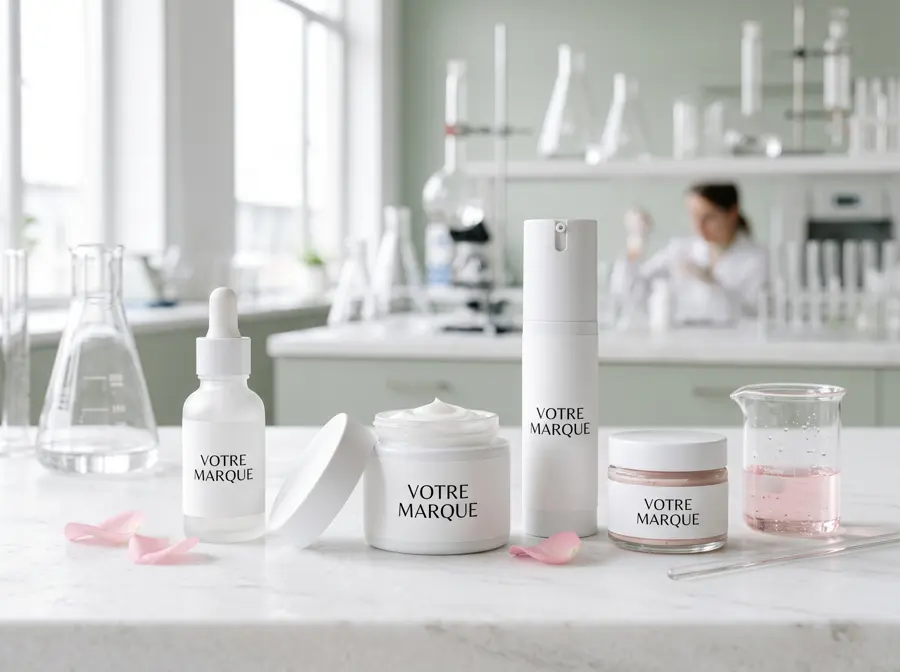
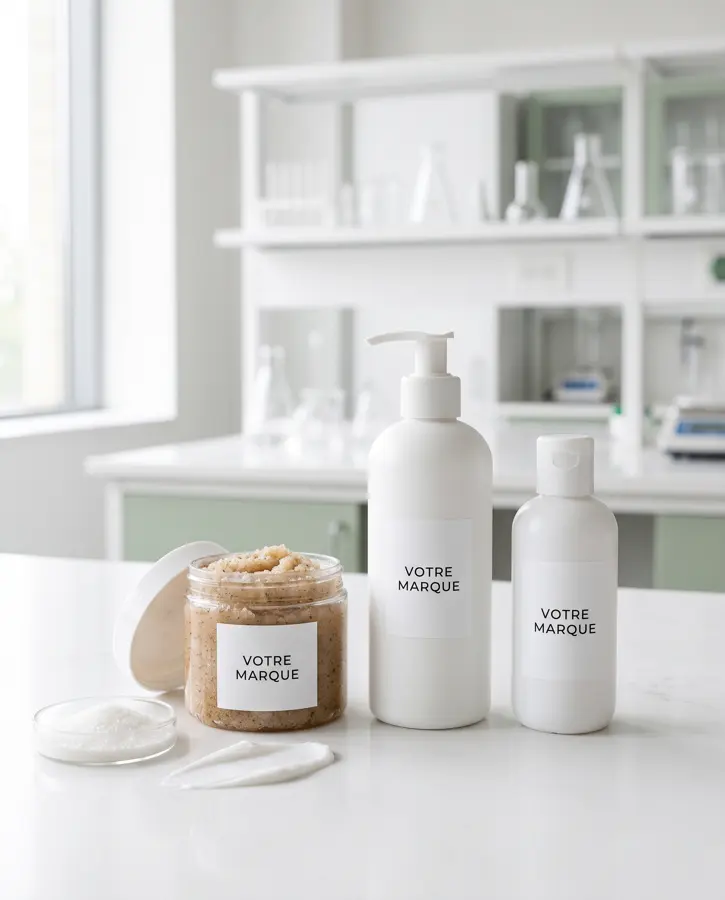
For skin
As a humectant, it helps skin hold water. In a cream, serum or body milk, it contributes to skin that feels hydrated, soft and comfortable.
Services
Catalog
Explore the full catalog1,000+ formulas ready to carry your brandFace careFull range
Serums, creams and targeted care, formulated with your actives.
Hair careFull range
From shampoo to leave-in, for every hair type.
Body careFull range
Moisturizing, nourishing and shower care: cream, butter or oil.
Hammam and naturalFull range
Black soap, argan and authentic Moroccan rituals.
Specialty careFull range
Sun care, lips, intimate care and oral care.
Industries
All solutions by industryFormulas and formats for your businessHospitality and wellness
Brands and creators
Our brands
Our own brands, developed and made in our laboratory.

 DermocosmeticsSublime CosmeticsFace, sun and body care for pharmacies and drugstores.Visit the website

 Hammam and spaLalla MamaMoroccan hammam rituals: black soap, rhassoul, oils and body care.Visit the website

 Equine careStallionGrooming care for horses: mane, coat and hooves.Visit the website
Laboratory
 Our factory in Aït MelloulISO 22716 and ISO 9001, visits by appointmentDiscover the factory
Cosmetics manufacturer based in Agadir
500+ brands35+ countries1,000+ formulas
Our factory in Aït Melloul
Up to 3 million units a yearVisits by appointment
Contract manufacturing, step by step
RegulationsCostsProject steps
Join our teams in Agadir
FormulationProductionQualityRegulatorySales
Resources
The dromedary milk from the herds of the Saharan South, mild and slightly salty.
The lactation a she-camel gives milk for eight to eighteen months.
The milk fat, protein, lactose and vitamin C.
The care a humectant for creams, serums and body milks.
By the Carmel Cosmetics Labs R&D team · updated October 18, 2026
Camel milk is the milk of the dromedary (Camelus dromedarius), used in cosmetics under the INCI name CAMEL MILK. The European CosIng database classes it as a humectant and skin conditioning agent: it helps skin hold water and stay in good condition. It contains fat, protein, lactose and vitamin C. It is an animal-derived ingredient, found in creams, serums and body milks.
The whole milk, liquid or dried, declared as CAMEL MILK. The CosIng database classes it as a humectant and skin conditioning agent.
A fraction extracted from the milk, declared as CAMEL MILK EXTRACT and classed by CosIng as a skin conditioning agent. The INCI name shows which of the two forms is in the product.
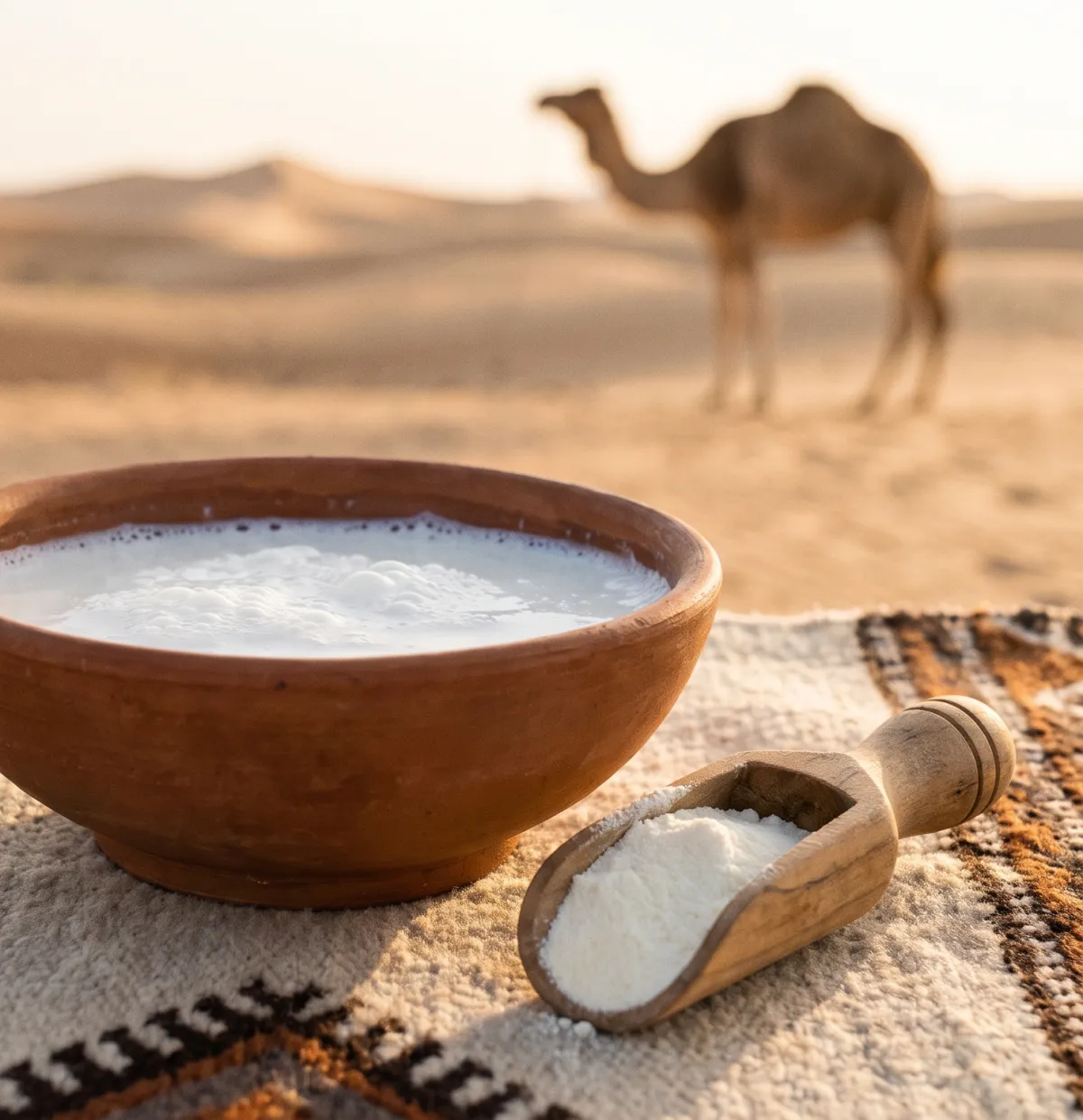
As a humectant, it helps skin hold water. In a cream, serum or body milk, it contributes to skin that feels hydrated, soft and comfortable.
Camel milk analyzed in Morocco contains about 34 g of fat, 32 g of protein and 50 g of sugars per liter, as well as vitamin C, in greater quantity than cow's milk.
A distinctive ingredient, tied to the dromedary herds of the South, easy to tell a story about. It suits ranges that embrace an animal-derived ingredient, with no health promise.
Camel milk cream or serum applied morning and evening on clean skin, with light movements.
Body milk massaged in after the shower, focusing on dry areas such as elbows and legs.
In a wash gel or a soap, it is used on wet skin, worked into a lather, then rinsed off.
We build it into face creams and serums, body milks and gels ready to carry your brand. Choose a category to see our formulas.
What our formulators take into account when camel milk goes into your product.
Often paired with
An animal-derived ingredient: the finished product cannot claim "vegan". We check the traceability and the health documents supplied with each batch.
Depending on the product, we choose a liquid or dried milk, and a formula protected by a preservation system validated by an efficacy test.
The INCI list shows CAMEL MILK for the milk and CAMEL MILK EXTRACT for an extract: two distinct ingredients in the CosIng database.
Camel milk is associated with food uses and popular health beliefs. In a cosmetic, we stay with hydrate, soften and nourish, with no health promise whatsoever.
The world population of camels and dromedaries is estimated at more than 41 million head, according to the FAO.
A she-camel produces milk for eight to eighteen months, with a peak in the second or third month of lactation.
Dromedary milk is slightly saltier than cow's milk, and richer in vitamin C.
Camel milk is the milk of the dromedary, declared as CAMEL MILK in the ingredient list. The European CosIng database classes it as a humectant and skin conditioning agent. It is found in creams, serums, body milks and cleansing products, in liquid or dried form.
Camel milk is a humectant: it helps skin hold water, for skin that feels hydrated, soft and comfortable. It also brings fat, protein and lactose. We do not make a health argument of it: its claimed benefits stay within the cosmetic framework.
Yes, camel milk can go into a soap or a wash gel, like other milks. The formula must then stay stable and well preserved. At Carmel Cosmetics Labs, we mainly build it into creams, serums and body milks, and we study a cleansing version on brief.
No. Camel milk is an animal-derived ingredient: a product that contains it cannot be presented as vegan. If your range aims for that claim, we offer other moisturizing actives of plant or biotech origin. The choice is made at the brief stage, before formula development.
In Morocco, the dromedary is mainly found in the Saharan zone of the South. A Moroccan study analyzed milks collected in Dakhla, Errachidia and the Fès-Meknès region. The precise origin of a batch depends on the supplier and its documents.
Yes. Carmel Cosmetics Labs builds camel milk into face creams and serums, body milks and gels in white label, or into an exclusive private label formula, made in our ISO 22716 factory in Aït Melloul, Morocco. We support you from choosing the formula through to packaging with your brand.
Send your brief: we formulate and manufacture your camel milk care in our ISO 22716 factory in Aït Melloul. Free consultation and a selection of formulas, no commitment.