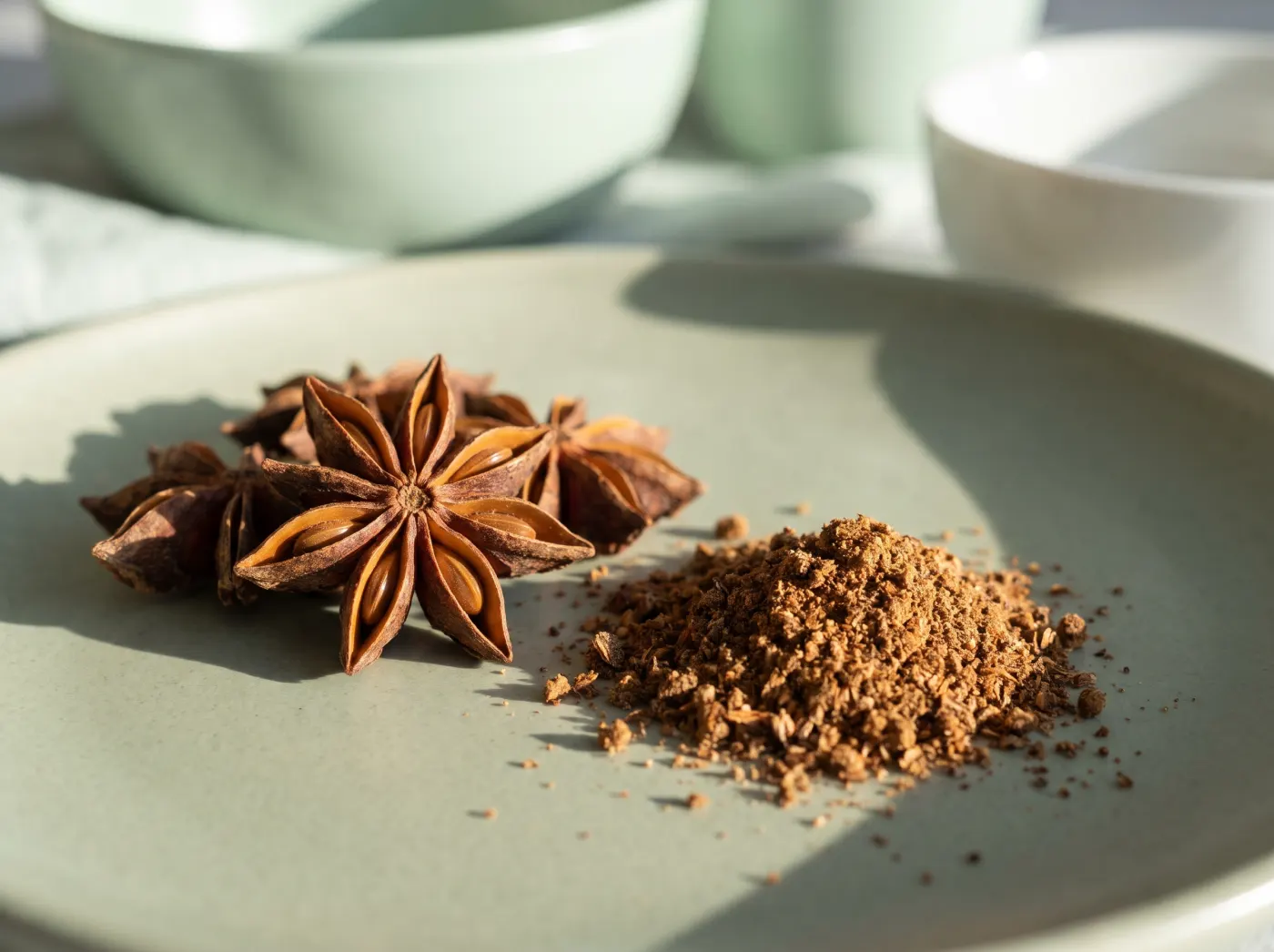
A risk of confusion with Japanese star anise
Review2011 review
The fruit of Illicium verum is sometimes contaminated with that of Japanese star anise (I. anisatum) or other toxic Illicium species, which contain neurotoxic sesquiterpenes6.
Anisatin, a marker of toxic fruits
LaboratoryWhole fruits and infusionsDART and high-resolution mass spectrometry
The signal of anisatin, the neurotoxin of Japanese star anise, is more than 1,000 times higher than in Chinese star anise. Adulteration down to 1% (by mass) is still measurable. None of the 8 commercial infusions analyzed contained a significant amount7.
A simpler method to tell the two species apart
LaboratoryOne carpel, mass spectrometryComparison with the DART method
The anisatin signal is about 250 times higher in Japanese star anise than in Chinese star anise, with the same yes/no result as the DART method in a few seconds8.
Contact allergy to the anethole of a toothpaste
Case report63-year-old womanPatch test to anethole
Lip irritation persisting for 6 years disappears when the flavored toothpaste is stopped; the patch test is positive to anethole, the toothpaste flavor9.