











































Natural or synthetic
ReviewCamphor is distilled from camphor tree wood, but can also be synthesized, mostly from turpentine. The review lists it among cosmetic fragrances and also notes its use as a skin penetration enhancer1.
Services
Catalog
Explore the full catalog1,000+ formulas ready to carry your brandFace careFull range
Serums, creams and targeted care, formulated with your actives.
Hair careFull range
From shampoo to leave-in, for every hair type.
Body careFull range
Moisturizing, nourishing and shower care: cream, butter or oil.
Hammam and naturalFull range
Black soap, argan and authentic Moroccan rituals.
Specialty careFull range
Sun care, lips, intimate care and oral care.
Industries
All solutions by industryFormulas and formats for your businessHospitality and wellness
Brands and creators
Our brands
Our own brands, developed and made in our laboratory.

 DermocosmeticsSublime CosmeticsFace, sun and body care for pharmacies and drugstores.Visit the website

 Hammam and spaLalla MamaMoroccan hammam rituals: black soap, rhassoul, oils and body care.Visit the website

 Equine careStallionGrooming care for horses: mane, coat and hooves.Visit the website
Laboratory
 Our factory in Aït MelloulISO 22716 and ISO 9001, visits by appointmentDiscover the factory
Cosmetics manufacturer based in Agadir
500+ brands35+ countries1,000+ formulas
Our factory in Aït Melloul
Up to 3 million units a yearVisits by appointment
Contract manufacturing, step by step
RegulationsCostsProject steps
Join our teams in Agadir
FormulationProductionQualityRegulatorySales
Resources
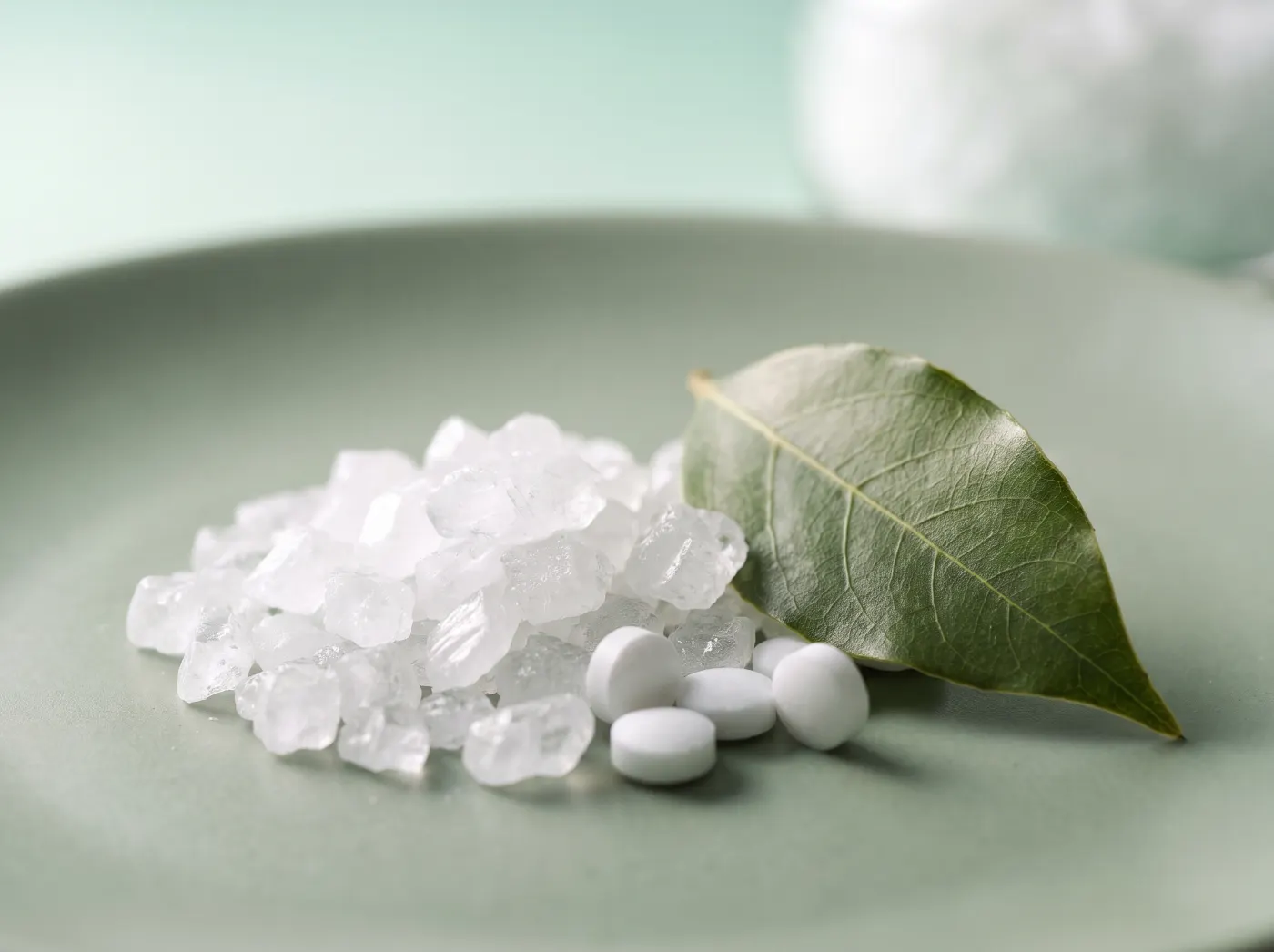
Camphor (INCI CAMPHOR, bornan-2-one) is extracted from the camphor tree or synthesized from turpentine1. CosIng classes it as a denaturant, fragrance and plasticiser7. It is named in EU Annex III: its presence must be declared above 0.001% in leave-on products and 0.01% in rinse-off products, with no maximum concentration89. It is toxic to young children if swallowed2.
Entry from our cosmetic ingredient glossary. Regulatory data from the European Commission's CosIng database7, Regulation (EU) 2023/15458 and the consolidated Regulation (EC) No 1223/20099. Copy the identifiers in one click for your files.
Each result shows the protocol and the level of evidence. The higher the level, the better the result carries over to a finished formula.
Camphor is distilled from camphor tree wood, but can also be synthesized, mostly from turpentine. The review lists it among cosmetic fragrances and also notes its use as a skin penetration enhancer1.
Cinnamomum camphora leaf oil falls into six main chemotypes: eucalyptol, nerolidol, camphor, linalool, selina and mixed. Camphor content decreases with longitude. Camphor tree oil is therefore not always rich in camphor6.
In children, swallowing 500 mg or more is cited as a cause of death; 750 to 1,000 mg are associated with seizures and deaths. Products with 10% camphor contain 500 mg in 5 mL. Under 6 years, an exposure of 500 mg or more requires emergency care2.
Symptoms usually last 24 to 48 hours, but in this case delirium and headaches persisted 6 days after ingestion, with a return to normal on day 19. The authors call for better public information3.
With 8 patches, the peak plasma concentration of camphor is 41.0 ng/mL, versus 26.8 ng/mL with 4 patches; its terminal half-life is 5.6 hours. The authors conclude a relatively low systemic exposure, even with an unrealistic number of patches4.
A woman developed a contact allergy after applying a chest ointment containing camphor, menthol, thymol and turpentine, eucalyptus, cedar leaf and nutmeg oils. The authors do not name camphor as the cause: it is a case presentation5.
This page summarizes published literature on a cosmetic ingredient. It does not describe the effect of a finished product, which depends on its formula, and it is not medical advice. Evidence is flagged by level: clinical trial, review or laboratory.
No formula in our white label catalog features camphor yet. Our formulation lab can add it to a custom formula or to a catalog formula. Its common uses:
Very rare use: supporting fragrance, with mandatory declaration above 0.001% in leave-on products.
Scented balms and massage oils, not to be intended for young children.
Fragrance of hair care, with mandatory declaration above 0.01% in a rinse-off product.
Four aromatic materials sometimes combined in the same care fragrance. Their regulatory status differs: check it before choosing.
| Camphor | Clove | Wintergreen | Boswellia | |
|---|---|---|---|---|
| Substance named in Annex III | Camphor, line 3318 | Eugenol, line 719 | Methyl salicylate, line 3249 | α-pinene and β-pinene, line 3718 |
| Oil or resin named in Regulation (EU) 2023/1545 | Not applicable: a chemical substance is named8 | Yes: Eugenia caryophyllus oil, line 3568 | No: no line for Gaultheria89 | No: no line for Boswellia or frankincense89 |
| Concentration limit | None: declaration only8 | None: declaration only89 | Yes, by product: 0.002% to 2.52% methyl salicylate9 | None for the material; peroxide value below 10 mmol/L for pinene8 |
Peer-reviewed studies and official regulatory sources, checked on November 3, 2026.

A product specialist reviews your request and gets back to you on the channel you prefer.