











































Services

Torn between two services?A project manager will guide you

Catalog

Explore the full catalog1,000+ formulas ready to carry your brand

Face careFull range

Serums, creams and targeted care, formulated with your actives.

Body careFull range

Moisturizing, nourishing and shower care: cream, butter or oil.

Specialty careFull range

Sun care, lips, intimate care and oral care.

Men, baby, makeupFull range

Shaving and beard, baby and mom, makeup.

Industries

All solutions by industryFormulas and formats for your business

Our brands

Our own brands, developed and made in our laboratory.

Become a distributor of our brandsPharmacies, spas, shops and wholesalers

Laboratory

Cosmetics manufacturing room with a row of stainless-steel mixers and an operator in white workwearOur factory in Aït MelloulISO 22716 and ISO 9001, visits by appointmentDiscover the factory

Resources

Java citronella essential oil

The citronella essential oil in the glossary is obtained from the grass of Cymbopogon winterianus, Java citronella1. It contains mostly geraniol (42.1%), citronellal and citronellol4. It is not named in Annex III, which covers other Cymbopogon ("lemongrass"), but geraniol and citronellol are named there23.
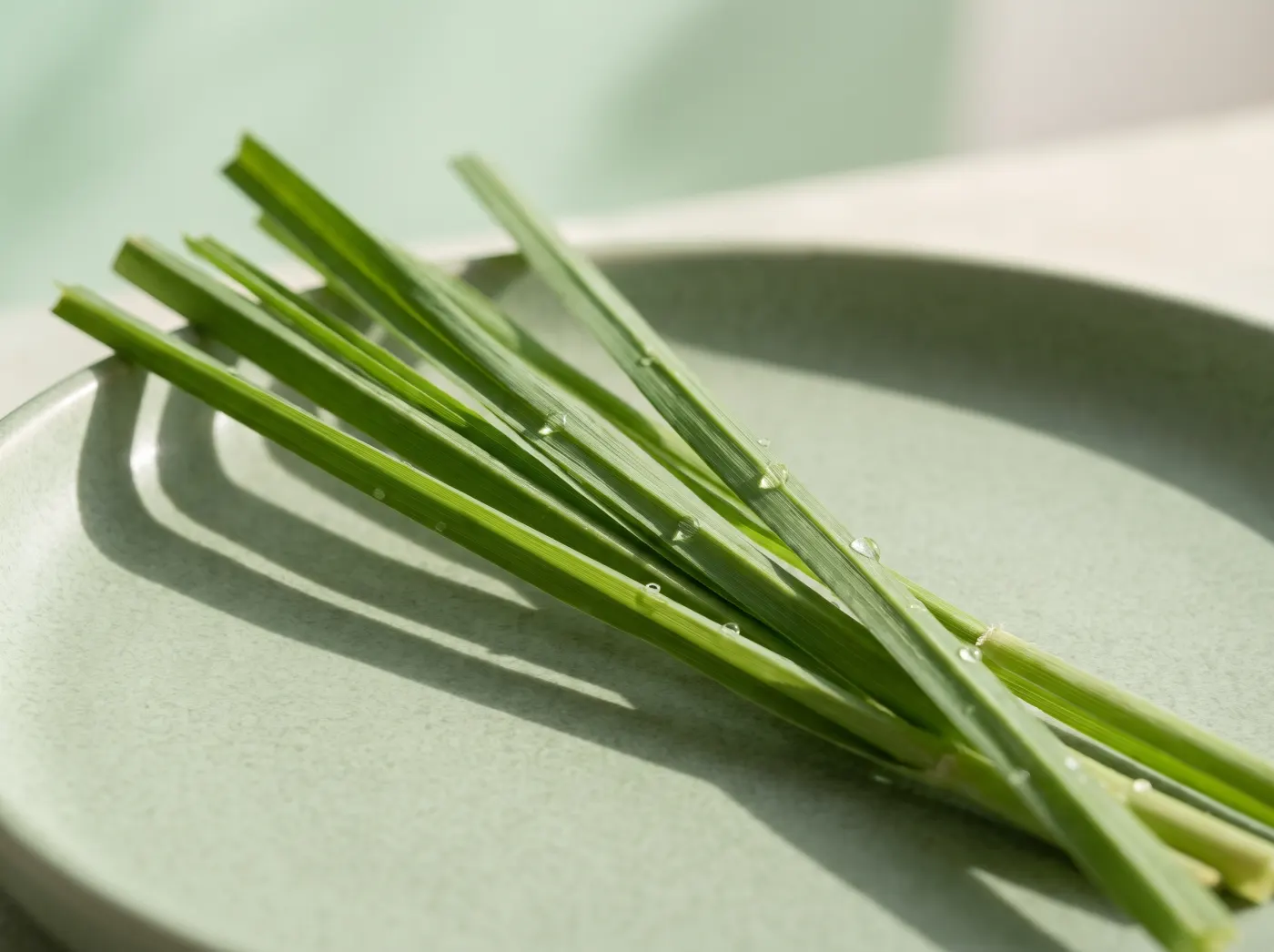
Java citronella essential oil in macro view, clear drops on a sage green ceramic surface, raking light

Java citronella oil at a glance

Entry from our cosmetic ingredient glossary. Regulatory data from the European Commission's CosIng database1 and from Regulations (EU) 2023/15452 and 1223/2009 consolidated3. Copy the identifiers in one click for your files.

INCI name
CYMBOPOGON WINTERIANUS HERB OILCosIng gives no separate US INCI name1
Other names
Java citronella essential oilCitronella oil (Java). Not to be confused with lemongrass (Cymbopogon citratus, flexuosus or schoenanthus), a different INCI1
CAS number
91771-61-8CosIng1
EC number
294-954-7CosIng1
Botanical origin
Java citronella (Cymbopogon winterianus, Poaceae)CosIng: essential oil obtained from the herbaceous parts of the plant1
Composition
Geraniol, citronellal, citronellolGeraniol 42.1%, citronellal 17.3%, citronellol 16.9% in one analyzed oil4
CosIng functions
Fragrance"Perfuming"1
EU status
Oil not named; constituents namedLine 354 of Annex III names the oils of Cymbopogon schoenanthus, flexuosus and citratus ("Lemongrass Oil"), not that of Cymbopogon winterianus. CosIng indicates no restriction21
Allergen to declare
Yes, through geraniol and citronellolGeraniol (line 78) and citronellol (line 86): above 0.001% in a leave-on product and 0.01% in a rinse-off product. Citronellal is not named in Annex III3.
Safety
No CIR assessment retainedNo CIR panel report found on this oil. Point of caution: oxidation of geraniol and citronellol in air79

What the research says

Each result shows the protocol and the level of evidence. The higher the level, the better the result carries over to a finished formula.

Clinical trialReview or consensusLaboratory

Oil compositionChemistry

Geraniol, citronellal, citronellol

Laboratory
Cymbopogon winterianus oilChemical analysis

Geraniol represents 42.13% of the oil, citronellal 17.31% and citronellol 16.91%. The oil showed cytotoxicity on mammalian fibroblasts only above 250 µg/mL. The study concerns parasites, not cosmetics4.

Oxidation and contact allergiesToxicology

Citronella, among nine oils with more than 2% positive tests

Review
2016 review55 oils tested in people suspected of contact allergy

Nine oils exceeded 2% positive tests, including citronella oil (the abstract does not specify the species). Relevance data are missing or insufficient5.

Geraniol oxidizes in air and becomes sensitizing

Laboratory
LLNA test, miceAnalysis of oxidation products

Pure geraniol is a weak allergen. Exposed to air, it forms hydrogen peroxide, geranial and neral, among others: oxidized samples have a moderate sensitizing potential7.

Oxidized geraniol: 3 to 8% positive tests

Clinical study
1,476 consecutively tested peopleClinic populationGeraniol at 6%, oxidized geraniol at 6 and 11%

Pure geraniol at 6% gives 1% positive tests; oxidized geraniol at 6% gives 3% and at 11% gives 8%. Most people react only to oxidized geraniol8.

Oxidized citronellol: up to 4.5% positive tests

Clinical study
658 tested peoplePure and oxidized citronellol, 1 to 6%

Pure citronellol detects 0.15 to 0.31% positive tests, oxidized citronellol 0.61 to 4.5%. Among people reacting to oxidized citronellol, 75 to 91% also react to oxidized linalool or limonene9.

Use on skinLaboratory

Java citronella and melanin production, in a formulation

Laboratory
Blend of Litsea cubeba, Pinus mugo and Cymbopogon winterianusOil-in-water emulsion and oily solution

The study evaluates the skin release of citral, myrcene and citronellal from a blend of oils, with the idea of inhibiting tyrosinase. The oil-in-water emulsion releases the compounds better. This is formulation work, not a cosmetic outcome trial10.

No cosmetic clinical trial retained

Review
2016 review of lemongrass

The lemongrass review describes its composition and contact allergies6. We retained no robust cosmetic clinical trial on skin for Java citronella: the oil remains first of all a fragrance ingredient1.

This page summarizes published literature on a cosmetic ingredient. It does not describe the effect of a finished product, which depends on its formula, and it is not medical advice. Evidence is flagged by level: clinical trial, review or laboratory.

Which products can use citronella oil?

No formula in our white label catalog features citronella oil yet. Our formulation lab can add it to a custom formula or to a catalog formula. Its common uses:

Face

Fresh fragrance in toners and creams for normal to combination skin.

Body

Fragrance in shower gels, soaps, scrubs and massage oils.

Hair

Fragrance in shampoos and hair sprays.

Citronella, litsea cubeba, lemon or sweet orange?

Four lemon-scented or citrus oils often compared. Their chemistry differs, so does their labeling.

CitronellaLitsea cubebaLemonSweet orange
Dominant constituentsGeraniol (42.1%), citronellal (17.3%), citronellol (16.9%)4Neral and geranial (citral), 78.7 to 87.4%11Limonene (60.7% in one analyzed oil)12Limonene, 73.9 to 97%13
Regulation (EU) 2023/1545Oil not named; geraniol and citronellol named3Oil not named; citral named (line 70)2Oil named (line 353)2Oil named (line 351)2
Carmel catalog formulasNoneNone1 formula1 formula

Frequently asked questions about citronella oil

What is citronella oil?
In our glossary, it is the essential oil of Java citronella, Cymbopogon winterianus1. Its INCI name is CYMBOPOGON WINTERIANUS HERB OIL. It contains mostly geraniol (42.1%), citronellal and citronellol4. It differs from lemongrass, another Cymbopogon species.
Does citronella repel mosquitoes?
We retained no study of Java citronella applied on human skin. A repellent is a use outside cosmetics: for a brand, we formulate citronella-scented care products, with no promise of protection against mosquitoes.
Do I have to declare citronella oil in the ingredient list?
Cymbopogon winterianus oil is not named in Annex III; line 354 covers the oils of Cymbopogon schoenanthus, flexuosus and citratus ("Lemongrass Oil")2. However, the geraniol and citronellol it contains are named and must be declared above 0.001% in a leave-on product and 0.01% in a rinse-off product3. Citronellal is not named.
Is citronella allergenic?
It can be: in a 2016 review, citronella oil is among nine oils with more than 2% positive tests5. Geraniol oxidizes in air and becomes sensitizing7: 8% positive tests to oxidized geraniol at 11% versus 1% to pure geraniol8. Citronellol follows the same pattern9. Air-protected packaging, an antioxidant and tolerance tests are recommended.
What is the difference between citronella, lemongrass and litsea cubeba?
Java citronella (Cymbopogon winterianus) is rich in geraniol, citronellal and citronellol4. Lemongrass comes from other Cymbopogon species, named at line 354 of Annex III2. Litsea cubeba is a Lauraceae rich in citral11. Each has its own page.
Is citronella photosensitizing?
The CosIng database refers it to no restriction1 and we retained no phototoxicity study on this oil. Furocoumarins fall under Annex II, line 3583; ask for the certificate of analysis of your batch.
Can you manufacture a citronella product for my brand?
Yes. Our ISO 22716 certified lab can add citronella to a catalog formula that you customize or to a custom formula, taking the declaration of geraniol and citronellol into account. Samples are free.

Sources

Peer-reviewed studies and official regulatory sources, checked on November 3, 2026.

  1. European Commission. CosIng, entry CYMBOPOGON WINTERIANUS HERB OIL (CAS 91771-61-8, EC 294-954-7). ec.europa.eu/growth/tools-databases/cosing
  2. Commission Regulation (EU) 2023/1545 of 26 July 2023 amending Regulation (EC) No 1223/2009 of the European Parliament and of the Council as regards labelling of fragrance allergens in cosmetic products (Annex III). eur-lex.europa.eu
  3. Regulation (EC) No 1223/2009 of the European Parliament and of the Council on cosmetic products, consolidated version of 1 May 2025 (Annexes II and III). eur-lex.europa.eu
  4. Pereira PS, Oliveira CVB, Maia AJ, Vega-Gomez MC, Rolón M, Coronel C, et al. Evaluation of the In Vitro Antiparasitic Effect of the Essential Oil of Cymbopogon winterianus and Its Chemical Composition Analysis. Molecules. 2022;27(9):2753. doi:10.3390/molecules27092753
  5. de Groot AC, Schmidt E. Essential Oils, Part IV: Contact Allergy. Dermatitis. 2016;27(4):170-175. doi:10.1097/der.0000000000000197
  6. de Groot A, Schmidt E. Essential Oils, Part V: Peppermint Oil, Lavender Oil, and Lemongrass Oil. Dermatitis. 2016;27(6):325-332. doi:10.1097/der.0000000000000218
  7. Hagvall L, Bäcktorp C, Svensson S, Nyman G, Börje A, Karlberg AT. Fragrance compound geraniol forms contact allergens on air exposure. Identification and quantification of oxidation products and effect on skin sensitization. Chem Res Toxicol. 2007;20(5):807-814. doi:10.1021/tx700017v
  8. Hagvall L, Bruze M, Engfeldt M, Isaksson M, Lindberg M, Ryberg K, et al. Contact allergy to oxidized geraniol among Swedish dermatitis patients-A multicentre study by the Swedish Contact Dermatitis Research Group. Contact Dermatitis. 2018;79(4):232-238. doi:10.1111/cod.13047
  9. Hagvall L, Rudbäck J, Bråred Christensson J, Karlberg AT. Patch testing with purified and oxidized citronellol. Contact Dermatitis. 2020;83(5):372-379. doi:10.1111/cod.13654
  10. Capetti F, Cagliero C, Argenziano M, Cavalli R, Dianzani C, Pavarino M, et al. A New Blend of Litsea cubeba, Pinus mugo, and Cymbopogon winterianus Essential Oil Active as an Anti-tyrosinase Ingredient in Topical Formulations. Planta Med. 2024;90(4):267-275. doi:10.1055/a-2225-7603
  11. Si L, Chen Y, Han X, Zhan Z, Tian S, Cui Q, et al. Chemical composition of essential oils of Litsea cubeba harvested from its distribution areas in China. Molecules. 2012;17(6):7057-7066. doi:10.3390/molecules17067057
  12. Kačániová M, Čmiková N, Vukovic NL, Verešová A, Bianchi A, Garzoli S, et al. Citrus limon Essential Oil: Chemical Composition and Selected Biological Properties Focusing on the Antimicrobial (In Vitro, In Situ), Antibiofilm, Insecticidal Activity and Preservative Effect against Salmonella enterica Inoculated in Carrot. Plants (Basel). 2024;13(4):524. doi:10.3390/plants13040524
  13. Geraci A, Di Stefano V, Di Martino E, Schillaci D, Schicchi R. Essential oil components of orange peels and antimicrobial activity. Nat Prod Res. 2017;31(6):653-659. doi:10.1080/14786419.2016.1219860
Carmel Cosmetics Labs product specialist with a brand founder

Tell us about your project

A product specialist reviews your request and gets back to you on the channel you prefer.

Lead EN – Demande de devis
Tell us about your project. A product specialist will get back to you shortly.
CONTACT INFORMATION
Name
PROJECT INFORMATION
Which cosmetics category interests you most?

By submitting this form, you agree to our terms of service and privacy policy.

No obligation. Your information stays confidential and is used only to prepare your quote.





