Services

Torn between two services?A project manager will guide you

Catalog

Explore the full catalog1,000+ formulas ready to carry your brand

Face careFull range

Serums, creams and targeted care, formulated with your actives.

Body careFull range

Moisturizing, nourishing and shower care: cream, butter or oil.

Specialty careFull range

Sun care, lips, intimate care and oral care.

Men, baby, makeupFull range

Shaving and beard, baby and mom, makeup.

Industries

All solutions by industryFormulas and formats for your business

Our brands

Our own brands, developed and made in our laboratory.

Become a distributor of our brandsPharmacies, spas, shops and wholesalers

Laboratory

Cosmetics manufacturing room with a row of stainless-steel mixers and an operator in white workwearOur factory in Aït MelloulISO 22716 and ISO 9001, visits by appointmentDiscover the factory

Resources

Copaiba essential oil

Copaiba essential oil is the volatile fraction of the resin of Copaifera officinalis1. Its main constituent is often β-caryophyllene, from 19.7 to 57.5% depending on the species4, named as a fragrance allergen in Annex III2. The oil is not named, and studies on human skin are rare5.

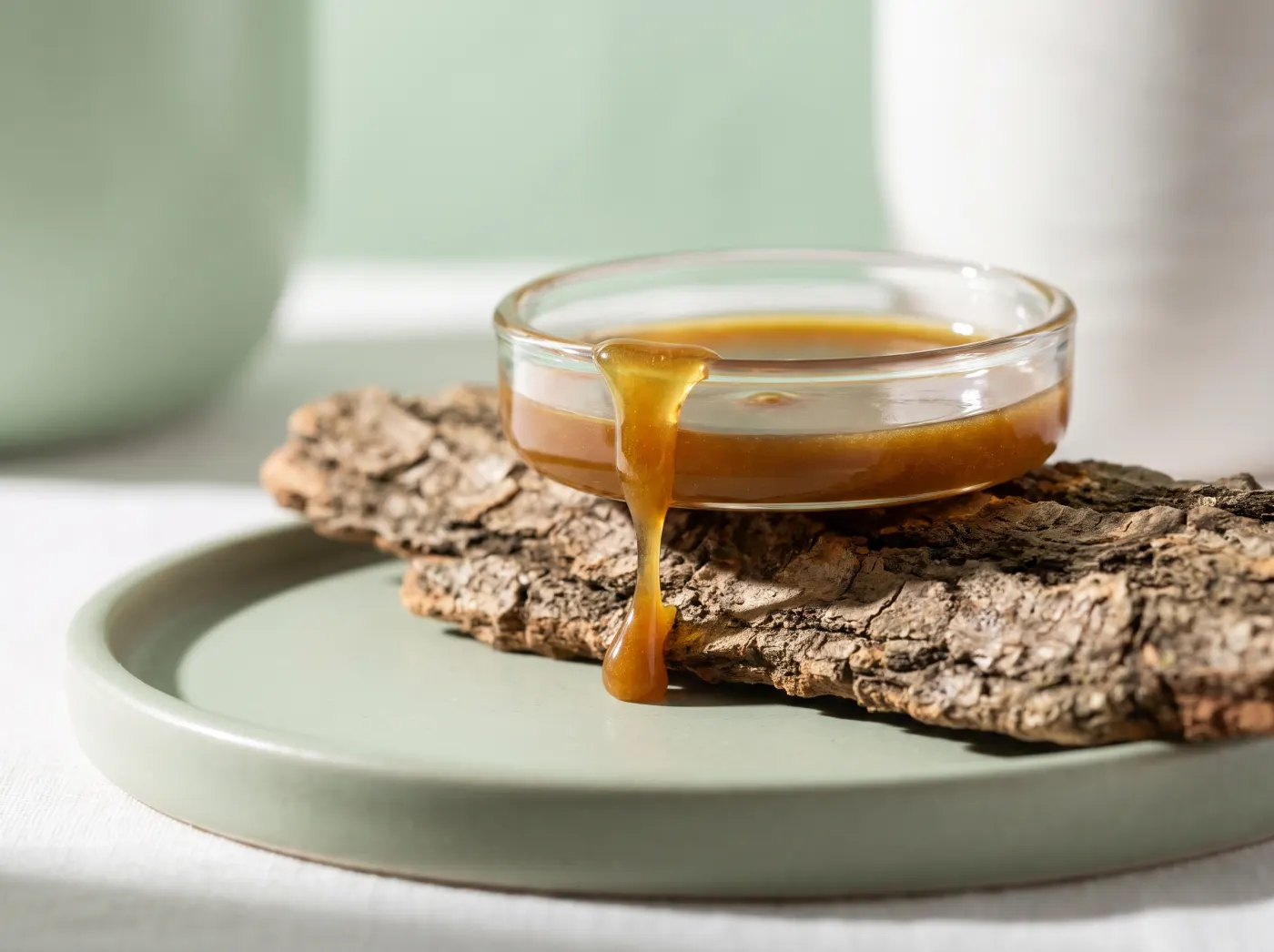
Copaiba essential oil in macro view, pale drops on a sage green ceramic surface, raking light

Copaiba oil at a glance

Entry from our cosmetic ingredient glossary. Regulatory data from the European Commission's CosIng database1 and from Regulation (EU) 2023/15452. Copy the identifiers in one click for your files.

INCI name
COPAIFERA OFFICINALIS RESIN OILCosIng also contains multi-species entries (COPAIFERA DUCKEI/MULTIJUGA/OFFICINALIS/RETICULATA RESIN OIL, among others) and the oleoresin, COPAIFERA OFFICINALIS RESIN (CAS 9000-12-8 / 8001-61-4)1
Other names
Copaiba essential oilCopaiba oil. Not to be confused with the oleoresin (copaiba balsam), a mixture of acidic diterpenes dissolved in volatile sesquiterpenes6
CAS number
Not providedCosIng gives no CAS number for this entry1
EC number
Not providedCosIng gives no EC number for this entry1
Botanical origin
Copaiba (Copaifera officinalis, Fabaceae)CosIng: volatile oil obtained from the resin1. The genus Copaifera has many Amazonian species, whose oils differ48
Composition
β-caryophyllene, α-humulene, α-copaene, diterpenic acidsβ-caryophyllene from 19.7 to 57.5% depending on the species4; in the essential oil of another species (C. langsdorffii), cis-thujopsene dominates at 47%5
CosIng functions
Fragrance, skin conditioning"Fragrance" and "Skin conditioning"1
EU status
No annex of Regulation 1223/2009The name Copaifera appears in no annex of the version consolidated on 1 May 20253
Allergen to declare
Not as an oil; beta-caryophyllene must be declaredBeta-caryophyllene is named in Annex III (line 332): it must be declared above 0.001% in a leave-on product and 0.01% in a rinse-off product. Non-compliant products may be placed on the market until 31 July 2026 and made available until 31 July 20282
Safety
No CIR assessment foundNo CIR panel report found. A 2023 review notes that the toxic effects of copaiba oils and their constituents are poorly known9

What the research says

Each result shows the protocol and the level of evidence. The higher the level, the better the result carries over to a finished formula.

Clinical trialReview or consensusLaboratory

Oil compositionChemistry

β-caryophyllene leads, depending on the species

Laboratory
Three Copaifera speciesOleoresins

β-caryophyllene makes up 57.5% of C. multijuga oil, 19.7% of C. cearensis oil and 40.9% of C. reticulata oil. The acidic diterpenes also differ: copalic acid (6.2%) in C. multijuga, clorechinic and hardwickiic acids in C. cearensis4.

An essential oil that can be dominated by another compound

Laboratory
Copaifera langsdorffiiEssential oil distilled from the oleoresin48 substances

The essential oil has 48 substances, of which 14 main ones account for 95.8% of the total. cis-Thujopsene makes up nearly 47%5. Reviews describe the same families: volatile sesquiterpenes and acidic diterpenes78.

Safety and stabilityToxicology

Little toxicity data

Review
2023 review

The review of in vitro and in vivo studies concludes that the toxic effects of copaiba oils and their constituents are poorly known, despite their traditional use9.

No DNA damage in mice

Laboratory
Swiss miceComet and micronucleus tests500 to 2,000 mg/kg by gavage

The oleoresin and its volatile and resinous fractions increase neither DNA damage nor micronuclei. This test covers genotoxicity after ingestion: it says nothing about skin tolerance10.

β-caryophyllene is volatile and oxidizes

Review
2025 review

The main constituent oxidizes to β-caryophyllene oxide: the authors recommend adding antioxidants, working at low oxygen levels and protecting the product through packaging11. In mice, repeated applications of β-caryophyllene at 10 mg/mL cause itching, thickening of the epidermis and a rise in IgE: the sensitizing potential deserves attention12.


Skin: limited evidenceSkincare

A 1% gel against placebo, on blemish-prone skin

Clinical trial
1.0% gel of C. langsdorffii essential oilDouble-blind versus placeboVolunteers with blemish-prone skin

The area affected by blemishes decreases clearly more with the copaiba gel than with placebo, which also has an effect. The study aimed at a medical use: we only keep the result on the look of the skin, and we found no second study to confirm it5.

The nanoemulsion carries β-caryophyllene deeper

Laboratory
Crude C. multijuga oil and nanoemulsionSkin permeation studyHS-GC/MS assay

With the nanoemulsion, β-caryophyllene reaches the dermis, which the crude oil does less well. The delivery system therefore affects penetration13. This is a penetration measurement only: it does not demonstrate a cosmetic effect.

This page summarizes published literature on a cosmetic ingredient. It does not describe the effect of a finished product, which depends on its formula, and it is not medical advice. Evidence is flagged by level: clinical trial, review or laboratory.

Which products can use copaiba oil?

No formula in our white label catalog features copaiba oil yet. Our formulation lab can add it to a custom formula or to a catalog formula. Its common uses:

Face

Targeted care gels and serums: a controlled trial exists at 1%, but it remains isolated.

Body

Massage oils, balms and body milks with a woody and spicy note, soaps.

Hair

Hair oils and leave-in care; we found no published study on hair with this oil.

Copaiba, patchouli, West Indian sandalwood or rosewood?

Four oils with woody notes, often confused in purchasing sheets. Their chemistry differs, and so does their labeling status.

CopaibaPatchouliWest Indian sandalwoodRosewood
Dominant constituentsβ-caryophyllene (19.7 to 57.5% depending on the species)4Patchouli alcohol (about 28% in the oil studied)14Valerianol, elemol, eudesmol isomers, caryophyllene15Linalool (93.6% in one oil studied)16
Annex IIIOil not named; beta-caryophyllene named (line 332)2Oil named (line 365)2Oil not named3Oil not named; linalool named (line 84)3

Frequently asked questions about copaiba oil

What is copaiba essential oil?
It is the volatile fraction of the resin of Copaifera officinalis, an Amazonian tree1. Its INCI name is COPAIFERA OFFICINALIS RESIN OIL. Its main constituent is often β-caryophyllene, depending on the species4.
What is the difference between copaiba oil and oleoresin?
The oleoresin is the balsam exuded from the trunk: acidic diterpenes dissolved in volatile sesquiterpenes6. The essential oil is its volatile fraction, distilled. The two have different INCI names in CosIng1.
What are the benefits of copaiba oil in cosmetics?
CosIng classifies it as a fragrance and skin conditioning agent1. We kept a single controlled trial, on a 1% gel and blemish-prone skin5: cosmetic evidence remains limited. The other data come from the laboratory.
Do I have to declare copaiba oil in the ingredient list?
Copaiba oil is not named in Annex III. Its main constituent, beta-caryophyllene, is (line 332): its declaration depends on its level in the finished product, above 0.001% in leave-on and 0.01% in rinse-off products2.
Is copaiba oil allergenic?
Its skin tolerance in humans is not documented in the studies we kept9. In mice, repeated β-caryophyllene at 10 mg/mL caused a skin reaction and a rise in IgE12. Tolerance tests on the finished product remain the rule.

How should copaiba oil be stored?
β-caryophyllene oxidizes to β-caryophyllene oxide: the authors recommend antioxidants, working at low oxygen levels and protective packaging11. During pregnancy, as with any skincare product, a healthcare professional's advice remains the rule.
Can you manufacture a copaiba product for my brand?
Yes, we study its integration depending on raw material availability and its analysis. Our ISO 22716 certified lab can add it to a customized catalog formula, or design it into a custom formula, with the allergen declaration calculated. Samples are free.

Sources

Peer-reviewed studies and official regulatory sources, checked on November 3, 2026.

  1. European Commission. CosIng, entry COPAIFERA OFFICINALIS RESIN OIL (no CAS or EC number provided). ec.europa.eu/growth/tools-databases/cosing
  2. Commission Regulation (EU) 2023/1545 of 26 July 2023 amending Regulation (EC) No 1223/2009 of the European Parliament and of the Council as regards labelling of fragrance allergens in cosmetic products (Annex III). eur-lex.europa.eu


  3. Regulation (EC) No 1223/2009 of the European Parliament and of the Council on cosmetic products, consolidated version of 1 May 2025 (Annexes II to VI). eur-lex.europa.eu
  4. Veiga Junior VF, Rosas EC, Carvalho MV, Henriques MG, Pinto AC. Chemical composition and anti-inflammatory activity of copaiba oils from Copaifera cearensis Huber ex Ducke, Copaifera reticulata Ducke and Copaifera multijuga Hayne--a comparative study. J Ethnopharmacol. 2007;112(2):248-54. doi:10.1016/j.jep.2007.03.005
  5. da Silva AG, Puziol Pde F, Leitao RN, Gomes TR, Scherer R, Martins ML, et al. Application of the essential oil from copaiba (Copaifera langsdori Desf.) for acne vulgaris: a double-blind, placebo-controlled clinical trial. Altern Med Rev. 2012;17(1):69-75. PMID 22502624
  6. Leandro LM, Vargas Fde S, Barbosa PC, Neves JK, da Silva JA, da Veiga-Junior VF. Chemistry and biological activities of terpenoids from copaiba (Copaifera spp.) oleoresins. Molecules. 2012;17(4):3866-89. doi:10.3390/molecules17043866
  7. da Trindade R, da Silva JK, Setzer WN. Copaifera of the Neotropics: A Review of the Phytochemistry and Pharmacology. Int J Mol Sci. 2018;19(5):1511. doi:10.3390/ijms19051511
  8. Arruda C, Aldana Mejía JA, Ribeiro VP, Gambeta Borges CH, Martins CHG, Sola Veneziani RC, et al. Occurrence, chemical composition, biological activities and analytical methods on Copaifera genus-A review. Biomed Pharmacother. 2019;109:1-20. doi:10.1016/j.biopha.2018.10.030
  9. Cardinelli CC, Silva JEAE, Ribeiro R, Veiga-Junior VF, Santos EPD, de Freitas ZMF. Toxicological Effects of Copaiba Oil (Copaifera spp.) and Its Active Components. Plants (Basel). 2023;12(5):1054. doi:10.3390/plants12051054
  10. Almeida MR, Darin JD, Hernandes LC, de Souza Ramos MF, Antunes LM, de Freitas O. Genotoxicity assessment of Copaiba oil and its fractions in Swiss mice. Genet Mol Biol. 2012;35(3):664-72. doi:10.1590/S1415-47572012005000052
  11. Bagher AM. Topical β-Caryophyllene for Dermatologic Disorders: Mechanisms, Human Evidence, and Clinical Translation. Pharmaceuticals (Basel). 2025;18(11):1605. doi:10.3390/ph18111605
  12. Inan S, Ward SJ, Baltazar CT, Peruggia GA, Javed E, Nayak AP. Epicutaneous Sensitization to the Phytocannabinoid β-Caryophyllene Induces Pruritic Inflammation. Int J Mol Sci. 2023;24(18):14328. doi:10.3390/ijms241814328
  13. Lucca LG, de Matos SP, Borille BT, de O Dias D, Teixeira HF, Veiga VF, et al. Determination of β-caryophyllene skin permeation/retention from crude copaiba oil (Copaifera multijuga Hayne) and respective oil-based nanoemulsion using a novel HS-GC/MS method. J Pharm Biomed Anal. 2015;104:144-8. doi:10.1016/j.jpba.2014.11.013
  14. Lin RF, Feng XX, Li CW, Zhang XJ, Yu XT, Zhou JY, et al. Prevention of UV radiation-induced cutaneous photoaging in mice by topical administration of patchouli oil. J Ethnopharmacol. 2014;154(2):408-18. doi:10.1016/j.jep.2014.04.020
  15. Kucharska M, Frydrych B, Wesolowski W, Szymanska JA, Kilanowicz A. A Comparison of the Composition of Selected Commercial Sandalwood Oils with the International Standard. Molecules. 2021;26(8):2249. doi:10.3390/molecules26082249
  16. Teles AM, Silva-Silva JV, Fernandes JMP, Calabrese KDS, Abreu-Silva AL, Marinho SC, et al. Aniba rosaeodora (Var. amazonica Ducke) Essential Oil: Chemical Composition, Antibacterial, Antioxidant and Antitrypanosomal Activity. Antibiotics (Basel). 2020;10(1):24. doi:10.3390/antibiotics10010024
Carmel Cosmetics Labs product specialist with a brand founder

Tell us about your project

A product specialist reviews your request and gets back to you on the channel you prefer.

Lead EN – Demande de devis
Tell us about your project. A product specialist will get back to you shortly.
CONTACT INFORMATION
Name
PROJECT INFORMATION
Which cosmetics category interests you most?

By submitting this form, you agree to our terms of service and privacy policy.

No obligation. Your information stays confidential and is used only to prepare your quote.