











































Services

Torn between two services?A project manager will guide you

Catalog

Explore the full catalog1,000+ formulas ready to carry your brand

Face careFull range

Serums, creams and targeted care, formulated with your actives.

Body careFull range

Moisturizing, nourishing and shower care: cream, butter or oil.

Specialty careFull range

Sun care, lips, intimate care and oral care.

Men, baby, makeupFull range

Shaving and beard, baby and mom, makeup.

Industries

All solutions by industryFormulas and formats for your business

Laboratory

Cosmetics manufacturing room with a row of stainless-steel mixers and an operator in white workwearOur factory in Aït MelloulISO 22716 and ISO 9001, visits by appointmentDiscover the factory

Resources

Centella asiatica (cica, gotu kola)

Centella asiatica, or cica, is a plant whose extract contains triterpenes such as asiaticoside and madecassoside8. In cosmetics, a review of 5 double-blind trials (172 women) reports fewer wrinkles around the eyes and lips and clearly higher hydration3. Extracts are not standardized, which limits these results3.
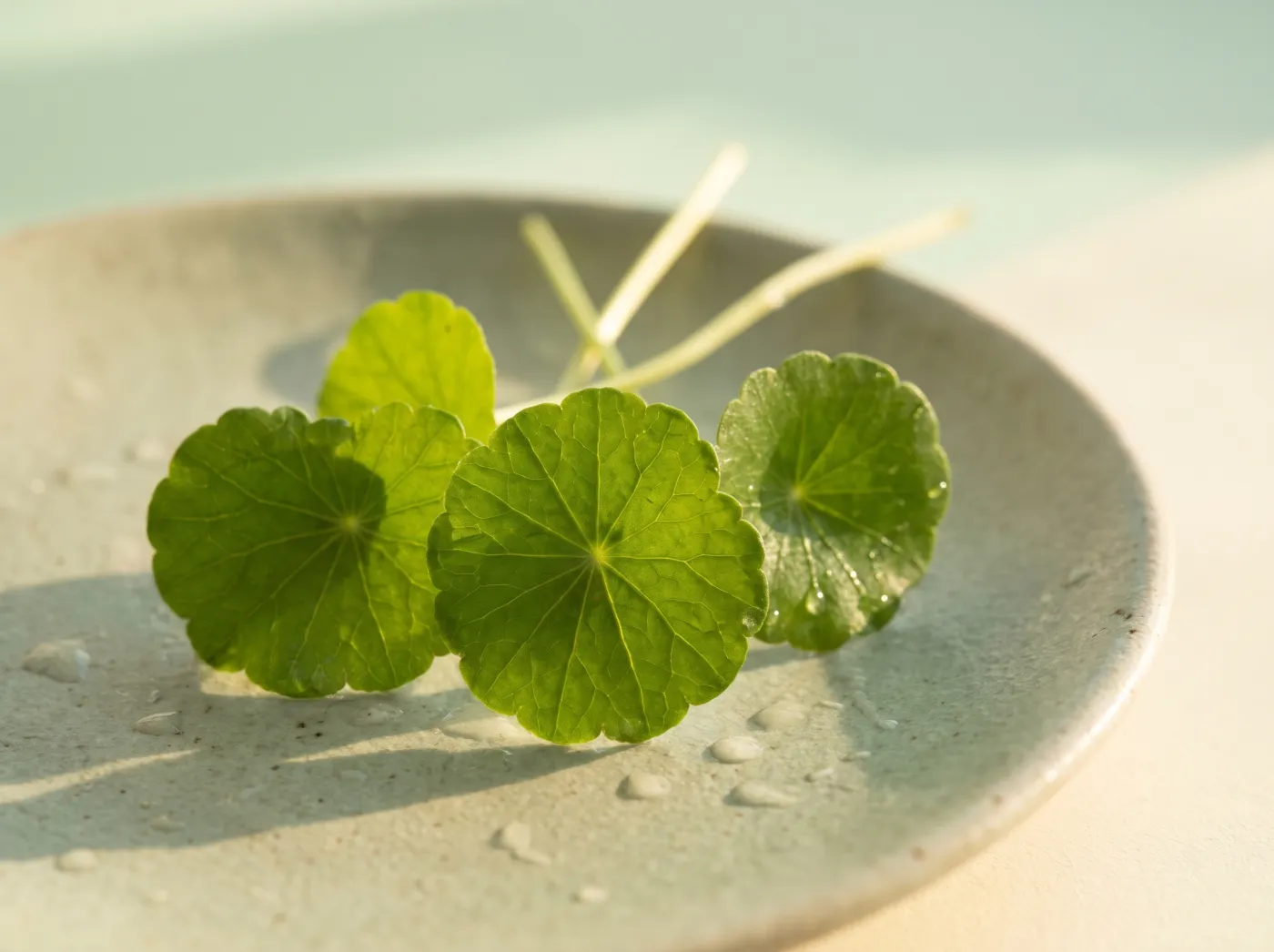
Dried centella asiatica leaves in macro view on a sage green ceramic surface

Centella asiatica at a glance

Entry from our cosmetic ingredient glossary. Regulatory data from the European Commission's CosIng database1, safety according to the CIR expert panel2. Copy the identifiers in one click for your files.

INCI name
CENTELLA ASIATICA EXTRACTAlso exists by plant part (leaf, root, leaf and stem) and as cell culture1
Other names
Cica, gotu kola, hydrocotyleCentella asiatica (L.) Urb.
CAS number
84696-21-9
EC number
283-640-5
Botanical origin
Centella asiatica (L.) Urb., ApiaceaeCosIng describes the extract of the whole plant1
Active markers
Asiaticoside, madecassosidePentacyclic triterpenes, with asiatic and madecassic acids8
CosIng function
Soothing, smoothing, tonic, cleansing, skin conditioning"Soothing", "Smoothing", "Tonic", "Cleansing" and "Skin conditioning" in the European nomenclature1
Standardization
Varies by extractThe lack of standardization limits the comparison of studies3: the triterpene content is set in the raw material specification
EU status
No restrictionNot listed in the annexes of Regulation (EC) 1223/20091
Allergen to declare
No
Safety
Judged safe in cosmetics2023 CIR panel: safe in current uses, if the formula is non-sensitizing2

What the research says

Each result shows the protocol and the level of evidence. The higher the level, the better the result carries over to a finished formula.

Clinical trialReview or consensusLaboratory

Facial skinSkincare

Wrinkles around the eyes and lips

Review
Systematic review5 double-blind trials172 Asian womenGel or cream, 8 to 12 weeks

The extract or asiaticoside improves periorbital and lip wrinkles, and skin hydration increases markedly. The authors stress the lack of extract standardization and the absence of long-term safety data3.

24-hour hydration

Clinical trial
Hyaluronic acid 1%, glycerin 5% and centella stem cell extract fluidSingle application20 womenIntra-individual, blinded evaluator

Hydration increases by 59% after 1 hour and by 29% after 24 hours compared with baseline and the untreated site, and water loss is lower at 24 hours. The effect of centella itself is not isolated: the fluid also contains hyaluronic acid and glycerin4.

Sensitive skin: comfort and redness

Observational study
Centella, ceramide NP and panthenol cream4 weeks88 womenNo control group

The sensitivity score (SS-10) drops by 66% at 2 weeks and by 76% at 4 weeks; irritation, tightness, itching and redness decrease. Combination of three actives: the effect of centella alone is not isolated5.

Collagen: laboratory results

Laboratory
Cultured human fibroblastsCentella triterpenes

Asiaticoside and asiatic and madecassic acids stimulate type I collagen synthesis6. At 30 µg/ml, asiaticoside increases the expression of 54 genes for proliferation and extracellular matrix, including collagens I and III7. These cell culture results do not predict the effect of a cream.

Reviews and safetySyntheses

A triterpene-rich extract

Review
2013 and 2023 reviewsNarrative reviews

The reviews identify asiaticoside, madecassoside and their acids as the active compounds8. They credit the plant with cosmetic roles in hydration, anti-aging care and collagen synthesis9.

Extracts that need standardizing

Review
2020 systematic review

The lack of extract standardization prevents the results from being generalized, and long-term safety remains to be established3.

Nine ingredients assessed by the CIR panel

Expert assessment
2023 CIR panel9 centella-derived ingredients

The extract, the leaf, root and flower-leaf-stem extracts, the leaf water and the cell cultures are judged safe in current uses and concentrations, provided they are formulated to be non-sensitizing2.

This page summarizes published literature on a cosmetic ingredient. It does not describe the effect of a finished product, which depends on its formula, and it is not medical advice. Centella asiatica is also studied in traditional medicine and for skin damage: only cosmetic results (hydration, comfort, wrinkles) are included here. Several trials test combinations of actives, which is stated each time.

Which products use Centella asiatica?

Our white label catalog includes 23 formulas with centella asiatica: the key active in 7 of them, a supporting ingredient in the others. Every category can be customized (formula, fragrance, packaging).

14Face

Key active in the cream, the cleansing gel and the face scrub, also found in eye care, masks, toners and serums.

In our formulas, it is most often paired with

Panthenol 11Niacinamide 10Aloe vera 9Allantoin 8

Centella asiatica, aloe vera, panthenol or niacinamide?

Four actives often chosen for skin comfort and the skin barrier. They do not exclude each other.

Centella asiaticaAloe veraPanthenolNiacinamide
Main roleSoothing, hydration, comfort1Hydration and comfortHydration, barrier, hairBarrier, skin tone, shine
OriginPlant, extract standardized in triterpenesPlant, leaf gelSynthetic, provitamin B5Synthetic, vitamin B3
Formulation pointTriterpene content varies by extract3Aloe and anthraquinone content to controlLiquid or powder depending on the formEasy to formulate in the water phase
EU regulationNo restriction1No restrictionNo restrictionNo restriction

Frequently asked questions about Centella asiatica

What is centella asiatica?
It is a plant of the Apiaceae family, also called gotu kola or hydrocotyle. In cosmetics, its extract is used, rich in triterpenes such as asiaticoside and madecassoside8, to soothe and hydrate skin. It is declared as CENTELLA ASIATICA EXTRACT1.
Are cica and centella asiatica the same thing?
In skincare, "cica" refers to centella asiatica. It is not an INCI name: on the label, the ingredient appears as CENTELLA ASIATICA EXTRACT or under the name of one of its parts (leaf, root)1.
What are the benefits of centella asiatica for skin?
A review of 5 trials reports fewer wrinkles around the eyes and lips and higher hydration, with non-standardized extracts3. A cream combining centella, ceramide NP and panthenol reduced discomfort on sensitive skin in 4 weeks5. In both cases, the evidence remains limited.
What percentage of centella asiatica should you use?
The studies cited give no usable concentration: it depends on the extract and its triterpene content3. The dose is set with the formulator, based on the raw material specification.
What should you pair centella asiatica with?
The trials cited combine it with hyaluronic acid and glycerin4, or with ceramide NP and panthenol5. In our formulas, it is most often paired with panthenol, niacinamide and aloe vera. The stability of the final formula is checked through lab testing.
Is centella asiatica safe?
The CIR panel judges centella-derived ingredients safe in current uses, provided they are formulated to be non-sensitizing2. The studies cited report mild, temporary side effects5. During pregnancy, as with any skincare product, a healthcare professional's advice remains the rule.
Can you manufacture a centella asiatica cream for my brand?
Yes. Our ISO 22716 certified lab offers 23 centella asiatica formulas (creams, cleansing gels, scrubs, balms, men's and intimate care) that you can customize, or a custom formula. Samples are free.

Sources

Peer-reviewed studies and official regulatory sources, checked on November 2, 2026.

  1. European Commission. CosIng, entry CENTELLA ASIATICA EXTRACT (CAS 84696-21-9, EC 283-640-5). ec.europa.eu/growth/tools-databases/cosing
  2. Johnson W Jr, Bergfeld WF, Belsito DV, et al. Safety Assessment of Centella asiatica-Derived Ingredients as Used in Cosmetics. Int J Toxicol. 2023;42(1 suppl):5S-22S. doi:10.1177/10915818231158272
  3. Kongkaew C, Meesomperm P, Scholfield CN, et al. Efficacy and Safety of Centella Asiatica (L.) Urb. on Wrinkles: A Systematic Review of Published Data and Network Meta-Analysis. J Cosmet Sci. 2020;71(6):439-454. PMID 33413787
  4. Milani M, Sparavigna A. The 24-hour skin hydration and barrier function effects of a hyaluronic 1%, glycerin 5%, and Centella asiatica stem cells extract moisturizing fluid: an intra-subject, randomized, assessor-blinded study. Clin Cosmet Investig Dermatol. 2017;10:311-315. doi:10.2147/CCID.S144180Difa Cooper (manufacturer of the product tested)
  5. Su Z, Zheng Y, Yi J, et al. The Effectiveness and Safety of a Skin Care Product With Centella asiatica Leaf Extract, Ceramide NP, and Panthenol in Subjects With Sensitive Skin: A Prospective, Observational Study. J Cosmet Dermatol. 2025;24(7):e70324. doi:10.1111/jocd.70324
  6. Bonte F, Dumas M, Chaudagne C, et al. Influence of asiatic acid, madecassic acid, and asiaticoside on human collagen I synthesis. Planta Med. 1994;60(2):133-135. doi:10.1055/s-2006-959434LVMH Recherche
  7. Lu L, Ying K, Wei S, et al. Asiaticoside induction for cell-cycle progression, proliferation and collagen synthesis in human dermal fibroblasts. Int J Dermatol. 2004;43(11):801-807. doi:10.1111/j.1365-4632.2004.02047.x
  8. Bylka W, Znajdek-Awiżeń P, Studzińska-Sroka E, et al. Centella asiatica in cosmetology. Postepy Dermatol Alergol. 2013;30(1):46-49. doi:10.5114/pdia.2013.33378
  9. Bandopadhyay S, Mandal S, Ghorai M, et al. Therapeutic properties and pharmacological activities of asiaticoside and madecassoside: A review. J Cell Mol Med. 2023;27(5):593-608. doi:10.1111/jcmm.17635
Carmel Cosmetics Labs product specialist with a brand founder

Tell us about your project

A product specialist reviews your request and gets back to you on the channel you prefer.

Lead EN – Demande de devis
Tell us about your project. A product specialist will get back to you shortly.
CONTACT INFORMATION
Name
PROJECT INFORMATION
Which cosmetics category interests you most?

By submitting this form, you agree to our terms of service and privacy policy.

No obligation. Your information stays confidential and is used only to prepare your quote.
