











































Services

Torn between two services?A project manager will guide you

Catalog

Explore the full catalog1,000+ formulas ready to carry your brand

Face careFull range

Serums, creams and targeted care, formulated with your actives.

Body careFull range

Moisturizing, nourishing and shower care: cream, butter or oil.

Specialty careFull range

Sun care, lips, intimate care and oral care.

Men, baby, makeupFull range

Shaving and beard, baby and mom, makeup.

Industries

All solutions by industryFormulas and formats for your business

Our brands

Our own brands, developed and made in our laboratory.

Become a distributor of our brandsPharmacies, spas, shops and wholesalers

Laboratory

Cosmetics manufacturing room with a row of stainless-steel mixers and an operator in white workwearOur factory in Aït MelloulISO 22716 and ISO 9001, visits by appointmentDiscover the factory

Resources

Alpha-arbutin

Alpha-arbutin is a hydroquinone glycoside obtained by enzymatic synthesis3. In the lab, it slows melanin formation4, more strongly than beta-arbutin on human tyrosinase5. Clinical evidence remains thin. The EU limits it to 2% in face cream and 0.5% in body lotion2.
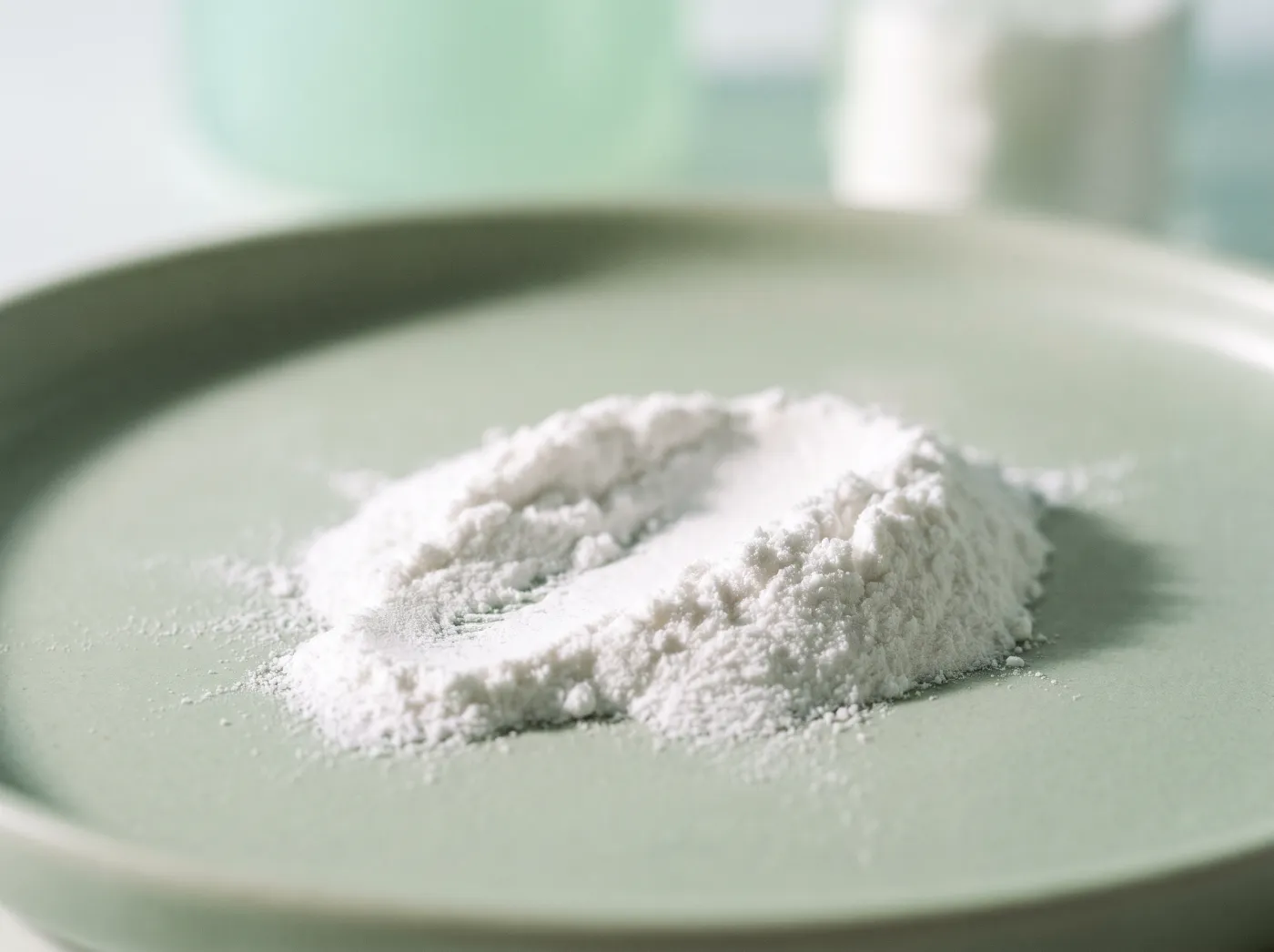
White alpha-arbutin powder in macro view on a sage green ceramic surface

Alpha-arbutin at a glance

Entry from our cosmetic ingredient glossary. Data from the European Commission's CosIng database1, Regulation (EU) 2024/9962 and the opinion of the SCCS scientific committee3. Copy the identifiers in one click for your files.

INCI name
ALPHA-ARBUTIN
Other names
4-Hydroxyphenyl-alpha-D-glucopyranosideAlpha isomer of arbutin3
CAS number
84380-01-8
EC number
617-561-8
Formula
C₁₂H₁₆O₇Hydroquinone glycoside3
Origin
Enzymatic synthesisGlycosylation of hydroquinone; beta-arbutin, by contrast, occurs in the leaves and bark of many plants3
CosIng functions
Antioxidant, skin lighteningAlso a skin conditioning agent1
EU status
RestrictedAnnex III no. 377: 2% in face cream, 0.5% in body lotion. Hydroquinone must remain at the level of unavoidable traces2
Allergen to declare
No
Safety
Judged safe at the permitted levelsSCCS opinion of January 31, 2023, including cumulative exposure with arbutin3

What the research says

Each result shows the protocol and the level of evidence. The higher the level, the better the result carries over to a finished formula.

Clinical trialReview or consensusLaboratory

Facial skinSkincare

Less melanin in a human skin model

Laboratory
0.5 mM on cells; 250 µg on reconstructed skinHuman melanoma cellsManufacturer study

Melanin synthesis falls to 76% of that of control cells, and to 40% on the skin model, with no toxicity to the cells. These are lab results, not a demonstrated effect on living skin4.

More potent than beta-arbutin on tyrosinase

Laboratory
Human and mouse tyrosinaseTwo lab studiesIndustry studies

On human tyrosinase, the inhibition constant of alpha-arbutin is 20 times lower than that of arbutin: the inhibition is stronger5. On mouse melanoma tyrosinase, it is about 10 times more active (IC50 of 0.48 mM) but does not inhibit mushroom tyrosinase: the result depends on the enzyme tested6.

An experimental gel tested on volunteers

Clinical trial
Ethosome gelVolunteers, number not given in the abstract

The formulation improves the melanin index, hydration and elasticity of the skin. The abstract gives neither the sample size nor the values, and the formula is experimental: the effect of alpha-arbutin alone is not isolated7.

Safety assessmentSCCS

Safe up to 2% in face cream and 0.5% in body lotion

SCCS opinion
SCCS/1642/22January 31, 2023

The committee judges alpha-arbutin safe at these levels, including when used together, and cumulative exposure with arbutin without risk. Hydroquinone must remain at the level of unavoidable traces3. Regulation (EU) 2024/996 adopts these limits2.

Low skin absorption

Laboratory
In vitroHuman skin, 3 donorsSkin frozen for 8 days

Total skin absorption reaches 0.27 ± 0.13% of the dose. The SCCS uses 0.53% in its calculations and notes the low number of donors3.

What experts sayDermatology

A cosmetic alternative, quality trials to come

Review
Literature reviews2016 and 2021

Arbutin and its derivatives, kojic acid and nicotinamide were developed as cosmetic alternatives to medical agents with side effects9. A 2021 review considers that quality trials, on larger samples, are still needed to confirm the efficacy and safety of alpha-arbutin8.

This page summarizes published literature on a cosmetic ingredient. It does not describe the effect of a finished product, which depends on its formula, and it is not medical advice. Evidence on alpha-arbutin comes mostly from lab studies; clinical trials on healthy skin are rare and the published studies often cover medical uses, which we do not report. Several studies were run by industry; this is indicated in the sources.

Concentrations used in studies

No trial cited specifies the concentration tested on skin. The reference levels are those assessed by the SCCS and set by the regulation: 2% in face cream and 0.5% in body lotion32.

Which products use alpha-arbutin?

Our white label catalog includes 2 formulas with alpha-arbutin: the key active in 2 of them, a supporting ingredient in the others. Every category can be customized (formula, fragrance, packaging).

2Face

Key active, with kojic acid, of the catalog's dark spot serum and cream.

In our formulas, it is most often paired with

Licorice extract 2Niacinamide 2Panthenol 2Vitamin C 2

Alpha-arbutin, arbutin, kojic acid or niacinamide?

Four actives often compared for evening out skin tone. They do not exclude each other: our dark spot serum and cream combine alpha-arbutin, kojic acid and niacinamide.

Alpha-arbutinArbutin (beta)Kojic acidNiacinamide
OriginEnzymatic synthesis3Found in many plants3Not covered hereVitamin B3
EU regulationRestricted: 2% in face cream, 0.5% in body lotion2Restricted: 7% in face cream2Restricted: 1% for face and hands2No restriction
Human tyrosinaseStronger inhibition than beta5Weaker inhibition than alpha5Not compared in these studiesDifferent mode of action: see the niacinamide page
Point of cautionHydroquinone at the level of unavoidable traces3Releases hydroquinone at pH 3 or below3Concentration limit in Annex III2See the niacinamide page

Frequently asked questions about alpha-arbutin

What is alpha-arbutin?
It is a hydroquinone glycoside, 4-hydroxyphenyl-alpha-D-glucopyranoside (CAS 84380-01-8). CosIng assigns it the functions antioxidant, skin lightening and skin conditioning1. It is obtained by enzymatic synthesis, whereas beta-arbutin occurs in many plants3.
What are the benefits of alpha-arbutin?
In the lab, it reduces melanin formation in cells and in a human skin model4 and inhibits human tyrosinase more strongly than beta-arbutin5. Clinical trials on healthy skin are rare: a 2021 review calls for better quality trials8.
What percentage of alpha-arbutin is allowed in cosmetics?
Regulation (EU) 2024/996 sets 2% maximum in face creams and 0.5% in body lotions, based on the SCCS opinion23. The hydroquinone level must stay as low as possible, never above unavoidable traces2.
Can you combine alpha-arbutin with vitamin C, kojic acid and niacinamide?
Yes, these are common combinations. Our dark spot cream and serum combine kojic acid and alpha-arbutin, with niacinamide and vitamin C among their supporting actives. Kojic acid has its own 1% limit for face and hand products2. The stability of the final formula is checked through lab testing.
Alpha-arbutin: morning or night?
None of the sources cited sets a time of application.
Is alpha-arbutin safe, and does it have side effects?
The SCCS judges it safe at 2% in face cream and 0.5% in body lotion, used alone or together3. The point of caution is hydroquinone, which must remain at the level of unavoidable traces2. Skin absorption measured in vitro on human skin is low3.
Can you use alpha-arbutin during pregnancy?
The sources cited do not address pregnancy. As with any targeted skincare product, a healthcare professional's advice remains the rule.
Can you manufacture an alpha-arbutin serum for my brand?
Yes. Our ISO 22716 certified lab offers 2 alpha-arbutin catalog formulas (dark spot serum and cream) that you can customize, or a custom formula. Samples are free.

Sources

Peer-reviewed studies and official regulatory sources, checked on November 2, 2026.

  1. European Commission. CosIng, entry ALPHA-ARBUTIN (CAS 84380-01-8, EC 617-561-8). ec.europa.eu/growth/tools-databases/cosing
  2. Commission Regulation (EU) 2024/996 of 3 April 2024 amending Regulation (EC) No 1223/2009 (vitamin A, alpha-arbutin, arbutin and other substances) : Annex III, entries 375 (kojic acid), 377 (alpha-arbutin) and 378 (arbutin). eur-lex.europa.eu
  3. Scientific Committee on Consumer Safety (SCCS). Opinion on the safety of alpha-arbutin and beta-arbutin in cosmetic products, SCCS/1642/22, final version of 31 January 2023. health.ec.europa.eu
  4. Sugimoto K, Nishimura T, Nomura K, Sugimoto K, Kuriki T. Inhibitory effects of alpha-arbutin on melanin synthesis in cultured human melanoma cells and a three-dimensional human skin model. Biol Pharm Bull. 2004;27(4):510-514. doi:10.1248/bpb.27.510Ezaki Glico (alpha-arbutin manufacturer)
  5. Sugimoto K, Nishimura T, Nomura K, Sugimoto K, Kuriki T. Syntheses of arbutin-alpha-glycosides and a comparison of their inhibitory effects with those of alpha-arbutin and arbutin on human tyrosinase. Chem Pharm Bull (Tokyo). 2003;51(7):798-801. doi:10.1248/cpb.51.798Ezaki Glico (alpha-arbutin manufacturer)
  6. Funayama M, Arakawa H, Yamamoto R, et al. Effects of alpha- and beta-arbutin on activity of tyrosinases from mushroom and mouse melanoma. Biosci Biotechnol Biochem. 1995;59(1):143-144. doi:10.1271/bbb.59.143Kurabo Industries
  7. Khan HMS, Tanveer N, Arshad T, et al. Encapsulation of alpha arbutin, a depigmenting agent, in nanosized ethosomes: in vitro and in vivo human studies. Heliyon. 2023;9(9):e19326. doi:10.1016/j.heliyon.2023.e19326
  8. Saeedi M, Khezri K, Seyed Zakaryaei A, Mohammadamini H. A comprehensive review of the therapeutic potential of α-arbutin. Phytother Res. 2021;35(8):4136-4154. doi:10.1002/ptr.7076
  9. Desmedt B, Courselle P, De Beer JO, et al. Overview of skin whitening agents with an insight into the illegal cosmetic market in Europe. J Eur Acad Dermatol Venereol. 2016;30(6):943-950. doi:10.1111/jdv.13595
Carmel Cosmetics Labs product specialist with a brand founder

Tell us about your project

A product specialist reviews your request and gets back to you on the channel you prefer.

Lead EN – Demande de devis
Tell us about your project. A product specialist will get back to you shortly.
CONTACT INFORMATION
Name
PROJECT INFORMATION
Which cosmetics category interests you most?

By submitting this form, you agree to our terms of service and privacy policy.

No obligation. Your information stays confidential and is used only to prepare your quote.





