Services

Torn between two services?A project manager will guide you

Catalog

Explore the full catalog1,000+ formulas ready to carry your brand

Face careFull range

Serums, creams and targeted care, formulated with your actives.

Body careFull range

Moisturizing, nourishing and shower care: cream, butter or oil.

Specialty careFull range

Sun care, lips, intimate care and oral care.

Men, baby, makeupFull range

Shaving and beard, baby and mom, makeup.

Industries

All solutions by industryFormulas and formats for your business

Laboratory

Cosmetics manufacturing room with a row of stainless-steel mixers and an operator in white workwearOur factory in Aït MelloulISO 22716 and ISO 9001, visits by appointmentDiscover the factory

Resources

Vitamin C (ascorbic acid and ascorbyl glucoside)

Vitamin C is an antioxidant of the skin. The clinical literature mostly covers pure ascorbic acid, which only enters skin at a pH below 3.58 and remains unstable11. Our formulas use ascorbyl glucoside, a stabilized derivative judged safe by the CIR panel3, less documented in clinical research: the studies cited on it are few610.

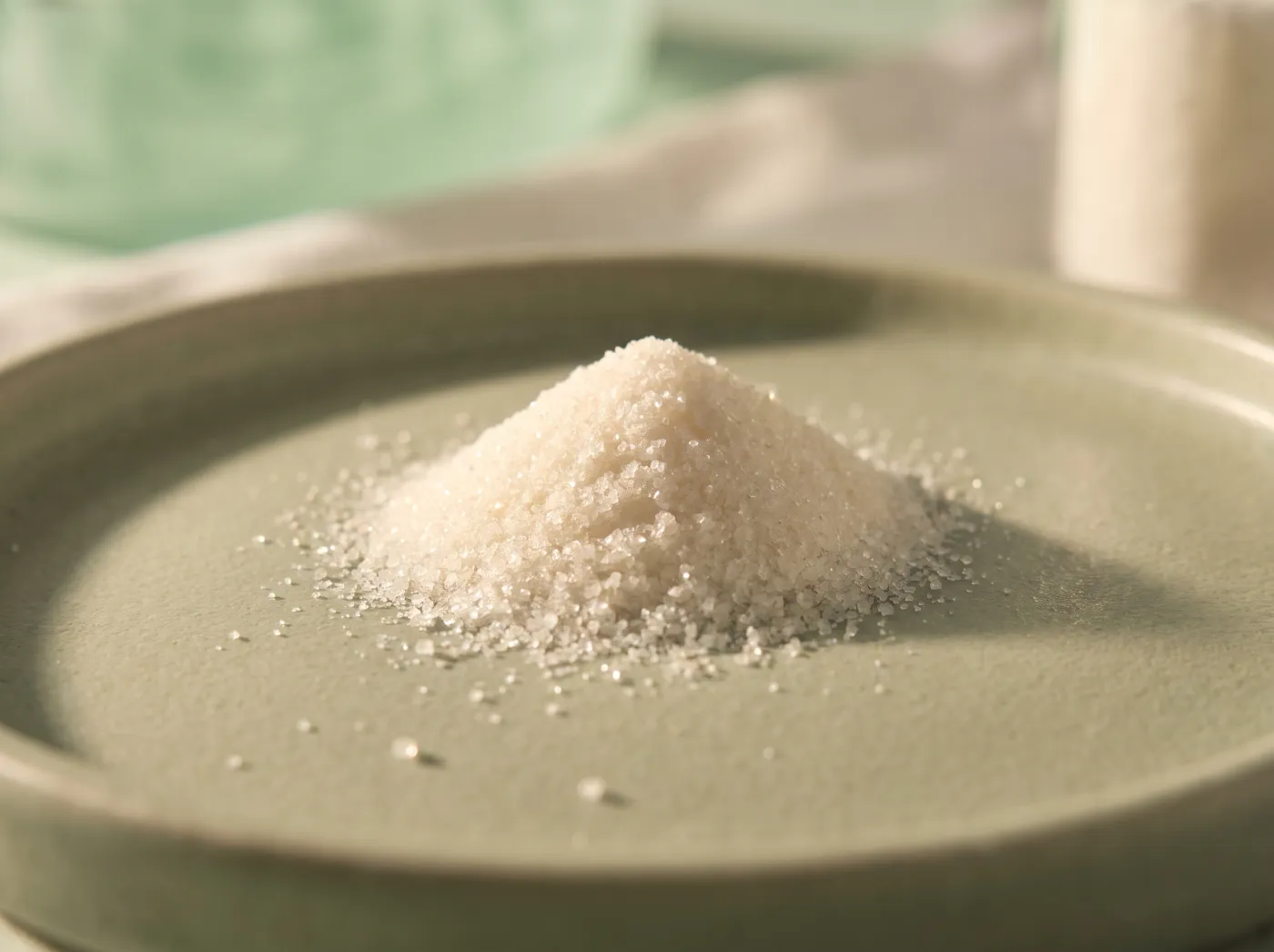
White ascorbyl glucoside powder in macro view on a sage green ceramic surface

Vitamin C at a glance

Entry from our cosmetic ingredient glossary. Regulatory data from the European Commission's CosIng database12, safety of ascorbyl glucoside according to the CIR expert panel3. The Carmel catalog declares ascorbyl glucoside; most studies cover ascorbic acid, which is stated in each result.

INCI name
ASCORBYL GLUCOSIDEAscorbic acid derivative used in our formulas1
Other names
Stabilized vitamin C2-O-alpha-D-glucopyranosyl-L-ascorbic acid, ascorbic acid 2-glucoside1
CAS number
129499-78-1
EC number
425-980-0
CosIng function
AntioxidantThe CIR panel adds "skin conditioning agent"3
Pure form
ASCORBIC ACIDCAS 50-81-7, EC 200-066-2; CosIng functions: antioxidant, buffering, skin conditioning2
Appearance
White powder, soluble in waterFormulated in the water phase
EU status
No restrictionNeither ascorbyl glucoside nor ascorbic acid appears in the restriction annexes of Regulation (EC) 1223/200912
Allergen to declare
No
Safety
Judged safe in cosmeticsCIR panel conclusion for ascorbyl glucoside and its sodium salt, at current uses and concentrations3

What the research says

Each result shows the protocol and the level of evidence. The higher the level, the better the result carries over to a finished formula.

Clinical trialReview or consensusLaboratory

Facial skinSkincare

Fine lines and photoaging: 10% ascorbic acid

Clinical trial
10% ascorbic acid and 7% tetrahexyldecyl ascorbate12 weeks10 participantsDouble-blind, split-face

The photoaging score improves on the vitamin C side, on the cheeks and around the mouth, and the biopsy shows more type I collagen. No sign of inflammation. Hydration improves on both sides4.

Smoother, brighter skin: a review of 7 randomized trials

Review
2023 systematic review7 publications139 volunteers

Treated skin looks smoother and less wrinkled, with measurable brightening. Hydration improves as much with placebo. Prolonged use is needed and the ideal concentration remains to be established5.

Sun spots reduced with an ascorbyl glucoside derivative

Clinical trial
28% ascorbyl glucoside-arginine complex24 weeks27 Japanese womenDouble-blind, split-face

The sun spot pigmentation score drops at 24 weeks compared with placebo, and skin brightness improves from week 12, with no depigmenting effect. This is a related complex, not ascorbyl glucoside alone6.

Skin tone: ranking among 14 molecules

Clinical trial
14 studies of 15 to 30 women6 weeks7% ascorbic acid, 2% ascorbyl glucoside

Against daylight-induced pigmentation, 7% ascorbic acid ranks second after 4 days of irradiation. 2% ascorbyl glucoside is among the molecules compared, with no rank given in the abstract7.

Getting into skin: it all depends on the formula

Laboratory
Pig skinAscorbic acid, 3 derivatives tested

Ascorbic acid only enters skin at a pH below 3.5, with an optimum at 20%. Levels saturate after three daily applications. Magnesium ascorbyl phosphate, ascorbyl palmitate and dehydroascorbic acid do not raise the skin's ascorbic acid content; ascorbyl glucoside was not tested8.


What dermatologists sayDermatology

Recommended for fine lines and spots

Expert consensus
2025 Delphi consensus62 dermatologists43 centers

Vitamin C is one of the 23 cosmetic ingredients recommended by the panel, for fine lines and brown spots. The abstract does not specify the form of vitamin C12.

Derivatives: stability gained, clinical evidence still thin

Review
3 literature reviews2013 to 2023

The reviews agree: ascorbic acid is unstable and hard to get into skin, hence derivatives designed for stability and absorption. Studies of these derivatives are mostly lab-based, and well-designed clinical trials are lacking91011.

Skin and diet: what a skincare product does not replace

Review
2017 review

Skin naturally contains a lot of vitamin C. This review compares dietary intake with topical application and notes that the efficacy of topical application remains poorly established for several effects13.

This page summarizes published literature on a cosmetic ingredient. It does not describe the effect of a finished product, which depends on its formula, and it is not medical advice. Several of the clinical trials cited were run or funded by cosmetics companies; this is indicated in the sources. Most studies cover ascorbic acid, not ascorbyl glucoside.

Concentrations used in studies

The concentrations cited mostly concern ascorbic acid: 7% in the skin tone comparison, 10% in the photoaging trial, 20% as the lab absorption optimum. Ascorbyl glucoside is compared at 2%. The final concentration of a formula is set with the formulator, depending on the form of vitamin C, the pH, the format and the target tolerance.

Which products use vitamin C?

Our white label catalog includes 20 formulas with vitamin C: the key active in 9 of them, a supporting ingredient in the others. Every category can be customized (formula, fragrance, packaging).

15Face

Key active in serums, creams, radiance masks and cleansers, supporting active in scrubs and cream washes.

Vitamin C, niacinamide, retinol or hyaluronic acid?

Four actives often compared when choosing the hero of a range. They do not exclude each other and are often combined in the same routine.

Vitamin CNiacinamideRetinolHyaluronic acid
Main roleRadiance, antioxidant protectionBarrier, skin tone, shineSkin texture, fine linesSurface hydration
WhenOften in the morningMorning and eveningIn the eveningMorning and evening
In the formulaAscorbic acid is unstable and needs a low pH; derivatives such as ascorbyl glucoside are more stable811Stable, easy to formulate in the water phaseSensitive to light and oxidationStable, molecular weight changes the feel
EU regulationNo restriction12No restrictionConcentration limited since Regulation (EU) 2024/99614No restriction
Who it suitsDull skinGeneral public, sensitive skin includedExperienced users, gradual introductionAll skin types

Frequently asked questions about vitamin C

What is vitamin C in cosmetics?
It is an antioxidant naturally present in skin. In cosmetics, either pure ascorbic acid is used, very effective in the lab but unstable11, or stabilized derivatives such as ascorbyl glucoside1. Ascorbic acid is the best documented; our catalog formulas declare ascorbyl glucoside.
Ascorbic acid or ascorbyl glucoside: what is the difference?
Ascorbic acid is the pure form: it only enters skin at a pH below 3.58 and oxidizes easily. Ascorbyl glucoside is a more stable derivative, judged safe by the CIR panel3. Reviews point out that clinical studies on derivatives remain few910.
What are the benefits of vitamin C for skin?
The clinical studies cited cover the look of fine lines, skin texture and a brighter skin tone, with effects visible after several weeks: 12 weeks in the photoaging trial4, 24 weeks on sun spots6. A review of 7 trials notes that prolonged use is needed5.
What percentage of vitamin C should you use?
The concentrations tested for ascorbic acid range from 7 to 10% in trials, with an absorption optimum at 20% in the lab478. Ascorbyl glucoside is compared at 2%7. The ideal concentration is not established5: it is decided with the formulator, depending on the form of vitamin C and the pH.


Should you use vitamin C in the morning or at night?
Both work. The sun spot trial used two applications a day6 and the EU imposes no restriction on use12. The routine is chosen according to the texture and tolerance of the formula.
Can you use vitamin C with niacinamide?
Yes, it is a common pairing, including in the same formula. The skin tone comparison cited tests ascorbic acid, ascorbyl glucoside and niacinamide, each on its own7. The stability of the final formula is checked through lab testing.
Is vitamin C safe, and does it have side effects?
The CIR panel judges ascorbyl glucoside safe at current uses3 and neither ascorbyl glucoside nor ascorbic acid is restricted in the EU12. During pregnancy, as with any skincare product, a healthcare professional's advice remains the rule.
Can you manufacture a vitamin C serum for my brand?
Yes. Our ISO 22716 certified lab offers 20 vitamin C formulas (serums, creams, masks, body care) that you can customize, or a custom formula. Samples are free.

Sources

Peer-reviewed studies and official regulatory sources, checked on November 2, 2026.

  1. European Commission. CosIng, entry ASCORBYL GLUCOSIDE (CAS 129499-78-1, EC 425-980-0). ec.europa.eu/growth/tools-databases/cosing
  2. European Commission. CosIng, entry ASCORBIC ACID (CAS 50-81-7, EC 200-066-2). ec.europa.eu/growth/tools-databases/cosing
  3. Johnson W Jr, Bergfeld WF, Belsito DV, et al. Safety assessment of ascorbyl glucoside and sodium ascorbyl glucoside as used in cosmetics. Int J Toxicol. 2025;44(1_suppl):5S-16S. doi:10.1177/10915818241297075
  4. Fitzpatrick RE, Rostan EF. Double-blind, half-face study comparing topical vitamin C and vehicle for rejuvenation of photodamage. Dermatol Surg. 2002;28(3):231-236. doi:10.1046/j.1524-4725.2002.01129.x
  5. Correia G, Magina S. Efficacy of topical vitamin C in melasma and photoaging: a systematic review. J Cosmet Dermatol. 2023;22(7):1938-1945. doi:10.1111/jocd.15748
  6. Takada M, Numano K, Nakano M, et al. Treatment with ascorbyl glucoside-arginine complex ameliorates solar lentigos. Int J Mol Sci. 2024;25(24):13453. doi:10.3390/ijms252413453Doctor's Choice Co., Ltd.
  7. Muller B, Flament F, Jouni H, et al. A Bayesian network meta-analysis of 14 molecules inhibiting UV daylight-induced pigmentation. J Eur Acad Dermatol Venereol. 2024;38(8):1566-1574. doi:10.1111/jdv.19910L'Oréal
  8. Pinnell SR, Yang H, Omar M, et al. Topical L-ascorbic acid: percutaneous absorption studies. Dermatol Surg. 2001;27(2):137-142. doi:10.1046/j.1524-4725.2001.00264.x
  9. Enescu CD, Bedford LM, Potts G, Fahs F. A review of topical vitamin C derivatives and their efficacy. J Cosmet Dermatol. 2022;21(6):2349-2359. doi:10.1111/jocd.14465
  10. Vasques LI, Vendruscolo CW, Leonardi GR. Topical application of ascorbic acid and its derivatives: a review considering clinical trials. Curr Med Chem. 2023;30(29):3272-3286. doi:10.2174/0929867329666221003102238
  11. Telang PS. Vitamin C in dermatology. Indian Dermatol Online J. 2013;4(2):143-146. doi:10.4103/2229-5178.110593
  12. Alvarez GV, Kang BY, Richmond AM, et al. Skincare ingredients recommended by cosmetic dermatologists: a Delphi consensus study. J Am Acad Dermatol. 2025;93(6):1509-1525. doi:10.1016/j.jaad.2025.04.021
  13. Pullar JM, Carr AC, Vissers MCM. The roles of vitamin C in skin health. Nutrients. 2017;9(8):866. doi:10.3390/nu9080866Zespri International (partial funder)
  14. Commission Regulation (EU) 2024/996 of 3 April 2024 amending Regulation (EC) No 1223/2009 (vitamin A, alpha-arbutin, arbutin and other substances). eur-lex.europa.eu
Carmel Cosmetics Labs product specialist with a brand founder

Tell us about your project

A product specialist reviews your request and gets back to you on the channel you prefer.

Lead EN – Demande de devis
Tell us about your project. A product specialist will get back to you shortly.
CONTACT INFORMATION
Name
PROJECT INFORMATION
Which cosmetics category interests you most?

By submitting this form, you agree to our terms of service and privacy policy.

No obligation. Your information stays confidential and is used only to prepare your quote.