





















For high-end beauty brands, controlling production costs is a constant challenge. Consumers want ever more quality, transparency and innovation, while still paying attention to value for money. In this context, private label cosmetics have become an essential strategic lever: they let you optimize costs without compromising quality or brand prestige.
At Carmel Cosmetics Labs, we help premium brands in Morocco and Europe create high-performance cosmetic lines that meet international standards while protecting their high-end positioning.
1. Understanding how private label cosmetics work
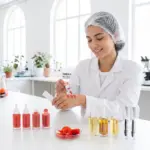
With private label cosmetics (marque privée in French), a brand entrusts product design, formulation and production to a partner lab. This model lets the brand focus on marketing, distribution and growth while the lab handles manufacturing.
Key benefits:
- Lower upfront investment: no need to build a factory or an R&D department.
- Access to proven, tested formulas.
- Shorter time to market.
- Flexibility to test new ranges without tying up large amounts of capital.
2. Optimizing costs without sacrificing quality
Staying high-end doesn’t have to mean producing at high cost. The key is smart resource management and choosing reliable partners.
a. Shared production resources
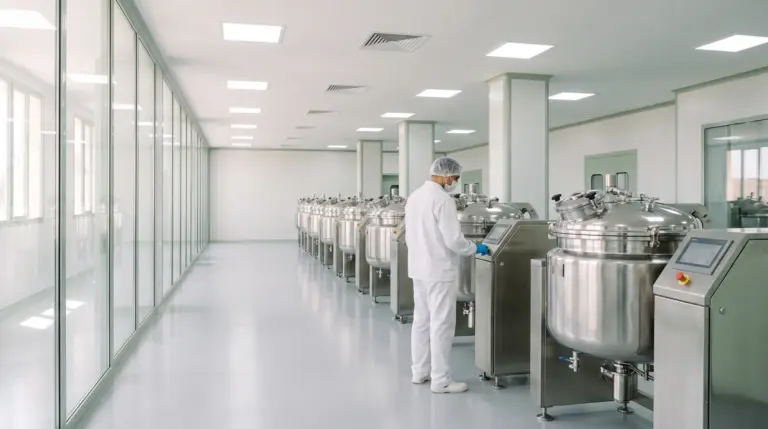
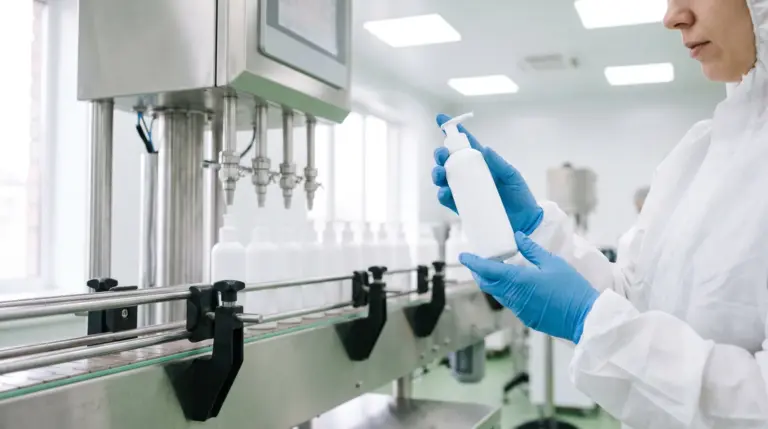
Specialized labs such as Carmel Cosmetics Labs share their production lines across several brands. This pooling makes it possible to:
- lower the unit cost through economies of scale;
- ensure consistent quality through processes standardized to Good Manufacturing Practices (ISO 22716).
b. Local, sustainable sourcing
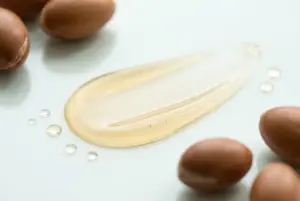
Morocco has a world-renowned natural ingredient ecosystem: argan, prickly pear, nigella, sweet almond… Using these local resources helps you:
- cut import costs;
- showcase traditional craftsmanship;
- strengthen premium storytelling with “Made in Morocco” authenticity.
c. Smart, premium packaging
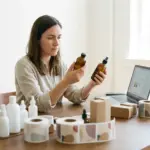
Packaging often accounts for 30 to 40% of a cosmetic product’s total cost. For a private label cosmetics brand, the secret is to choose:
- customizable stock packaging (bottles, vials, tubes, airless);
- recyclable materials or eco-design;
- high-end finishes (gold foiling, matte, soft-touch) that heighten the sense of luxury.
3. R&D: innovation that supports high-end positioning
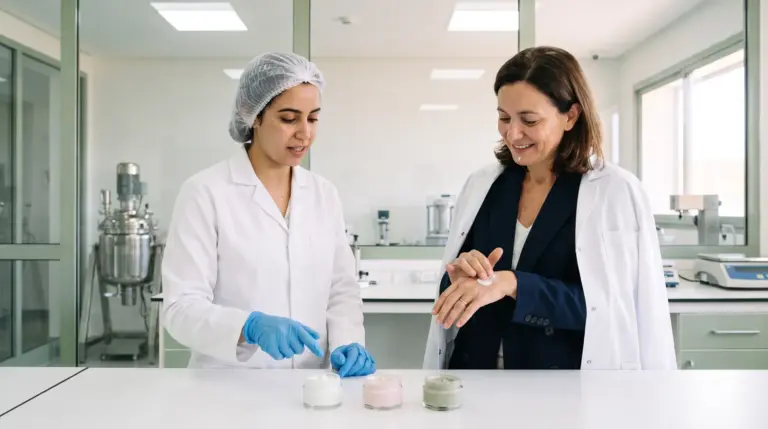
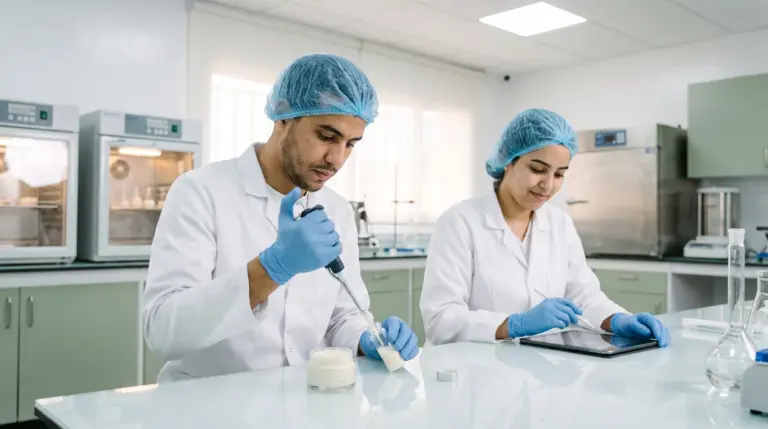
Innovation remains a central pillar of a premium image. With its in-house R&D department, Carmel Cosmetics Labs offers:
- custom formulations compliant with EU regulations (Regulation (EC) No 1223/2009);
- patented and natural actives built into your formulas;
- lab-tested product stability to ensure performance over time.
Example: adding plant oils such as argan or cactus to anti-aging creams delivers a sensory and quality result on par with international brands… at a much lower cost.
4. Why your choice of partner lab matters
Working with an established lab such as Carmel Cosmetics Labs gives you full technical and regulatory expertise:
- Production that meets EU and international standards.
- Rigorous quality control at every stage (raw materials, batch, packaging).
- Turnkey service: formulation, testing, production, filling, labeling, regulatory file (PIF).
This lets the private label cosmetics brand focus on its image and distribution, free of technical constraints.
5. Keeping the high-end perception
Cutting costs must never lower perceived value. Here are the levers for keeping a premium image:
a. Storytelling and transparency
Premium consumers look for authentic brands. Highlight:
- the natural origin of the ingredients,
- local manufacturing in Morocco,
- compliance with international standards.
b. Sensory appeal and product experience
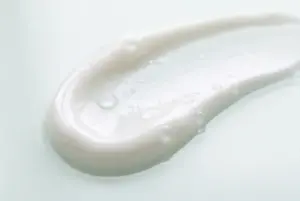
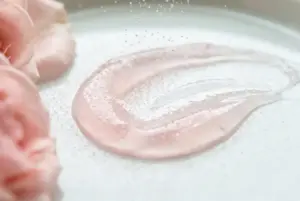
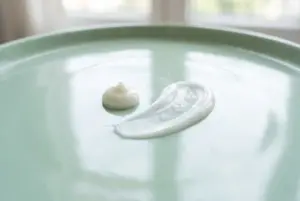
Texture, fragrance, color and design are key. Carmel Cosmetics Labs offers custom fragrances and silky textures inspired by the great European houses.
c. Consistent price positioning
An “affordable luxury” strategy works very well in cosmetics. By relying on private label cosmetics, a brand can cut its production costs by 30 to 50% while keeping healthy margins and a premium positioning.
6. Case study: a private label cosmetics success story
A premium French facial care brand worked with Carmel Cosmetics Labs to launch a range of prickly pear seed oil moisturizers.
Results:
- Production cost down 38% compared with their former factory in Eastern Europe.
- Time to market: shortened, with the timeline defined with the brand in the quote.
- Stronger brand perception thanks to the “Formulated and made in Morocco” claim.
This example shows how private label cosmetics can combine cost optimization with product excellence.
7. Why certifications and regulatory compliance matter
ISO 22716, GMP and EU standards guarantee an internationally recognized level of quality. At Carmel Cosmetics Labs:
- every batch is traceable,
- every formula is toxicologically assessed,
- products are not tested on animals and vegan.
These factors give a high-end private label cosmetics brand credibility with demanding distributors and consumers.
8. Long-term growth strategies
For a premium brand, private label cosmetics also make it possible to:
- expand ranges (hair, body, face, spa) without extra R&D costs;
- adjust production to seasonality or demand;
- enter new markets (drugstores, concept stores, e-commerce).
It’s an agile, sustainable and scalable approach.
Conclusion: high performance that drives profitability
Optimizing costs doesn’t mean compromising on quality. With private label cosmetics, you can now combine cost efficiency with product excellence.
The Carmel Cosmetics Labs model is built on local production, natural ingredients, proven technology and end-to-end support.
This combination lets premium brands keep their DNA while becoming more competitive in international markets.
Internal links:
- Manufacturing in Morocco for the European market
- How to launch a white label cosmetics brand with an accessible MOQ