Services

Torn between two services?A project manager will guide you

Catalog

Explore the full catalog1,000+ formulas ready to carry your brand

Face careFull range

Serums, creams and targeted care, formulated with your actives.

Body careFull range

Moisturizing, nourishing and shower care: cream, butter or oil.

Specialty careFull range

Sun care, lips, intimate care and oral care.

Men, baby, makeupFull range

Shaving and beard, baby and mom, makeup.

Industries

All solutions by industryFormulas and formats for your business

Our brands

Our own brands, developed and made in our laboratory.

Become a distributor of our brandsPharmacies, spas, shops and wholesalers

Laboratory

Cosmetics manufacturing room with a row of stainless-steel mixers and an operator in white workwearOur factory in Aït MelloulISO 22716 and ISO 9001, visits by appointmentDiscover the factory

Resources

Olive leaf extract in cosmetics

Olive leaf extract (OLEA EUROPAEA LEAF EXTRACT) is obtained from the leaves of Olea europaea L.1. It is rich in oleuropein, up to 6 to 9% of the dry weight of the leaves2. The skin data we kept are laboratory results; most studies concern oral use.

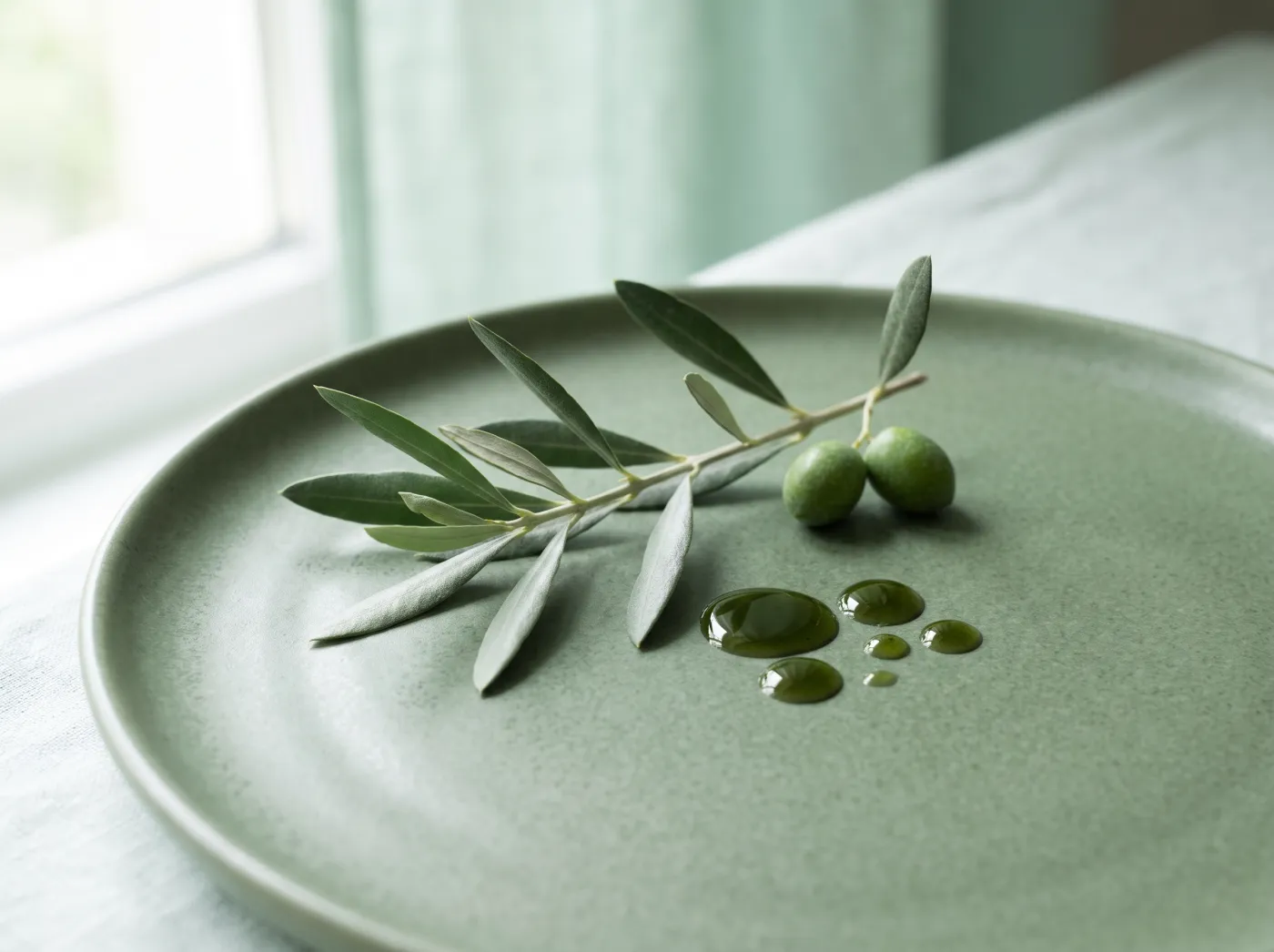
Dried olive leaves in macro, silvery green on a sage green ceramic surface, raking light

Olive leaf extract at a glance

Entry from our cosmetic ingredient glossary. Regulatory data from the European Commission's CosIng database1. Copy the identifiers in one click for your files.

INCI name
OLEA EUROPAEA LEAF EXTRACTExtract of the leaves of the olive tree, Olea europaea L. (Oleaceae). HYDROLYZED OLIVE LEAF EXTRACT, OLEA EUROPAEA FRUIT/LEAF EXTRACT and ferments also exist: tell them apart in the INCI list1
Other names
Olive leaf extractOlea europaea leaf extract; Olea europaea folium
CAS number
8001-25-0 / 84012-27-1
EC number
232-277-0
Botanical origin
Olive tree (Oleaceae)Leaves. They have long been used in traditional preparations around the Mediterranean, including Morocco and Tunisia2
Main compound
Oleuropein (up to 6 to 9% of the dry weight of the leaves)A secoiridoid; other compounds: related secoiridoids, flavonoids, triterpenes2; apigenin, elenolic acid, hydroxytyrosol, ligstroside, oleoside, tyrosol3
CosIng functions
Skin conditioning, fragrance"Skin conditioning" and "Perfuming"1
EU status
No restriction specific to the ingredientAbsent from annexes II to VI of Regulation (EC) 1223/2009 as consolidated on May 1, 20257
Allergen to declare
NoAbsent from Regulation (EU) 2023/1545 and from consolidated annex III7
Safety
No CIR or SCCS assessment keptWe did not find an official opinion specific to cosmetic olive leaf extract

What the research says

Each result shows the protocol and the level of evidence. The higher the level, the better the result carries over to a finished formula.

Clinical trialReview or consensusLaboratory

Composition and raw materialChemistry

Oleuropein, the dominant compound

Review
2009 reviewOlive leaves

Oleuropein, a secoiridoid, can make up 6 to 9% of the dry weight of the leaves, along with other secoiridoids, flavonoids and triterpenes. The properties put forward in the review are mostly nutritional and metabolic2.

A range of extraction methods

Review
2024 reviewChemistry and extraction

Oleuropein is found mainly in the leaves and young fruit. Common extraction methods are maceration, Soxhlet, microwaves, ultrasound and supercritical fluids. The properties listed come from in vitro and in vivo studies3.

A material studied mostly by the oral route

Review
2014 reviewLeaf polyphenols

Phenolic compounds, oleuropein in particular, are studied above all for their antioxidant properties. The other effects described in this literature concern oral intake, not application on the skin4.

SkinSkincare

UVA on fibroblasts: less damage in culture

Laboratory
Human Hs68 fibroblasts, UVA at 8 J/cm²Extract standardized to 26.2% phenols, including 22.2% oleuropein2.5 to 25 µg/mL, 24 h before irradiation

The extract reduced the DNA damage and reactive oxygen species induced by UVA, and preserved cell viability by limiting apoptosis. The secretion of TNF-α and IL-2 induced by UVA decreased in cultured lymphocytes. A laboratory result, not verified in volunteers5.

An unexpected effect: more melanin secreted in culture

Laboratory
Primary human melanocytes and melanoma cellsStandardized dry extract, 10 to 200 µg/mL

The extract increased extracellular melanin and the dendrite length of melanocytes, with no effect on intracellular melanin. This is a pro-pigmenting effect in culture: it is a reason not to present the extract as evening out skin tone without testing. The authors filed an invention disclosure6.

No controlled cosmetic trial kept

Review
PubMed search, November 2026

Our searches did not find a controlled trial of an olive leaf extract cream on the skin of volunteers. The skin data we kept are laboratory results56.


This page summarizes published literature on a cosmetic ingredient. It does not describe the effect of a finished product, which depends on its formula, and it is not medical advice. Any industry funding is shown in the sources. The literature on olive leaf is dominated by oral use (nutrition, metabolism). We only keep here what concerns composition and skin.

Which products can use olive leaf extract?

No formula in our white label catalog features olive leaf extract yet. Our formulation lab can add it to a custom formula or to a catalog formula. Its common uses:

Face

Face serums and creams with plant extracts, for a Mediterranean-inspired range.

Body

Body care with plant extracts.

Hair

Shampoos and hair lotions with plant extracts.

Frequently asked questions about olive leaf extract

What is olive leaf extract in cosmetics?
It is an extract of the leaves of the olive tree, Olea europaea L., INCI name OLEA EUROPAEA LEAF EXTRACT1. CosIng classifies it as a skin conditioning agent and fragrance1. It is rich in oleuropein, a secoiridoid2.
What are the benefits of olive leaf extract for skin?
In the laboratory, a standardized extract limited UVA-induced damage in cultured human fibroblasts5. We did not find a controlled trial on the skin of volunteers: the cosmetic benefit remains to be shown, and most studies concern oral use24.
Is olive leaf extract good for hair?
We kept no hair study on olive leaf extract. It can be formulated in a shampoo or lotion as a plant extract, with no hair effect shown by our sources. Tolerance is checked on the final formula.
What is the difference with olive oil?
Olive leaf extract (OLEA EUROPAEA LEAF EXTRACT) comes from the leaves and mainly contains polyphenols such as oleuropein12. Olive oil comes from the fruit (OLEA EUROPAEA FRUIT OIL).
Is olive leaf extract regulated in cosmetics in the EU?
No restriction is specific to it: it is absent from annexes II to VI of Regulation (EC) 1223/2009 as consolidated on May 1, 20257, and from the fragrance allergen list of Regulation (EU) 2023/15457.
Can olive leaf extract change pigmentation?
In melanocyte culture, a standardized extract increased melanin secretion6. This laboratory result says nothing about a finished product, but it justifies testing before any claim about an even skin tone.


Can you manufacture an olive leaf extract product for my brand?
Yes, we can add it to a serum, a cream or a hair care product. Our ISO 22716 certified lab adapts a catalog formula or develops a custom formula. Free samples are included.

Sources

Peer-reviewed studies and official regulatory sources, checked on November 3, 2026.

  1. European Commission. CosIng, entry OLEA EUROPAEA LEAF EXTRACT (CAS 8001-25-0 / 84012-27-1, EC 232-277-0). ec.europa.eu/growth/tools-databases/cosing
  2. El SN, Karakaya S. Olive tree (Olea europaea) leaves: potential beneficial effects on human health Nutr Rev. 2009;67(11):632-8. doi:10.1111/j.1753-4887.2009.00248.x
  3. Khalil AA, Rahman MM, Rauf A, et al.. Oleuropein: Chemistry, extraction techniques and nutraceutical perspectives-An update Crit Rev Food Sci Nutr. 2024;64(27):9933-9954. doi:10.1080/10408398.2023.2218495
  4. Vogel P, Kasper Machado I, Garavaglia J, et al.. Polyphenols benefits of olive leaf (Olea europaea L) to human health Nutr Hosp. 2014;31(3):1427-33. doi:10.3305/nh.2015.31.3.8400
  5. Machała P, Liudvytska O, Kicel A, et al.. Valorization of the Photo-Protective Potential of the Phytochemically Standardized Olive (Olea europaea L.) Leaf Extract in UVA-Irradiated Human Skin Fibroblasts Molecules. 2022;27(16):5144. doi:10.3390/molecules27165144
  6. Goenka S, Simon SR. A Novel Pro-Melanogenic Effect of Standardized Dry Olive Leaf Extract on Primary Human Melanocytes from Lightly Pigmented and Moderately Pigmented Skin Pharmaceuticals (Basel). 2021;14(3):252. doi:10.3390/ph14030252Invention disclosure filed by the authors
  7. Regulation (EC) No 1223/2009 of the European Parliament and of the Council of 30 November 2009 on cosmetic products, consolidated version of May 1, 2025. eur-lex.europa.eu
Carmel Cosmetics Labs product specialist with a brand founder

Tell us about your project

A product specialist reviews your request and gets back to you on the channel you prefer.

Lead EN – Demande de devis
Tell us about your project. A product specialist will get back to you shortly.
CONTACT INFORMATION
Name
PROJECT INFORMATION
Which cosmetics category interests you most?

By submitting this form, you agree to our terms of service and privacy policy.

No obligation. Your information stays confidential and is used only to prepare your quote.