




Launching your own cosmetics brand in 2025 is an exciting and promising venture, but it comes with challenges. In our recent webinar, “Launch Your Cosmetics Brand in 2025”, we walked through the key steps of building a brand, with a focus on working with a cosmetics laboratory. Here is a structured summary of the essential points to guide you through the process.
Why work with a cosmetics laboratory?
Most independent founders rely on a laboratory to create their cosmetics brand. These partners play a crucial role in the development, production and compliance of your products. Whether you need to formulate a new cream or make sure your product meets international regulations, a laboratory is your best ally.
Key steps to create your cosmetics brand
1. Understand the cosmetics market
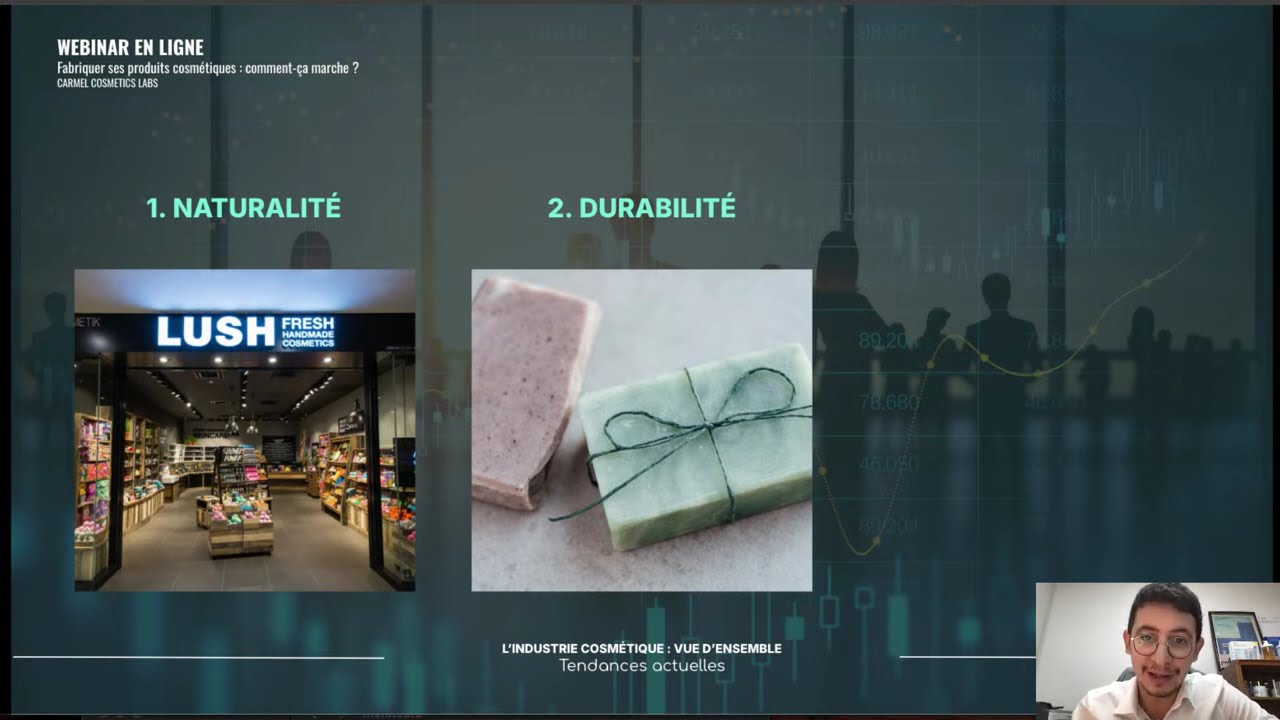
The global cosmetics market is growing fast, from $400 billion in 2022 to a forecast $600 billion in the years ahead. The industry is driven by innovation, natural ingredients and sustainability. Consumers want products made with natural, sustainable and personalized ingredients, which creates plenty of opportunities for new brands.
2. Research and choose a laboratory
To work effectively with a laboratory, here are the essential criteria to assess:
- Expertise: Make sure the laboratory has experience with the type of products you want to develop (natural skincare, solid cosmetics, etc.).
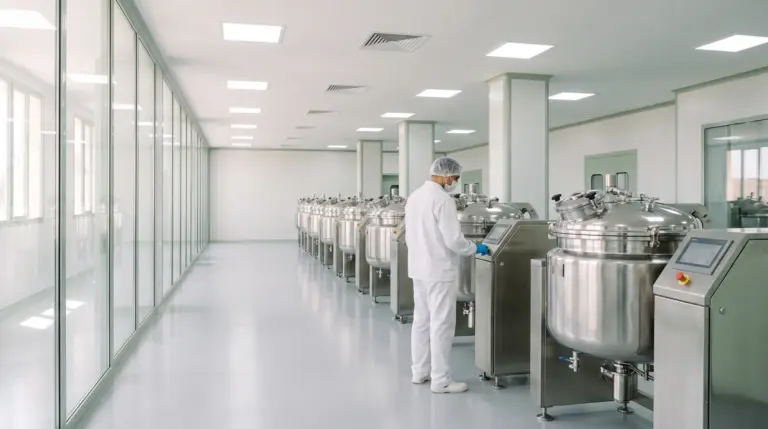
- Infrastructure: Check that the laboratory has the facilities and equipment needed to produce at the scale you want.
- Reputation: Read online reviews and ask for references.
- Flexibility: Choose a laboratory that can adapt to your needs.
3. Write a precise product brief
The product brief is the cornerstone of your collaboration. It should include:
- The ingredients you want and those to exclude.
- The expected performance (hydration, anti-aging, etc.).
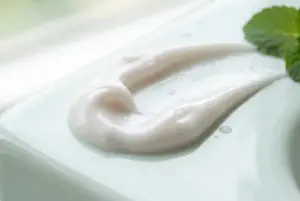
- The product format (cream, serum, oil).
- The sensory profile (fragrance, color).
- The target market, to ensure compliance with local regulations.
4. Work together on the formulation
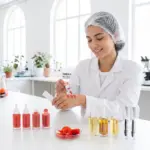
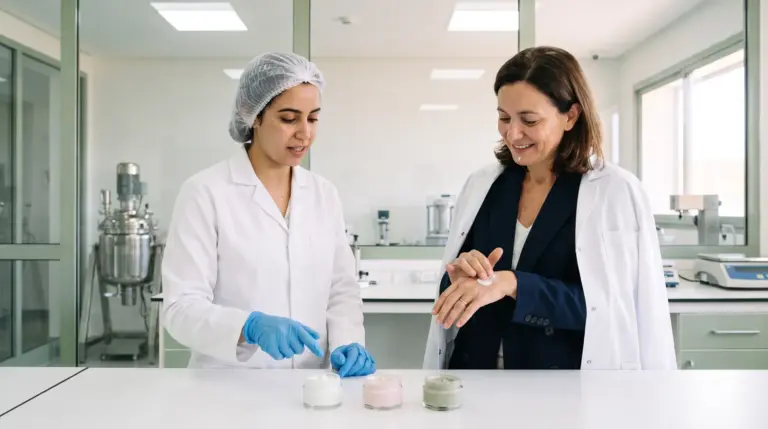
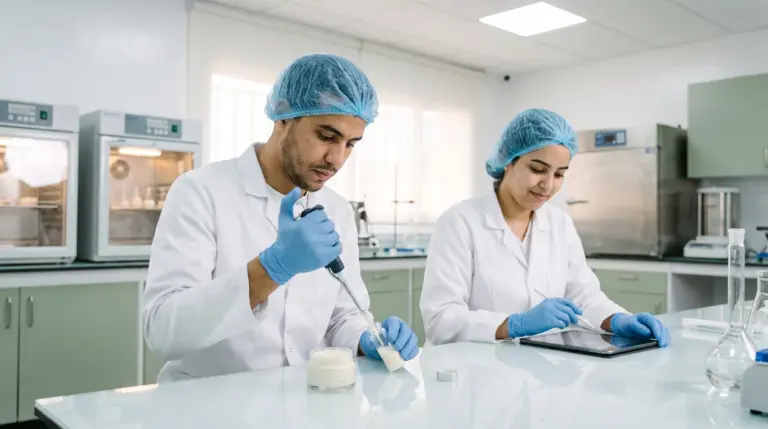
The laboratory develops prototypes of your products based on your brief. These samples are tested and adjusted until the result is right. This crucial step ensures the final product matches your expectations.
5. Carry out testing and certifications
Several tests are needed to ensure your products are safe and effective:
- Stability tests: Make sure the formula remains stable over time.
- Microbiological tests: Check for the absence of harmful microorganisms.
- Efficacy tests: Substantiate the claims (anti-aging, hydration, etc.).
- Compliance with local rules: Each market has its own regulations (FDA in the United States, Regulation (EC) No 1223/2009 in Europe).
6. Plan production and logistics
Once the formula is approved, production begins. It includes:
- Sourcing: Purchasing raw materials and packaging.
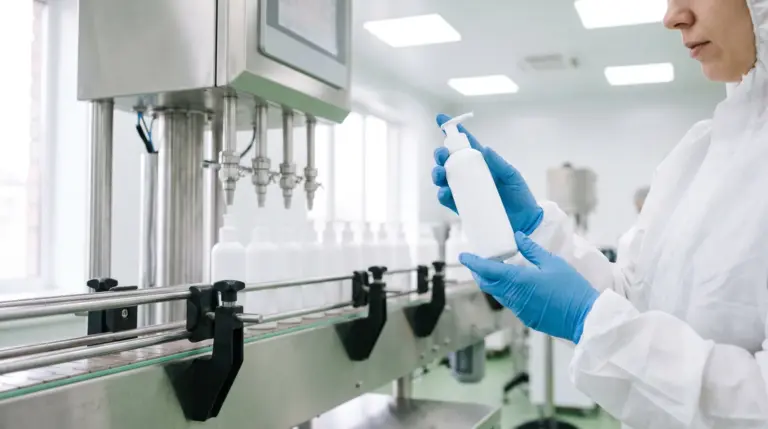
- Manufacturing: A process adapted to each product (creams, oils, shampoos).
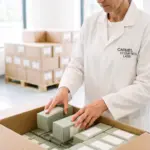
- Packaging: Filling, labeling and boxing.
- Shipping: Transporting the finished products.
7. Build a lasting partnership
To make your project a success, keep in regular contact with the laboratory, stay flexible when the unexpected happens and prepare fallback options in case of problems.
Conclusion
Creating a cosmetics brand in 2025 takes careful planning and effective collaboration with a capable laboratory. Carmel Cosmetics Labs is ready to support entrepreneurs throughout the journey, from the initial idea to the market launch of high-quality finished products.
If you have questions or want to learn more, contact us through our website or social media. Together, let’s turn your ideas into reality.
See you soon at our next webinar!