Services

Torn between two services?A project manager will guide you

Catalog

Explore the full catalog1,000+ formulas ready to carry your brand

Face careFull range

Serums, creams and targeted care, formulated with your actives.

Body careFull range

Moisturizing, nourishing and shower care: cream, butter or oil.

Specialty careFull range

Sun care, lips, intimate care and oral care.

Men, baby, makeupFull range

Shaving and beard, baby and mom, makeup.

Industries

All solutions by industryFormulas and formats for your business

Our brands

Our own brands, developed and made in our laboratory.

Become a distributor of our brandsPharmacies, spas, shops and wholesalers

Laboratory

Cosmetics manufacturing room with a row of stainless-steel mixers and an operator in white workwearOur factory in Aït MelloulISO 22716 and ISO 9001, visits by appointmentDiscover the factory

Resources

Hydrolyzed collagen

Hydrolyzed collagen is a mixture of peptides obtained by hydrolysis of animal collagen, used in cosmetics as a humectant and film former1. Molecules above 500 Da do not cross the stratum corneum3: it mostly works on the surface. A 6-month trial showed no benefit from a 2.5% serum4.

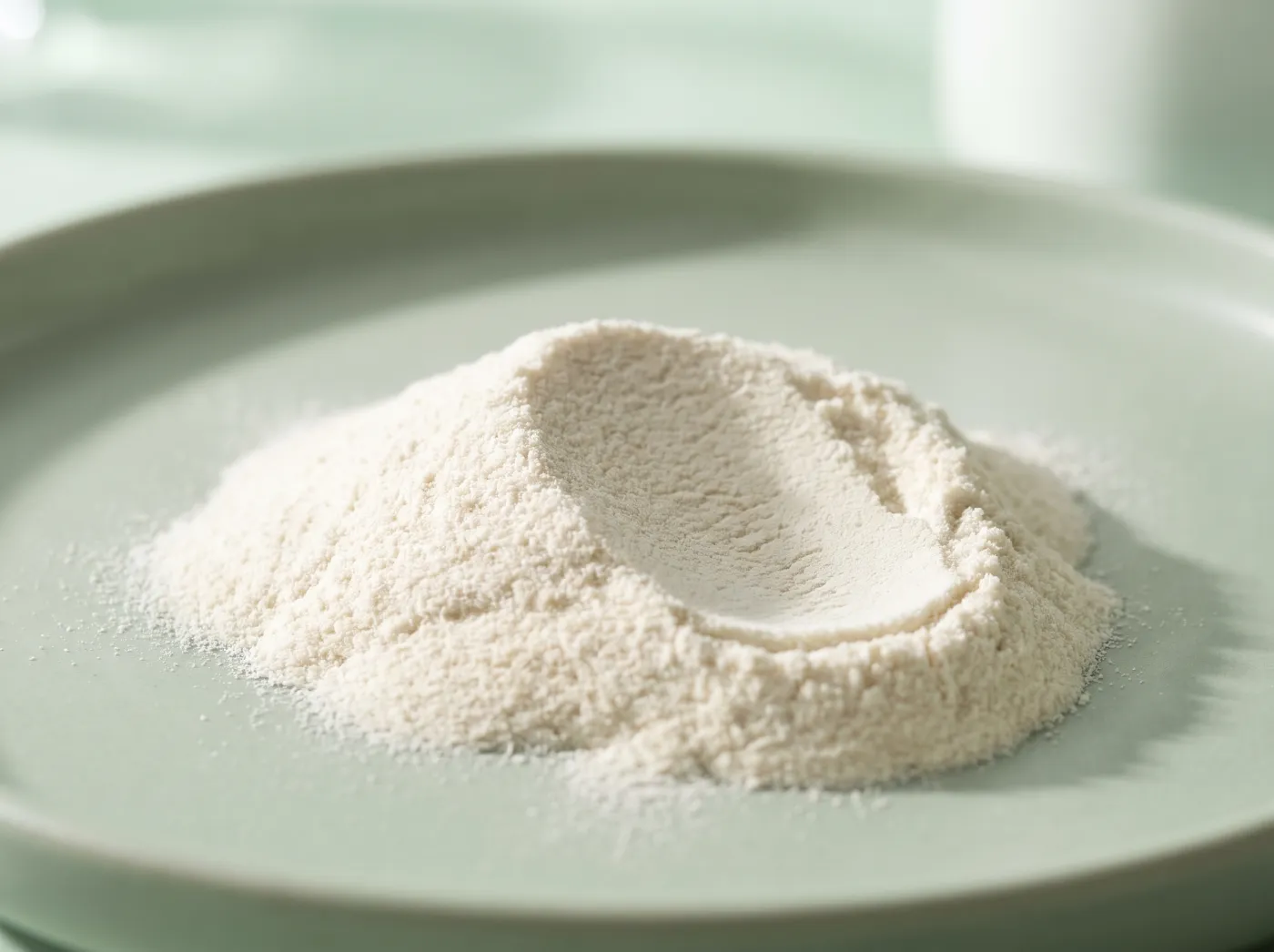
Hydrolyzed collagen, pale powder, in macro view on a sage green ceramic surface

Hydrolyzed collagen at a glance

Entry from our cosmetic ingredient glossary. Regulatory data from the European Commission's CosIng database12. Hydrolyzed collagen and native collagen have two separate INCI names. Copy the identifiers in one click for your files.

INCI name
HYDROLYZED COLLAGENNative collagen has the INCI name COLLAGEN, CAS 9007-34-52
Other names
Hydrolyzed collagenCollagen hydrolysate, collagen peptides
CAS number
92113-31-0CosIng also lists CAS 73049-73-71
EC number
295-635-5
Nature
Amino acids, peptides and proteinsObtained by acid, alkaline or enzymatic hydrolysis of collagen, according to the CosIng description1
Origin
AnimalTraditionally bovine or porcine; chicken, deer and fish are also studied6
Peptide size
Defined by the hydrolysis processA molecule above 500 Da does not cross the stratum corneum3
CosIng functions
Humectant, emollient, film forming, skin and hair conditioningAlso antistatic1
EU status
No restrictionNot listed in the annexes of Regulation (EC) 1223/20091
Allergen to declare
NoRare cases of contact urticaria with protein hydrolysates in conditioners89
Tolerance
Well tolerated, rare reactionsLow antigenicity according to a review7; cases of contact urticaria exist89

What the research says

Each result shows the protocol and the level of evidence. The higher the level, the better the result carries over to a finished formula.

Clinical trialReview or consensusLaboratory

Facial skinSkincare

Fish hydrolysate in a gel: periorbital wrinkles

Clinical trial
Hydrolysates at 0.5% and 1.5%Emulsion and gelIn vivo measurements on volunteers

Fish hydrolysate is the best suited to formulation among those tested (chicken, deer, carp). In a gel, it reduces wrinkles in the periorbital region. Formulation study, with no clinical comparison against other actives6.

Micronized collagen in a cream: penetration on skin samples

Laboratory
Ex vivo human skinOptical techniqueMicronized marine collagen

The authors recall that the collagen in a cream does not usually penetrate the skin. In micronized form, it reaches the deep epidermis on samples, and the skin is smoother. No clinical trial; the authors are consultants for the company5.

BodyBodycare

2.5% serum on the forearm: no benefit in 6 months

Clinical trial
2.5% topical serum6 months, once a day56 postmenopausal women aged 60 to 93Double-blind, placebo-controlled

Neither the topical serum, nor oral collagen at 5 g/day, nor their combination changes elasticity, dermis thickness or histological markers compared with placebo. The authors advise against routine use in these women4.

Expert view and safetyDermatology

The 500 dalton rule: size limits penetration

Review
2000 review

A molecule must weigh less than 500 Da to cross the stratum corneum. This rule of thumb explains why large proteins and peptides mostly work on the surface3.

A surface humectant according to a collagen manufacturer

Review
2020 reviewOral and topical routes

The authors, affiliated with a collagen manufacturer, describe a low-antigenicity hydrolysate with good hydrating properties on the stratum corneum. The antioxidant effect depends on peptide size: the smaller they are, the stronger it is7.

The positive results concern the oral route

Review
2026 systematic review25 randomized trialsOral route

Hydrolyzed collagen taken by mouth improves hydration in 10 of 15 trials, elasticity in 10 of 13 and wrinkles in 9 of 10. These supplements fall outside cosmetics: these results do not transfer to a cream10.

Cases of contact urticaria with conditioners

Case reports
Isolated case with bovine collagen hydrolysateTest series: 11 hairdressers, 2,160 adults, 28 people with reactive skin

A case of contact urticaria with systemic symptoms followed the application of a bovine collagen hydrolysate conditioner8. In another series, 12 people with reactive skin reacted to protein hydrolysates, all to a quaternized derivative of hydrolyzed collagen9.


This page summarizes published literature on a cosmetic ingredient. It does not describe the effect of a finished product, which depends on its formula, and it is not medical advice. The level of evidence is low: a single controlled trial on topical use, and it is negative. The positive results in the literature mostly concern oral supplements, which are not cosmetics. Studies affiliated with a manufacturer are flagged in the sources.

Concentrations used in studies

The studies cited test hydrolyzed collagen at 0.5%, 1.5% and 2.5%. None identifies an effective dose: the only 6-month trial, at 2.5%, is negative4. The final concentration of a formula is set with the formulator, depending on the role you want (humectant, film former, range selling point).

Which products use hydrolyzed collagen?

Our white label catalog includes 2 formulas with collagen: the key active in 2 of them, a supporting ingredient in the others. Every category can be customized (formula, fragrance, packaging).

1Body

Key active in the post-pregnancy cream, paired with niacinamide, hyaluronic acid and vitamin E.

In our formulas, it is most often paired with

Hyaluronic acid 1Sweet almond oil 1Coconut oil 1

Frequently asked questions about hydrolyzed collagen

What is hydrolyzed collagen in cosmetics?
It is a mixture of amino acids, peptides and proteins obtained by hydrolysis of animal collagen1. It works as a humectant, emollient and film former, and appears on labels under the INCI name HYDROLYZED COLLAGEN. Native collagen has a different INCI name, COLLAGEN2.
Does the collagen in a cream penetrate the skin?
As a rule, no: a molecule above 500 Da does not cross the stratum corneum3, and researchers recall that the collagen in a cream does not penetrate the skin5. One team states that micronized collagen reaches the deep epidermis on skin samples, but it is an ex vivo test with no clinical trial5.
Does collagen cream work?
The level of evidence is low. The only 6-month controlled trial cited, with a 2.5% serum, showed no benefit on forearm skin4. A fish hydrolysate in a gel reduced periorbital wrinkles in a formulation study6. A collagen product sells mostly on its other actives and its texture.
Marine or bovine collagen: which should you choose?
Hydrolyzed collagen is traditionally bovine or porcine; chicken, deer and fish are studied alternatives6. In that study, fish hydrolysate was the best suited to formulation, but no clinical trial compares the origins with each other.
Is collagen in a cream the same as collagen supplements?
No. The reviews that report better hydration, elasticity and wrinkles concern collagen taken by mouth10, outside the cosmetic field. They do not transfer to a product applied to the skin.
What concentration of hydrolyzed collagen should you use?
The studies cited range from 0.5% to 2.5%46, with no established effective dose. The dose of a product is decided with the formulator, depending on its role in the formula.
Can hydrolyzed collagen cause allergies?
Reactions are rare: a review describes it as low in antigenicity7. Cases of contact urticaria have nevertheless been reported with conditioners containing protein hydrolysates, in people with reactive skin89. A tolerance test of the final formula is still advised.


Can you manufacture a collagen cream for my brand?
Yes. Our ISO 22716 certified lab offers 2 hydrolyzed collagen formulas (post-pregnancy cream, lip care) that you can customize, or a custom formula. Samples are free.

Sources

Peer-reviewed studies and official regulatory sources, checked on November 2, 2026.

  1. European Commission. CosIng, entry HYDROLYZED COLLAGEN (CAS 92113-31-0 / 73049-73-7, EC 295-635-5). ec.europa.eu/growth/tools-databases/cosing
  2. European Commission. CosIng, entry COLLAGEN (CAS 9007-34-5, EC 232-697-4). ec.europa.eu/growth/tools-databases/cosing
  3. Bos JD, Meinardi MM. The 500 Dalton rule for the skin penetration of chemical compounds and drugs Exp Dermatol. 2000;9(3):165-169.. doi:10.1034/j.1600-0625.2000.009003165.x
  4. Guadanhim LRS, Miot HA, Soares JLM, et al. Efficacy and safety of topical or oral hydrolyzed collagen in women with dermatoporosis: a randomized, double-blind, factorial design study Dermatol Ther (Heidelb). 2023;13(2):523-534.. doi:10.1007/s13555-022-00859-y
  5. Lubart R, Yariv I, Fixler D, Lipovsky A. A novel facial cream based on skin-penetrable fibrillar collagen microparticles. J Clin Aesthet Dermatol. 2022;15(5):59-64. PMID 35642230Hava Zingboim Ltd
  6. Egner P, Pavlačková J, Sedlaříková J, et al. Collagen hydrolysates from animal by-products in topical cosmetic formulations Int J Mol Sci. 2025;26(6):2776.. doi:10.3390/ijms26062776
  7. Aguirre-Cruz G, León-López A, Cruz-Gómez V, et al. Collagen hydrolysates for skin protection: oral administration and topical formulation Antioxidants (Basel). 2020;9(2):181.. doi:10.3390/antiox9020181Uni-Collagen
  8. Pasche-Koo F, Claeys M, Hauser C. Contact urticaria with systemic symptoms caused by bovine collagen in a hair conditioner Am J Contact Dermat. 1996;7(1):56-57.. doi:10.1016/s1046-199x(96)90035-4
  9. Niinimäki A, Niinimäki M, Mäkinen-Kiljunen S, et al. Contact urticaria from protein hydrolysates in hair conditioners Allergy. 1998;53(11):1078-1082.. doi:10.1111/j.1398-9995.1998.tb03818.x
  10. Bassila C, Bassila JC, Slim M. Efficacy and safety of hydrolyzed collagen supplementation on skin health outcomes: a systematic literature review of randomized controlled trials Eur J Clin Nutr. 2026;80(9):867-885.. doi:10.1038/s41430-026-01778-3
Carmel Cosmetics Labs product specialist with a brand founder

Tell us about your project

A product specialist reviews your request and gets back to you on the channel you prefer.

Lead EN – Demande de devis
Tell us about your project. A product specialist will get back to you shortly.
CONTACT INFORMATION
Name
PROJECT INFORMATION
Which cosmetics category interests you most?

By submitting this form, you agree to our terms of service and privacy policy.

No obligation. Your information stays confidential and is used only to prepare your quote.