Services

Torn between two services?A project manager will guide you

Catalog

Explore the full catalog1,000+ formulas ready to carry your brand

Face careFull range

Serums, creams and targeted care, formulated with your actives.

Body careFull range

Moisturizing, nourishing and shower care: cream, butter or oil.

Specialty careFull range

Sun care, lips, intimate care and oral care.

Men, baby, makeupFull range

Shaving and beard, baby and mom, makeup.

Industries

All solutions by industryFormulas and formats for your business

Our brands

Our own brands, developed and made in our laboratory.

Become a distributor of our brandsPharmacies, spas, shops and wholesalers

Laboratory

Cosmetics manufacturing room with a row of stainless-steel mixers and an operator in white workwearOur factory in Aït MelloulISO 22716 and ISO 9001, visits by appointmentDiscover the factory

Resources

Lactic acid (AHA)

Lactic acid is an alpha-hydroxy acid (AHA) that is both an exfoliant3 and a humectant1. In the trials cited, it improves skin smoothness and firmness at 12%4 and the comfort of dry skin at 15%7. The CIR panel allows 10% at most and a pH of 3.5 or higher3.

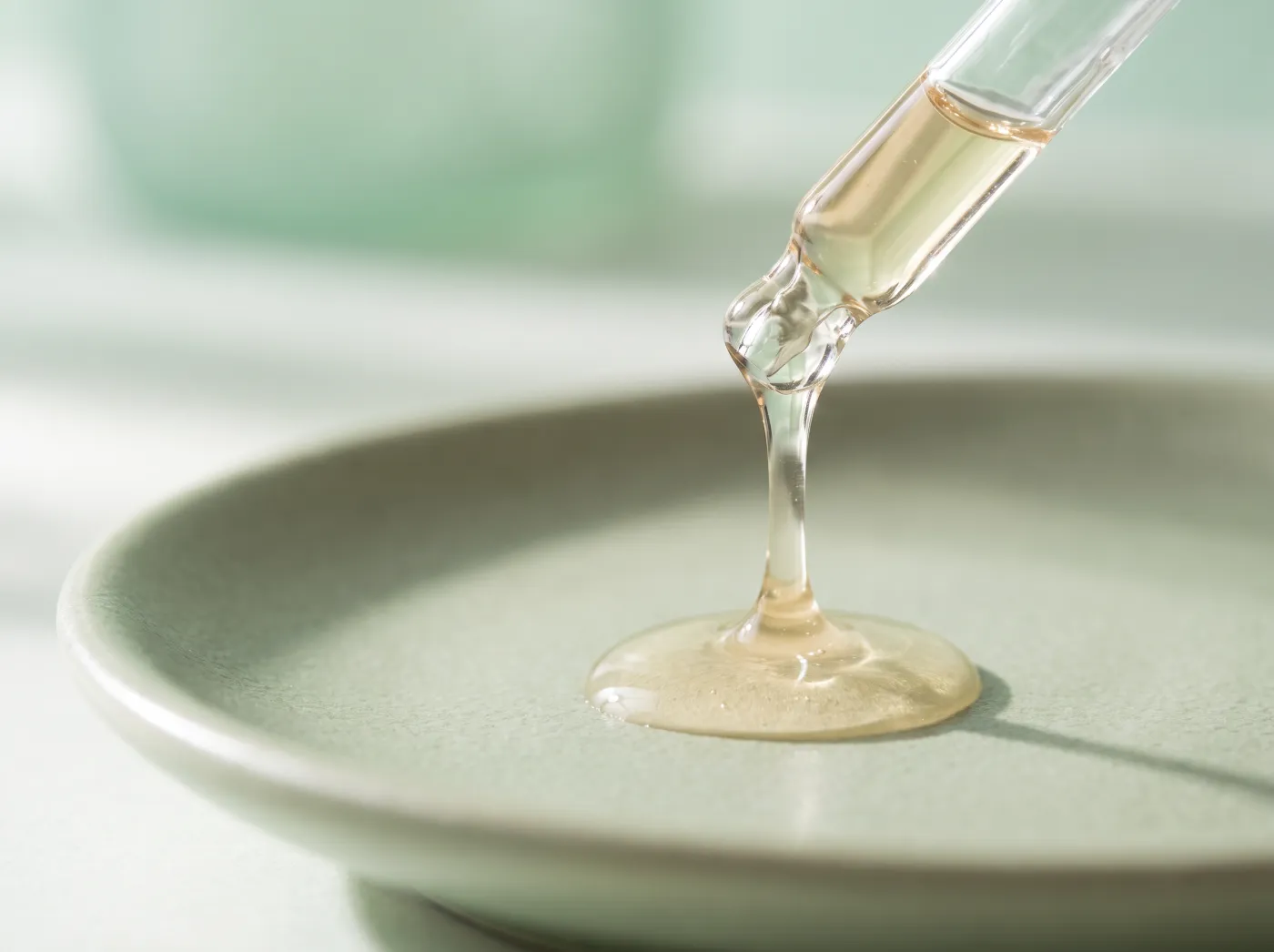
Lactic acid as a clear solution, macro view on a sage green ceramic surface

Lactic acid at a glance

Entry from our cosmetic ingredient glossary. Data from the European Commission's CosIng database1. No maximum concentration is listed in the annexes of the regulation; the guidelines come from the European scientific committee2 and the CIR panel3. Copy the identifiers in one click for your files.

INCI name
LACTIC ACID
Other names
2-Hydroxypropanoic acidAlpha-hydroxy acid (AHA)1
CAS number
50-21-5
EC number
200-018-0
Formula
C₃H₆O₃
Forms
L(+) and D(−)In the lab, the L form is more effective than the D form6
CosIng functions
Buffering, humectant, skin conditioning"Buffering", "humectant", "skin conditioning"1
EU status
No restrictionNot listed in the annexes of Regulation (EC) 1223/20091. European scientific committee guidelines: 2.5% and pH 5 or higher2
Allergen to declare
No
Safety
Safe under conditionsCIR panel: 10% at most, pH of 3.5 or higher, formula protecting from the sun or sun protection advice3

What the research says

Each result shows the protocol and the level of evidence. The higher the level, the better the result carries over to a finished formula.

Clinical trialReview or consensusLaboratory

Facial skinSkincare

Smoother, firmer skin after 3 months

Clinical trial
5% and 12%3 monthsTwice a day

At 12%, firmness and the thickness of the epidermis and dermis increase, and smoothness and the look of wrinkles improve. At 5%, surface and epidermis changes are comparable, with no measured effect on the dermis4.

Lactic or glycolic: which is better tolerated?

Clinical trial
0.5 to 1.15 M6 weeksComparison of six AHAsPrivate consulting firm

At equal concentration, the L and D forms of lactic acid and glycolic acid are the most effective on hydration and wrinkles. L-lactic acid draws the fewest complaints. Above 1.5 M, stinging is stronger with glycolic acid and the D form than with the L form5.

More ceramides in the stratum corneum

Laboratory
Cultured keratinocytesLotions applied to skinManufacturer study

In the lab, ceramide production by keratinocytes increases by 300% with L-lactic acid, against 100% with the D form. On skin, stratum corneum ceramides increase by 48% with L-lactic acid and by 25% with the D,L mix; the D form has no effect. The barrier improves with the L and D,L forms6.


BodyBodycare

Softer dry lower-leg skin in 14 days

Clinical trial
15% with ceramides14 days56 women over 50Randomized, against no treatment

Hydration and desquamation improved from day 2 and at day 14 (−2.51 then −3.07 points on the D-Squame score, p < 0.0001). The investigator's and the participants' assessments point the same way, with no adverse effect. The lotion also contains ceramides: lactic acid alone is not isolated7.

What experts sayDermatology

European guidelines: 2.5% and pH of 5 or higher

Committee opinion
European scientific committee2000, maintained in 2004

As a precaution, the committee proposed 2.5% lactic acid at most and a pH of 5 or higher, with a warning on UV exposure. In 2004 it noted that AHA application increases UV-induced damage and that no no-effect threshold could be defined2.

Texture and radiance, but an optimal concentration still to be defined

Review
Literature reviews2010, 2018 and 2024

A 2024 review reports that glycolic and lactic acids improve skin texture and radiance, while stressing that the optimal concentration remains to be defined8. According to a 2018 review, the effect of AHAs on sun damage depends on the concentration9. Studies on prolonged use on sun-exposed skin remain very few10.

This page summarizes published literature on a cosmetic ingredient. It does not describe the effect of a finished product, which depends on its formula, and it is not medical advice. Most trials on lactic acid are old (1990s) or run by manufacturers; this is indicated in the sources. Recent, independent evidence remains limited.

Concentrations used in studies

The trials cited test lactic acid between 5% and 15%47. The safety guidelines are lower: 2.5% with a pH of 5 or higher (European scientific committee, as a precaution)2, 10% with a pH of 3.5 or higher (CIR panel)3. The final concentration is set with the formulator, along with pH and sun protection.

Which products use lactic acid?

Our white label catalog includes 7 formulas with lactic acid: the key active in 2 of them, a supporting ingredient in the others. Every category can be customized (formula, fragrance, packaging).

5Face

Key active in AHA exfoliants and cleansing gels, supporting active in cleansers, washing creams and serums.

2Body

Supporting active in one washing product and one body cream of the catalog.

In our formulas, it is most often paired with

Niacinamide 4Panthenol 4Sweet almond oil 3Salicylic acid 2

Lactic acid, glycolic acid, salicylic acid or niacinamide?

Four actives often compared for exfoliating or smoothing skin texture. They do not exclude each other and are combined in several of our formulas.

Lactic acidGlycolic acidSalicylic acidNiacinamide
FamilyAHA3AHA3BHA (common name)12Vitamin B3, not an acid
Effect studiedSmoothing, firmness, comfort of dry skin47Hydration and wrinkles, comparable to lactic acid5See the salicylic acid pageSee the niacinamide page
EU regulationNo restriction in the annexes1. Guideline: 2.5%, pH 5 or higher2No restriction in the annexes. Guideline: 4%, pH 3.8 or higher2Restricted: 0.5 to 3% depending on the product11No restriction
ToleranceLess stinging than glycolic acid above 1.5 M, for the L form5Stronger stinging than L-lactic acid above 1.5 M5Depends on concentration and formulaSee the niacinamide page
SunSun protection recommended with AHAs3Increased UV sensitivity during use3Sun protection recommended with BHAs12Not photosensitizing

Frequently asked questions about lactic acid

What is lactic acid?
It is an alpha-hydroxy acid, also called 2-hydroxypropanoic acid (CAS 50-21-5). CosIng assigns it three functions: buffering, humectant and skin conditioning1. It exists in two forms, L and D, and the first is more effective in the lab6.

What are the benefits of lactic acid for skin?
At 12% for 3 months, it increases the firmness and thickness of the skin and improves smoothness4. At 15% with ceramides, it improves hydration and desquamation of dry skin in 14 days7. These results come from complete formulas and from old or industry-run studies.

What percentage of lactic acid and what pH should you choose?
No maximum concentration is listed in the annexes of European regulation1. The European scientific committee proposed, as a precaution, 2.5% and a pH of 5 or higher2. The CIR panel allows 10% at most and a pH of 3.5 or higher, with a formula protecting from the sun or sun protection advice3.
Lactic acid or glycolic acid?
Both were the most effective AHAs in a 6-week study comparing six acids. L-lactic acid drew the fewest complaints, and stinging is stronger with glycolic acid above 1.5 M5. The choice depends on the target product: they are also combined in our AHA exfoliants and gels.
Should you use lactic acid in the morning or at night, and what about the sun?
No source cited sets the time. As with all AHAs, the FDA recommends sun protection during use and the following week3. The European scientific committee noted that AHAs increase UV-induced damage2.
Is lactic acid safe?
At the recommended concentrations and pH, the CIR panel judges it safe3. Stinging remains possible, especially at high concentration or with the D form5. In the 15% dry skin trial, no adverse effect was reported7.
Can you use lactic acid during pregnancy?
The sources cited do not address pregnancy. As with any exfoliating product, a healthcare professional's advice remains the rule.
Can you manufacture a lactic acid exfoliant for my brand?
Yes. Our ISO 22716 certified lab offers 7 lactic acid formulas from the catalog (exfoliants, cleansing gels and related care) that you can customize, or a custom formula. Samples are free.

Sources

Peer-reviewed studies and official regulatory sources, checked on November 2, 2026.

  1. European Commission. CosIng, LACTIC ACID entry (CAS 50-21-5, EC 200-018-0). ec.europa.eu/growth/tools-databases/cosing
  2. Scientific Committee on Cosmetic Products and Non-Food Products Intended for Consumers (SCCNFP). Updated position paper concerning consumer safety of alpha-hydroxy acids, SCCNFP/0799/04, adopted May 25, 2004. ec.europa.eu
  3. US Food and Drug Administration. Alpha hydroxy acids, "Cosmetic Ingredients" page. fda.gov
  4. Smith WP. Epidermal and dermal effects of topical lactic acid. J Am Acad Dermatol. 1996;35(3 Pt 1):388-391. doi:10.1016/s0190-9622(96)90602-7
  5. Smith WP. Comparative effectiveness of alpha-hydroxy acids on skin properties. Int J Cosmet Sci. 1996;18(2):75-83. doi:10.1111/j.1467-2494.1996.tb00137.xWalter Smith Consultants (private consultancy)
  6. Rawlings AV, Davies A, Carlomusto M, et al. Effect of lactic acid isomers on keratinocyte ceramide synthesis, stratum corneum lipid levels and stratum corneum barrier function. Arch Dermatol Res. 1996;288(7):383-390. doi:10.1007/BF02507107Unilever Research
  7. Draelos ZD, Hall S, Munsick C. A 14-day controlled study assessing qualitative improvement with 15% lactic acid and ceramides in skin moisturization and desquamation. J Clin Aesthet Dermatol. 2020;13(8):E54-E58. PMID 33178384Fougera Pharmaceuticals (Sandoz)
  8. Almeman AA. Evaluating the efficacy and safety of alpha-hydroxy acids in dermatological practice: a comprehensive clinical and legal review. Clin Cosmet Investig Dermatol. 2024;17:1661-1685. doi:10.2147/CCID.S453243
  9. Tang SC, Yang JH. Dual effects of alpha-hydroxy acids on the skin. Molecules. 2018;23(4):863. doi:10.3390/molecules23040863
  10. Kornhauser A, Coelho SG, Hearing VJ. Applications of hydroxy acids: classification, mechanisms, and photoactivity. Clin Cosmet Investig Dermatol. 2010;3:135-142. doi:10.2147/CCID.S9042
  11. European Parliament and Council. Regulation (EC) No 1223/2009 on cosmetic products, consolidated version of May 1, 2025: Annex III, entry 98 (salicylic acid). eur-lex.europa.eu
  12. US Food and Drug Administration. Beta hydroxy acids, "Cosmetic Ingredients" page (content as of February 25, 2022). fda.gov
Carmel Cosmetics Labs product specialist with a brand founder

Tell us about your project

A product specialist reviews your request and gets back to you on the channel you prefer.

Lead EN – Demande de devis
Tell us about your project. A product specialist will get back to you shortly.
CONTACT INFORMATION
Name
PROJECT INFORMATION
Which cosmetics category interests you most?

By submitting this form, you agree to our terms of service and privacy policy.

No obligation. Your information stays confidential and is used only to prepare your quote.