











































Services

Torn between two services?A project manager will guide you

Catalog

Explore the full catalog1,000+ formulas ready to carry your brand

Face careFull range

Serums, creams and targeted care, formulated with your actives.

Body careFull range

Moisturizing, nourishing and shower care: cream, butter or oil.

Specialty careFull range

Sun care, lips, intimate care and oral care.

Men, baby, makeupFull range

Shaving and beard, baby and mom, makeup.

Industries

All solutions by industryFormulas and formats for your business

Laboratory

Cosmetics manufacturing room with a row of stainless-steel mixers and an operator in white workwearOur factory in Aït MelloulISO 22716 and ISO 9001, visits by appointmentDiscover the factory

Resources

Glycolic acid (AHA)

Glycolic acid, an alpha-hydroxy acid (AHA), exfoliates the skin surface3. At 5%, it improves texture and skin tone against placebo4. It makes skin more sensitive to the sun during use5: the CIR panel allows 10% at most, a pH of 3.5 or higher and sun protection3.
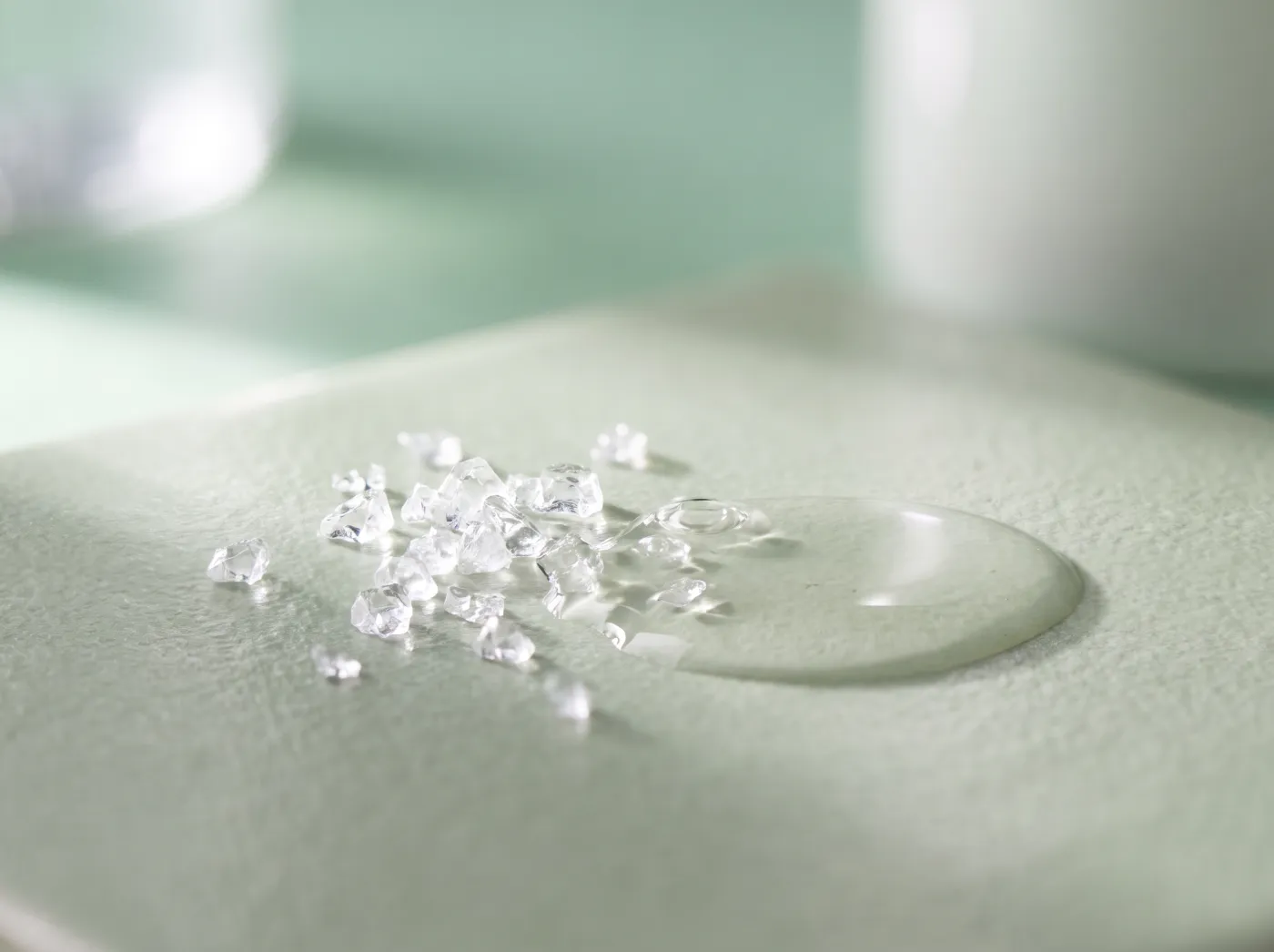
Glycolic acid crystals, macro view on a sage green ceramic surface

Glycolic acid at a glance

Entry from our cosmetic ingredient glossary. Data from the European Commission's CosIng database1. No maximum concentration is listed in the annexes of the regulation; the concentration and pH guidelines come from the European scientific committee2 and the CIR panel3. Copy the identifiers in one click for your files.

INCI name
GLYCOLIC ACID
Other names
Hydroxyacetic acidAlpha-hydroxy acid (AHA), chemical name "Acetic acid, hydroxy-" in CosIng1
CAS number
79-14-1
EC number
201-180-5
Formula
C₂H₄O₃
CosIng function
BufferingAdjusts the pH of the formula1
EU status
No restrictionNot listed in the annexes of Regulation (EC) 1223/20091. European scientific committee guidelines: 4% and pH 3.8 or higher2
Allergen to declare
No
Safety
Safe under conditionsCIR panel: 10% at most, pH of 3.5 or higher, formula protecting from the sun or sun protection advice3

What the research says

Each result shows the protocol and the level of evidence. The higher the level, the better the result carries over to a finished formula.

Clinical trialReview or consensusLaboratory

Facial skinSkincare

Better texture and skin tone after 3 months at 5%

Clinical trial
5% without neutralization3 months75 volunteersRandomized, double-blind, placebo-controlledFace and neck

Significant improvement in overall skin texture and discoloration compared with placebo. The drop in wrinkles points the same way without reaching significance4.

Skin more sensitive to UV during use, reversible effect

Clinical trial
10% at pH 3.54 weeks29 volunteersRandomized, double-blind

Treated sites produced more sunburn cells and tolerated less UV before turning red. DNA damage increased without reaching significance. One week after stopping, no difference remained5. The FDA puts this sensitivity at 18% more for UV redness and a doubling of cell damage on average3.

Desquamation and collagen depending on concentration

Laboratory
8, 10, 15 and 25% at pH 45 daysHuman skin explants

Desquamation increases with concentration. Total collagen increases at every concentration, more at the highest ones. The TNF-α marker stays unchanged. Study run by the maker of the formulations tested6.

What dermatologists sayDermatology

Recommended for dark spots

Expert consensus
2025 Delphi consensus62 dermatologists43 centers

Glycolic acid is one of the 23 ingredients recommended by the panel, notably for brown spots. The panel also keeps it for a medical use that this page does not cover7.

European guidelines: 4% and pH of 3.8 or higher

Committee opinion
European scientific committee2000, maintained in 2004

As a precaution, the committee proposed 4% glycolic acid at most and a pH of 3.8 or higher, with a warning on UV exposure. In 2004 it noted that AHA application increases UV-induced damage and that no no-effect threshold could be defined2.

Friend or foe of the skin, depending on concentration

Review
Literature reviews2010, 2018 and 2024

Depending on the case, AHAs can worsen or limit sun damage: it all depends on the concentration8. The reviews stress that the optimal concentration remains to be defined and that international recommendations set concentrations and pH values to limit irritation9. Studies on prolonged use of these products on sun-exposed skin remain very few10.

This page summarizes published literature on a cosmetic ingredient. It does not describe the effect of a finished product, which depends on its formula, and it is not medical advice. Some of the trials cited were run or funded by cosmetics companies, and several studies are old; this is indicated in the sources. Glycolic acid is also used in professional peels, which are outside the scope of this page.

Concentrations used in studies

Published guidelines range from 4% with a pH of 3.8 or higher (European scientific committee, as a precaution)2 to 10% with a pH of 3.5 or higher (CIR panel)3. The daily placebo-controlled trial uses 5%4. pH matters as much as concentration: the lower it is, the stronger the exfoliation and irritation63.

Which products use glycolic acid?

Our white label catalog includes 10 formulas with glycolic acid: the key active in 3 of them, a supporting ingredient in the others. Every category can be customized (formula, fragrance, packaging).

7Face

Key active in AHA exfoliants and cleansing gels, supporting active in scrubs, targeted care and creams.

2Body

Supporting active in one body scrub and one washing product of the catalog.

1Hair

Key active in the AHA scalp spray.

Glycolic acid, lactic acid, salicylic acid or niacinamide?

Four actives often compared for exfoliating or smoothing skin texture. They do not exclude each other and are combined in several of our formulas.

Glycolic acidLactic acidSalicylic acidNiacinamide
FamilyAHA3AHA3BHA (common name)12Vitamin B3, not an acid
Effect studiedTexture and skin tone at 5%4Surface exfoliation3See the salicylic acid pageSee the niacinamide page
EU regulationNo restriction in the annexes1. Guideline: 4%, pH 3.8 or higher2No restriction in the annexes. Guideline: 2.5%, pH 5 or higher2Restricted: 0.5 to 3% depending on the product11No restriction
SunIncreased UV sensitivity, reversible within a week5Sun protection recommended with AHAs3Sun protection recommended with BHAs12Not photosensitizing

Frequently asked questions about glycolic acid

What is glycolic acid?
It is the best-known alpha-hydroxy acid, also called hydroxyacetic acid (CAS 79-14-1). AHA products cause exfoliation, meaning the removal of surface cells. How strong it is depends on the type of AHA, the concentration and the pH3.
What are the benefits of glycolic acid for skin?
In the 3-month placebo-controlled trial, the 5% cream significantly improved skin texture and discoloration in 75 volunteers. The drop in wrinkles was not significant4. The dermatologists of the Delphi panel also recommend it for brown spots7.
What percentage of glycolic acid and what pH should you choose?
No maximum concentration is listed in the annexes of European regulation1. The European scientific committee proposed, as a precaution, 4% and a pH of 3.8 or higher2. The CIR panel allows 10% at most and a pH of 3.5 or higher, with a formula protecting from the sun or sun protection advice3.
Does glycolic acid make skin sensitive to the sun?
Yes, during use. With 10% at pH 3.5 for 4 weeks, skin tolerates less UV before turning red, but the effect disappears one week after stopping5. The FDA recommends that manufacturers add a warning advising sunscreen, protective clothing and limited exposure during use and for a week afterward3.
Should you use glycolic acid in the morning or at night?
None of the sources cited sets the time. What matters is sun protection during use and the following week3, and clear directions for use on the label.
Is glycolic acid safe?
At the recommended concentrations and pH, the CIR panel judges it safe3. Irritation remains possible: the FDA received 114 reports between 1992 and February 2004, including burns (45), swelling (29) and itching (12), mostly with strongly exfoliating peel-type products3.
Can you use glycolic acid during pregnancy?
The sources cited do not address pregnancy. As with any exfoliating product, a healthcare professional's advice remains the rule.
Can you manufacture a glycolic acid exfoliant for my brand?
Yes. Our ISO 22716 certified lab offers 10 glycolic acid formulas from the catalog (exfoliants, cleansing gels, scalp care) that you can customize, or a custom formula. Samples are free.

Sources

Peer-reviewed studies and official regulatory sources, checked on November 2, 2026.

  1. European Commission. CosIng, GLYCOLIC ACID entry (CAS 79-14-1, EC 201-180-5). ec.europa.eu/growth/tools-databases/cosing
  2. Scientific Committee on Cosmetic Products and Non-Food Products Intended for Consumers (SCCNFP). Updated position paper concerning consumer safety of alpha-hydroxy acids, SCCNFP/0799/04, adopted May 25, 2004. ec.europa.eu
  3. US Food and Drug Administration. Alpha hydroxy acids, "Cosmetic Ingredients" page. fda.gov
  4. Thibault PK, Wlodarczyk J, Wenck A. A double-blind randomized clinical trial on the effectiveness of a daily glycolic acid 5% formulation in the treatment of photoaging. Dermatol Surg. 1998;24(5):573-577. doi:10.1111/j.1524-4725.1998.tb04209.x
  5. Kaidbey K, Sutherland B, Bennett P, et al. Topical glycolic acid enhances photodamage by ultraviolet light. Photodermatol Photoimmunol Photomed. 2003;19(1):21-27. doi:10.1034/j.1600-0781.2003.00013.x
  6. Narda M, Trullas C, Brown A, et al. Glycolic acid adjusted to pH 4 stimulates collagen production and epidermal renewal without affecting levels of proinflammatory TNF-alpha in human skin explants. J Cosmet Dermatol. 2021;20(2):513-521. doi:10.1111/jocd.13570ISDIN
  7. Alvarez GV, Kang BY, Richmond AM, et al. Skincare ingredients recommended by cosmetic dermatologists: a Delphi consensus study. J Am Acad Dermatol. 2025;93(6):1509-1525. doi:10.1016/j.jaad.2025.04.021
  8. Tang SC, Yang JH. Dual effects of alpha-hydroxy acids on the skin. Molecules. 2018;23(4):863. doi:10.3390/molecules23040863
  9. Almeman AA. Evaluating the efficacy and safety of alpha-hydroxy acids in dermatological practice: a comprehensive clinical and legal review. Clin Cosmet Investig Dermatol. 2024;17:1661-1685. doi:10.2147/CCID.S453243
  10. Kornhauser A, Coelho SG, Hearing VJ. Applications of hydroxy acids: classification, mechanisms, and photoactivity. Clin Cosmet Investig Dermatol. 2010;3:135-142. doi:10.2147/CCID.S9042
  11. European Parliament and Council. Regulation (EC) No 1223/2009 on cosmetic products, consolidated version of May 1, 2025: Annex III, entry 98 (salicylic acid). eur-lex.europa.eu
  12. US Food and Drug Administration. Beta hydroxy acids, "Cosmetic Ingredients" page (content as of February 25, 2022). fda.gov
Carmel Cosmetics Labs product specialist with a brand founder

Tell us about your project

A product specialist reviews your request and gets back to you on the channel you prefer.

Lead EN – Demande de devis
Tell us about your project. A product specialist will get back to you shortly.
CONTACT INFORMATION
Name
PROJECT INFORMATION
Which cosmetics category interests you most?

By submitting this form, you agree to our terms of service and privacy policy.

No obligation. Your information stays confidential and is used only to prepare your quote.
