







For hair and scalp
Mixed into a paste, the powder cleanses gently thanks to its saponins, with a light lather. The scalp feels clean, and hair stays supple and light, without stripping.
Services
Catalog
An active in mind?Ingredients glossaryIndustries
Laboratory
 Our factory in Aït MelloulGreater Agadir, Morocco
Resources
 Study: dermocosmetics in MoroccoA MAD 2.77 billion market
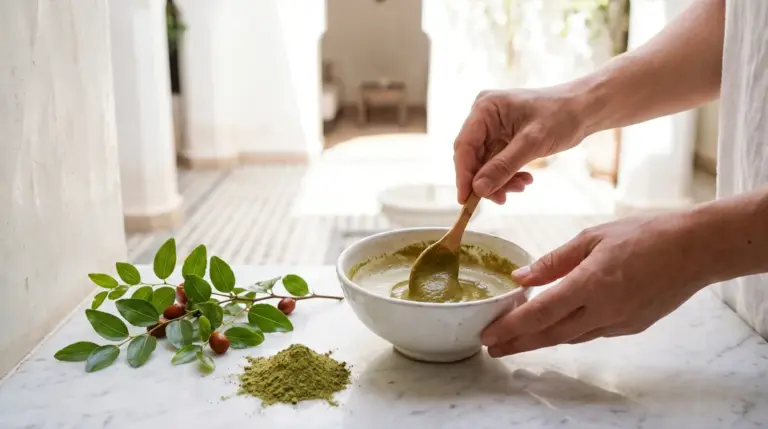
The wild jujube the sedra, a thorny shrub of Morocco's arid lands.
The leaves small and oval, picked then dried.
The powder finely ground, a soft green.
The wash mixed with water, a light, gentle lather.
By the Carmel Cosmetics Labs R&D team · updated October 2, 2026
Sidr is the powder made by grinding the dried leaves of the jujube tree. In Morocco, it comes from the wild jujube, Ziziphus lotus, known as sedra: a thorny shrub of arid and semi-arid regions. Its leaves are the part of the plant richest in saponins, plant compounds that make water lather lightly. Mixed with water, the powder forms a paste that gently cleanses hair and scalp.
The wild jujube of North Africa, called sedra in Morocco. A thorny shrub with small leaves rich in saponins. This is the one in our products.
The "sidr" of the Middle East and the Arabian Peninsula, another species with cleansing leaves. Its INCI name is different: ZIZIPHUS SPINA-CHRISTI LEAF.
The tree grown for its fruit, jujubes. In cosmetics, its fruit extract (ZIZIPHUS JUJUBA FRUIT EXTRACT) is mostly used, for example in hair oils.
Mixed into a paste, the powder cleanses gently thanks to its saponins, with a light lather. The scalp feels clean, and hair stays supple and light, without stripping.
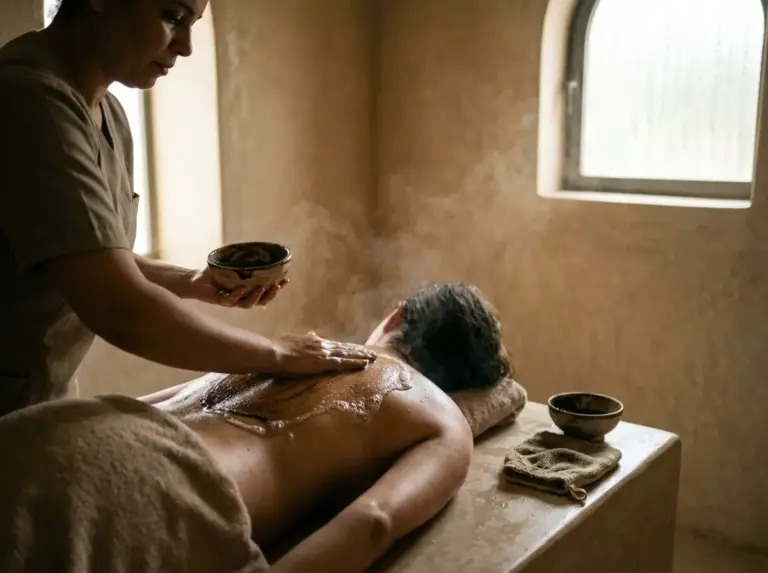
Combined with black soap, it brings a gentle wash and a botanical note to the ritual, before scrubbing with the kessa glove (Moroccan exfoliating mitt).
A plant powder of Moroccan origin, it enriches cleansing formulas, from black soap to scalp scrub, and gives them a natural identity to highlight on the label.
Mixed with lukewarm water into a smooth paste, massaged into wet hair and scalp, then rinsed thoroughly.
Mixed with ghassoul or a plant oil, as a mask for a few minutes before rinsing.
In sidr black soap, applied to warm, damp skin, left on, then rinsed before scrubbing.
We use it in a sidr black soap, a scalp scrub, a hair spray and a face cleanser, ready to carry your brand. Choose a category to see the formulas.
What our formulators consider when sidr goes into your product.
Moroccan sidr and Middle Eastern sidr are not the same plant: we check the species on the supplier's certificate and the INCI name on your label.
Sidr tints the formula green-brown: we embrace it as a visual signature or adjust the dose for the look you want.
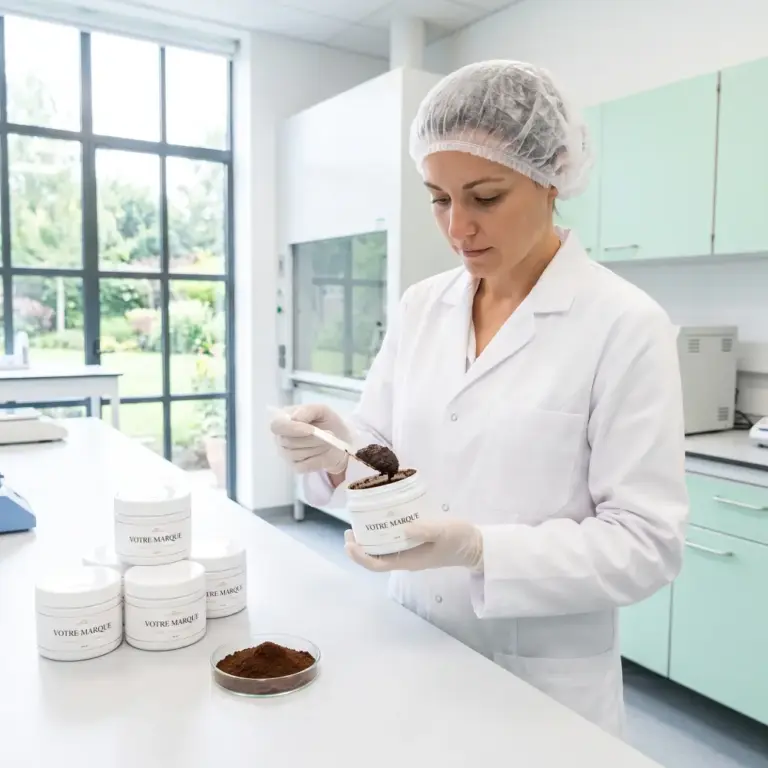
As a raw plant powder, it is tested on receipt, and the full formula is made with reverse osmosis water.
Finely sieved, the powder disperses with no gritty feel in a black soap, a scrub or a hair spray.
The word comes from the Latin sapo, "soap": these are the compounds that make water lather when you mix in sidr leaf powder.
Ziziphus lotus is often identified with the "lotus" of the Lotus-eaters in Homer's Odyssey, the fruit that made travelers forget their way home.
Native to Morocco, it grows on arid plateaus and along the sandy beds of Saharan wadis, and as far as southern Spain and Sicily.
It is the powder of dried, ground jujube leaves. In Morocco, it comes from the wild jujube, Ziziphus lotus, known as sedra. Rich in saponins, it forms a lightly foaming paste in water that cleanses hair and scalp.
Its saponins give it a gentle cleansing power, with a light lather. It leaves the scalp clean and hair supple, without stripping. At the hammam, it pairs with black soap for a gentle body wash.
Mix the powder with lukewarm water into a smooth paste, massage it into wet hair and scalp, leave it on for a few minutes, then rinse thoroughly. You can also mix it with ghassoul or a plant oil for a mask.
Yes: sidr is the Arabic name for thorny jujube trees of the genus Ziziphus. In cosmetics, it is the leaves that matter, not the fruit. In Morocco, sidr is the wild jujube (Ziziphus lotus), not to be confused with the common jujube grown for its fruit.
They are two jujube species with cleansing leaves. Ziziphus spina-christi is the sidr of the Middle East and the Arabian Peninsula; Ziziphus lotus is the sidr of North Africa, the Moroccan sedra. Their INCI names differ, which tells you which one a product contains.
Mixed into a paste, they cleanse gently with no synthetic surfactant, but lather far less than a regular shampoo. They are often used for an occasional wash or as a pre-shampoo mask. In formulas, we combine them with mild cleansing bases.
Yes. We use it in black soaps, scalp scrubs, hair sprays and face cleansers as white label, or in an exclusive private label formula, made in our factory in Morocco.
Send us your brief: we formulate and manufacture in our ISO 22716 factory in Aït Melloul. Free consultation and formula selection, with no commitment.