



For the face
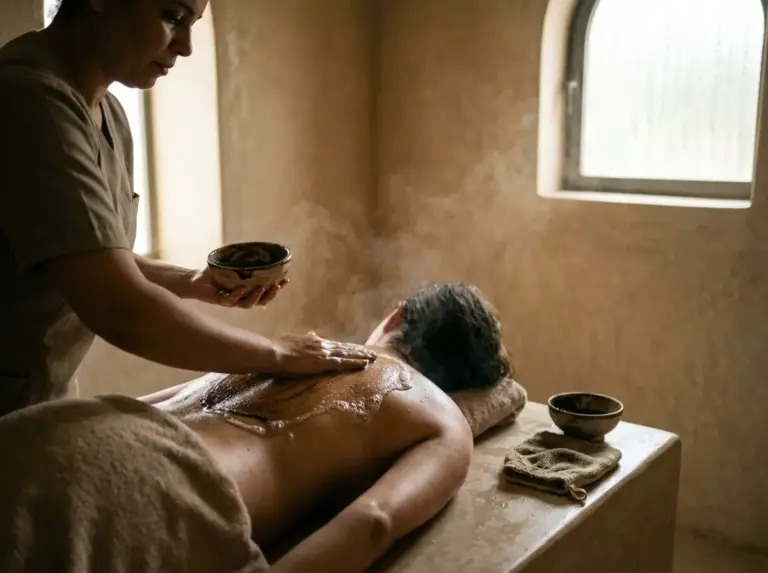
As a mask, combined with a clay such as kaolin or ghassoul, it goes into treatments that absorb excess sebum and leave skin clean and soft, with a brighter-looking complexion. These effects come from the whole formula.
Services
Catalog
An active in mind?Ingredients glossaryIndustries
Laboratory
 Our factory in Aït MelloulGreater Agadir, Morocco
Resources
 Study: dermocosmetics in MoroccoA MAD 2.77 billion market
The indigo plant a dye plant of hot lands.
The vat its leaves ferment and the water turns blue.
The nila a midnight-blue pigment, in stones or powder.
The ritual mixed with black soap, at the heart of the hammam.
By the Carmel Cosmetics Labs R&D team · updated October 2, 2026
Nila, or blue nila, is a plant indigo made from the leaves of indigo plants of the genus Indigofera. The leaves contain indican, which through fermentation and then oxidation in air produces the blue indigo pigment. Sold as stones or powder in the souks of southern Morocco, it goes into masks, scrubs and black soap for the hammam ritual.
Plant-derived indigo, made from indigo plant leaves and ground into a fine powder. It does not dissolve in water: it disperses, then settles. This is what you find in our nila products.
The same coloring molecule, indigotin, but intended for textiles: it is the blue of denim, now mostly made synthetically. A dyeing indigo is not a cosmetic raw material.
A powder or product whose blue comes from an added colorant. In cosmetics, an approved colorant must appear in the INCI list (CI code). A powder that turns water an even, instant blue suggests a soluble dye: it is a clue, only batch analysis is conclusive.
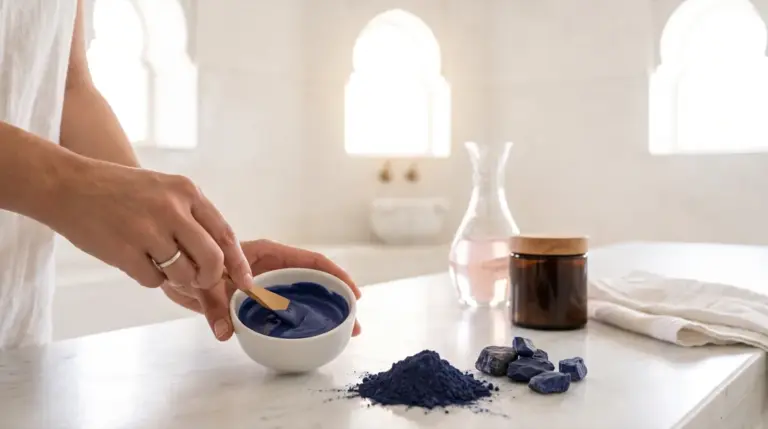
As a mask, combined with a clay such as kaolin or ghassoul, it goes into treatments that absorb excess sebum and leave skin clean and soft, with a brighter-looking complexion. These effects come from the whole formula.
In a sugar scrub or mixed with black soap, it supports hammam exfoliation: dead skin cells are removed and skin looks smoother and more even.
Its deep blue makes the formula instantly recognizable, and its name evokes the Sahara. On safety, the European SCCS opinion on the indigo plant (Indigofera tinctoria) cannot rule out a weak sensitization potential: a patch test on a small area is recommended.
As a mask: mixed with a clay and a liquid (rose water, for example), in a thin layer on clean skin, rinsed before it dries completely.
At the hammam: mixed with black soap, applied to warm, damp skin, left on for a few minutes, then rinsed before scrubbing with the kessa glove (Moroccan exfoliating mitt).
In a ready-to-use sugar or salt scrub, massaged onto damp skin then rinsed thoroughly.
We use it in masks, face and body scrubs and black soap ready to carry your brand. Choose a category to see the formulas.
What our formulators consider when nila goes into your product.
Indigo pigment is strong: we dose nila for an attractive product color while limiting blue marks on skin and linen when rinsing.
If a more intense shade is wanted, it can be topped up with an approved cosmetic colorant, always declared in the INCI list.
It depends on the species and form (leaf powder or extract): we use the one on the supplier's technical data sheet, checked on receipt.
No "whitening" or "lightening": we write your product sheets with defensible cosmetic claims.
The nomads of the Sahara, from the Tuareg to the tribes of the Guelmim region, owe this nickname to the indigo of their veils and clothing, which rubs off on the skin.
In southern Morocco, nila is part of the beauty rituals passed down from mother to daughter, especially at the hammam before a wedding.
In plant-based hair color, indigo is combined with henna to get brown to black shades.
It is a plant indigo, made from the leaves of the indigo plant (genus Indigofera). Fermented and then oxidized in air, they produce a midnight-blue pigment, sold as stones or powder in southern Morocco. It is used in masks, scrubs and at the hammam.
Added to a clay mask or a scrub, it goes into treatments that leave skin clean and soft, with a brighter-looking complexion. These effects come from the whole formula, clay and exfoliation included. Its own strengths are its color and its roots in the Saharan ritual.
Mix it with a clay and a little rose water, apply a thin layer to clean skin and rinse before it dries completely. Do a patch test on a small area first: the European SCCS opinion cannot rule out a weak sensitization potential for the indigo plant.
No study shows that nila lightens or whitens the skin. It is used in beauty products that even out the look of the complexion through exfoliation and clay. Be wary of "nila" products that promise fast lightening.
Indigo does not dissolve in water: a pinch of real nila disperses, then settles. A powder that instantly turns all the water an even blue suggests an added soluble dye. This test is only a clue: only the technical data sheet and batch analysis are conclusive.
Nila is an indigo: its pigment, indigotin, is the same molecule as in indigo dye. The difference lies in use and quality: cosmetic nila is a tested plant powder, while dyeing indigo is meant for textiles and often synthetic.
Yes. We use it in face masks, face and body scrubs and black soap as white label, or in an exclusive private label formula, made in our factory in Morocco.
Send us your brief: we formulate and manufacture in our ISO 22716 factory in Aït Melloul. Free consultation and formula selection, with no commitment.