


For hair and scalp
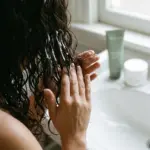
Mixed into a paste, it lifts impurities and excess sebum with no foaming surfactant. Oily hair regains lightness and volume, and the scalp feels clean.
Services
Catalog
An active in mind?Ingredients glossaryIndustries
Laboratory
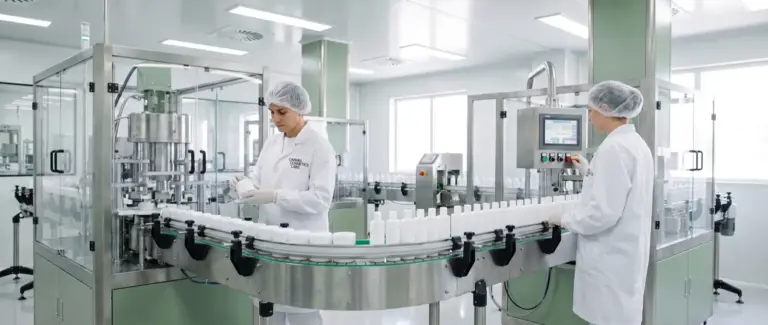 Our factory in Aït MelloulGreater Agadir, Morocco
Resources
 Study: dermocosmetics in MoroccoA MAD 2.77 billion market
The Middle Atlas the only known deposit, in the Moulouya Valley.
Raw ghassoul mined as flakes of brown clay.
The powder washed, dried, finely sieved.
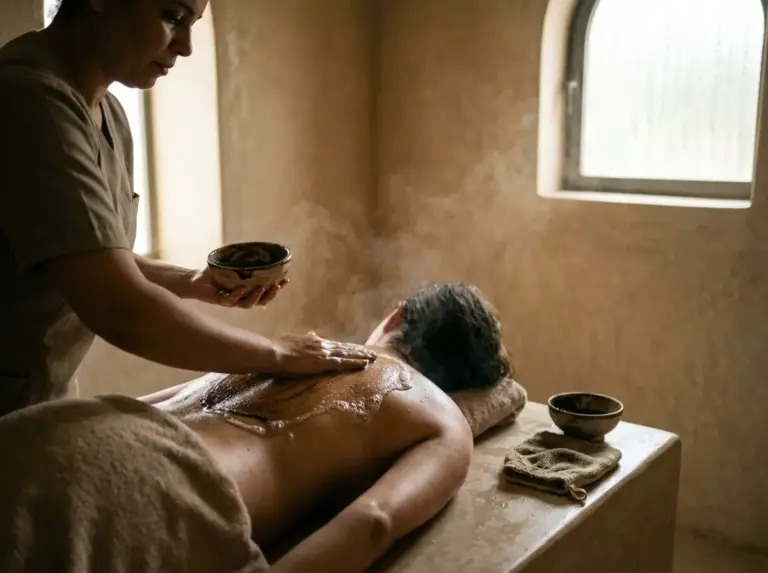
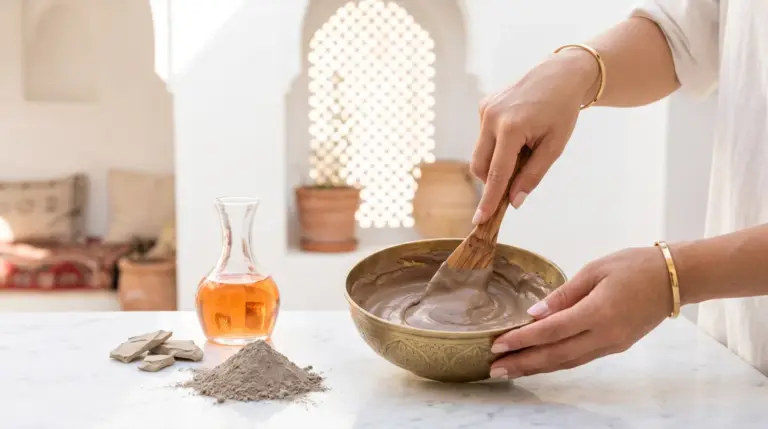
The ritual a silky paste, at the heart of the hammam.
By the Carmel Cosmetics Labs R&D team · updated October 2, 2026
Ghassoul, also spelled rhassoul, is a natural clay mined from a single deposit in Morocco, in the Missour basin, at the eastern foot of the Middle Atlas. It is a stevensite, a clay of the smectite family rich in magnesium and silica. Mixed with water, it forms a paste that cleanses skin and hair without lathering: it is the clay of the hammam.
Published analysis of a raw Middle Atlas ghassoul (El Ass, Global NEST Journal, 2018), rounded to the nearest unit. Levels vary with the seam and the washing; each batch's certificate of analysis is the reference.
A magnesium clay (stevensite) that swells in water and cleanses without lather. The only one of the three also used as a shampoo. This is the one in our hammam products.
A clay often rich in illite or montmorillonite, colored by iron. Highly absorbent, it is used mainly in masks for oily skin.
White clay (kaolinite), the gentlest of the three. Mildly absorbent, it suits sensitive skin and is also used as a base for powders and gentle masks.
Mixed into a paste, it lifts impurities and excess sebum with no foaming surfactant. Oily hair regains lightness and volume, and the scalp feels clean.
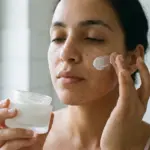
As a mask, it absorbs excess sebum and deep-cleans the skin texture. Its fine, silky texture leaves skin clean and soft, without stripping it.
Absorbent, it also builds texture: the EU CosIng database lists it as abrasive, absorbent, opacifying, emulsion stabilizing and viscosity controlling.
Mixed into a smooth paste with lukewarm water, applied from scalp to ends, then rinsed thoroughly.
As a mask, in a thin layer on clean skin, rinsed off before it dries completely.
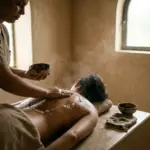
At the hammam, as a wrap on warm, damp skin after black soap, then rinsed.
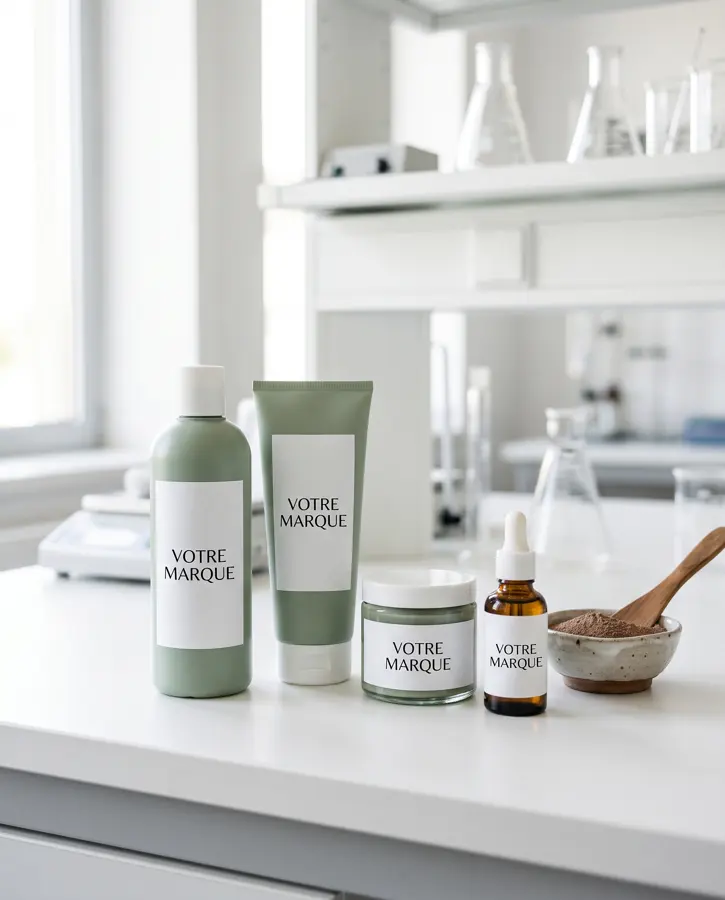
We use it in masks, sulfate-free shampoos and hammam rituals ready to carry your brand. Choose a category to see the formulas.
What our formulators take into account when ghassoul goes into your product.
Ghassoul absorbs a lot of water: we adjust its dosage for a stable texture, neither too runny nor too thick.
As a mineral mined from the earth, it is tested on receipt, and the full formula is made with reverse osmosis water.
MOROCCAN LAVA CLAY is the official name, even though ghassoul is not volcanic: we explain this nuance on your product sheets.
Its unique Moroccan deposit can be highlighted on the packaging, provided it is documented in the product file.
The word ghassoul comes from the Arabic root meaning "to wash": it is the clay that washes.
Despite its INCI name "lava clay", ghassoul is not volcanic: it formed in the sediments of ancient lakes in the Moulouya basin.
In Morocco, it is traditionally given to the bride-to-be alongside henna, and prepared by the family with herbs and orange blossom water.
Mixed with water, it forms a paste that lifts impurities and excess sebum. It cleanses skin and hair without lathering and leaves them clean and soft. It is the traditional clay of the Moroccan hammam.
Mix it into a smooth paste with lukewarm water, apply from scalp to ends, leave on for a few minutes, then rinse thoroughly. It is especially suited to oily hair, restoring lightness and volume.
Yes, as a mask: a thin layer on clean skin, rinsed off before it dries completely. It absorbs excess sebum and leaves skin clean, which makes it well suited to combination and oily skin. Do a patch test on a small area before first use.
None: they are two transliterations of the same Arabic word, naming the same Moroccan clay. You will also see "rassoul". Its INCI name is MOROCCAN LAVA CLAY.
Its INCI name is MOROCCAN LAVA CLAY. The name does not mean the clay is volcanic: ghassoul is a stevensite of lake origin.
Ghassoul cleanses without lather and works as a shampoo, a mask or at the hammam. Green clay, highly absorbent, is used mainly in masks for oily skin. For sensitive skin, kaolin is the gentlest.
Yes. We use it in white label face masks, sulfate-free shampoos, scrubs and hammam rituals, or in an exclusive private label formula, manufactured in our factory in Morocco.
Send your brief: we formulate and manufacture in our ISO 22716 factory in Aït Melloul. Free consultation and a selection of formulas, with no commitment.