







Updated September 28, 2026 — by the Carmel Cosmetics Labs team.
Cosmetic contract manufacturing means entrusting the production of your cosmetic products to a third-party laboratory (the contract manufacturer) that handles formulation, production and packaging according to the brand’s specifications. It is now the dominant model: the vast majority of cosmetics brands do not own a factory and outsource all or part of their production. This complete guide covers the definition, the regulatory framework, the benefits, the costs and the steps to make your project a success.
Contents
- What is cosmetic contract manufacturing?
- Contract manufacturing, toll manufacturing, white label: what is the difference?
- Why outsource your cosmetics manufacturing?
- What does a cosmetic contract manufacturer handle?
- Cosmetic contract manufacturing: what do the regulations say?
- How to choose your cosmetic contract manufacturer
- How much does cosmetic contract manufacturing cost?
- The steps of a cosmetic contract manufacturing project
- Why outsource cosmetic production to Morocco?
- FAQ — Cosmetic contract manufacturing
- Conclusion
What is cosmetic contract manufacturing?
Cosmetic contract manufacturing is an industrial partnership in which a brand (the client) delegates the manufacturing of its products to a specialized laboratory. The contract manufacturer provides its formulation expertise, production equipment, ingredient sourcing and regulatory know-how.
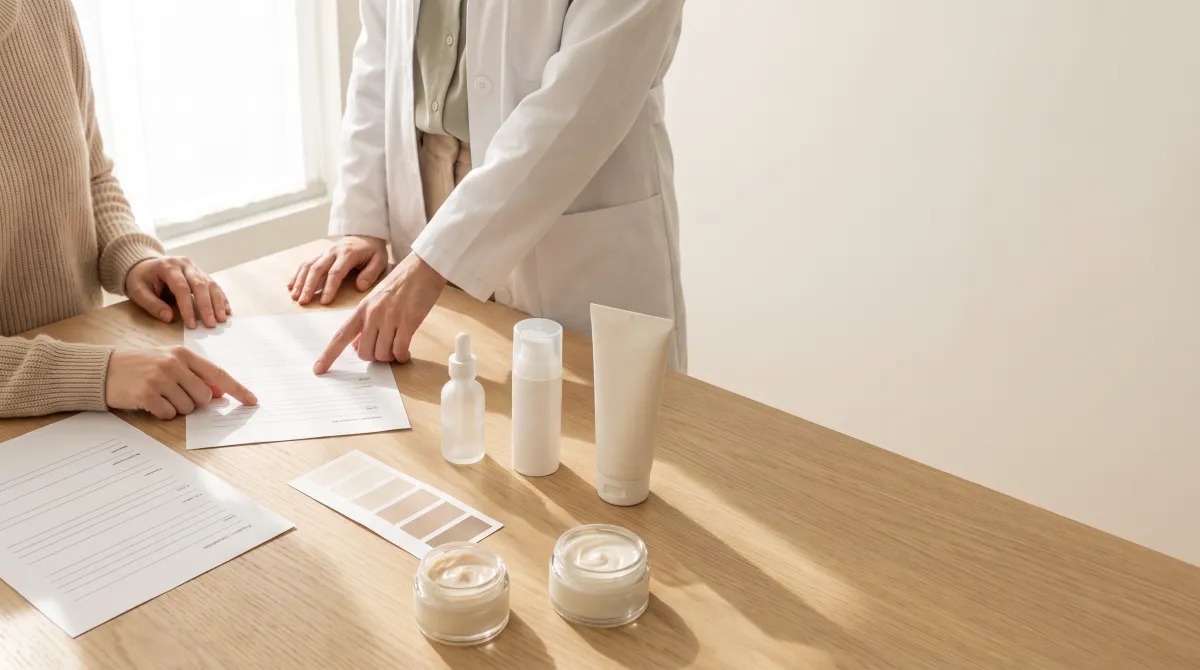
Three parties shape the relationship: the client (the brand), the contract manufacturer (the factory or laboratory that produces) and the responsible person, a legal requirement that guarantees product compliance before it is placed on the market. The brand keeps ownership of its formula, identity and commercial strategy; it focuses on marketing and distribution while the cosmetics manufacturer takes care of industrialization.
Contract manufacturing, toll manufacturing, white label: what is the difference?
These terms are often confused. Here is a clear table to tell them apart:
| Term | Definition | Level of customization | Ideal for |
|---|---|---|---|
| Contract manufacturing | Broad legal term: delegating all or part of manufacturing to a third party | Variable | All brands |
| Toll manufacturing | Production of a formula (often custom) on behalf of the brand | High | Brands with their own formula |
| White label | The laboratory’s existing formula, customized under your name | Medium | Fast launch, controlled budget |
| Private label | “Ready-to-sell” catalog product labeled with your brand (term often used as a synonym for white label) | Low | Market testing, accessible MOQ |
In practice, a single laboratory like Carmel Cosmetics Labs can cover all four models. Discover our white label service and our catalog of customizable products.
Why outsource your cosmetics manufacturing?
Outsourcing production brings decisive advantages, especially for emerging and growing brands:
- No industrial investment: no factory, equipment or production staff to fund.
- R&D and regulatory expertise: immediate access to formulators and compliance experts.
- Faster time to market: an experienced laboratory considerably shortens development.
- Guaranteed compliance: Good Manufacturing Practices, testing and the regulatory file are handled for you.
- Flexibility and scalability: production that grows with your volumes.
- Optimized costs: pooled purchasing of ingredients and packaging.
What does a cosmetic contract manufacturer handle?
A full-service contract manufacturer supports the brand across the entire value chain, from idea to finished product:
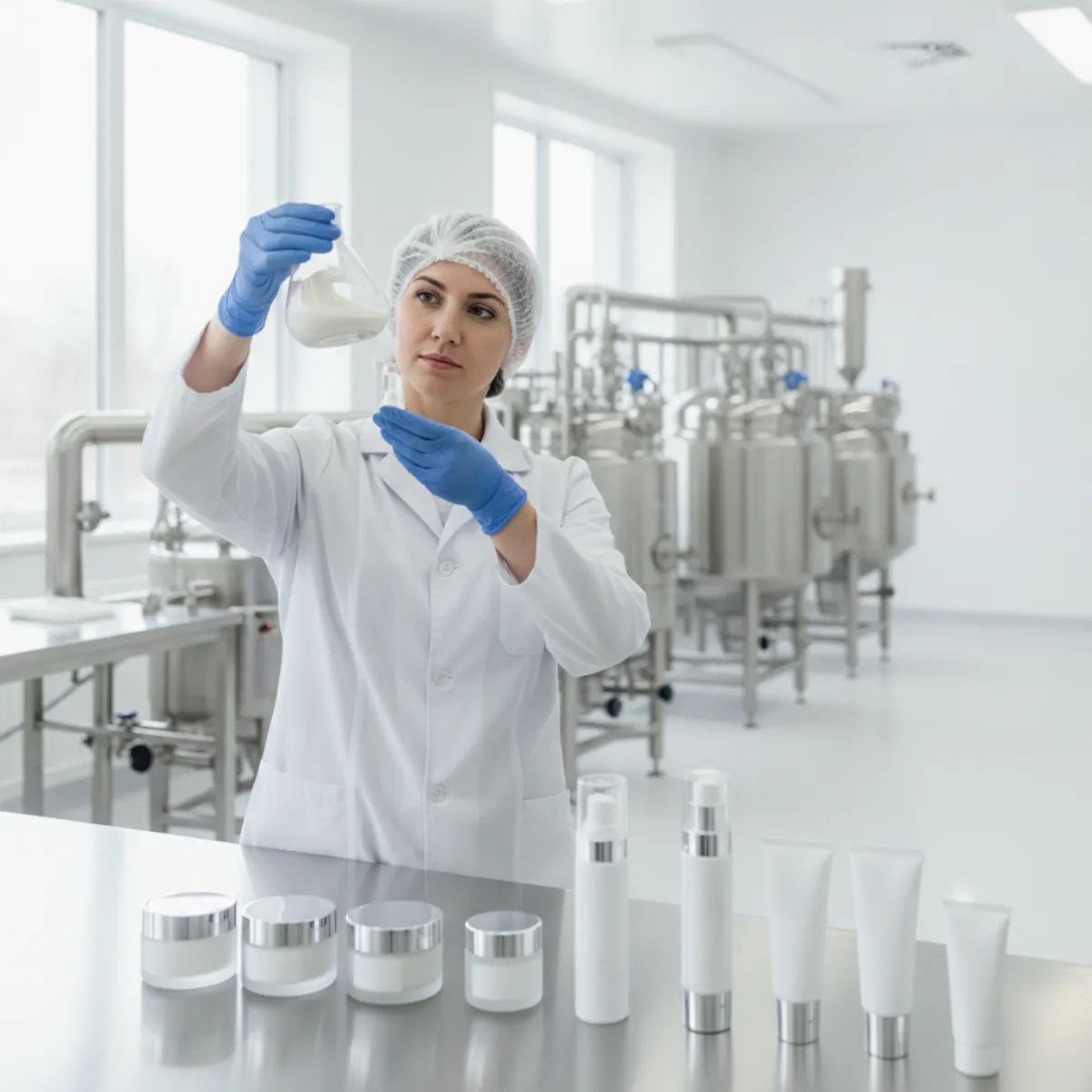
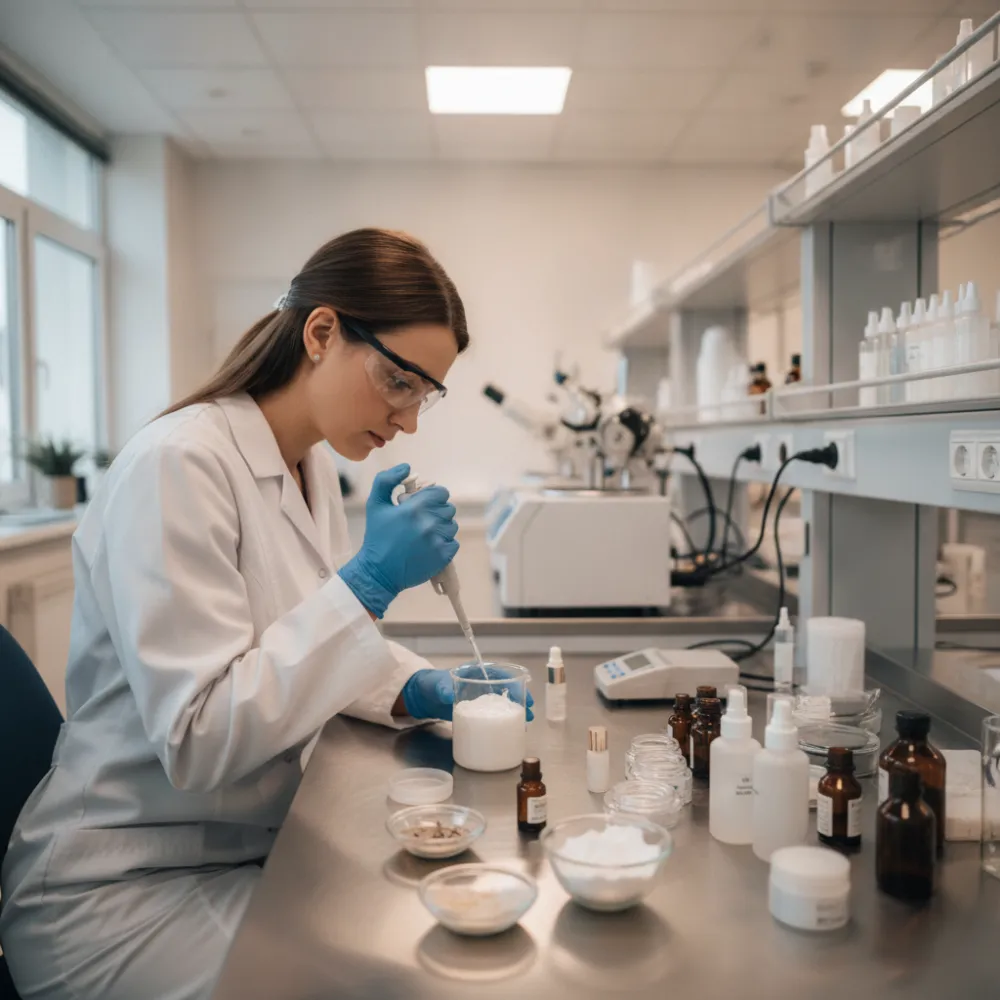
- Research & development and formulation (or adaptation of an existing formula).
- Sourcing of raw materials and actives.
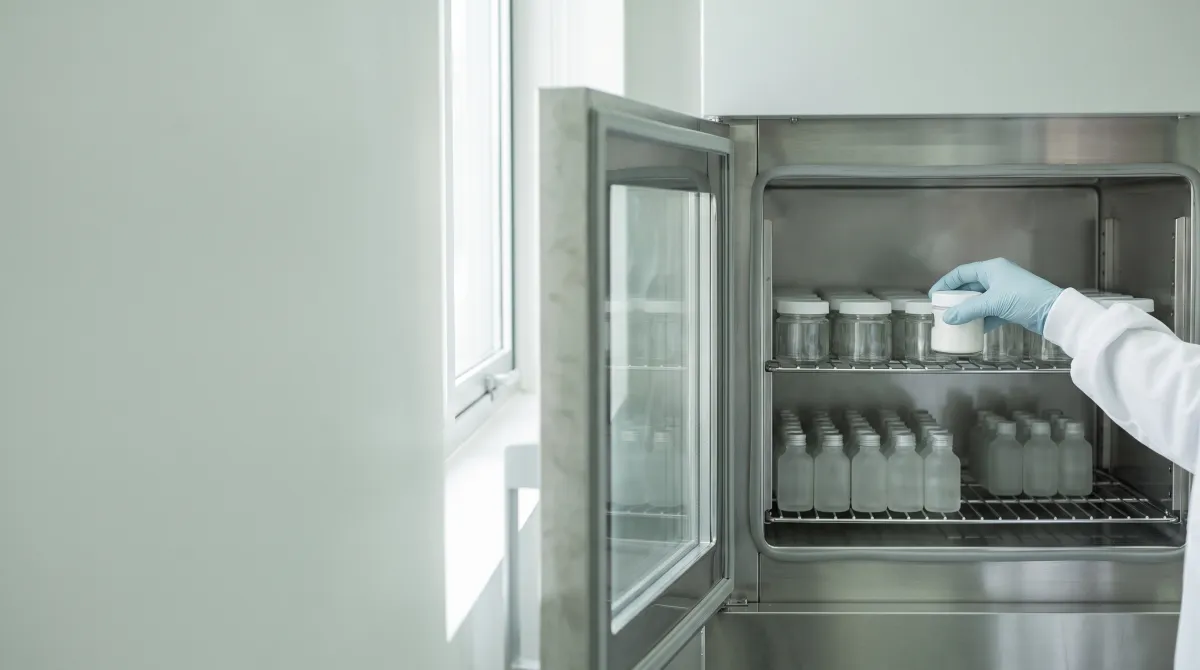
- Testing for stability and packaging/product compatibility, plus safety assessment.
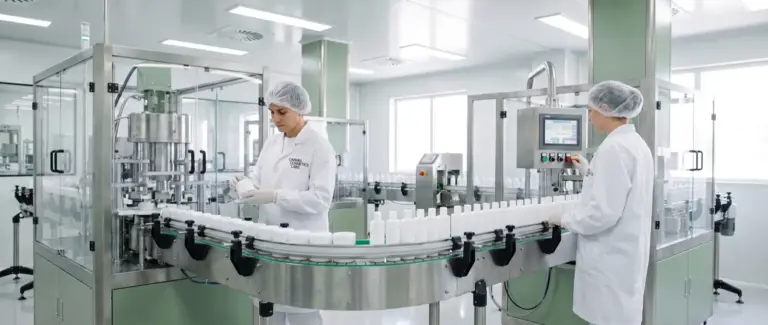
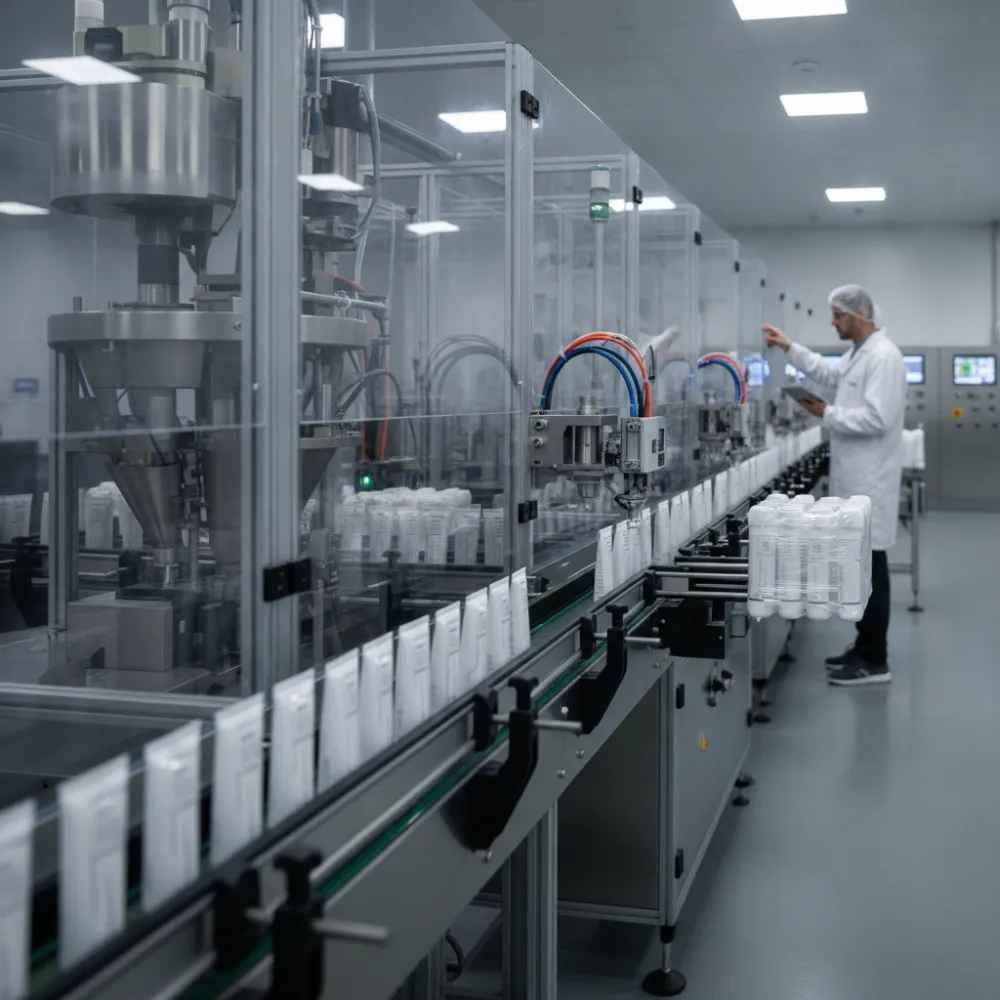
- Production at industrial scale (mixing, emulsifying, homogenizing).
- Packaging and filling (bottles, jars, airless, soft tubes, sachets).
- Quality control and batch release.
- Regulatory support: Product Information File (PIF), notification.
Cosmetic contract manufacturing: what do the regulations say?
This is the most sensitive point, and the most decisive one when choosing a partner. In the European Union, every cosmetic product, whether made in-house or outsourced, is governed by Regulation (EC) No 1223/2009, the foundation of European cosmetics regulation.
Four obligations shape contract manufacturing:
- Good Manufacturing Practices (GMP): mandatory (Article 8 of the Regulation), they are presumed to be met when manufacturing follows the harmonized standard ISO 22716, which applies to the contract manufacturer and the client alike.
- The responsible person: an entity established in the EU guarantees product compliance.
- The Product Information File (PIF): it brings together the formula, safety assessment and manufacturing data.
- The contract manufacturing agreement: required by ISO 22716 (chapter 12), it is the legal backbone that secures the relationship and clearly allocates responsibilities.
To learn more, see our page on compliance with EU standards.
How to choose your cosmetic contract manufacturer
Not all laboratories are equal. Here are the key criteria to check before you commit:
- Certifications: ISO 22716 (strongly recommended, as proof of GMP compliance), and organic or natural labels (COSMOS standard, certified for example by Ecocert) where relevant.
- Minimum order quantity (MOQ): an accessible MOQ that fits your budget and launch phase.
- Formulation capabilities: creams, serums, gels, oils, balms, powders…
- R&D strength: the ability to create a custom, original formula.
- Traceability and quality control: batch tracking, complete documentation.
- Regulatory support: handling of the PIF and testing.
- References and responsiveness: client portfolio, reliability, quality of follow-up.
How much does cosmetic contract manufacturing cost?
There is no single price. A project’s cost depends on several factors: formula complexity, choice of packaging, required certifications and, above all, the order volume. The rule is simple: the lower the minimum order quantity, the higher the unit cost, because fixed costs (development, setup) are spread over fewer units. An industrial partner with strong production capacity lets you optimize that unit cost as volumes grow.
The steps of a cosmetic contract manufacturing project
A well-run project follows a structured sequence, on a timeline defined with you in the quote:
- Brief and specifications: positioning, texture, actives, packaging, budget.
- Formulation in the lab (creation or adaptation).
- Samples and sensory approval.
- Stability testing and compatibility testing.
- Regulatory file (PIF, safety assessment).
- Production of the industrial batch.
- Packaging and quality control.
- Delivery and launch support.
Why outsource cosmetic production to Morocco?
Morocco has become a competitive hub for cosmetic contract manufacturing serving Europe and Africa. It combines controlled production costs, direct access to unique natural ingredients (argan oil, ghassoul, rose water, prickly pear) and logistical proximity to the European market. For sales in the European Union, the responsible person remains the importer established in the EU, or a representative it appoints in writing.
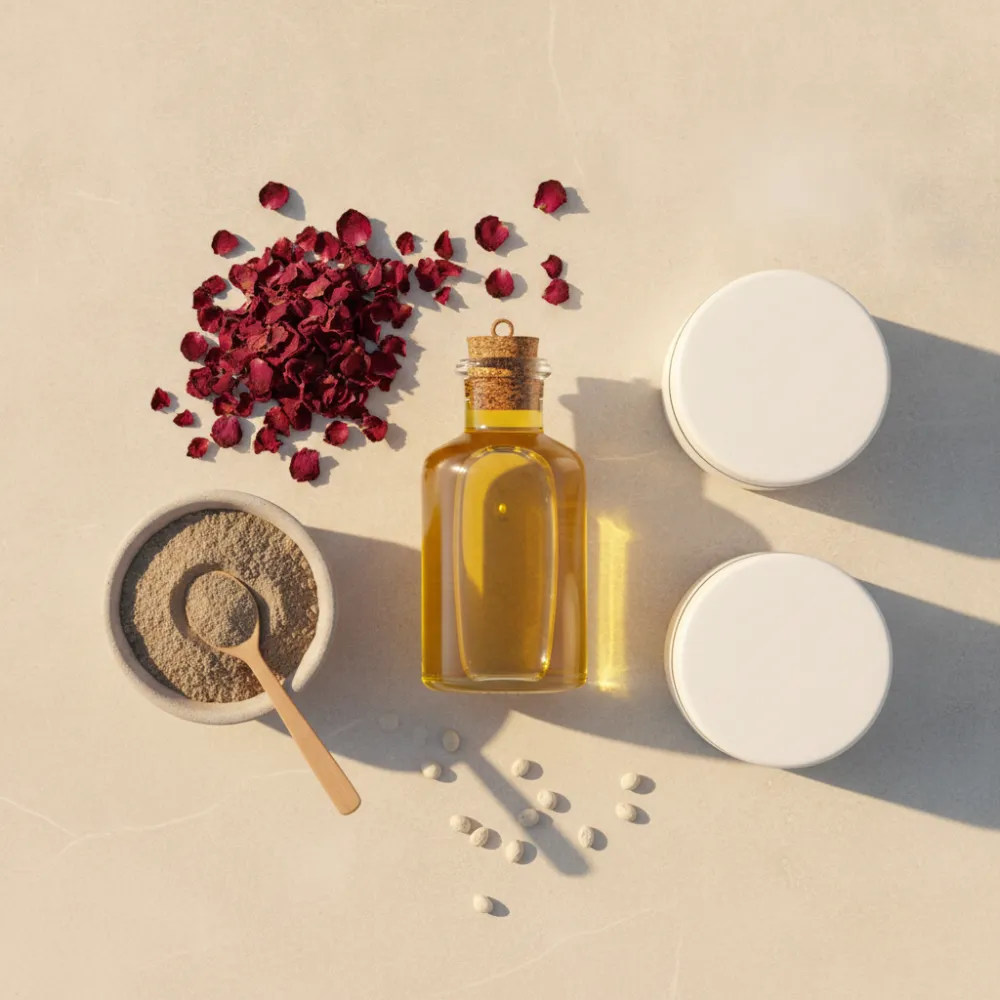
Carmel Cosmetics Labs runs an cosmetics factory in Morocco certified ISO 22716, compliant with EU regulations, with a capacity of up to 3 million units a year. From formulation to finished product, we support brands of all sizes in toll manufacturing and white label.
FAQ — Cosmetic contract manufacturing
What is cosmetic contract manufacturing?
Cosmetic contract manufacturing means entrusting the production of your cosmetic products to a third-party laboratory, which handles formulation, production and packaging according to the brand’s specifications, in compliance with Regulation (EC) No 1223/2009 and the ISO 22716 standard.
What is the difference between contract manufacturing and toll manufacturing?
The two terms are almost synonymous. “Toll manufacturing” refers to production carried out by a manufacturer on behalf of a brand; “contract manufacturing” is the broader legal term that covers toll manufacturing, white label and private label.
Is cosmetic contract manufacturing regulated?
Yes. In the European Union, every cosmetic product, whether made in-house or outsourced, is subject to Regulation (EC) No 1223/2009. Good Manufacturing Practices are mandatory (ISO 22716 is the harmonized reference standard), and every product must have a Product Information File (PIF) and a responsible person.
How much does cosmetic contract manufacturing cost?
There is no fixed price: the cost depends on the formula, packaging, certifications and above all the order volume (MOQ). The lower the minimum order quantity, the higher the unit cost. A tailored quote is essential.
Why outsource cosmetic production to Morocco?
Morocco combines competitive production costs, direct access to natural ingredients (argan oil, ghassoul, rose), compliance with EU standards and logistical proximity to Europe. Carmel Cosmetics Labs runs an ISO 22716-certified factory there with a capacity of up to 3 million units a year.
What are the steps to launch a cosmetic contract manufacturing project?
The project follows 8 steps: brief / specifications, lab formulation, samples, stability testing, regulatory file (PIF), production, packaging and quality control, then delivery. The timeline depends on the project’s complexity and is defined with you in the quote.
Conclusion
Cosmetic contract manufacturing is the lever that lets a brand launch and grow without carrying the weight of a factory. Success comes down to clear specifications, compliance with EU regulations (Regulation (EC) No 1223/2009, ISO 22716) and above all choosing a reliable, transparent partner that can take you from idea to shelf. That is exactly what Carmel Cosmetics Labs offers as a cosmetics laboratory in Morocco.