








































Anyone who sells in-demand or trending products for a living, online or offline, should know these six ways to use marketing psychology to drive sales.
As an online store owner, you have a series of hurdles to clear. First, you need to build your brand and launch a user-friendly website. Then, you need to drive traffic to that site. And after all that work, you still have to convince visitors to buy on your website with effective product pages, copywriting and photography.
Getting people to say yes to what you ask them to do can be hard. Anyone who sells in-demand or trending products for a living, online or offline, should know these six ways to use marketing psychology to drive sales.
What is marketing psychology?
Marketing psychology is the study of human consumer behavior and how shoppers respond to marketing and advertising, engage with brands and ultimately decide how they will spend their money. The psychological side looks at why people behave the way they do and make the decisions they make. We look at what influences buying decisions and how brands and marketers can build campaigns that respond to those behaviors.
Six ways to influence customers with marketing psychology
If you read books on sales or marketing, you may know Robert Cialdini’s Influence. The book defines and explores the key areas of psychological persuasion that brands should focus on. We have adapted these ideas and added a few more to the list below.
Now let’s look at how to use marketing psychology to build psychological triggers into your online store.
1. Reciprocity
The principle of reciprocity in marketing psychology means that when someone gives us something, we feel obliged to give something back. Have you ever gone to Costco and ended up buying sausages you had not planned to buy because you felt obliged after trying a free sample? That was reciprocity in action.
Of course, online retailers cannot personally visit the home of everyone who interacts with them to slip a sample into their hand. So how do you make reciprocity work for you?
Free gift with purchase
You may not be able to give something upfront, but you can certainly give something alongside. Cosmetics and beauty manufacturers love this tactic. Your gifts can also include product samples. Wellness brand Anima Mundi Apothecary encourages conversions and bigger basket values by offering free samples when shoppers reach a certain amount.
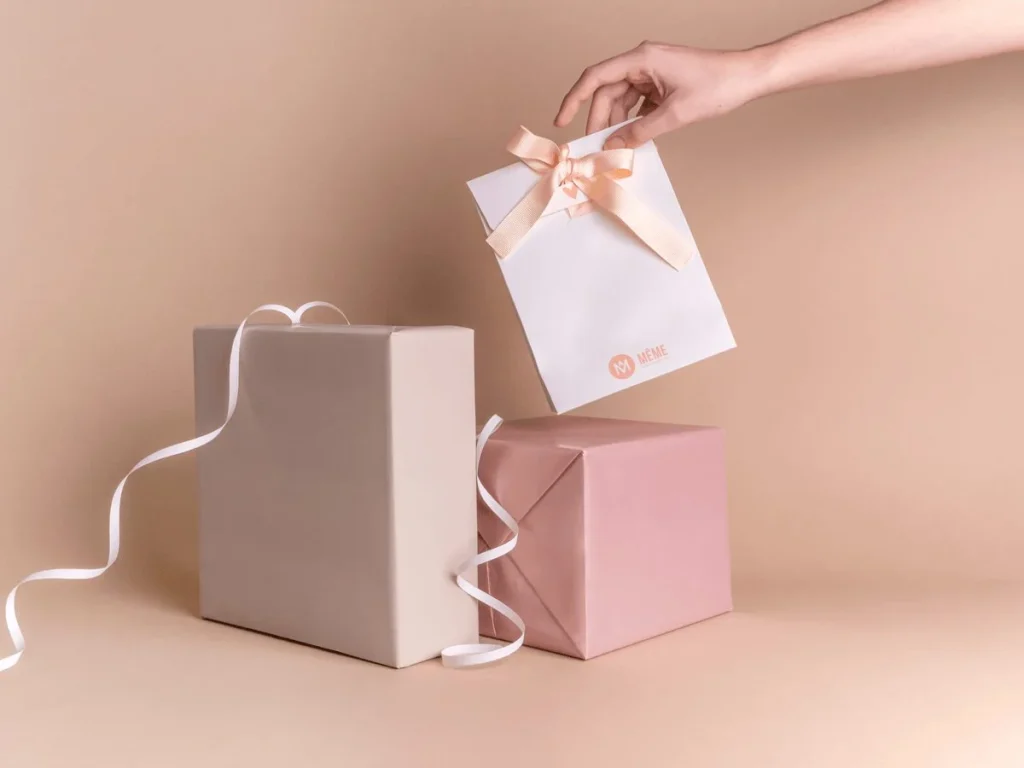
Even if you do not announce the gift in advance, slipping samples of other products into your shipped order is a marketing psychology technique that can encourage repeat purchases.
The gift of content
Content marketing is an effective way for online retailers to bring value to potential buyers as they move through their customer journey. For example, underwear brand Boody uses this principle in its marketing by publishing a fun blog post that explains the differences between briefs and bikinis, two products the brand sells itself.

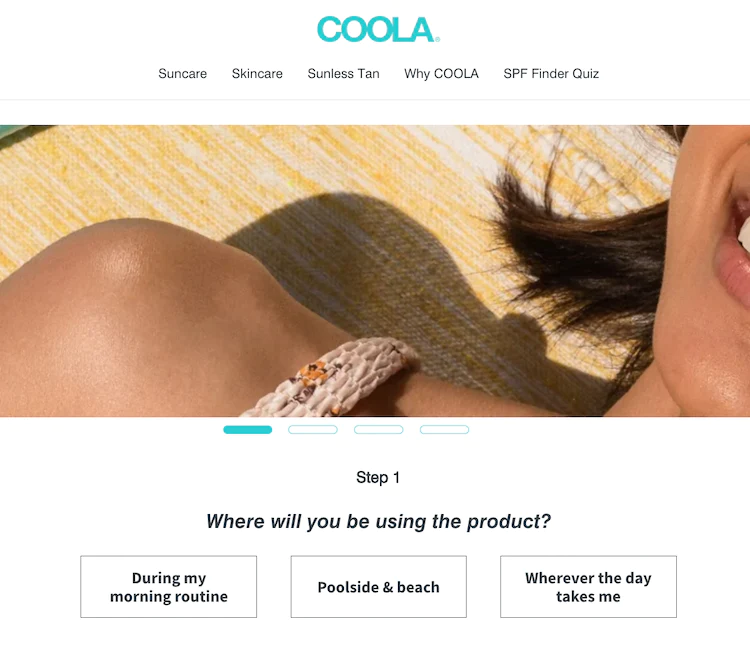
COOLA, which sells sunscreens and other sun-related skincare products, taps into buying psychology by helping potential customers find the right SPF and product for them with an interactive quiz. It also gives the brand useful insights into its audience.
Whether it is a guide to making the perfect salad dressing or an exclusive author interview, use content as an ethical bribe that makes people feel grateful to your business.
Surprise and delight
While advertising free gifts before purchase is a great way to encourage first orders and tap into shopping psychology, a surprise-and-delight approach means you do not tell customers in advance what they will get for free. Instead, they discover when they receive their order that you have given them a gift.
Not only does this build loyalty and word of mouth, it also introduces customers to new products they might not have discovered otherwise.
2. Social proof
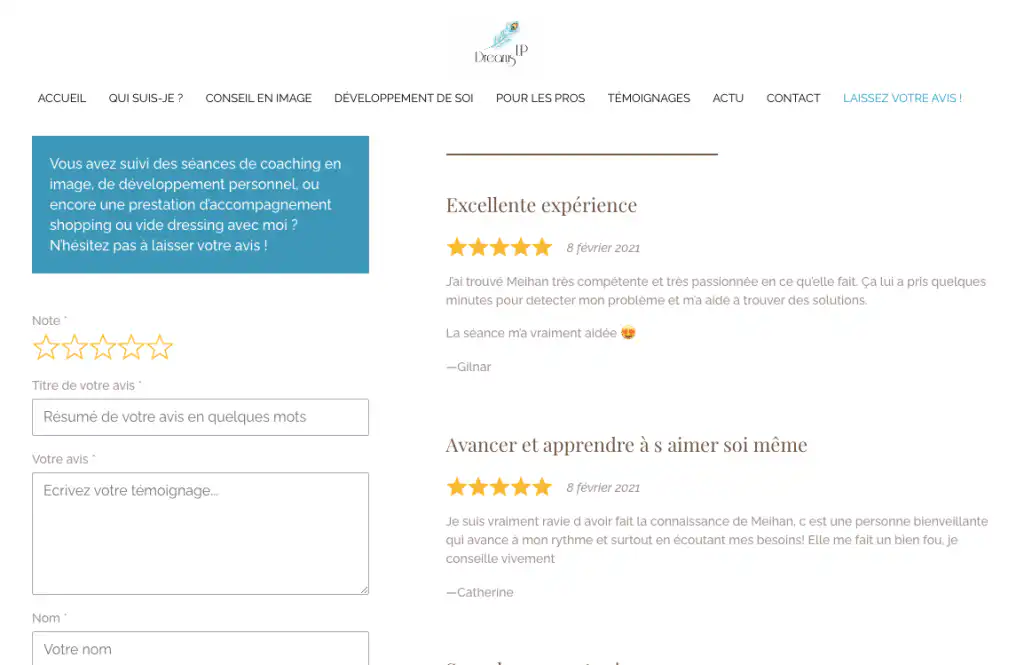
Social proof matters more than ever: people pay more attention to customer reviews than they did before the pandemic. Brands rated below 4 out of 5 stars are at a serious disadvantage, because consumers do not trust them.
Social proof is linked to the principle of liking. Because we are social creatures, we tend to have a cognitive bias toward things other people already like, whether we know them or not. Anything that shows how popular your site and products are can be a psychological trigger.
Gluten-free vegan snack brand Partake Foods is one merchant that makes frequent use of customer reviews on its website.
Using social media for social proof
The psychology of social proof can also play out beyond your website, for example on social media. Influencer marketing has become commonplace in e-commerce. Online comments about your brand and products can spark interest and, in turn, sales.
One way to use social proof on social media is to partner with an influencer, creator or celebrity. That is exactly what HELM Boots does. By featuring Liz Lambert in a pair of its boots, the brand gave them an extra touch of desirability.
Show what others are interested in
Have you ever silently saluted the taste of someone wearing the same shoes or shirt as you? You probably felt a quick connection with that person based on that one thing in common.
Stores can use this idea by showing products similar to the one a person is browsing. Amazon is famous for this approach. It has two ways of showing other products popular with shoppers.
It displays the other products customers searched for and bought during the buying process.
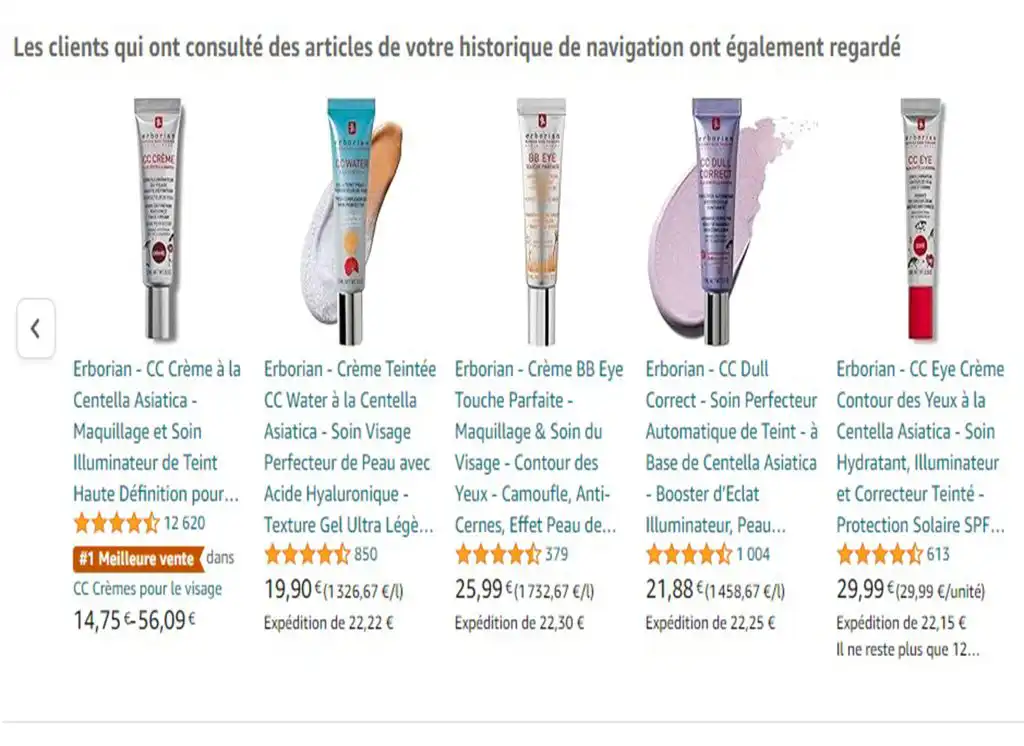
You can take a similar approach in your own online store with an app such as Also Bought or Frequently Bought Together.
3. Scarcity
Scarcity marketing is when people are motivated by the possibility of missing out. It is the eternal-teenager principle: if someone tells you that you can’t have it, you may want it even more.
However, announcing scarcity is only half the job. You need to give your audience enough information to seize the opportunity. A simple “only 10 left!” message, with no obvious path to buy the product, would undermine your message and cause needless frustration.
Sales that end
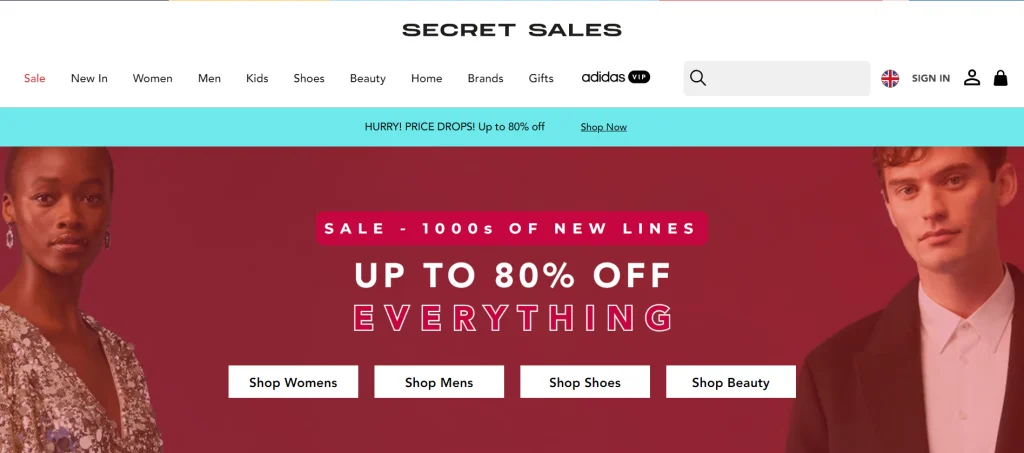
You can run time-limited sales with discounts on selected items to encourage purchases. Make sure shoppers know the offer will not last forever, so they feel compelled to buy while they still can.
Announcements of imminent stockouts
Items about to be pulled from the shelves carry an element of scarcity. If a product is part of a sample sale or being discontinued, it can help to point this out so interested customers do not miss out.
Display a counter or a number somewhere to show exactly how many items are left. Say whether or not the product will be restocked. If it will, let shoppers sign up for a restock notification in case they miss their chance.
Seasonal or limited products
Every March, when my friend gets her green Shamrock Shake from McDonald’s, she goes all out on social media. She would not be nearly as excited if she could walk in and get one any time – knowing the offer is limited motivates her and creates a thrill around exclusivity.
That is exactly how I feel about my Starbucks pumpkin spice latte, and Starbucks knows other customers feel the same way.
But you don’t need the fame of these companies to use this marketing psychology tactic. Fashion designer Tery D’Ciano has grown her business on this principle alone. She makes each piece by hand and buys only a limited amount of supplies to produce it, so every drop has a limited number of items to buy – you have to grab the new designs before they sell out!
4. Pricing
Setting a product’s price involves real psychology. The price of your product represents the size of the risk someone is willing to take. In other words, people will scrutinize a $10,000 product far more closely than a $1 product.
Bundle pricing
Product bundling means combining two or more items that are usually sold individually into a single “product” available for purchase. This bundle is offered to shoppers at a flat price. In some cases, you can discount the bundle price. In others, you can add a markup to cover extras such as gift wrapping.
Whatever your approach, bundling can increase the perceived value of a purchase. Customers can get a discount if they buy all the items at once. If you sell hair care products, for example, you can bundle shampoo, conditioner and hair gel for a small discount.
In other cases, the added value lies in convenience. You might offer a bundle of gift items, so the customer does not have to shop around for presents. You can also package the bundle in a nice basket or box so the customer does not have to worry about wrapping.
Show price comparisons
Also consider comparing prices. A consumer will be far more inclined to buy your item if you can show them it is competitively priced. If your price is more affordable than your competitors’, this can be a viable way to influence the sale.
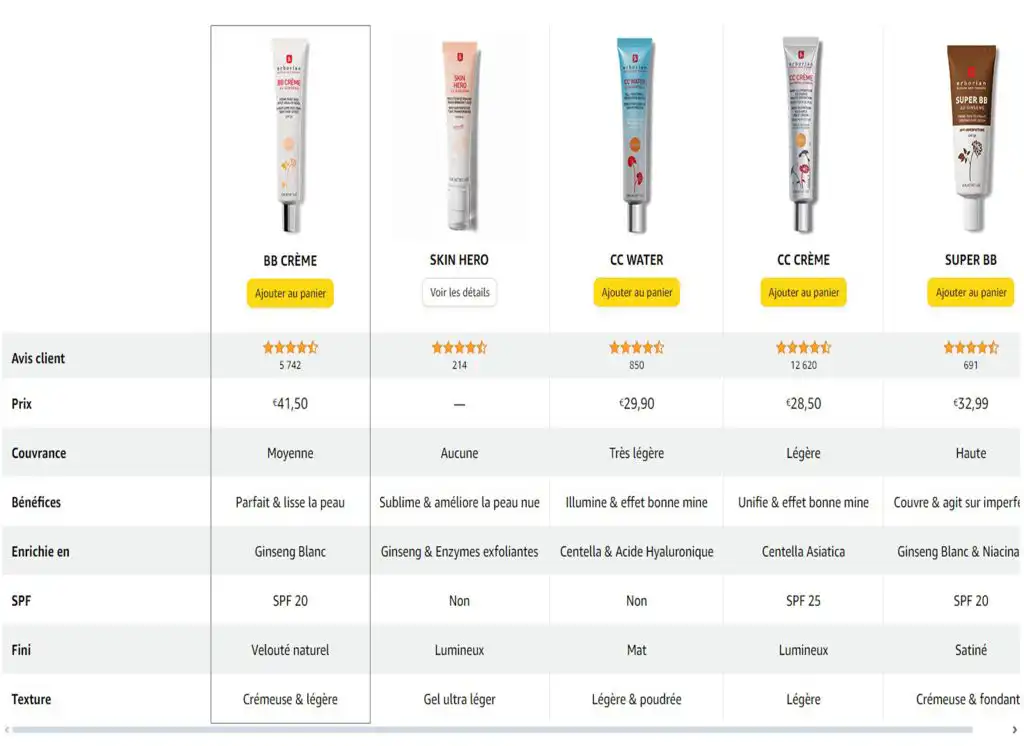
You can also compare the prices of your own products. Shoppers may be torn between two of your items, so you can offer product and price comparisons to help them decide.
5. Loss aversion
Marketing psychology comes down to finding non-obvious ways to reduce the risk shoppers perceive, through persuasion tactics. For example, by appealing to authority, you lower the risk of a “yes”. Someone who says yes (to your call to buy a product) can always point to the authority you showed to justify their purchase. With scarcity, the risk of “no” inherently increases. Someone who turns down an offer today may not get to benefit from it later.
Using the psychology of influence can lower the risk of “yes” through social proof, authority and unity, or raise the risk of “no” through scarcity, consistency and reciprocity. Loss aversion essentially means we feel losses far more intensely than gains of the same size.
Identify the loss and the gain
Effective marketing addresses specific pain points and how the product relieves them. The loss is the pain point, and the gain is the product, or the solution the product helps the customer achieve. When you market your items, you should highlight the loss as much as possible while describing the gain.
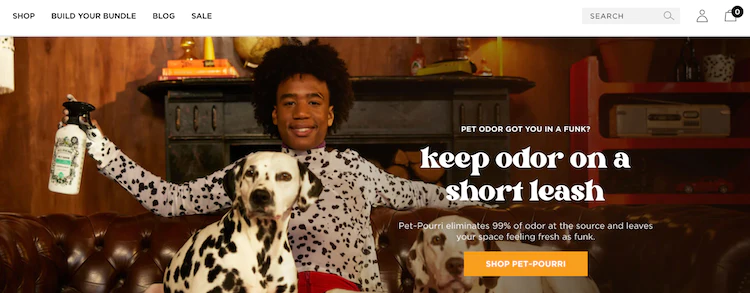
For example, this homepage banner from Pourri addresses both sides effectively. It emphasizes the pain of bad pet odors and the fact that life without its products is smelly. Then the copy explains how its Pet-Pourri product can eliminate those odors and leave you with a fresh, pleasant-smelling space – the gain.
Free samples and trials
If you can, offer free samples before purchase. “Try before you buy” is one of the surest ways to get a consumer to buy with confidence. This approach works especially well if you sell consumables, such as food and drink, skincare and cosmetics, and other health and wellness products. If you sell subscription products, you can offer a free or discounted first box.
When people can experience the product firsthand, they see what they have been missing and what they will keep missing if they do not act. Nobody wants to miss out on an exceptional experience, and you can prove it by offering free samples and product trials.
6. Commitment and consistency
When it comes to sales psychology, the principles of commitment and consistency state that people go to great lengths to appear consistent in their words and actions, even to the point of doing things that are fundamentally irrational.
That is why, if you are trying to change something in your life (losing weight, for example), it can really help to share your goal. Once you have committed publicly, you will be far more motivated to keep your commitment.
As a retailer, if you can understand buying psychology and get customers to make a small commitment to your brand – for example by signing up for your email newsletter – they will be more inclined to buy from you later. And if you can get products into their hands, even without a formal commitment to buy, you increase your chances even further.
This is the principle behind Warby Parker’s home try-on program.
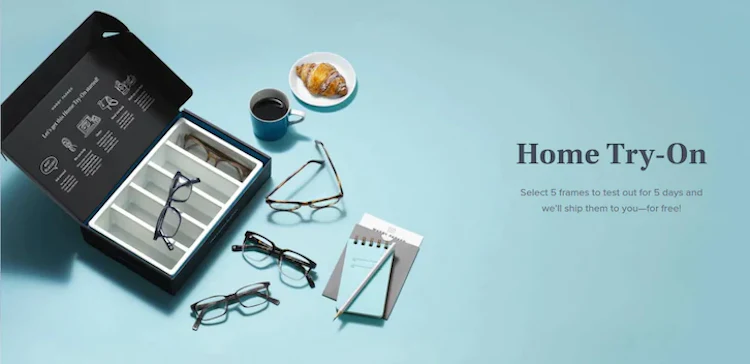
Warby Parker knows that with a product that sits in your field of vision all day (literally), look and fit matter. The company also knows that if it can get a set of frames into your hands, it has already gone a long way toward the sale – that is the power of understanding buying psychology.
So Warby Parker makes the process as simple as possible: order the samples, receive the box, order the frames you want and send the box back for free. They say there is no commitment, but they are savvy students of Cialdini. They know the customer feels committed as soon as they open the box.
Make commitment easier with easy returns
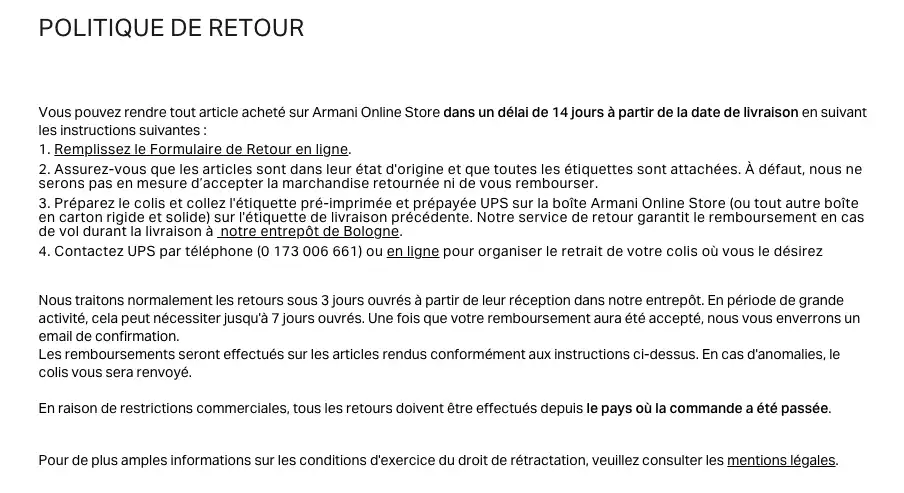
You can also apply the principle of commitment and consistency to your returns policy. In a study by Narvar, nearly three quarters of consumers said they would be more inclined to buy from a company with a “no questions asked” returns policy.
Zappos and REI are two brands known for their easy returns policies and are great examples. Buying feels less risky for the customer, because they know that if they don’t like the product, they can easily get a refund. But once the product is in their hands, will they really return it? Maybe not. They have already committed.
Stay true to your brand
While it is tempting to get carried away by the theories behind website personalization and conversion rate optimization (CRO), it is important to stay authentic. You should not sacrifice your brand identity to make a sale. In fact, your brand and your marketing psychology tactics should go hand in hand.
Authenticity and consistency build trust. When consumers trust your brand, they are more likely not only to buy from it, but also to spread the word about your mission and products, which lets you make even more of the social proof advantage we discussed earlier.
Sprinkle these marketing psychology techniques across your site and watch your sales grow.
Marketing psychology FAQ
What is marketing psychology?
Marketing psychology is the study of human behavior and how consumers respond to marketing and advertising, engage with brands and ultimately decide to spend their money.
How is psychology used in marketing?
Companies use psychology in marketing to understand how consumers make buying decisions. They can then build strategies that respond to those behaviors and trigger specific actions.
Why do we need psychology in marketing?
Psychology is essential to marketing for understanding how consumers make buying decisions. Once we understand this, we can learn to build marketing strategies that promote products effectively and drive sales.
What is a psychological marketing strategy?
A psychological marketing strategy appeals to consumers’ subconscious to prompt specific actions, whether that is making a purchase or converting in another way.