
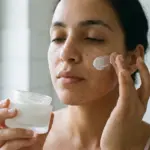
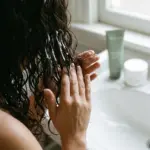



Morocco, a land of a thousand colors and scents, has long been known for its rich beauty heritage. From argan oil, the country’s liquid gold, to mystical henna, the Moroccan cosmetics tradition blends nature, culture and science.
The History of Moroccan Cosmetics
At the crossroads of African, Arab and Berber civilizations, Morocco has a rich and varied history that shows in its ancestral beauty traditions.
Berber roots
The Berbers, Morocco’s earliest known inhabitants, have always placed special importance on body and skin care. The use of natural oils such as argan and prickly pear seed oil goes back thousands of years. These oils were traditionally used to protect the skin from the arid Saharan climate and hot desert winds.
The hammam: a purification ritual
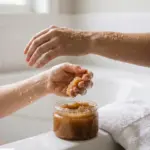
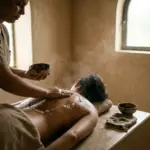
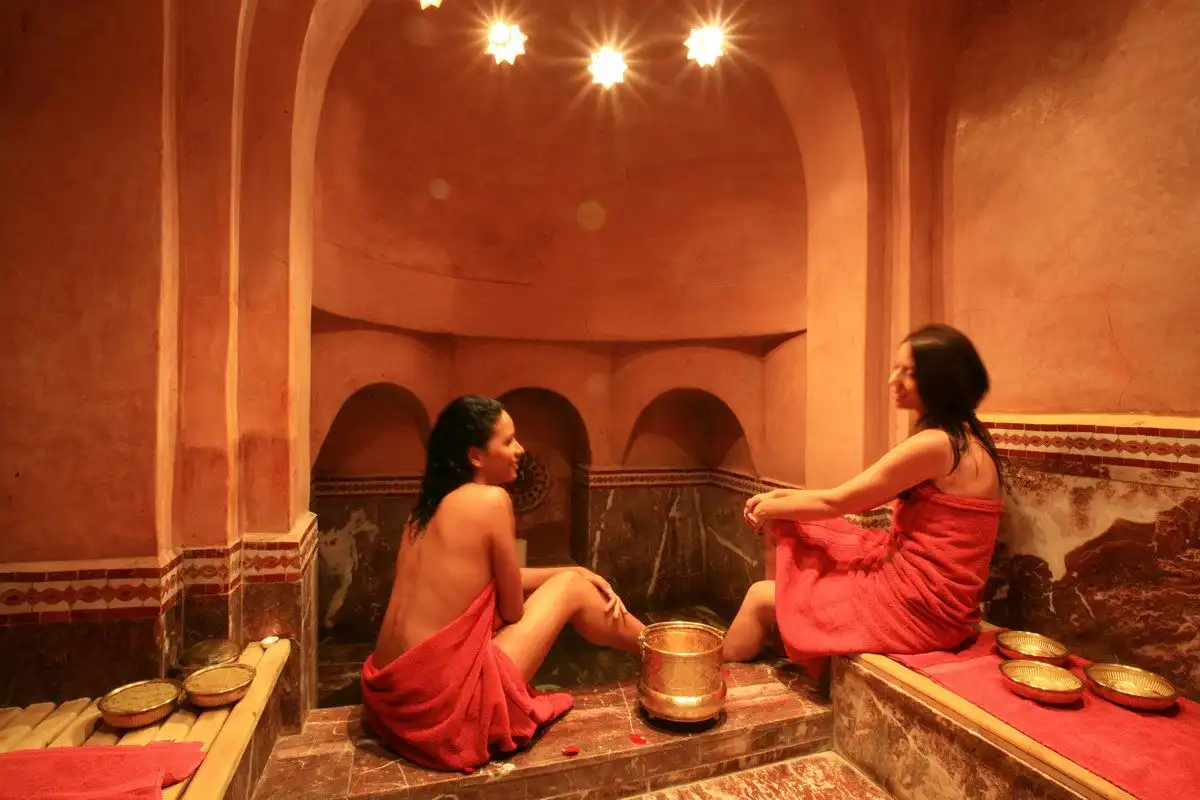
At the heart of the Moroccan beauty tradition is the hammam. More than a simple bath, it is a ritual that purifies body and mind. Women in particular go to the hammam for exfoliating treatments with black soap and a kessa glove, removing dead cells and purifying the skin. After exfoliation, clay masks (ghassoul) are often applied to nourish the skin and restore its radiance. Today, riads, spas and hotels have these hammam products made under their own brand, with a cosmetics lab for Marrakech.
Argan oil: Morocco’s liquid gold
Argan oil, produced from the kernels of the argan tree, is a pillar of Moroccan cosmetics. This national treasure is rich in vitamin E and essential fatty acids, which give it exceptional moisturizing and repairing properties. Traditionally, Berber women press the kernels by hand to extract the oil, a process that takes patience and skill.
Arab and Andalusian influences
With the Arab conquests and the Andalusian period, Morocco was exposed to new beauty practices and ingredients. Fragrances, especially orange blossom and rose, were introduced and became essential to Moroccan beauty. Likewise, kohl, used to line the eyes, became a staple of traditional makeup.
Liquid Gold: Argan Oil
Argan oil, nicknamed Morocco’s “liquid gold”, is extracted from the kernels of the argan tree, which grows only in certain areas of southwestern Morocco. The tree’s ability to survive extreme climate conditions, and the rarity of its oil, have made the argan tree a national treasure.
Origins and extraction
With its deep roots and dense foliage, the argan tree is perfectly adapted to Morocco’s dry climate. Over centuries, Berber communities developed a traditional extraction process. After drying the fruit in the sun, women crack them by hand to remove the kernels, which are then pressed to extract a pure, rich oil. Our Aït Melloul plant, in the heart of argan country, turns it into skincare under your brand: see our cosmetics lab in Agadir.
Cosmetic properties
Argan oil is especially rich in vitamin E, antioxidants and essential fatty acids. Together, they give the oil exceptional properties:
- Hydration: It absorbs quickly into the skin, leaving it soft and hydrated without a greasy feel.
- Anti-aging: Its antioxidants fight free radicals, reducing the appearance of wrinkles and firming the skin.
- Repair: Applied to hair, it nourishes deeply, repairs split ends and restores shine and strength. It also strengthens brittle nails.
Culinary use
Beyond cosmetics, argan oil is also a treat for the taste buds. Moroccan cooking often uses it for its nutty flavor, whether to dress salads or to make amlou, a spread of argan oil, almonds and honey.
Preserving the heritage
As demand for argan oil grows, efforts have been made to protect the argan tree. In 1998, UNESCO declared the region where it grows a biosphere reserve, underlining the tree’s importance to Morocco’s ecosystem and heritage.
Henna: Much More Than a Tattoo
Henna, the green powder that, once mixed, leaves shades from orange to dark brown on the skin, has been at the heart of Moroccan culture for centuries. Far more than body art, henna is a symbol deeply rooted in Moroccan tradition and spirituality.
Origins and history of henna
Henna comes from the dried leaves of the Lawsonia inermis shrub, which grows in the hot regions of North Africa, the Middle East and South Asia. In Morocco, henna use dates back to antiquity. It was valued both for its medicinal properties and for its aesthetic qualities.
Beneficial properties
- Soothing: Henna has cooling properties and can soothe skin irritation. In Morocco’s hot regions, it is commonly used to cool the skin and protect it from the sun.
- Hair care: Besides being a natural hair dye, henna strengthens, revitalizes and adds shine to hair. It is also effective against dandruff and an itchy scalp.
Henna in celebrations
Henna holds a place of honor in Moroccan ceremonies, especially weddings. On the eve of the wedding, the bride’s hands and feet are often decorated with intricate, delicate patterns. These patterns are not chosen at random: they symbolize joy, prosperity, protection against the evil eye and the hope of a happy future. According to some beliefs, the darker the henna, the more the bride will be loved by her husband and in-laws.
Spiritual symbolism
Beyond aesthetics, henna has a spiritual dimension. It is often associated with sacred moments and life transitions, such as birth, marriage and sometimes even death. It is used to protect, to bless and to celebrate.
The Rise of Moroccan Cosmetics Labs
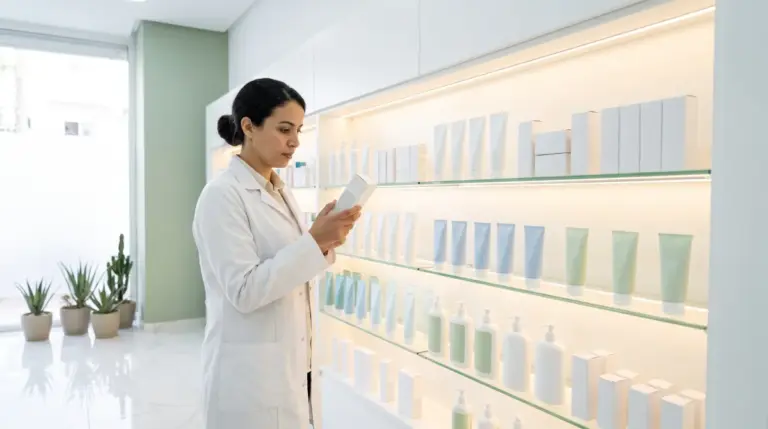
While Morocco is rich in tradition, it has not hesitated to embrace modernity. Many cosmetics labs have emerged, combining the best of both worlds. Among them, the cosmetics lab in Agadir, Carmelcos, stands out for its expertise and passion for cosmetics.
The Importance of White Label in Moroccan Cosmetics
White label, which supplies unbranded products for other companies to customize and sell, has taken off in Morocco. Thanks to labs like Carmelcos, these brands can offer a wide range of products. The cosmetic product catalog from Carmelcos is a perfect example of this diversity, combining tradition and innovation.
Morocco’s Place on the Global Cosmetics Stage
Morocco is not only a leader on the African continent; it is also recognized worldwide. Thanks to the quality of its products, the richness of its natural ingredients and the expertise of its labs, Morocco has become a key player in the global cosmetics industry.
With its rich beauty heritage, Morocco continues to charm the world. By combining tradition and modernity, and relying on expert labs like Carmelcos, the country offers the best of natural beauty. It’s time to discover and embrace the magic of Moroccan cosmetics.